Entering Imperial Service
Entered civil and military service through imperial clan privilege as Cavalier Attendant Gentleman.
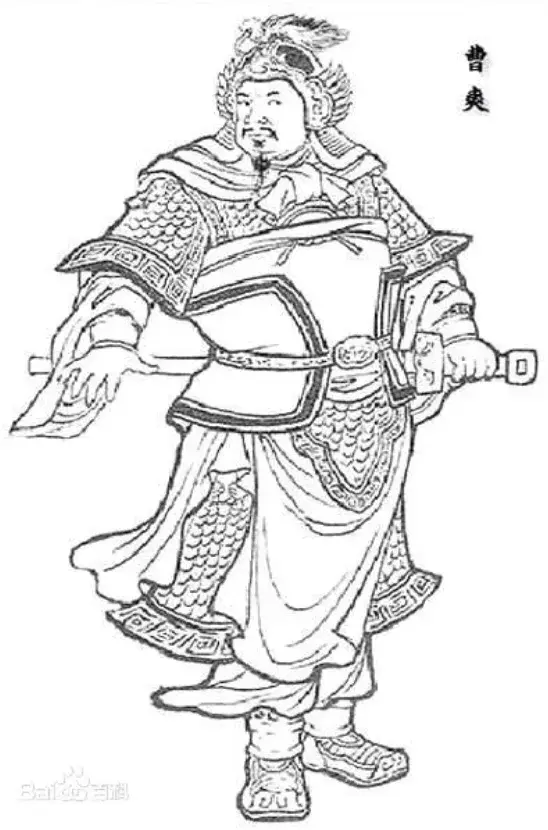
曹爽
Cao Shuang (? – February 9, 249), courtesy name Zhaobo, was a native of Qiao County, Pei Commandery (present-day Bozhou, Anhui). He was the eldest son of Cao Zhen, Grand Marshal of Cao Wei and prominent imperial kinsman, and served as a core regent entrusted by Emperor Ming of Wei (Cao Rui) on his deathbed. In his early career, benefiting from his noble imperial lineage, Cao Shuang held successive appointments including…
Cao Shuang (? – February 9, 249), courtesy name Zhaobo, was a native of Qiao County, Pei Commandery (present-day Bozhou, Anhui). He was the eldest son of Cao Zhen, Grand Marshal of Cao Wei and prominent imperial kinsman, and served as a core regent entrusted by Emperor Ming of Wei (Cao Rui) on his deathbed. In his early career, benefiting from his noble imperial lineage, Cao Shuang held successive appointments including Cavalier Attendant Gentleman, Colonel of the City Gates, Cavalier Attendant-in-Ordinary, and General of the Martial Guards, enjoying profound personal trust and favor from Emperor Ming. In the first month of the third year of the Jingchu era (239), as Emperor Ming fell critically ill, he testamentary commanded Cao Shuang and Grand Commandant Sima Yi to jointly assist the eight-year-old child emperor, Cao Fang (Prince of Qi). Cao Shuang was invested as General-in-Chief, granted the Staff of Authority and Battle-axe, and appointed to Oversee the Affairs of the Masters of Writing. Initially, Cao Shuang acted with modesty and consulted Sima Yi on all state matters. However, his younger brother Cao Xi soon formed a political alliance with He Yan, Ding Mi, and Deng Yang, leveraging imperial in-law ties and young literati factions. They elevated Sima Yi to Grand Tutor, ostensibly promoting him while stripping his actual military authority, thereby concentrating palace defense and central administrative commands within the hands of the Cao brothers. In domestic administration, Cao Shuang empowered He Yan and others to implement the Zhengshi Reforms, reorganizing bureaucratic structures and standards. In military matters, he launched an ill-considered expedition through the Luo Valley against Shu Han in the fifth year of the Zhengshi era (244), causing catastrophic casualties among Guanzhong forces without achieving any territorial gain. In the first month of the tenth year of the Zhengshi era (249), while the Cao brothers escorted the young emperor Cao Fang to Gaoping Tombs to pay respects at Emperor Ming's mausoleum, Sima Yi, who had feigned debilitating illness for years, staged the "Incident at the Gaoping Tombs" in Luoyang, seizing the capital and locking the city gates. Huan Fan, Chamberlain for the National Treasury, escaped from Luoyang and reached the imperial encampment at Gaoping Tombs, vehemently urging Cao Shuang to escort the emperor to Xuchang and issue an imperial call to arms across the realm. Vacillating and indecisive, Cao Shuang credulously trusted Sima Yi's solemn oath by the Luo River promising that removal from office would still guarantee wealth and peaceful retirement. He voluntarily surrendered all commands and weapons. Days after returning to Luoyang, Sima Yi broke his oath, framed Cao Shuang, his brothers, and key confederates including He Yan, Ding Mi, and Deng Yang on charges of high treason, and exterminated their three clans. With their fall, the supreme military and civil authority of Cao Wei completely passed into the hands of the Sima clan.
Entered civil and military service through imperial clan privilege as Cavalier Attendant Gentleman.
Emperor Ming (Cao Rui) ascended the throne and promoted the favored Cao Shuang to Colonel of the City Gates and Cavalier Attendant-in-Ordinary.
Following the death of Grand Marshal Cao Zhen, Cao Shuang inherited the Marquisate of Shaoling and became General of the Martial Guards, guarding the palace.
Emperor Ming fell gravely ill and testamentary appointed Cao Shuang and Sima Yi as co-regents; Cao Shuang was made General-in-Chief and Overseer of the Affairs of the Masters of Writing.
Elevated Sima Yi to Grand Tutor to strip his military commands; appointed brother Cao Xi as Central Army Commander and Cao Xun as General of the Martial Guards.
Followed Deng Yang and Li Sheng's advice to lead an army through the Luo Valley against Shu; suffered decisive defeat against Wang Ping and Fei Yi.
Forcibly relocated Empress Dowager Guo to Yongning Palace under house arrest; Sima Yi feigned grave illness and withdrew from court.
On the 6th day of the 1st month, accompanied the emperor to Gaoping Tombs; Sima Yi seized Luoyang and lured Cao Shuang to surrender with an oath by the Luo River.
On the 10th day of the 1st month, Sima Yi reneged on his promise, accused Cao Shuang of treason, and executed Cao Shuang and his faction along with three clans.
Cao Shuang hailed from the most eminent aristocratic house of the imperial Cao clan. His father, Cao Zhen, originally surnamed Qin, was adopted into the imperial house and bestowed the imperial surname Cao after his biological father Qin Shao sacrificed his life to save Cao Cao. Cao Zhen achieved illustrious military distinction during the founding of Cao Wei and in resisting Zhuge Liang's Northern Expeditions, eventually rising to Grand Marshal. Cao Shuang was of stout build and mild temperament. Entering civil service in his youth during the reign of Emperor Wen (Cao Pi) through imperial kinship privileges, he held the post of Cavalier Attendant Gentleman.
Emperor Ming (Cao Rui) had shared a close personal bond with Cao Shuang since youth. Upon ascending the throne, Emperor Ming showered him with favor, rapidly elevating him to Colonel of the City Gates and later Cavalier Attendant-in-Ordinary. In the fifth year of the Taihe era (231), following Cao Zhen's death, Cao Shuang inherited the noble title of Marquis of Shaoling and was conferred the command of General of the Martial Guards, directing the imperial bodyguards and becoming Emperor Ming's closest confidant. In the winter of the second year of the Jingchu era (238), Emperor Ming became gravely ill, triggering fierce political maneuvers regarding the regency. The emperor initially intended to appoint Cao Yu, Prince of Yan, as General-in-Chief to oversee the realm. However, Liu Fang (Director of the Secretariat) and Sun Zi (Supervisor of the Secretariat), who harbored deep antipathy toward Cao Yu, vigorously dissuaded Emperor Ming and recommended Cao Shuang, who possessed little independent prestige but was compliant, along with Grand Commandant Sima Yi, who was campaigning on the distant Liaodong front. Before his deathbed, Emperor Ming held the hands of Cao Shuang and Sima Yi, entrusting the eight-year-old child emperor Cao Fang into their hands. On the New Year's Day of the third year of the Jingchu era (239), Emperor Ming died. Cao Fang was enthroned, and Cao Shuang was appointed General-in-Chief, granted the Staff of Authority and Battle-axe, Commander-in-Chief of Central and External Military Affairs, and Overseer of the Affairs of the Masters of Writing, while being promoted to Palace Attendant, sharing 5,000 elite imperial guard troops with Sima Yi.
In the first year of the Zhengshi era (240), devised by his strategist Ding Mi, Cao Shuang petitioned the child emperor Cao Fang to elevate Grand Commandant Sima Yi to Grand Tutor under the pretext of honoring an elder founding statesman. While the position of Grand Tutor carried supreme prestige, it lacked direct commanding power over standing armies and the Department of Affairs of the Masters of Writing. Through this deft maneuver, Cao Shuang effectively stripped Sima Yi of practical military and civil leadership. Immediately afterward, Cao Shuang appointed his second younger brother Cao Xi as Central Army Commander, third brother Cao Xun as General of the Martial Guards, and youngest brother Cao Yan as Cavalier Attendant-in-Ordinary, placing the entirety of imperial palace defense and capital garrisons under the absolute monopoly of the Cao brothers. Within the civil executive apparatus, He Yan and Deng Yang were appointed Masters of Writing, Ding Mi and Bi Gui handled confidential state secrets, and Li Sheng became Governor of Henan.
During this period, backed by Cao Shuang, He Yan and Deng Yang launched the renowned "Zhengshi Reforms." They advocated breaking the monopolistic grip of aristocratic lineages over official selection under the Nine-Rank System, promoting talented non-magnate scholars, reforming metrology and administrative structures, and curbing agrarian land accumulation by powerful clans. Concurrently, however, the lifestyle of the Cao brothers and their clique rapidly degenerated into ostentatious extravagance. Cao Shuang constructed palatial private mansions across Luoyang, unlawfully took possession of former court maids, musical instruments, and palace treasures left behind by Emperor Ming, while He Yan and Deng Yang openly accepted bribes and traded offices, fueling deep indignation among the entrenched aristocratic bureaucratic faction represented by Sima Yi.
In the fifth year of the Zhengshi era (244), seeking to build military prestige to counter Sima Yi's profound influence among troops and civilians across Guanzhong and Longyou, Cao Shuang, enthusiastically urged on by Deng Yang and Li Sheng, resolved to initiate a massive campaign against Shu Han. Cao Shuang personally led sixty to seventy thousand elite infantry and cavalry out from Chang'an, joining forces with Xiahou Xuan and Guo Huai to press toward Hanzhong. However, Cao Shuang possessed negligible understanding of the rugged mountainous terrain of Sichuan and Shaanxi, recklessly marching his grand army into the narrow, precipitous Luo Valley. Wang Ping, General Who Pacifies the North for Shu Han, exploited the defensible pass at Xingshi to hold the position, while Grand General Fei Yi swiftly marched main Shu forces across the mountains to sever the valley passes.
Occurring in late spring and early summer, torrential rains battered the Qinling mountain trails, washing away wooden plank roadways and cutting off supply convoys. Pack animals including oxen, donkeys, and mules plummeted down cliffs in droves, leaving the Northern troops starving and demoralized. Adjutant Yang Wei and Sima Yi both recognized the disaster and urged an immediate retreat. Trapped in a desperate deadlock, Cao Shuang was compelled to order an undignified withdrawal. Shu troops ambushed the retreating columns, routing the Wei army. Elite forces from Guanzhong were devastated, and central treasuries were depleted, shattering Cao Shuang's standing in the armed forces.
In the eighth year of the Zhengshi era (247), adopting He Yan's counsel, Cao Shuang forcibly removed Empress Dowager Guo (Emperor Ming's adoptive mother) from the main palace, confining her to the peripheral Yongning Palace in Luoyang to further isolate imperial authority. Recognizing that conditions were not yet ripe, Sima Yi feigned physical decay and retired behind closed doors, shunning state governance to lull Cao Shuang into false security. In the winter of the ninth year of the Zhengshi era (248), Li Sheng was appointed Inspector of Jingzhou and, on Cao Shuang's instruction, visited Sima Yi's residence to assess his physical state. Sima Yi deliberately acted toothless, stuttering, drooling over his clothes, and pretending to be deaf and senile, even spilling porridge across his chest and mistaking "Bingzhou" for "Jingzhou." Returning to Cao Shuang, Li Sheng reported that the Grand Tutor was a withered wreck at death's door. Cao Shuang rejoiced, completely dropping his guard.
On the sixth day of the first month of the tenth year of the Zhengshi era (249), the young emperor Cao Fang departed through Luoyang's south gate to conduct spring ancestral rites at the Gaoping Tombs, the mausoleum of Emperor Ming. Cao Shuang and his brothers Cao Xi, Cao Xun, and Cao Yan, accompanied by their core followers, departed the capital en masse as royal escorts. This catastrophic strategic vacuum offered the seventy-one-year-old Sima Yi the long-awaited opportunity for a decisive strike.
The moment the imperial carriages cleared the capital gates, Sima Yi leapt from his sickbed in full vitality. Mobilizing three thousand private death-squad warriors trained secretly over years, he joined his sons Sima Shi and Sima Zhao to seize the Sima Gate and control the perimeter of Luoyang. Invoking an edict in Empress Dowager Guo's name, Sima Yi declared the deposition of the Cao brothers from their offices, seized the imperial armory, dispatched Minister on the Overgaard Gao Rou with imperial authority to take over Cao Shuang's garrison, and sent Chamberlain for the National Treasury Wang Guan to replace Cao Xi's command over the Central Army. Sima Yi then deployed main forces across the floating bridge of the Luo River, cutting off all communication between Luoyang and the Gaoping Tombs, and submitted an imperial memorial denouncing Cao Shuang's subversion of the state and dynasty.
When the news reached Gaoping Tombs, the Cao brothers were stricken with terror and paralyzed by panic. Huan Fan, Chamberlain for the National Treasury (hailed as a master strategist), smuggled the ministerial seal out of Pingchang Gate and rode through the night to join Cao Shuang. Huan Fan ardently pleaded: "The Son of Heaven is here, and Your Excellency commands the imperial authority! Though Luoyang is lost, Xuchang's southern granary has tens of thousands of bushels of grain and a full armory. We can escort His Majesty to Xuchang and issue imperial decrees summoning armies nationwide to suppress the rebellion! Sima Yi holds an isolated city without long-term provisions and will crumble within a month!"
Yet, confronted by life-or-death crisis, the arrogant Cao Shuang revealed his inner cowardice and incompetence. Aware of Cao Shuang's craving for comfortable survival, Sima Yi dispatched Cao Shuang's trusted associates, Palace Attendant Xu Yun, Master of Writing Chen Tai, and veteran Yin Damu, to the camp. They swore solemn oaths by the Luo River, guaranteeing that the Grand Tutor sought only his resignation from military command and promised that Cao Shuang would preserve his immense personal fortune and live peacefully as a wealthy patriarch. Cao Shuang spent the night pacing and weeping in his command tent, ignoring Huan Fan's passionate admonitions. At dawn on the seventh day, Cao Shuang sighed, hurled his sword to the ground, and declared: "Lord Sima surely will not break faith with me; I shall not forfeit the life of a wealthy master!" Rejecting Huan Fan's plan, he ordered all forces to surrender, relinquished his seals of office, and escorted Emperor Cao Fang back to the capital.
Huan Fan wept bitterly, crying: "Cao Zidan was an outstanding man, yet his sons are mere calves! Who could have imagined that today I would be destroyed alongside you!" Upon their return to Luoyang, Sima Yi repudiated every pledge. He encircled Cao Shuang's mansion with thousands of armored troops and erected high observation towers at the four corners to watch every movement day and night. On the tenth day of the first month, Sima Yi instructed the judicial authorities to fabricate charges accusing Cao Shuang, He Yan, and Ding Mi of conspiring high treason. Sima Yi ordered the arrest of the Cao brothers and their lineages, executing Cao Shuang, Cao Xi, Cao Xun, He Yan, Ding Mi, Deng Yang, Li Sheng, Bi Gui, and Huan Fan at the public marketplace through waist truncation and exterminating their three clans, killing thousands. With the imperial Cao lineage's military backbone severed, the hollowed Cao Wei dynasty inexorably drifted into the usurpation of the Sima clan's Western Jin.
During the initial phase of his regency, Cao Shuang adroitly exploited Emperor Ming's testamentary decree and his imperial clan prestige to neutralize the founding non-clan statesmen. By promoting veteran statesman Sima Yi to the nominally exalted but powerless post of Grand Tutor, he consolidated commanding authority over the two vital palace guard armies—the Central Army and the Martial Guards—under his younger brothers Cao Xi and Cao Xun. This maneuver achieved the most concentrated consolidation of power within the Cao royal lineage since Emperor Wen. On this foundation, Cao Shuang supported He Yan and Ding Mi in orchestrating the "Zhengshi Reforms," promoting non-aristocratic scholars, standardizing metrological codes, and attempting to curb the monopoly of entrenched magnate clans, marking an exploratory chapter in early medieval institutional transformation.
The campaign against Shu Han initiated by Cao Shuang in the fifth year of the Zhengshi era was a pivotal military conflict of the late Three Kingdoms era. Driven by an ambition to match the military stature of the Sima house, Cao Shuang forced tens of thousands of northern troops into the treacherous Qinling mountain passes without adequate geographical survey or sustainable logistical lines. This reckless venture was repelled by resolute Shu defenders Wang Ping and Fei Yi. The defeat not only claimed the lives of tens of thousands of soldiers in the gorges, but also drained massive grain supplies and military stores across Guanzhong and the central plains, severely damaging Cao Shuang's prestige within the rank-and-file military and laying a vulnerable foundation for Sima Yi's subsequent coup.
Cao Shuang's catastrophic collapse during Sima Yi's sudden coup in the tenth year of the Zhengshi era directly catalyzed the downfall of Cao Wei imperial authority. When Huan Fan delivered the ministerial seal and presented a viable operational counter-offensive by withdrawing to Xuchang to summon loyalist forces across the empire, Cao Shuang succumbed to cowardly illusions of personal safety. He credulously accepted Sima Yi's oath by the Luo River and surrendered his weapons in the hollow hope of retaining private wealth. This capitulation not only led to the extermination of his brothers and three clans under trumped-up treason charges, but also stripped the Cao Wei dynasty of its last armed defense against the Sima family, representing a tragic watershed in the transition from Wei to Jin.
FIGURES ASSOCIATED WITH THIS DYNASTY