Birth in Luhe
Born on the fifteenth day of the fourth month in Luhe County, Jiangning Prefecture; impoverished but precocious, composing couplets at four and memorizing classics at five.
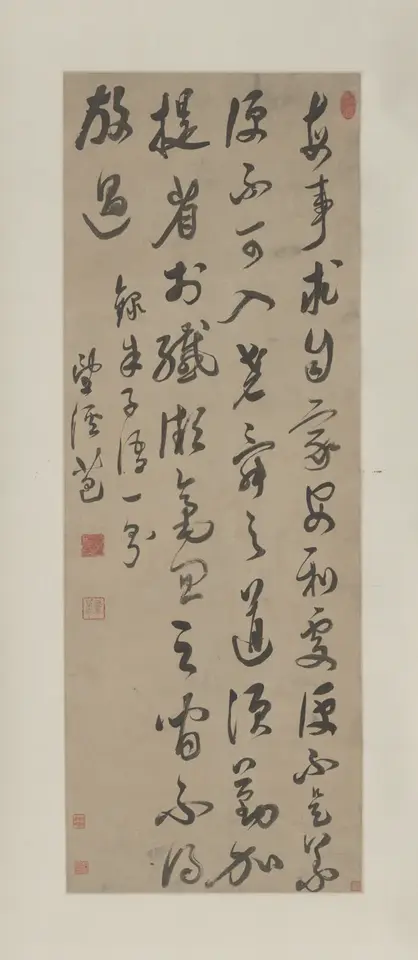
方苞
Fang Bao (方苞, 1668–1749), courtesy names Fengjiu and Linggao, and late pseudonym Wangxi, was a native of Tongcheng in Anhui. He was an eminent Qing Dynasty essayist, classical philologist, and court historian across the Kangxi, Yongzheng, and Qianlong reigns, celebrated as the founding father of the Tongcheng School, the most influential classical prose movement in late imperial China. Together with Liu Dakui and Yao Nai, he…
Fang Bao (方苞, 1668–1749), courtesy names Fengjiu and Linggao, and late pseudonym Wangxi, was a native of Tongcheng in Anhui. He was an eminent Qing Dynasty essayist, classical philologist, and court historian across the Kangxi, Yongzheng, and Qianlong reigns, celebrated as the founding father of the Tongcheng School, the most influential classical prose movement in late imperial China. Together with Liu Dakui and Yao Nai, he was revered as one of the Three Patriarchs of Tongcheng. Exhibiting precocious intellect, he placed first in the Jiangnan provincial examination in 1699 and ranked fourth in the metropolitan examination in 1706, but withdrew without taking the palace examination to nurse his ailing mother. In 1711, he was implicated in the notorious Nanshan Collection Case for having penned a preface for his fellow townsman Dai Mingshi and mentioning family records; he was imprisoned on death row in the Ministry of Justice for two years. Maintaining unruffled composure in prison, he continued writing scholarly works until Grand Secretary Li Guangdi secured an imperial pardon from the Kangxi Emperor, who remarked that Fang Bao's erudition was known throughout the realm. Released from prison, he entered the South Study as a commoner and was appointed Director-General for Book Compilation in the Wuying Palace. Under the Yongzheng and Qianlong reigns, Fang Bao received profound imperial favor. His banner registration was canceled and his original civilian status restored; he rose progressively to Right Secretarial Sponsor, Academician Expositor-in-waiting of the Hanlin Academy, Grand Academician of the Grand Secretariat, and Right Vice Minister of Rites, directing imperial compilations including the Comprehensive Gazetteer of the Great Qing (Da Qing Yitong Zhi), the Flourishing Flowers of the Qing Dynasty (Huangqing Wenying), and imperial editions of the Three Rites. In literary criticism, Fang formulated the famous theory of Meaning and Method (Yifa), arguing that meaning constitutes the inner substance derived from the Book of Changes, while method represents the structural sequence and rigorous syntax. He harmonized the moral principles of Cheng-Zhu Neo-Confucianism with the stylistic disciplines of Sima Qian, Han Yu, and Ouyang Xiu, creating a prose style characterized by ethical gravitas, concise elegance, and structural precision that dominated the Chinese literary world for over two centuries. His masterworks, such as Notes from Prison (Yuzhong Zaji) and Anecdotes of Lord Zuo the Loyal and Resolute (Zuo Zhongyi Gong Yishi), remain perennial classics. Retiring in 1742 to Nanjing, he died in 1749 at the age of eighty-two, leaving behind the Collected Works of Master Wangxi (Wangxi Xiansheng Wenji).
Born on the fifteenth day of the fourth month in Luhe County, Jiangning Prefecture; impoverished but precocious, composing couplets at four and memorizing classics at five.
Returned to his ancestral home of Tongcheng at sixteen to take the county examination, becoming a licentiate and mastering classical prose.
Entered the Imperial College in Beijing at twenty-five; his literary mastery won imperial acclaim, with Grand Secretary Li Guangdi hailing him as Han Yu and Ouyang Xiu reborn.
Captured first place (Jieyuan) in the Jiangnan provincial examination, establishing an empire-wide reputation as a master of prose.
Ranked fourth in the metropolitan examination; rushed home to Jiangning upon hearing of his mother's critical illness, forfeiting the palace examination.
Implicated in the Nanshan Collection Case for writing a preface for Dai Mingshi; sentenced to death by decapitation and spent two years writing classical commentaries in prison.
Pardoned by the Kangxi Emperor following Li Guangdi's advocacy; inducted into the South Study as a commoner to compile musical and mathematical canons.
Appointed Director-General for Book Compilation in the Wuying Palace; the Yongzheng Emperor subsequently restored his original Han civilian status.
Promoted to Grand Academician of the Grand Secretariat; served as Director-General of the Comprehensive Gazetteer of the Great Qing.
Recalled to the South Study by the Qianlong Emperor; elevated to Right Vice Minister of Rites and Deputy Director-General of the Three Rites Commission.
Petitioned for retirement due to advanced age and declining vitality; retired with his full ministerial rank to reside quietly in Nanjing.
Passed away peacefully at his residence in Shangyuan on the eighteenth day of the eighth month at eighty-two; revered by posterity as the First Patriarch of the Tongcheng School.
Fang Bao was born on the fifteenth day of the fourth month in the seventh year of the Kangxi era of Emperor Shengzu of Qing (1668) in Luhe County, Jiangning Prefecture (present-day Luhe District, Nanjing, Jiangsu). His family had been a distinguished gentry clan of Tongcheng, Anhui, for generations, but by the time of his father Fang Zhongshu, the family fortunes had collapsed into severe poverty. When Fang Bao was six years old, his family moved to an ancestral dwelling within the city walls of Jiangning, while remaining registered under their ancestral home of Tongcheng. Precociously gifted, Fang Bao could compose balanced poetic couplets at four and recited classical canons fluently at five, earning the admiration of local elders.
In 1684, sixteen-year-old Fang Bao accompanied his father back to Tongcheng to participate in the local examinations, achieving the rank of government licentiate. In 1692, twenty-five-year-old Fang traveled to the capital to study at the Imperial College in Beijing. In Beijing, he organized scholarly societies to discuss Neo-Confucian philosophy and pre-Qin historical prose. His powerful diction and profound classical erudition captivated the literati of the capital, earning him the title of Premier Talent of the South. Grand Secretary Li Guangdi of the Grand Secretariat read Fang's essays and praised him unstintingly, declaring that Fang was Han Yu and Ouyang Xiu reborn and that no comparable prose had appeared since the Northern Song.
In 1699, Fang Bao sat for the Jiangnan provincial examination in Nanjing, capturing first place (Jieyuan) with brilliant policy arguments. However, in the two subsequent metropolitan examinations, he suffered disappointment as examiners favored ornate, shallow examination formats. In 1706, Fang competed in the metropolitan examination for the third time, demonstrating immense literary force to rank fourth nationwide. Just as he prepared to enter the palace examination to secure high bureaucratic office, urgent dispatches arrived from Jiangning reporting that his mother was critically ill. Possessing profound filial devotion, Fang immediately packed his belongings and rode home day and night to nurse his mother, thereby missing the palace examination and remaining a provincial graduate for the rest of his life.
In 1711, the Qing imperial court witnessed a major literary inquisition known as the Nanshan Collection Case. Left Senior Deputy Censor-in-Chief Zhao Shenqiao submitted a memorial impeaching Hanlin Junior Compiler Dai Mingshi for including seditious phrases in his Nanshan Collection and Jieyi Lu, citing the Dian-Qian Jiwen composed by Fang Bao's clan grandfather Fang Xiaobiao, which utilized Southern Ming Yongli reign titles. Dai Mingshi and Fang Bao were fellow townsmen who frequently corresponded on ancient prose, and Fang had contributed a preface to Dai's collection, resulting in his immediate arrest.
Fang was seized at his home in Jiangning, placed in heavy cangues, and escorted to Beijing to be cast into the Ministry of Justice death row. Under the Qing Penal Code, treason and sedition were capital offenses, and the Ministry of Justice sentenced Fang to decapitation after autumn assizes. In the damp, dark, and pestilence-ridden cells where condemned prisoners fell into despair, Fang displayed calm composure. Sitting in a corner of the death house, he used the dim light to read classical commentaries day and night, methodically completing two substantial exegetical works: Dissecting Doubts in the Book of Rites (Liji Xiyi) and Queries on Mourning Rituals (Sangli Huowen).
In 1713, the case concluded with Dai Mingshi executed by decapitation. Grand Secretary Li Guangdi, knowing Fang's upright character and profound loyalty to classical ethics, risked imperial displeasure to plead passionately for his life. The Kangxi Emperor, aware of Fang's literary brilliance, issued an imperial rescript: "Fang Bao's scholarship is known throughout the realm; how could he have harbored treasonous intentions?" He was pardoned from execution. Upon release, Fang was registered under the Han Military Banners for court supervision and summoned as a commoner into the South Study to serve as the Emperor's literary attendant, later transferring to the Yangmeng Studio to compile imperial works on pitch-pipe music and mathematics. In 1721, the Kangxi Emperor appointed him Director-General for Book Compilation in the Wuying Palace.
Upon the accession of the Yongzheng Emperor in 1723, the imperial court placed deep trust in the Tongcheng scholarly circle led by Grand Secretary Zhang Tingyu. Fang Bao's political status improved substantially. The Yongzheng Emperor issued a decree releasing Fang and other individuals implicated in the Dai case from the banner rolls, restoring their civilian status in Tongcheng. In 1724, Fang was granted leave to return to Jiangning and escort his mother's casket back to Tongcheng for burial.
In 1725, Fang returned to Beijing to resume duty in the South Study. The Yongzheng Emperor admired his scholarly gravity, appointing him Left Secretarial Sponsor in the Spring Court of the Supervisorate of Imperial Instruction in 1731, and promoting him to Academician Expositor-in-waiting in 1732. In 1733, Fang was elevated to Grand Academician of the Grand Secretariat. When Fang submitted a memorial declining the post due to leg ailments and advanced age, the Yongzheng Emperor retained him, instructing him to focus on book compilation and imperial libraries without the burden of daily administrative attendance. He was named Director-General of the Comprehensive Gazetteer of the Great Qing and Deputy Director-General of the Flourishing Flowers of the Qing Dynasty, establishing his authority over court scholarship.
When the Qianlong Emperor ascended the throne in 1736, he recalled Master Wangxi to the South Study, promoting him to Right Vice Minister of Rites, Deputy Director-General of the Three Rites Commission, and Director-General of the Commission for the Classics and Histories. Throughout thirty years of court service, Fang preserved his stern, unbending integrity, declining bribes and refusing to compromise scholarship to flatter high ministers. While compiling imperial compendia, he eliminated superficial flattery, enforcing rigorous archival standards. Whenever the court deliberated state rituals and sacrificial ceremonies, Fang grounded his arguments in ancient classical canons, exemplifying the composure of classical masters.
In 1742, at seventy-five years of age, Fang Bao felt his physical vitality declining and submitted memorials begging leave to retire. The Qianlong Emperor granted his request, allowing him to retire with full ministerial rank and bestowing generous travel funds. Bidding farewell to Beijing, Fang returned to his old residence in Nanjing to pursue scholarly writing.
In his final years in Nanjing, though secluded from politics, aspiring scholars traveled from across the empire to seek his instruction. Even while confined to bed by old age, Fang continued editing his lifetime essays, letters, and classical treatises, compiling them into the Collected Works of Master Wangxi (Wangxi Xiansheng Wenji). He also composed classic treatises including Discriminating the Offices of Zhou (Zhouguan Bian), Dissecting Doubts in the Etiquette and Ceremonies (Yili Xiyi), and General Treatises on the Spring and Autumn Annals (Chunqiu Tonglun), alongside annotations on the Records of the Grand Historian and Book of Han. On the eighteenth day of the eighth month of 1749, Fang passed away at his home in Shangyuan, Nanjing, at eighty-two. Scholars mourned his passing, and disciples Liu Dakui and Yao Nai continued his intellectual heritage, elevating the Tongcheng School to its zenith in Chinese literature.
Fang Bao occupies a seminal position in Chinese literary criticism and prose development. In the early Qing period, literary circles were divided among frivolous imitations of late Ming individualist movements, intricate parallel prose, and fragmented evidential philology. Fang synthesized the classical prose traditions of the pre-Qin, Han, Tang, and Song dynasties to formulate the theoretical framework of Meaning and Method (Yifa).
In his Postscript to the Biographies of Money-Makers and other critical essays, Fang wrote: "The Spring and Autumn Annals contains both meaning and method. Meaning is the residence of heavenly principle, corresponding to having substance in speech in the Book of Changes; method is the structural sequence of composition, corresponding to having order in speech in the Changes. Meaning is the source of method, and method is the vehicle of meaning." He established the moral principles of Cheng-Zhu Neo-Confucianism as the substantive soul of prose (having substance), while establishing structural balance, logical progression, and refined phrasing as the expressive rule (having order).
In stylistic expression, Fang advocated elegance and purity (yajié). Elegance demanded pure and dignified diction, barring vernacular slang, frivolous vulgarities, and Buddhist or Daoist jargon; purity required that language be concise and purged of superfluous phrasing. Fang's doctrine of Meaning and Method arrested the decline of early Qing prose, providing a clear aesthetic standard for prose composition. Disciples Liu Dakui enriched the doctrine with musical cadence and spiritual vigor, while Yao Nai perfected the synthesis of moral principle, evidential research, and literary craftsmanship, establishing the Tongcheng School as the longest-lived, most widely adopted, and most influential literary movement in late imperial China.
Fang Bao's literary output demonstrated his theoretical principles while producing masterpieces of social criticism, foremost among which is his celebrated essay Notes from Prison (Yuzhong Zaji), composed during his incarceration in the Ministry of Justice death cells during the Nanshan Collection Case.
In Notes from Prison, Fang employed objective, unadorned descriptive realism to record the horrors of the imperial prison system. He exposed how jailers, turnkeys, and coroners conspired to extort money from condemned inmates through torture and extortion: the wealthy bribed guards to delay torment, while the penniless were tortured to death. The essay exhibited interlocking logical transitions, unadorned prose, and precise details, revealing the grim realities of prison abuse. The work embodied his ideal of disciplined structure and substantive content, illustrating the deep humanitarian compassion and critical conscience of a Confucian scholar facing death.
Another masterwork, Anecdotes of Lord Zuo the Loyal and Resolute (Zuo Zhongyi Gong Yishi), holds an esteemed place in Chinese biographical prose. The narrative recorded the unbending loyalty of Zuo Guodou, a prominent Donglin censor in the late Ming Dynasty who died under torture, and his discovery of the patriotic hero Shi Kefa.
Fang employed skillful literary condensation, discarding chronological biographical conventions to focus on two scenes: Zuo discovering Shi Kefa asleep in a snowbound temple and Zuo reproaching Shi in the dark prison. Describing Zuo's scarred face and flashing eyes as he rebuked Shi for risking his life to visit prison rather than serving the state, Fang depicted an unyielding martyr dedicated to the dynasty. The prose was concise, forceful, and resonant, serving as a classic model of Tongcheng prose that achieved depth through brevity and structural concentration.
As a senior compiler across three imperial reigns and Director-General of the Wuying Palace, Fang Bao made substantial contributions to official Qing scholarship. He supervised the compilation of the Comprehensive Gazetteer of the Great Qing, Flourishing Flowers of the Qing Dynasty, imperial editions of the Three Rites, and the Classics and Histories. During compilation, he enforced editorial rigor, eliminating sycophantic rhetoric and establishing an unadorned standard for official publications.
In classical scholarship, Fang adhered to Cheng-Zhu Neo-Confucianism while investigating pre-Qin classical canons. He authored dozens of volumes of classical commentaries, including Discriminating the Offices of Zhou, General Treatises on the Spring and Autumn Annals, and Dissecting Doubts in the Book of Rites. Fang practiced rigorous critical philology; in Discriminating the Offices of Zhou, he demonstrated through textual collation and logical analysis that the Rites of Zhou contained interpolations inserted by Liu Xin and later scholars. His commitment to integrating classical exegesis with practical statecraft was inherited by subsequent Tongcheng masters such as Yao Nai.
Beyond Confucian exegesis, Fang Bao dedicated immense effort to historiographical criticism and textual analysis of the early Han histories. He conducted analyses of the narrative architecture and rhetorical strategies of Sima Qian's Records of the Grand Historian and Ban Gu's Book of Han, producing his Supplementary Corrections to Annotations on the Records of the Grand Historian (Shiji Zhu Buji) and General Outline of the Method of the Zuo Tradition (Zuozhuan Yifa Juyao).
In analyzing the Records of the Grand Historian, Fang illuminated Sima Qian's technique of cross-reference (hujianfa) and veiled praise and blame (qubi cunzhen). He observed that the Grand Historian's moral judgments were embedded within the sequencing of narrative episodes and syntactical placement rather than overt polemics. Addressing ancient commentaries by Pei Yin, Sima Zhen, and Zhang Shoujie, Fang corrected hundreds of punctuation errors, misplaced toponyms, and factual errors through institutional and classical cross-referencing. This achievement deepened the literary understanding of standard histories and bridged literary criticism and historical evidential scholarship.
FIGURES ASSOCIATED WITH THIS DYNASTY