Birth into Scholarly Family
Born on the 23rd day of the intercalary third month in Caojiazhui, Li County; nurtured in rigorous Confucian ethics.
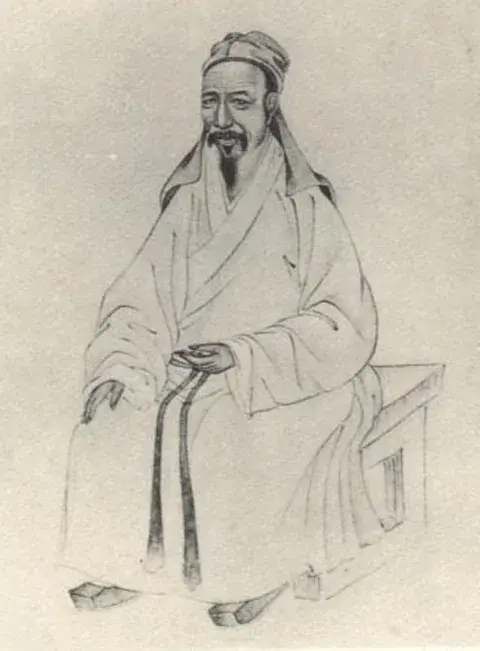
李塨
Li Gong (李塨, 1659–1733), courtesy name Gangzhu and art name Shugu, was a preeminent Chinese philosopher, thinker, and educator of the early Qing dynasty. Hailing from Li County in Baoding Prefecture of Zhili (modern Hebei Province), he studied under the northern master Yan Yuan, systematically inheriting, developing, and disseminating Yan's pragmatist philosophy. The two men were collectively revered by scholars as "Yan-Li,"…
Li Gong (李塨, 1659–1733), courtesy name Gangzhu and art name Shugu, was a preeminent Chinese philosopher, thinker, and educator of the early Qing dynasty. Hailing from Li County in Baoding Prefecture of Zhili (modern Hebei Province), he studied under the northern master Yan Yuan, systematically inheriting, developing, and disseminating Yan's pragmatist philosophy. The two men were collectively revered by scholars as "Yan-Li," and their intellectual tradition became celebrated across China as the "Yan-Li School." At a historical watershed when Song-Ming Neo-Confucianism was decaying into abstract quietism, Li Gong stood at the forefront of the intellectual reaction against the speculative metaphysics of Cheng-Zhu orthodoxy and Lu-Wang intuitionism. Raising the banner of "practical learning" (Shixue) and "statecraft for practical utility" (Jingshi Zhiyong), he emerged as one of the most critical and action-oriented minds of the early Qing enlightenment. In philosophical ontology, Li Gong formulated the materialist proposition that "principle is inherent within concrete affairs" (Li Zai Shi Zhong), vehemently refuting the idealist notion that principle exists as an abstract metaphysical entity prior to physical reality. In epistemology, he refined the doctrine of practical engagement (Xixing), synthesizing experiential action with rigorous textual learning to construct a dialectical framework of "knowing through action." In education, he condemned the eight-legged civil service examination system as an intellectual poison that produced useless pedants incapable of statecraft, advocating the restoration of the classical pre-Qin "Six Arts" (rites, music, archery, charioteering, calligraphy, and arithmetic) alongside practical vocational disciplines. In socio-economic theory, he penned the visionary treatise Draft Policies for Great Peace (Ni Taiping Ce), outlining radical programs for equalizing land tenure, universal militia defense, administrative reform, and hydraulic engineering. Author of influential works including Commentaries on the Four Books and Commentaries on the Classic of Changes, Li Gong occupies a foundational position in the history of pre-modern Chinese practical philosophy.
Born on the 23rd day of the intercalary third month in Caojiazhui, Li County; nurtured in rigorous Confucian ethics.
Placed first in the local prefectural examination at age nineteen, becoming a licensed government student (Shengyuan).
Formally entered the school of Yan Yuan at twenty-one, abandoning empty examination rhetoric for practical learning.
Passed the provincial examinations in Beijing to earn the Juren degree; subsequent metropolitan examination setbacks led him to renounce officialdom.
Journeyed to Jiangsu and Zhejiang, debating southern literati in Yangzhou and Nanjing to spread the doctrines of practical learning.
Assumed supreme leadership of the Yan-Li School following the death of his master Yan Yuan; collated and printed Yan's works.
Delivered celebrated lectures in Beijing outside Xuanwumen, engaging in profound philosophical dialogues with Wan Sitong and Mao Qiling.
Completed his socio-political masterwork Draft Policies for Great Peace, articulating a comprehensive blueprint for statecraft.
Invited by Henan Governor Tian Wenjing to preside over the prestigious Daliang Academy in Kaifeng, revitalizing central plains scholarship.
Passed away peacefully in an upright seated posture on the New Year's Day at seventy-five; mourned by disciples with the posthumous title Master Wenjian.
Li Gong was born on May 14, 1659 (the 23rd day of the intercalary third month of the 16th year of the Shunzhi reign) in Caojiazhui village of Li County, Baoding Prefecture, Zhili. The Li lineage had for generations practiced farming and scholarly learning with unbending moral rectitude. His grandfather Li Cai was widely revered for generosity, having depleted his personal estate during the mid-seventeenth-century dynastic transition to feed starving neighbors and dissuade impoverished youths from turning to banditry. His father Li Mingxing was a Ming dynasty scholar who withdrew entirely from public life following the fall of Beijing in 1644, taking the studio name "Master of Singleness of Heart" and dedicating each morning to recitations of the Classic of Filial Piety, Great Learning, and Doctrine of the Mean. Li Mingxing practiced Confucian virtues with such unswerving dedication that he was celebrated across northern scholarly circles as "Master Xiaoke," counting among the six contemporaries whom philosopher Yan Yuan held in the highest reverence.
Nurtured in this austere environment, Li Gong displayed exceptional intellect and moral discipline from infancy. At four, his father taught him classical odes while his grandfather crafted a miniature wooden bow to instruct him in archery. At eight, he entered formal classical schooling, studying ancient ritual decorum and memorizing canonical treatises. At fifteen, he married the younger sister of Wang Faqian, an intimate friend of Yan Yuan. Wang praised the young scholar's balanced disposition, remarking to Yan: "I tend toward scrupulous reticence, you tend toward bold enthusiasm, while Li Gong embodies the golden mean." In 1677, at age nineteen, Li finished first in the county examinations, earning the status of a government student. However, influenced by his father's insistence on tangible conduct, he grew deeply skeptical of the scholastic commentary tradition required by the examinations.
In 1679, at the age of twenty-one, Li Gong took a decisive step that permanently shaped his intellectual destiny by traveling to Beixinzhuang in Boye County to study under the iconoclastic thinker Yan Yuan. Yan passionately decried the quietist practices of Song and Ming Neo-Confucians, asserting that meditative book-reading paralyzed scholar-officials while abandoning tangible statecraft. Yan challenged Li with burning conviction: "Scholars must not surrender the power of transformation to fatalistic cosmic cycles. When one person practices truth, it becomes scholarship; when the multitude follows, it becomes civic custom. The people suffer deeply—how can you remain detached?" Deeply moved to tears, Li immediately discarded examination compositions, vowing to dedicate his life to the practical discipline championed by Yan.
Under Yan's mentorship, Li committed himself to unyielding moral and physical self-cultivation. He recorded a daily spiritual and practical journal (Ripu), rigorously scrutinizing his conduct, theoretical insights, and manual labor. Rather than confining his studies to classical texts, Li accompanied Yan in practicing horsemanship, archery, spear fencing, hydraulic canal engineering, and astronomical calculations. Mentor and pupil shared a deep intellectual bond, challenging each other's views without hesitation. Yan commended Li's intellectual breadth and moral courage, while Li revered Yan's unwavering integrity, resolving to carry Yan's practical doctrines beyond the rural confines of northern China to the entire empire.
In 1690, at thirty-two, Li Gong passed the provincial civil service examinations in Beijing, obtaining the coveted Juren degree. However, in subsequent metropolitan examinations, his refusal to pander to the prevailing examiner taste for ornate Song-style homilies and pedantic textual embellishments led to repeated failures. Having witnessed the pervasive moral decay, factional favoritism, and intellectual emptiness of the examination halls, Li became thoroughly disillusioned with bureaucratic advancement.
Reading the late Ming memorial of Shen Xun—which lamented that "every day Chinese scholars spend licking their writing brushes is another day barbarian nomads spend sharpening their weapons, until bandits swarm and the celestial mandate collapses"—Li wept with remorse over the paralysis of Chinese scholarship. He recognized that the examination system served merely to domesticate elite minds in trivial rhetorical games while leaving them helpless in times of national crisis. Consequently, Li renounced further attempts at civil office, resolving instead to devote his life to writing, rural community education, and deep socio-economic research among ordinary farming communities.
Unlike Yan Yuan, who rarely ventured beyond his native county, Li Gong recognized that a scholar must travel widely to verify theoretical principles against diverse regional customs and geography. Following his provincial graduation, he traveled south to Suzhou, Hangzhou, and Yangzhou, west to Shaanxi and Shanxi, and north to the imperial capital, engaging in extensive intellectual diplomacy.
Beginning in 1694, Li undertook multiple journeys to the cultural capitals of the Jiangnan region. Jiangnan had long been the intellectual heartland of Wang Yangming's intuitionist school and late Ming literati academies, where scholars indulged in abstract debates over innate mind or minute philological glosses. Initially, southern literati looked down upon Li as a rustic northern farmer preaching physical labor and military arts. However, in rigorous public disputations across Yangzhou and Nanjing, Li dazzled preeminent masters such as Mao Qiling and Wan Sitong with his profound mastery of classical texts, mathematical astronomy, musical harmonics, and rigorous logic. At a famous gathering at the Shaoning Guild Hall, when scholars pressed Wan Sitong to lecture on suburban sacrifice rituals, Wan stood and declared: "Do not rush to discuss suburban rites; let us first hear Master Li expound genuine sage learning!" Through Li's tireless advocacy, the pragmatic doctrines of northern practical learning captured the imagination of southern intellectuals, drawing outstanding southern scholars such as Wang Yuan, Cheng Tingzuo, and Yun Hesheng into the Yan-Li fold.
In 1704, master Yan Yuan passed away in Boye. Rushing to the master's home, Li directed the funerary rites alongside his fellow disciples. Prior to his death, Yan had entrusted the future of their movement to Li, lamenting: "I took all under heaven and future generations as my responsibility, and now I entrust it to you!" Li shouldered this historic mantle with unwavering dedication. Over the next three decades, he collated, edited, and financed the woodblock publication of Yan's foundational quartet—Preservation of Learning, Preservation of Nature, Preservation of Governance, and Preservation of Man—while composing his own systematic philosophical treatises, including Commentaries on the Four Books, Clarification of the Great Learning, and Compendium of Classical Learning Regulations.
In his mature years, Li's fame resounded across the empire, prompting high provincial governors to solicit his counsel. Between 1714 and the early Yongzheng reign, Li traveled twice to Beijing to deliver public lectures, drawing crowds of metropolitan officials, bannermen, and young scholars to his academy halls. In 1726, Henan Governor Tian Wenjing, renowned for strict administrative competence, formally invited Li to Kaifeng to preside as headmaster over the Daliang Academy, the highest academic institution in the central plains. At Daliang, Li abolished empty essay drills, introducing rigorous curricula in flood control, agronomy, calendrical mathematics, and military archery, profoundly reorienting the academic atmosphere of central China toward pragmatic statecraft.
In his late sixties, Li resigned from his academic appointments to retire to his ancestral home in Caojiazhui. Secluded in his rustic studio, he synthesized his lifetime of observations on state institutions, land tenure, taxation, and community ethics into his culminating political treatise, Draft Policies for Great Peace (Ni Taiping Ce). Reflecting on his writing, he remarked: "Master Yan took all under heaven and future generations as his duty and entrusted it to me. Having found no successor worthy of this charge, I have no choice but to entrust it to my books!"
On the first day of the first lunar month of 1733 (February 14, 1733), surrounded by his family and devoted disciples, Li sat in formal meditation attire in his study. Serene and composed, he passed away peacefully in an upright seated position at the age of seventy-five. In recognition of his lifetime of practical virtue, profound scholarship, and unbending integrity, his disciples conferred upon him the private posthumous title "Master Wenjian" (The Cultured and Succinct Master). His collected writings, preserved and published in monumental Qing compilations such as the Jifu Congshu, stand as an enduring monument to Chinese pragmatic rationalism.
Li Gong's most profound philosophical contribution was his revolutionary dismantling of the objective idealist metaphysics of the Song Neo-Confucian Cheng-Zhu school, replacing it with the materialist proposition that "principle is inherent within concrete affairs" (Li Zai Shi Zhong). Zhu Xi had asserted that "principle precedes material force" and that "before heaven and earth existed, principle already existed," establishing an abstract, disembodied moral absolute above physical reality. Li mounted a devastating critique against this metaphysical dualism in On Learning and his Commentaries on the Four Books.
He argued that since the emergence of Song Neo-Confucianism, scholars claimed to preserve sincerity and illuminate principle, yet became increasingly insincere and unenlightened because they sat in quietistic meditation discussing abstract cosmic nature, spinning empty phrases while discarding concrete institutions—such as military defense, agronomy, music, geography, and administrative history—as coarse remnants. For Li, seeking principle apart from concrete affairs was groundless dogmatism.
Deconstructing Zhu Xi's famous dictum that sweeping the floor represents the physical vessel while the reason for sweeping represents metaphysical principle, Li asserted: "When an affair possesses structural coherence, that coherence is called principle, which resides inside the affair itself. To say principle exists above affairs is to invent an independent phantom. The order of heavenly phenomena is celestial principle; the order of human conduct is human principle; the order of physical objects is physical principle. The Classic of Poetry states: 'Where there are things, there are laws.' Apart from things and affairs, what is there that can be called principle?" This materialist breakthrough restored Chinese philosophy to the objective reality of the natural and social worlds.
In direct opposition to the idealist epistemology of Song-Ming thinkers who advocated "knowing prior to acting" and "quiet sitting to exhaust principle," Li Gong collaborated with Yan Yuan to formulate a practical epistemology centered on experiential action (Xixing). Li insisted that genuine human talent and true insight cannot emerge from armchair contemplation or textual hair-splitting, but must be forged through direct physical engagement in human affairs.
He asserted: "The function of the mind is to think, but thinking without practical exercise is like painting cakes to stave off hunger." He illustrated this with a vivid metaphor: a person who memorizes every treatise on swimming and water currents will nevertheless drown upon falling into a river, whereas one who leaps into the current to practice stroking will master the art of flotation. Simultaneously, Li introduced a vital dialectical refinement to Yan Yuan's doctrine. While Yan leaned toward completely dismissing book-reading, Li cautioned that rejecting books entirely to rely solely on physical exertion was equally unbalanced.
Li articulated a comprehensive synthesis: "Investigation of things and extension of knowledge represent study and knowing; rectifying the heart, cultivating the person, and ordering the state represent acting. The path of ancient sages has always been that action is guided by knowledge, while knowledge resides in study. Through study and practice, action yields genuine knowledge, and conduct yields firm conviction." By uniting indirect rational knowledge with direct experiential verification, Li advanced Chinese epistemology to an unprecedented standard of dialectical realism.
In educational philosophy, Li was an intrepid institutional reformer who traced the collapse of the Ming dynasty to the intellectual paralysis engendered by the eight-legged civil service examination. He denounced examination essays as a toxic mechanism that taught scholars to fabricate falsehoods and chase personal gain, leaving graduates helpless when confronted with military crisis or famine relief.
He famously warned: "The more experience one acquires on paper, the less experience one possesses in human affairs; the more energy expended on ink and brush, the less vitality remaining for statecraft. The fall of the Song and Ming dynasties was brought about precisely by this intellectual malaise!" He demanded the complete abolition of quietist sitting and advocated the universal restoration of the pre-Qin "Six Arts" (rites, music, archery, charioteering, calligraphy, and arithmetic).
In Elementary Learning Verified and Clarification of the Great Learning, Li designed a comprehensive, tiered public school curriculum: at age eight, children entered rural schools to learn filial piety, character writing, arithmetic, classical odes, and elementary dance; at fifteen, youths advanced to county academies to study statecraft, ancient prose, the Zizhi Tongjian, mounted archery, and practical mathematics; at twenty, qualified students progressed to prefectural colleges and the Imperial Academy, where education was organized into nine specialized practical faculties: Ritual, Musical Harmonics, Astronomy, Agronomy, Military Strategy, Penal Law, Geography and Engineering, Public Finance, and General Studies. This curriculum established Li as an indigenous pioneer of modern vocational and technical education in China.
In political economy, Li authored his masterwork Draft Policies for Great Peace (Ni Taiping Ce), systematically addressing the structural crises of the early Qing era—including rampant land concentration, growing wealth inequality, administrative venality, and regressive taxation. Drawing inspiration from the egalitarian spirit of the ancient well-field system, Li advocated state-enforced land redistribution to ensure that every cultivator possessed arable land while curbing the monopolistic expansion of wealthy gentry estates.
In fiscal policy, he argued for minimal taxation, the eradication of arbitrary surcharges, and the consolidation of land dues into uniform, equitable levies based strictly on acreage. In national defense, he formulated a system of citizen-soldier integration (Bingnong Heyi), training farming households in military tactics during agricultural off-seasons to ensure regional defense without exhausting public coffers. Furthermore, he proposed meritocratic bureaucratic evaluations, the development of regional mining and artisanal workshops, and the construction of extensive hydraulic networks across northern China. The treatise remains one of the most sophisticated programmatic statecraft blueprints produced during the early modern era in China.
Although Yan Yuan was the philosophical founder of the school, his austere personality, rural northern isolation, and sharp prose meant that his doctrines risked falling into regional obscurity. It was Li Gong's literary eloquence, cosmopolitan outlook, and extraordinary rhetorical skill that elevated the Yan-Li School into an intellectual movement of national stature.
Venturing into the cultural capitals of Yangzhou, Nanjing, and Hangzhou, Li engaged Jiangnan's leading minds in public debate, dismantling the metaphysical abstractions of Neo-Confucian competitors. His intellectual power inspired legendary scholars such as Mao Qiling and Wan Sitong, and convinced prominent literatus Wang Yuan to travel north at age fifty-six to formally enroll as Yan Yuan's disciple. Subsequent intellectual luminaries such as Cheng Tingzuo and Yun Hesheng were likewise brought into the movement through Li's mentorship, creating a vibrant network of practical scholars across the Yangtze delta.
By personally funding the editing and publication of Yan's and his own collected works, Li established the Yan-Li School as one of the four defining intellectual movements of traditional Chinese thought, standing alongside Cheng-Zhu rationalism, Lu-Wang intuitionism, and Qianlong-Jiaqing evidential scholarship.
FIGURES ASSOCIATED WITH THIS DYNASTY