Dispatched to Sichuan
Served as Commandant of the Imperial Chariot; sent as imperial emissary to admonish Liu Yan and remained in Chengdu.
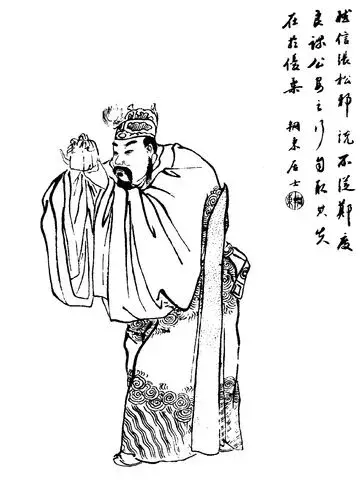
刘璋
Liu Zhang (刘璋, ?–220), courtesy name Jiyu, was a native of Jingling County in Jiangxia Commandery and a member of the imperial Han clan descended from King Gong of Lu. During the final decades of the Eastern Han dynasty, he ruled Yi Province as an autonomous warlord. Liu initially served in the imperial capital of Luoyang as Commandant of the Imperial Chariot. In 194, following the demise of his father Liu Yan, local…
Liu Zhang (刘璋, ?–220), courtesy name Jiyu, was a native of Jingling County in Jiangxia Commandery and a member of the imperial Han clan descended from King Gong of Lu. During the final decades of the Eastern Han dynasty, he ruled Yi Province as an autonomous warlord. Liu initially served in the imperial capital of Luoyang as Commandant of the Imperial Chariot. In 194, following the demise of his father Liu Yan, local officials selected Liu Zhang to succeed as governor due to his gentle and compliant demeanor, which was subsequently ratified by the imperial court with his appointments as General Who Pacifies the West and Shepherd of Yi Province. Throughout his twenty-year tenure in Sichuan, Liu Zhang maintained regional agricultural abundance and peace, but faced persistent domestic mutinies by indigenous clans and prolonged hostilities with the celestial master warlord Zhang Lu in Hanzhong. In 211, confronted by imminent military threats from northern warlord Cao Cao, Liu Zhang ignored the fervent remonstrances of loyal ministers like Huang Quan and Wang Lei and invited Liu Bei into Sichuan to reinforce his northern frontiers. This strategic blunder precipitated the War for Yi Province in 212. In 214, with Chengdu encircled by Liu Bei's armies, Liu Zhang surrendered to prevent civilian suffering. He was exiled to Gongan in Jing Province, later received symbolic regional governorship under Sun Quan following the Wu conquest of Jing Province, and died in Zigui.
Served as Commandant of the Imperial Chariot; sent as imperial emissary to admonish Liu Yan and remained in Chengdu.
Selected by provincial generals to succeed Liu Yan; formally appointed General Who Pacifies the West and Shepherd of Yi Province.
Crushed rebellions led by provincial officers Shen Mi, Lou Fa, and Gan Ning, forcing them to flee to Jing Province.
Quelled a major domestic rebellion led by indigenous magnate Zhao Wei following Zhang Lu's insubordination in Hanzhong.
Severed ties with Cao Cao after slighted embassies; swayed by advisor Zhang Song to seek military alliance with Liu Bei.
Traveled with substantial armed retinues to welcome Liu Bei at Fu City, supplying him with troops to counter Zhang Lu.
Executed Zhang Song upon discovering his conspiracy with Liu Bei; closed mountain passes as the War for Yi Province commenced.
Surrendered the provincial capital of Chengdu to Liu Bei to spare civilian casualties; relocated to Gongan in Jing Province.
Designated Shepherd of Yi Province (later Jing Province) by Sun Quan after the Wu annexation of Jing Province.
Died of illness in Zigui; his elder son Liu Xun served Shu Han while his younger son Liu Chan served Eastern Wu.
Liu Zhang belonged to the imperial Han dynasty royal lineage, descending from Liu Yu, King Gong of Lu. In the fifth year of the Zhongping reign (188), Emperor Ling accepted the strategic proposal of Grand Minister of Ceremonies Liu Yan to establish regional governorships endowed with overarching civil and military powers to suppress widespread rebellions. Consequently, Liu Yan was appointed Shepherd of Yi Province. Of Liu Yan's four sons, eldest son Liu Fan served as General of the Household of the Left, second son Liu Dan served as Attendant Censor in Charge of Documents, and fourth son Liu Zhang served as Commandant of the Imperial Chariot, all remaining in the imperial capital of Luoyang, while third son Liu Mao accompanied their father into Sichuan.
Following warlord Dong Zhuo's forced relocation of Emperor Xian to Chang'an, Liu Yan feigned severe illness and petitioned for Liu Zhang's arrival in Chengdu. Emperor Xian dispatched Liu Zhang with imperial credentials to inspect his father. Upon his arrival, Liu Yan detained him permanently. In 194, Liu Fan and Liu Dan conspired with western general Ma Teng to overthrow prime minister Li Jue in Chang'an, but their plot was discovered and both brothers were executed. Pang Xi, a loyal family friend, funded a daring rescue mission to bring Liu Fan's children safely into Sichuan. Later that year, Liu Yan died in Chengdu from severe back ulcers.
Prominent provincial general Zhao Wei and other regional magnates deemed Liu Zhang mild, benevolent, and easily amenable to guidance. They jointly petitioned the Han court to appoint him regional inspector. The imperial court subsequently confirmed Liu Zhang as General Who Pacifies the West and Shepherd of Yi Province, while commissioning Zhao Wei as General of the Household Who Conquers the East.
Upon assuming regional authority, Liu Zhang encountered severe factional instability. Tens of thousands of refugee families from Nanyang and the Guanzhong regions had migrated into Sichuan to escape war. Liu Yan had previously enlisted the robust young men among these migrants into elite units known as the Dongzhou Soldiers. Because Liu Zhang exercised lenient administrative control, these migrant troops frequently harassed native Sichuan communities, precipitating bitter animosity between indigenous gentry clans and the displaced northern settlers.
Late in 194, regional commanders Shen Mi, Lou Fa, and Gan Ning organized armed uprisings against Liu Zhang. Liu Zhang mobilized loyal forces to strike back decisively, crushing the insurgents and compelling Gan Ning and his confederates to flee east into Jing Province to seek refuge under Liu Biao.
In 200, Zhang Lu, leader of the Daoist Five Pecks of Rice Sect in Hanzhong, recognized Liu Zhang's perceived military softness, ceased obeying his administrative mandates, and halted dynastic tribute missions. Calling himself the Master of the State, Zhang Lu had initially been sent to Hanzhong by Liu Yan, while his mother had frequently visited Liu Yan's residence on account of her occult skills. Upon learning of Zhang Lu's defection, an enraged Liu Zhang executed Zhang Lu's mother and younger brother in Chengdu, cementing an irreconcilable feud between the two regional regimes. Liu Zhang repeatedly dispatched general Pang Xi to mount punitive expeditions against Hanzhong, but each campaign stalled.
Seizing upon local dissatisfaction with the Dongzhou troops, indigenous magnate Zhao Wei revolted in Jiangzhou. He allied with powerful local gentry clans and reached out to Liu Biao, triggering widespread rebellions across multiple commanderies that advanced toward Chengdu. Liu Zhang retreated behind the capital walls. Recognizing that defeat would lead to wholesale massacre by the rebels, the Dongzhou soldiers fought with desperate valor. Liu Zhang personally inspected the battlements and launched a coordinated counter-offensive, utterly destroying Zhao Wei's army. Zhao Wei was assassinated by his own subordinates during his flight, temporarily restoring peace to the Sichuan basin.
Following the suppression of Zhao Wei's rebellion, Liu Zhang implemented policies favoring civilian restoration and agricultural production. Historical chronicles record that Sichuan enjoyed prolonged peace, abundant harvests, thriving commerce, and population growth for over a decade. Liu Zhang's innate benevolence and reluctance to impose draconian legal punishments shielded the local populace from the catastrophic devastations that engulfed the Central Plains during this tumultuous era.
Nevertheless, Liu Zhang lacked military initiative and strategic ambition. Without rigorous administrative enforcement, regional magnates accumulated extensive estates, while civilian and military officials grew complacent. Regional commander Pang Xi garrisoned Baxi and amassed personal forces, leading to mutual suspicion with Liu Zhang.
In 208, northern chancellor Cao Cao conquered northern Jing Province. Terrified by the northern hegemon's advance, Liu Zhang dispatched senior aides Zhang Su and Zhang Song on diplomatic missions to establish friendly ties. Because Cao Cao was preoccupied with the forthcoming Battle of Red Cliffs, he treated the sharp-tongued Zhang Song with neglect. Deeply resentful, Zhang Song returned to Chengdu and vigorously urged Liu Zhang to sever diplomatic connections with Cao Cao and ally instead with general Liu Bei, who was then based at Gongan in Jing Province.
In 211, Cao Cao ordered generals Zhong Yao and Xiahou Yuan to mobilize against the Guanzhong warlords, intending to advance toward Zhang Lu's stronghold in Hanzhong. The news provoked extreme panic in Chengdu, as Liu Zhang feared that Cao Cao's capture of Hanzhong would leave Sichuan defenseless. Seizing this psychological moment, Zhang Song and Fa Zheng advised: "Our provincial generals like Pang Xi and Li Yi harbor disloyal ambitions; if Your Excellency invites Liu Bei to march north against Zhang Lu, Hanzhong will surely fall, and our regional commanders will not dare rebel."
Despite strenuous objections from loyal counselors such as Chief Scribe Huang Quan and Attendant Wang Lei, who hung himself upside down by ropes from the capital gate to remonstrate at the cost of his life, and Chief Scribe Huang Quan, who prostrated himself in urgent warning, Liu Zhang remained entirely obstinate. He dispatched Fa Zheng with four thousand troops to escort Liu Bei into Sichuan.
In the winter of 211, Liu Bei led an elite army of ten thousand infantry up the Yangtze River into Sichuan, arriving at Fu City. Liu Zhang personally led an escort of thirty thousand infantry and cavalry, adorned in resplendent regalia, to welcome Liu Bei. The two leaders celebrated together for over a hundred days. When Liu Bei's strategists Pang Tong and Fa Zheng urged him to assassinate Liu Zhang at the banquet to seize Sichuan immediately, Liu Bei refused, stating that he had not yet established public trust and benevolence.
Placing absolute confidence in Liu Bei, Liu Zhang lavishly supplied him with provisions, equipment, and thousands of additional soldiers, instructing him to garrison Jiameng Pass and direct northern military operations against Zhang Lu. Liu Zhang subsequently returned to Chengdu.
Stationed at Jiameng Pass, Liu Bei made no immediate move against Zhang Lu, choosing instead to distribute generous gifts to cultivate strong popularity among northern Sichuan leaders. In 212, when Cao Cao launched a southern assault against Sun Quan, Liu Bei wrote to Liu Zhang requesting ten thousand elite troops and vast stores of grain to return to the rescue of Jing Province. Suspicious of his designs, Liu Zhang provided only four thousand aging conscripts and half the requested supplies. Incensed by this refusal, Liu Bei manipulated the incident to incite hostility among his soldiers.
Shortly thereafter, Zhang Song's elder brother Zhang Su discovered his sibling's covert correspondence with Liu Bei. Fearing total family extermination, Zhang Su immediately disclosed the treason to Liu Zhang. In profound grief and indignation, Liu Zhang executed Zhang Song and issued strict directives to all strategic mountain checkpoints to cut off communications with Liu Bei and block his return south. The War for Yi Province erupted in full fury.
Liu Bei executed checkpoint commanders Yang Huai and Gao Pei and advanced southward, seizing Fu City and Mianzhu. Liu Zhang dispatched reliable generals Liu Gui, Leng Bao, Zhang Ren, and Deng Xian to mount vigorous defensive actions. At Luo City, Liu Zhang's forces held out for more than a year in an extraordinarily fierce siege. Liu Zhang's eldest son Liu Xun personally mounted the ramparts to direct defensive operations alongside generals Liu Gui and Zhang Ren, repeatedly repulsing enemy assaults. General Zhang Ren ambushed and killed Liu Bei's strategist Pang Tong at Luofengpo, though he was eventually captured at Yan Bridge and executed after refusing to serve a new master. In the summer of 214, reinforced by large contingents led by Zhuge Liang, Zhang Fei, and Zhao Yun, Liu Bei laid total siege to Chengdu. Soon afterward, northern cavalry warlord Ma Chao arrived beneath the walls with his formidable horsemen.
Even under intense siege, Chengdu still held thirty thousand elite troops and three years of grain reserves, with officers and civilians expressing unyielding resolve to fight to the death on the ramparts. Liu Bei dispatched advisor Jian Yong into the city to negotiate terms. Looking upon the devastated landscape, Liu Zhang wept: "My father and I have governed Yi Province for more than twenty years without bestowing substantial kindness upon the people. For three years, our citizens have suffered slaughter and famine solely on my account. How could I bear to shed more blood merely to preserve my personal position?" He firmly rejected continued resistance and surrendered. Observers throughout Sichuan wept openly at his sacrifice.
Upon entering Chengdu, Liu Bei accepted Liu Zhang's surrender with outward deference. He returned Liu Zhang's private possessions, conferred upon him the title of General of Inspiring Might, and relocated him with his family to Gongan in southern Jing Province, where Liu Zhang lived quietly in seclusion for several years without participating in political affairs.
In 219, Sun Quan dispatched general Lü Meng in a surprise amphibious assault across the Yangtze, capturing Jing Province and executing Guan Yu. To undermine remaining loyalties to Shu Han, Sun Quan formally appointed Liu Zhang as Shepherd of Yi Province (later re-designated Shepherd of Jing Province) and settled him in Zigui. In the first year of the Yankang reign (220), Liu Zhang died of illness at Zigui in Jing Province. Following his demise, his eldest son Liu Xun served Shu Han as Commandant of the Imperial Chariot, while his second son Liu Chan served Eastern Wu, rising to Palace Attendant Censor.
FIGURES ASSOCIATED WITH THIS DYNASTY