Joining the Insurgency
Joined Zhang Xianzhong's rebel army in Shaanxi; adopted as eldest foster son.
孙可望
Sun Kewang (孙可望, ?–1660), originally named Kewang, was a native of Yanchang County, Shaanxi Province. He was an influential peasant rebel commander, paramount warlord of the Southern Ming dynasty, and later an imperial defector under the Qing Dynasty. Joining the late Ming peasant rebellions in his youth, he was adopted by Zhang Xianzhong, the supreme leader of the Da Xi kingdom, ranking first among Zhang's four adoptive…
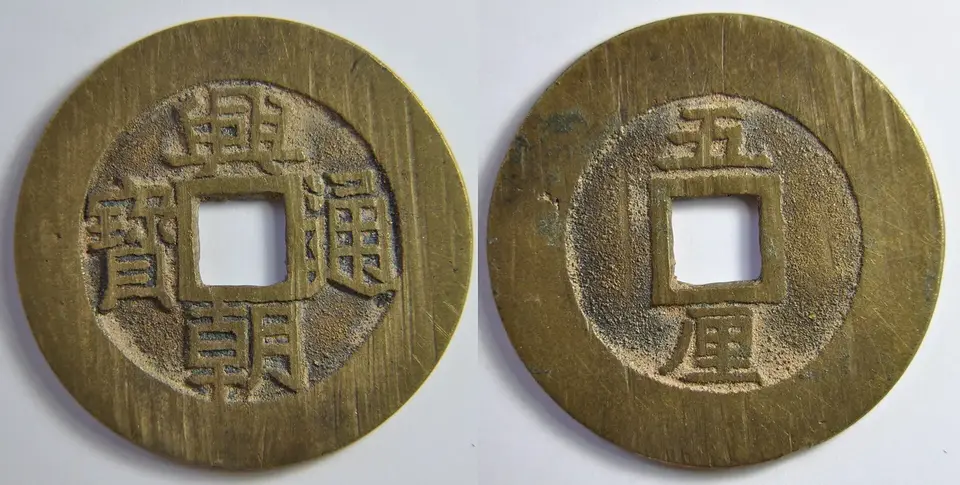
Sun Kewang (孙可望, ?–1660), originally named Kewang, was a native of Yanchang County, Shaanxi Province. He was an influential peasant rebel commander, paramount warlord of the Southern Ming dynasty, and later an imperial defector under the Qing Dynasty. Joining the late Ming peasant rebellions in his youth, he was adopted by Zhang Xianzhong, the supreme leader of the Da Xi kingdom, ranking first among Zhang's four adoptive general sons and invested as General Who Pacifies the East. Following Zhang Xianzhong's death in battle in 1646, Sun Kewang, along with Li Dingguo, Liu Wenxiu, and Ai Nengqi, retreated south with hundreds of thousands of troops, capturing Yunnan and Guizhou. In the southwest, Sun restored order, encouraged agriculture, opened copper mines, and minted the celebrated "Xingchao Tongbao" currency. In 1649, he forged an alliance with the Southern Ming Yongli regime, receiving the title Prince of Qin, establishing his capital at Guiyang, and asserting autocratic regency over Emperor Yongli. In 1652, he launched a grand counter-offensive, directing Li Dingguo to recover Hunan and Guangxi while destroying prominent Qing commanders Kong Youde and Prince Nikan. However, consumed by megalomania and desiring the imperial throne, Sun orchestrated the "Purge of the Eighteen Gentlemen" in 1654, executing royal loyalists. In 1657, he mobilized fourteen legions against Li Dingguo in Yunnan, but his forces mutinied at the Sanshui River. Deserted by his generals, Sun surrendered to the Qing military under Hong Chengchou. Bestowed the title Prince of Righteousness by Emperor Shunzhi, he surrendered strategic terrain maps that enabled the Qing to conquer southwestern China. He died suddenly in Beijing in 1660 at age unknown, posthumously titled Keshun.
Joined Zhang Xianzhong's rebel army in Shaanxi; adopted as eldest foster son.
Conquered Sichuan with Zhang Xianzhong; commissioned General Who Pacifies the East.
Zhang Xianzhong died in battle; Sun led rebel hosts south into Guizhou and Yunnan.
Forged a united anti-Qing front with Emperor Yongli, consolidating southwestern defenses.
Established supreme military regency in Guiyang; coerced the Southern Ming court into creating him Prince of Qin.
Coordinated the national offensive; Li Dingguo destroyed Qing armies under Kong Youde and Nikan.
Foiled an imperial rescue plot, executing Chancellor Wu Zhenyu and seventeen loyalist ministers.
Marched fourteen legions against Li Dingguo; suffered total mutiny at Sanshui River and fled to surrender to Qing.
Created Prince of Righteousness by Emperor Shunzhi; surrendered detailed topographic maps of Yunnan and Guizhou.
Died abruptly in Beijing (suspected assassination during an imperial hunt); posthumously canonized Keshun.
Sun Kewang was born into an impoverished peasant family in Yanchang County, Yan'an Prefecture, Shaanxi Province. During the catastrophic famines of the early Chongzhen reign, the orphaned Sun joined Zhang Xianzhong's insurgent forces. Shrewd, disciplined, and formidable in battle, he won Zhang's trust and was adopted as his eldest foster son, given the surname Zhang. Among the Da Xi military leadership, Sun ranked as the senior commander alongside Li Dingguo, Liu Wenxiu, and Ai Nengqi.
In 1644, the Da Xi army captured Sichuan, proclaiming a kingdom at Chengdu. Zhang Xianzhong invested Sun as General Who Pacifies the East. In November 1646, Prince Hooge led Manchu eight-banner divisions in a surprise strike, killing Zhang Xianzhong at Xichong. On his deathbed, Zhang urged his adopted sons: "The Ming dynasty has held the Mandate of Heaven for three hundred years; after my death, you must unite with the Ming and never submit to the barbarian Qing invaders!"
Preserving operational discipline, Sun Kewang and his three martial brothers rallied hundreds of thousands of surviving soldiers and dependants, pushing south into Guizhou. In 1647, capitalizing on the chaos of Sha Dingzhou's tribal insurrection in Yunnan, Sun crushed the rebels and occupied Kunming, establishing a permanent base.
Restoring his original surname, Sun ruled Yunnan and Guizhou as "Lord of the Realm." He abolished late-Ming extortionate levies, pacified indigenous chieftains, settled military agricultural colonies, and mined copper and silver to mint the "Xingchao Tongbao" currency. The coins were accepted across southern China and Southeast Asia, generating massive treasury reserves and fielding a disciplined standing army of over two hundred thousand troops.
In 1649, as Qing armies advanced across Guangdong and Guangxi, driving the itinerant court of Emperor Yongli (Zhu Youlang) to the brink of ruin, Sun implemented Zhang Xianzhong's dying counsel. He dispatched envoys to Guangxi to propose an alliance against the Qing, demanding an imperial princely title.
Although conservative Ming courtiers hesitated to elevate a peasant rebel to royal dignity, imperial emergencies forced Yongli to comply, formally investing Sun as Prince of Qin in 1651. Concurrently, Li Dingguo was created Marquis of Xining (later Prince of Jin), and Liu Wenxiu was named Marquis of Nankang (later Prince of Shu).
In 1652, Sun launched a coordinated national counter-offensive from Guiyang: Li Dingguo spearheaded the eastern thrust into Hunan and Guangxi, Liu Wenxiu directed the western thrust into Sichuan, while Sun remained in Guiyang managing logistical provisioning and troop reserves.
The campaigns achieved spectacular triumphs. Li Dingguo captured Guilin, driving Qing vassal king Kong Youde to commit suicide, and annihilated Manchu imperial prince Nikan at Hengzhou. Simultaneously, Liu Wenxiu liberated major commanderies across Sichuan. The stunning victories shook the Qing dynasty, prompting court debates in Beijing over whether to surrender southern China.
However, these triumphs amplified Sun's personal megalomania. Residing in Guiyang, he established six administrative ministries, designated Guiyang as the "Flourishing State", and styled himself sovereign. He relocated Emperor Yongli to Anlong in Guizhou, placing the court under strict military surveillance. Jealous of Li Dingguo's military fame, Sun withheld supplies and attempted to assassinate Li, fracturing the anti-Qing coalition.
In 1654, Sun prepared to force Emperor Yongli's abdication. Terrified, Yongli secretly summoned Grand Secretary Wu Zhenyu and seventeen loyalist courtiers, dispatching messengers bearing secret imperial edicts hidden in their clothing to plead for Li Dingguo's armed rescue.
Sun's intelligence agents intercepted the messengers. Infuriated, Sun sent officers to storm the imperial residence in Anlong, arresting Wu Zhenyu and his seventeen colleagues. Subjected to horrific torture, the ministers refused to betray the emperor, denouncing Sun as a treasonous usurper. Sun had all eighteen ministers executed, an atrocity remembered as the "Purge of the Eighteen Gentlemen." The massacre alienated Confucian literati across southern China, turning public sentiment irreversibly against Sun.
In January 1656, Li Dingguo led an expeditionary force to Anlong, rescued Emperor Yongli, and escorted the royal family to Kunming. Deprived of his imperial hostage, Sun fell into blind fury, choosing civil war over national resistance.
In August 1657, Sun mobilized fourteen field legions totaling one hundred and forty thousand veterans from Guizhou to launch an all-out assault against Li Dingguo in Yunnan.
On October 19, 1657, Sun's armada confronted Li Dingguo's forces at the Sanshui River (Jiaoshui) near Qujing. As the battle lines clashed, Li Dingguo rode forward, delivering a stirring indictment of Sun's fratricidal treason. Disgusted by Sun's tyranny, Sun's vanguard generals Ma Bao and Ma Jinzhong turned their cannons upon Sun's headquarters. Sun's entire army mutinied, disintegrating in hours. Escorted by a handful of personal bodyguards, Sun fled across Guizhou to Baoqing (modern Shaoyang, Hunan).
Driven into a geopolitical dead-end, Sun discarded his foster father's dying words. In December 1657, he surrendered to Qing Viceroy-General Hong Chengchou.
In May 1658, Sun was escorted to Beijing. To sow discord among remaining Ming defenders, Emperor Shunzhi lavished extravagant honors upon him, investing Sun as "Prince of Righteousness" and granting him a palatial residence in the capital.
Sun repaid this generosity through comprehensive betrayal. Seeking imperial favor, he surrendered confidential military blueprints detailing the mountain passes, supply routes, depot locations, and troop deployments of Yunnan and Guizhou.
Armed with Sun's operational intelligence, Qing armies commanded by Prince Doni and Wu Sangui invaded southwestern China along three coordinated vectors in 1659. The Qing overran Guiyang and Kunming within weeks, driving Emperor Yongli into exile in Burma and reducing the Southern Ming resistance to isolated guerrilla pockets.
Once southwestern resistance was eliminated, Sun's utility evaporated. In June 1660, imperial censors initiated impeachment proceedings accusing him of embezzlement and insubordination. On December 21, 1660, Sun died suddenly in Beijing (historical records dispute whether he succumbed to acute disease or was assassinated by stray arrows during an imperial hunting party). The Qing court awarded him the posthumous title Keshun, subsequently demoting his heirs through diminishing hereditary ranks.
Between 1647 and 1651, Sun Kewang instituted disciplined economic and administrative institutions across Yunnan and Guizhou. Learning from the logistical chaos of northern rebel hordes, he organized military agricultural colonies, cultivated the cooperation of indigenous chieftains, and reopened copper and silver mines. His minting of the "Xingchao Tongbao" currency created a stable regional monetary standard that facilitated commercial revival throughout the southwestern highlands and financed the anti-Qing military apparatus.
In 1652, Sun's centralized administrative leadership in Guiyang provided the operational foundation for the Southern Ming's most triumphant counter-offensive. By marshaling provisions, weapons workshops, and reserves, Sun enabled Li Dingguo and Liu Wenxiu to wage fluid offensive warfare that liberated three provinces and wiped out entire Manchu banner divisions, briefly shaking the Qing dynasty's hold on southern China.
Following his catastrophic defeat at the Sanshui River in late 1657, Sun Kewang fled to Baoqing in Hunan with a handful of retainers. Seeking political survival and imperial nobility, he abandoned the anti-Qing resistance, formally surrendering to Qing Viceroy-General Hong Chengchou.
To secure Emperor Shunzhi's favor, Sun surrendered all military secrets of the southwestern borderlands. He drafted detailed operational cartography showing the mountain defiles, river crossings, and depot stores across Yunnan, Guizhou, and Sichuan. He exposed the strategic dispositions and personality rivalries of commanders Li Dingguo and Liu Wenxiu. Guided by Sun's precise blueprints, Qing expeditionary armies bypassed prepared insurgent ambushes, overrunning Guiyang and Kunming in 1659 and driving Emperor Yongli into Burma, sealing Sun's historical infamy as a collaborator.
FIGURES ASSOCIATED WITH THIS DYNASTY