Birth on the Plateau
Born in the royal Orkhon camp as the youngest son of Ilterish Khagan and younger brother of Bogü.
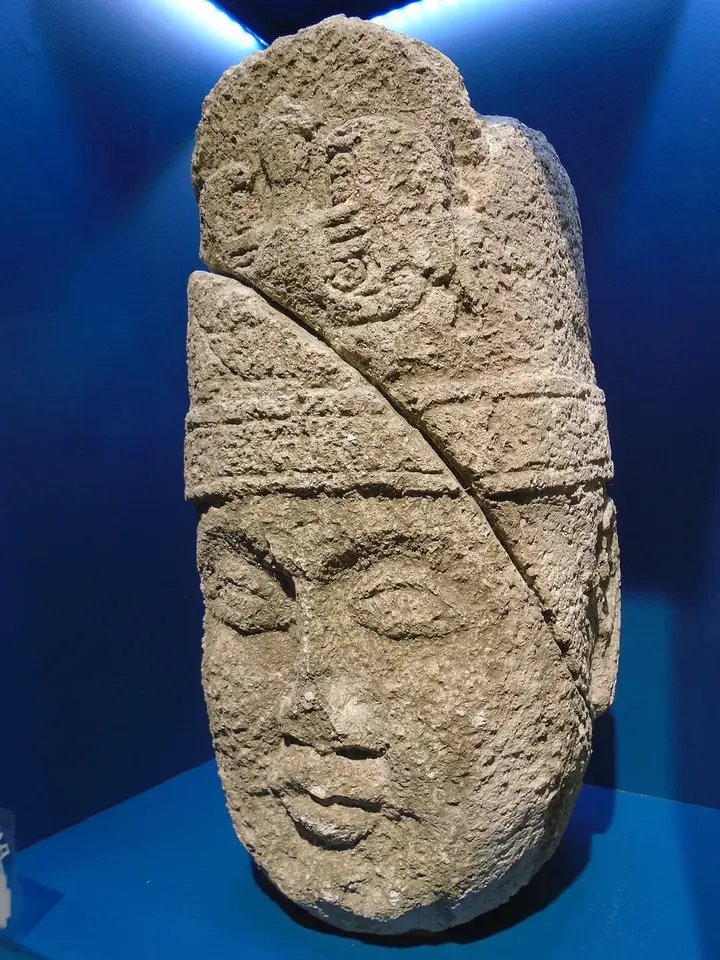
阙特勤
Kül Tigin (阙特勤, 685–731), of the Ashina royal house, was the youngest son of Ilterish Khagan (Qutlugh), the founder of the Second Turkic Khaganate, and the younger brother of Bilge Khagan (Bogü), standing as the foremost military generalissimo and political pillar of the nomadic empire in its zenith. Taking up arms at the age of sixteen, Kül Tigin campaigned across the Mongolian plateau alongside his father and brother,…
Kül Tigin (阙特勤, 685–731), of the Ashina royal house, was the youngest son of Ilterish Khagan (Qutlugh), the founder of the Second Turkic Khaganate, and the younger brother of Bilge Khagan (Bogü), standing as the foremost military generalissimo and political pillar of the nomadic empire in its zenith. Taking up arms at the age of sixteen, Kül Tigin campaigned across the Mongolian plateau alongside his father and brother, earning legendary renown for equestrian archery and battlefield courage. In 716, following the death of Qapaghan Khagan in battle, Qapaghan's son Inel Khagan seized power. Kül Tigin launched a decisive palace coup, eliminating Inel and hostile partisans, and elevated his elder brother Bogü to the throne as Bilge Khagan. Although Bilge offered the supreme khaganship to him, Kül Tigin declined, assuming command of the armed forces while partnering with the senior chancellor Tonyukuk to restore unity to the fracturing realm. Over fifteen years as supreme commander, Kül Tigin personally led armies to defeat the Basmyl, Kyrgyz, Nine Oghuz, Turgesh, and Khitan confederacies, frustrating Tang punitive encirclement efforts and securing steppe hegemony. Diplomatically, he supported peace and trade accords with the Tang Dynasty. Following his death in 731 at age forty-seven, Emperor Xuanzong sent imperial envoys and artisans to the Orkhon River to construct a monumental brick shrine and personally composed the text for the bilingual Kül Tigin Monument, inscribed in both Chinese and Old Turkic runic script.
Born in the royal Orkhon camp as the youngest son of Ilterish Khagan and younger brother of Bogü.
Took the field at sixteen against the Nine Tiele tribes, breaking enemy ranks and winning fame across the steppe.
Crossed the snow-covered Sayan Mountains in winter, ambushed the Yenisei Kyrgyz, and pacified territories around Lake Baikal.
Staged a coup following Qapaghan Khagan's demise, eliminating Inel and placing his elder brother Bilge Khagan on the throne.
Appointed generalissimo of the armed forces; pardoned and reappointed Tonyukuk to consolidate the tripartite ruling coalition.
Defeated the Basmyl vanguard during a coordinated Tang-Basmyl offensive, securing the northern defensive line.
Led elite horsemen into Songmo, routing an alliance of rebel Khitan and Xi tribes to secure the eastern pastures.
Traversed the Altai Mountains to defeat the Turgesh, extending Turkic suzerainty westward toward the Pamir passes.
Died in the royal camp at age forty-seven; in 732, Emperor Xuanzong dispatched imperial builders to erect a commemorative mausoleum and inscribed the bilingual Kül Tigin Monument.
Kül Tigin was born into the core lineage of the Ashina royal family. His father, Ilterish Khagan, was the celebrated restorer who threw off Tang domination in the closing years of Emperor Gaozong's reign, reviving the independent Turkic state. Raised amidst the windswept grasslands of the Mongolian plateau, Kül Tigin was immersed from childhood in nomadic martial arts. Possessing exceptional physical strength, mastery of mounted archery, and a resolute character, he demonstrated natural command capabilities in early adolescence.
In 701, the sixteen-year-old Kül Tigin saw his first major action during campaigns against the Nine Tiele tribes. Charging solo into the enemy vanguard, he cut down several hostile commanders, galvanizing his warriors to achieve total victory. Over the next decade, during the reign of his uncle Qapaghan Khagan, Kül Tigin campaigned from the Tian Shan range to Lake Baikal. In the grueling winter campaign of 710, he led horsemen across the frozen passes of the Sayan Mountains, slaying the Kyrgyz king in an ambush and asserting Turkic dominance. As commemorated on his funerary stele, Kül Tigin participated in forty-seven major military actions and personally charged into enemy battle lines twenty times, his white steed braving barrages of arrows.
In 716, the Second Turkic Khaganate faced an existential catastrophe. Qapaghan Khagan was ambushed and killed by the Bayirqu tribe during a northern expedition, his severed head dispatched to Chang'an. Taking advantage of the crisis, Qapaghan's son Inel proclaimed himself khagan without general tribal consent. Inel proved incompetent and cruel, alienating frontier chieftains and threatening the empire with imminent disintegration.
Recognizing the peril, Kül Tigin mobilized his elite bodyguards and executed a lightning coup, storming the royal tent, slaying Inel alongside his brothers and conspirators, and ending the rival branch's usurpation. Rather than claiming the khaganship for himself, Kül Tigin yielded the throne to his elder brother Bogü, who was crowned as Bilge Khagan. When Bilge sought to decline in favor of Kül Tigin, the latter wept and insisted that the elder brother must rule while he served as the state's military spearhead. Appointed generalissimo of the armies, Kül Tigin also restored the seasoned statesman Tonyukuk to office, forming an enduring triumvirate that restored political equilibrium and ushered in the empire's golden age.
In 720, alarmed by the resurgence of the Turkic state, the Tang court organized a grand coalition involving the Basmyl, Qarluq, and frontier Tang garrisons to converge on the Orkhon River. Working in tight coordination with Tonyukuk, Kül Tigin utilized classic steppe feigned retreats, drawing the Basmyl vanguard far ahead of their allies before launching a devastating counterattack that crushed the invasion.
Having demonstrated the resilience of their arms, the Turkic leadership recognized that prolonged conflict with the wealthy Tang Empire was strategically disadvantageous. Supported by Kül Tigin, Bilge Khagan adopted an accommodative foreign policy, repeatedly sending envoys to Chang'an to seek formal peace and horse-for-silk trade. Emperor Xuanzong recognized Kül Tigin's strategic restraint, leading to an extended era of frontier tranquility. Simultaneously, Kül Tigin led campaigns eastward in 723 to subdue the Khitan and Xi leagues, followed by a trans-Altai expedition in 728 that subdued the Turgesh, re-establishing Turkic influence from Manchuria to the borders of Transoxiana.
In the third month of 731, exhausted by decades of relentless combat, Kül Tigin passed away at the royal encampment along the Orkhon River at the age of forty-seven. His untimely death dealt a catastrophic blow to the khaganate. Bilge Khagan fell into inconsolable grief, lamenting that his eyes had gone dark and his hearing impaired by sorrow. Chieftains from across the Eurasian steppe assembled to mourn him, slashing their faces and cutting their hair in accord with ancient nomad funerary customs.
Emperor Xuanzong was deeply moved by the news of his passing. Desiring to preserve long-term peace with the northern empire, the Tang court dispatched General Zhang Quyi and Attendant Censor Lu Xiang to lead an imperial embassy carrying extensive condolence gifts. Tang court sculptors and painters traveled into the steppe to construct a Chinese-style walled cemetery, lining the ancestral hall with dynamic murals depicting Kül Tigin's battle triumphs. In 732, Emperor Xuanzong personally composed the imperial epitaph inscribed upon the Kül Tigin Monument. Standing beside the Orkhon River, the bilingual inscription in Tang regular script and Old Turkic runes became an immortal testament to the shared history of the northern peoples and the central plains.
Kül Tigin's decisive intervention in 716 saved the Second Turkic Khaganate from immediate fragmentation. By neutralizing Inel's usurpation within days, he prevented catastrophic civil war among the Ashina clans.
His selfless deference to his elder brother Bilge Khagan established an orderly principle of succession that united the aristocratic factions. The stable governing triumvirate of Bilge, Kül Tigin, and Tonyukuk provided fifteen years of internal cohesion, preserving the nomadic state's peak power.
Throughout his life, Kül Tigin served as the preeminent warrior of inner Asia. Beginning his martial career at sixteen, he led forty-seven major military expeditions, personally charging the enemy lines in twenty pitched battles.
His strategic victories over the Nine Tiele, Yenisei Kyrgyz, Basmyl, Khitan, and Turgesh unified the vast Eurasian grasslands under the blue wolf banner. His fearsome tactical reputation deterred external adversaries and maintained imperial authority over diverse nomadic confederations.
Kül Tigin exhibited rare political maturity in balancing military force with diplomatic accommodation. After neutralizing Tang-sponsored invasions in 720, he resisted calls for destructive raids against northern Chinese garrisons.
Instead, he championed commercial treaties and diplomatic tribute missions with Chang'an, securing vital agricultural imports and tea while fostering an extended era of peaceful coexistence along the Great Wall frontier.
The Kül Tigin Monument, erected following his passing in 732, stands as one of the most monumental epigraphic treasures of world history. It represents the earliest decipherable corpus of Old Turkic literature written in the Orkhon runic script.
Paired with the classical Chinese prose composed personally by Emperor Xuanzong, the stele articulates a sophisticated philosophy of nomadic-sedentary relations, offering modern scholars an unparalleled window into the culture, politics, and linguistics of eighth-century Eurasia.
FIGURES ASSOCIATED WITH THIS DYNASTY