Entity Type: Historical Figure Dynasty: Qing Dynasty
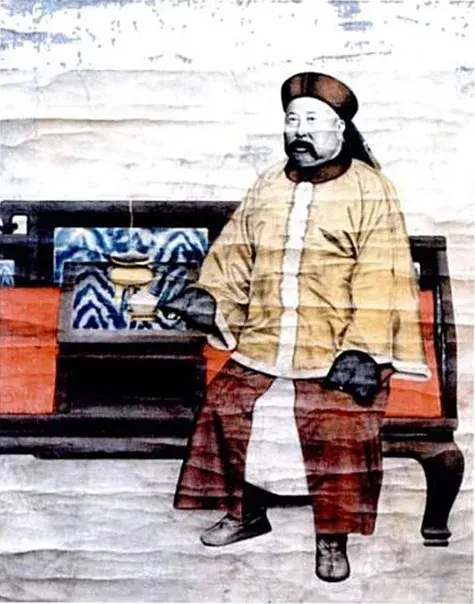
Historical figure
Nie Shicheng (聂士成)
聂士成
Nie Shicheng (聂士成, November 9, 1840 – July 9, 1900), courtesy name Gongting, born in Hefei, Anhui (modern Gangji Town, Changfeng County), was a renowned patriotic military commander, national hero, and a foremost pioneer of modern military modernization during the late Qing Dynasty. In his early years, Nie joined the Huai Army under Liu Mingchuan, distinguishing himself across central and northern China in campaigns against…
Era not stated
PROFILE
Nie Shicheng (聂士成, November 9, 1840 – July 9, 1900), courtesy name Gongting, born in Hefei, Anhui (modern Gangji Town, Changfeng County), was a renowned patriotic military commander, national hero, and a foremost pioneer of modern military modernization during the late Qing Dynasty. In his early years, Nie joined the Huai Army under Liu Mingchuan, distinguishing himself across central and northern China in campaigns against the Taiping and Nian rebellions, advancing from a common soldier to regional commander. In 1884, during the Sino-French War, he crossed the sea to Taiwan with Liu Mingchuan, defending Keelung against French naval bombardments and amphibious assaults. Following the war, Nie conducted an extensive ten-thousand-li frontier survey across Manchuria, authoring the strategic geographical work Travels to the East (Dongyou Jicheng), which presciently warned the imperial court of Tsarist Russian territorial ambitions in northeastern China. In 1894, with the outbreak of the First Sino-Japanese War, Nie led frontline units into Korea, ambushing Japanese forces at the Battle of Seonghwan and defending Pyongyang. After retreating into Liaodong, he anchored the mountain passes of Caokou and Motianling, securing the celebrated "Victory at Motianling" against the Japanese Fifth Division and recapturing the strategic supply base of Lianshanguan. Following the war, Nie established the modern Wuyi Army (later reorganized as the Front Division of the Wuwei Army) at Lutai and Xiaozhan outside Tianjin. Employing German military officers and fully adopting modern Prussian drill regulations, Mauser M1888 rifles, and Krupp artillery, Nie transformed his troops into the most combat-effective regular field army in late Qing China. During the 1900 Boxer Crisis, Nie led the Front Wuwei Army to intercept Seymour's Eight-Nation Alliance expedition at Langfang and Luofa, forcing the allied column into a chaotic retreat. During the subsequent siege of Tianjin, facing intense allied bombardments and treacherous intrigues from conservative court factions and Boxers, Nie held the forward redoubts of Balitai. On July 9, 1900, while mounted at the front lines directing his troops in an imperial yellow jacket, Nie suffered multiple wounds before a shell fragment tore open his abdomen, dying a martyr at sixty. The Qing court posthumously awarded him the title Senior Junior Protector of the Crown Prince and conferred the posthumous name "Zhongjie", establishing memorial shrines at Balitai in Tianjin.
- Courtesy Name
- Gongting (功亭)
- Posthumous Name
- Zhongjie (忠节)
- Native Place
- North Township, Hefei, Anhui (modern Sanshibu Community, Gangji Town, Changfeng County, Anhui Province)
- Date of Birth
- November 9, 1840 (Qing Daoguang 20, 10th Month, 16th Day)
- Date of Death
- July 9, 1900 (Qing Guangxu 26, 6th Month, 13th Day)
- Age at Death
- 60
- Highest Office
- Provincial Commander of Zhili concurrently Commander-in-Chief of the Front Division of the Wuwei Army, posthumously Senior Junior Protector of the Crown Prince
- Major Offices
- Regional Commander of Taiyuan, Provincial Commander of Zhili, Commander-in-Chief of the Front Wuwei Army
- Historical Identity
- Eminent patriotic military commander of the late Qing Dynasty, pioneer of modern Chinese military modernization, hero of the First Sino-Japanese War, national martyr of the 1900 Defense of Tianjin
LIFE TIMELINE
Relationship graph
BIOGRAPHY
Chronology
- 1840 (Qing Daoguang 20) | Birth in Hefei | Born on the sixteenth day of the tenth lunar month in Gangji, Hefei, Anhui, possessing a rugged physique and passion for martial arts.
- 1862 (Qing Tongzhi 1) | Enlistment in Huai Army | Enlisted under Liu Mingchuan's Ming Army, fighting through Jiangsu and Anhui, promoted from squad rank to platoon leader.
- 1868 (Qing Tongzhi 7) | Pacification of Nian Army | Campaigned against Eastern and Western Nian cavalry in Shandong and Zhili, awarded the title Liyong Baturu and promoted to brigade general.
- 1884 (Qing Guangxu 10) | Defense of Taiwan | Crossed the strait with Liu Mingchuan during the Sino-French War, fighting in Keelung to repel French forces; appointed Regional Commander of Datong.
- 1891 (Qing Guangxu 17) | Quelling Rehe Uprising | Dispatched cavalry through blizzards to crush the Jindandao sectarian uprising in Chaoyang, awarded the brevet rank of provincial commander.
- 1892 (Qing Guangxu 18) | Frontier Survey | Traversed ten thousand li surveying borders in Jilin and Heilongjiang, authoring the strategic military treatise Dongyou Jicheng.
- 1894 (Qing Guangxu 20) | Ambush at Seonghwan | Campaigned in Korea upon the outbreak of the First Sino-Japanese War, ambushing Japanese vanguard troops at Seonghwan.
- 1894 (Qing Guangxu 20) | Victory at Motianling | Defended Motianling in eastern Liaodong, defeating Japanese forces under Tachimi Naobumi and recapturing Lianshanguan.
- 1895 (Qing Guangxu 21) | Training the Wuyi Army | Established the Westernized Wuyi Army at Lutai, hiring German instructors and adopting modern European armaments; appointed Provincial Commander of Zhili.
- 1899 (Qing Guangxu 25) | Front Wuwei Army | Reorganized the Wuyi Army as the Front Division of the Wuwei Army, garrisoning Majiaying and Junliangcheng as northern China's core defense.
- 1900 (Qing Guangxu 26) | Repelling Seymour Expedition | Intercepted Seymour's Eight-Nation relief expedition at Luofa and Langfang, severing the railway and routing the allied vanguard.
- 1900 (Qing Guangxu 26) | Martyrdom at Balitai | Fought to the last breath on July 9 at Balitai, Tianjin; posthumously created Senior Junior Protector of the Crown Prince, given the name Zhongjie, and commemorated with shrines.
Life and Career
Early Career and the Huai Army
Nie Shicheng was born in Nieci Village, Sanshibu, in the northern countryside of Hefei, Anhui. His family was impoverished, and his father died when Nie was still a small child. He was raised by his mother, an exceptionally resolute woman who continued to practice horseback martial arts well into her seventies, exerting an enduring influence on her son's character. Although receiving limited classical literary schooling, Nie possessed a commanding physical stature, described as having the jaw of a swallow and the head of a tiger. He trained in horsemanship, archery, and swordplay while studying historical military tactics.
In 1862, Li Hongzhang recruited volunteers across Anhui to organize the Huai Army to defend Shanghai. Nie enlisted under fellow townsman Liu Mingchuan in the Ming Army. In campaigns against the Taiping Heavenly Kingdom across southern Jiangsu and Anhui, Nie was renowned for his courage, consistently leading assaults under fire. He distinguished himself during the recaptures of Luzhou, Taicang, Kunshan, Suzhou, Jiangyin, and Wuxi. Promoted rapidly through the ranks, he advanced from platoon leader to company commander, and by 1865 was named brigade commander.
From 1865 to 1868, as surviving Taiping forces merged with the Nian cavalry across Henan, Shandong, and Zhili, Nie operated as a vanguard cavalry leader under Liu Mingchuan. Conducting rapid pursuit marches across northern plains, he spearheaded counterattacks in engagements at Yingezhuang and Shouguang. For his battlefield gallantry, the Qing court conferred upon him the imperial warrior title "Liyong Baturu" and elevated him to regional commander.
Following the suppression of the rebellions, Nie moved north with the Huai Army, stationed along coastal outposts across Zhili and Tianjin. Observing foreign gunboats, Nie realized that traditional archery and antiquated smoothbore matchlocks were incapable of matching modern Western armaments, prompting him to study Western artillery, fortification engineering, and modern tactical manuals.
The Taiwan Campaign and Manchurian Reconnaissance
In 1884, the Sino-French War erupted. The French Far East Squadron sought to seize the ports of Keelung and Tamsui in Taiwan to blockade the Chinese coast and extract territorial concessions. The Qing court appointed Liu Mingchuan as Governor of Taiwan to direct maritime defense. Nie immediately volunteered to accompany Liu across the strait.
Upon arriving in Taiwan, Nie was stationed along the heights encircling Keelung. Confronting heavy French naval bombardments and modern breech-loading rifles, Nie constructed interlocking trench systems and dispersed rifle pits along undulating hills, repelling French assaults with rapid rifle volleys. Nie personally led night raids to recapture forward observation posts, checking French probes toward Taipei. The defense of Keelung inflicted heavy casualties on the French expeditionary forces, contributing to the death of French Admiral Amedee Courbet. In recognition of his service, the Qing court appointed Nie Regional Commander of Datong.
In late 1891, the violent Jindandao sectarian uprising broke out in Chaoyang, Rehe, with tens of thousands of insurgents sacking towns, attacking imperial garrisons, and slaughtering local populations. Ordered to suppress the insurrection, Nie led elite Zhili cavalry across snow-covered mountains in sub-zero temperatures, marching a hundred li overnight to surprise the main insurgent redoubt, storming fortified stone villages and neutralizing the rebellion. His decisive victory earned him the brevet rank of provincial commander.
In the spring of 1892, concerned by Tsarist Russian railway expansion in Siberia and border probes toward Manchuria, the imperial court dispatched Nie to inspect frontier defenses across Jilin and Heilongjiang. Traveling with a small mounted escort from Shanhaiguan across the Changbai Mountains, Nie inspected Sanxing, Hunchun, Ningguta, and frontier posts along the Amur River, covering over ten thousand li across several months. He surveyed mountain defiles, mapped river courses, and documented Russian fortresses and military colonies along the border. Upon his return, Nie compiled his strategic observations into the celebrated treatise Travels to the East (Dongyou Jicheng). In the book, he warned that Tsarist Russia constituted the most pressing long-term existential threat to northern China, urging the construction of Manchurian railways, the adoption of modern standing army formations, and the rearmament of frontier forces with modern breech-loading rifles.
The First Sino-Japanese War and the Battle of Motianling
In the summer of 1894, the First Sino-Japanese War broke out over the Korean peninsula. The Qing court ordered Zhili Provincial Commander Ye Zhichao to lead Huai Army divisions to Asan, Korea, with Nie serving as the vanguard commander of the Yi Army. At the Battle of Seonghwan near Asan, facing encirclement by the Japanese Combined Brigade, Nie established an ambush on Niwei Mountain, luring enemy assault units into close range before opening concentrated rifle fire, killing Japanese vanguard commander Major Matsuzaki Naoomi and inflicting hundreds of casualties. Nie then skillfully disengaged his force and guided his men to safety in Pyongyang.
During the Battle of Pyongyang, Commander Ye Zhichao panicked and fled, causing the collapse of the Chinese northern forces, who retreated behind the Yalu River. Japanese armies crossed the river into Liaodong, advancing toward Liaoyang and Shenyang. While other imperial commanders retreated in disorder, Nie gathered his remaining troops and fortified the strategic mountain gateway of Motianling.
Motianling was a precipitous mountain pass guarding the overland route to Shenyang. In December 1894, veteran Japanese commander Major General Tachimi Naobumi led elite regiments of the Fifth Division in an assault on the heights. Nie positioned his men in three hidden detachments across the snowy forests of Caokou. When Japanese infantry trudged uphill through deep snow, Nie launched a coordinated crossfire from concealed positions while releasing rolling logs and boulders down the slopes. Japanese ranks disintegrated under the combined barrage. Counterattacking down the mountains, Nie routed the Fifth Division and recaptured the vital supply hub of Lianshanguan, seizing Japanese rifles, mountain artillery, and provisions.
The Victory at Motianling was the sole major tactical triumph achieved by the Qing army on the land battlefields of the First Sino-Japanese War, thwarting Japanese plans to capture the ancestral capital of Shenyang and reviving national morale. Following this victory, Nie was elevated to Regional Commander of Taiyuan while retaining supreme tactical command in Zhili.
Creation of the Modernized Wuyi Army
The national humiliation of the Sino-Japanese War convinced Nie of the absolute necessity of radical military reform. In 1895, with the backing of Zhili Governor-General Wang Wenshao and Grand Secretary Ronglu, Nie established the Wuyi Army at Lutai outside Tianjin.
Nie broke decisively with the corrupt practices of the traditional Xiang and Huai armies. He abolished hereditary recruitment and personal retainers, enlisting physically robust young men of upright character from northern rural districts. He hired experienced German army officers to serve as tactical instructors, adopting modern Prussian infantry and artillery drill manuals. He discarded obsolete matchlocks, halberds, and spears, equipping every soldier with modern German-made Mauser M1888 repeating rifles and Mauser handguns. The artillery regiments were outfitted with modern Krupp 75mm breech-loading field and mountain guns, supported by dedicated logistical transport battalions, military engineering units, combat communications corps, and Western-style field hospitals.
In 1898, Grand Secretary Ronglu organized northern forces into the five divisions of the Wuwei Army. Given its superior discipline, training, and equipment, Nie's command was designated the Front Division of the Wuwei Army, numbering thirty battalions with fifteen thousand officers and soldiers. In the same year, Nie was appointed Provincial Commander of Zhili, holding the highest military office in northern China.
As provincial commander, Nie enforced iron discipline, strictly banning opium consumption, gambling, and harassment of civilians. Foreign observers noted that the Front Wuwei Army moved with precision, displayed outstanding marksmanship, and possessed combat capabilities comparable to contemporary European regular army divisions.
The 1900 Boxer Crisis and the Battle of Langfang
During 1899 and 1900, the Boxer movement expanded rapidly across northern China under the slogan "Support the Qing and Exterminate the Foreigners", burning mission stations and demolishing railways and telegraph lines. As the provincial commander responsible for maintaining national defense, Nie understood that indiscriminate xenophobia and the destruction of infrastructure would furnish foreign powers with pretexts for invasion, directing his troops to protect rail lines and maintain public order. This adherence to military duty incurred the enmity of reactionary court princes like Prince Duan (Zaiyi) and Grand Secretary Gangyi, who supported the Boxers.
In June 1900, after foreign warships attacked and captured the Dagu Forts, British Admiral Edward Seymour assembled an expeditionary force of over two thousand allied troops from eight nations, boarding trains in Tianjin to advance on Beijing. Amid conflicting imperial decrees from Beijing, Nie recognized the invasion of sovereign territory and ordered the Front Wuwei Army to block the foreign advance.
At the battles of Luofa and Langfang, Nie directed his forces to sever the rail lines and establish defensive trench networks flanking the tracks. Krupp artillery opened fire on the armored trains, while Mauser riflemen pinned down allied marines along the rail embankments. Fighting with discipline, the Front Wuwei Army inflicted three hundred casualties on the allied column, cutting off their communications and supplies. Trapped and facing encirclement, Seymour abandoned his trains and artillery, retreating toward the Tianjin concessions along the Hai River. The victory at Langfang halted the allied advance on Beijing and shattered the belief in Western invulnerability.
The Defense of Tianjin and Heroic Martyrdom
Following Seymour's defeat, the Eight-Nation Alliance mobilized over twenty thousand troops at Dagu to march on Tianjin, initiating the Defense of Tianjin. Nie deployed the Front Wuwei Army along the outer perimeter, holding the Haiguang Temple, Balitai, South Gate, and the borders of the Zizhulin concessions. For weeks, Nie directed fierce artillery and infantry battles against allied forces.
However, Nie faced betrayal from within. In Beijing, Prince Duan and conservative ministers petitioned Empress Dowager Cixi, falsely accusing Nie of harboring treasonous sympathies. Meanwhile, local Boxer groups in Tianjin raided Nie's rear supply depots, seizing ammunition and harassing his family residence. Grieved by this internal treachery, Nie proclaimed to his officers: "I have dedicated my life to the defense of our country, only to be slandered by court sycophants! My only path of honor is to die on the battlefield!"
At dawn on July 9, 1900 (Guangxu 26, 6th Month, 13th Day), allied forces unleashed a massive artillery bombardment against the Balitai perimeter, followed by determined infantry assaults by British, Japanese, and Russian regiments. Despite heavy defensive casualties and shattered breastworks, Nie refused to withdraw. He put on his imperial yellow jacket, donned his official feathered cap, mounted a white warhorse, and rode to the exposed bridgehead at Balitai to personally direct the defense.
Under a relentless storm of shrapnel and rifle fire, Nie exhorted his men: "A true soldier serves his nation in this hour!" Enemy batteries concentrated their fire on his position. Nie was struck seven times by bullets and fragments, his yellow jacket soaked in blood. Finally, an explosive shell detonated beside him, ripping open his abdomen. Wrapping his body in white cloth, Nie remained upright on his horse until he collapsed to the ground, dying a martyr at sixty years of age.
Following his death, soldiers of the Wuwei Army recovered his body under fire. When German forces occupied Balitai, their officers identified the fallen commander in the imperial yellow jacket. Moved by his courage, the German commander ordered an immediate ceasefire, directed his troops to fire a military rifle salute in honor of Nie, draped his remains in a German military flag, and returned his body to Chinese lines for formal burial.
Following the crisis, Viceroy Li Hongzhang submitted detailed memorials describing Nie's sacrifice at Balitai. Grieved by the loss, Empress Dowager Cixi and Emperor Guangxu cleared his name, posthumously elevated him to Senior Junior Protector of the Crown Prince, conferred the posthumous name "Zhongjie", and authorized the construction of the Nie Zhongjie Memorial Shrine at Balitai, commemorating a fearless defender of modern China.
Major Achievements
Pioneer of Modern Chinese Military Reform
Nie Shicheng was a foundational architect of China's transition to modern military organization. Through the creation of the Wuyi Army and Front Wuwei Army, he dismantled the outdated mercenary structures of the old Huai Army, introducing professional Western military curricula, modern Prussian tactical formations, and modern weaponry including Mauser rifles and Krupp artillery. The structural and tactical innovations instituted by Nie provided the blueprint for the subsequent Beiyang New Army developed by Yuan Shikai, earning him recognition as an essential pioneer of modern Chinese armed forces.
The Historic Victory at Motianling
Amid the catastrophic defeats suffered by Chinese forces in the First Sino-Japanese War, Nie's triumph at Motianling stood as the premier tactical success on the land battlefield. Confronted by elite Japanese divisions, Nie executed mobile mountain defense tactics through freezing conditions, routing the Japanese Fifth Division and recapturing Lianshanguan. This achievement protected the approaches to Shenyang and demonstrated the defensive capabilities of resolute Chinese leadership.
Strategic Geography of the Manchurian Frontier
Nie was an accomplished military geographer whose insights shaped Qing frontier policy. His hazardous ten-thousand-li survey of the northeastern borders in 1892 produced the strategic treatise Travels to the East (Dongyou Jicheng). The work provided detailed analyses of Tsarist Russian expansionist ambitions in Manchuria, urging the construction of regional railways, the establishment of regular garrisons, and the adoption of modern armaments to safeguard northern sovereignty.
The Interception of the Seymour Expedition
During the Boxer Crisis of 1900, Nie demonstrated decisive operational command during the engagements at Luofa and Langfang. Deploying coordinated artillery and infantry trench lines along the railway, his forces defeated Seymour's multinational expeditionary force, compelling the allied column to retreat to Tianjin. This engagement represented one of the most significant defensive victories achieved by modern Chinese regular forces against Western armies during the nineteenth century.
Supreme Sacrifice at the Battle of Balitai
Nie's martyrdom at Balitai on July 9, 1900, remains an enduring symbol of military sacrifice in modern Chinese history. Trapped between foreign armies and conservative court slander, Nie chose to uphold his duty to the nation, directing the battle from an exposed bridgehead in his imperial yellow jacket until mortally wounded. His courage earned the spontaneous military salute of invading forces, securing his place as a revered national hero of China's modern era.
Personal Relationships
- Mother: Lady Nie, an Anhui woman of resolute spirit who practiced martial arts into her seventies, exerting a lifelong influence on her son.
- Huai Army Mentor: Liu Mingchuan, commander of the Ming Army and first Governor of Taiwan, whom Nie served under during the Nian campaigns and the defense of Taiwan.
- Beiyang Patron: Li Hongzhang, Grand Secretary and Viceroy of Zhili, who promoted Nie to regional commander and Provincial Commander of Zhili.
- New Army Superior: Ronglu, Grand Secretary and Minister of War, who integrated the Wuyi Army into the Front Division of the Wuwei Army.
- Sino-Japanese War Colleague: Ye Zhichao, Provincial Commander of Zhili who fled during the Battle of Pyongyang, contrasting sharply with Nie's steadfast defense.
- Japanese Opponent: Tachimi Naobumi, Japanese major general whose forces were routed by Nie at Caokou and Motianling.
- Allied Opponent: Edward Hobart Seymour, British Vice Admiral who led the Eight-Nation relief expedition defeated by Nie at Langfang.
- Court Political Adversaries: Prince Duan (Zaiyi) and Gangyi, ultra-conservative Qing court ministers who slandered Nie and courted the Boxers.
- Boxer Chiefs: Cao Futian and Zhang Decheng, Boxer leaders in Tianjin who seized Nie's rear supply depots and harassed his family.
Historical Evaluation
- Li Hongzhang: "Shicheng governed the army with absolute integrity, possessing loyalty and valor without equal. The victory at Motianling exalted national prestige; his death at Balitai shone with radiant honor. Though aged, I weep for the empire's tragic loss of this true general!" (Complete Works of Li Hongzhang)
- Ronglu: "Provincial Commander of Zhili Nie Shicheng was endowed with steadfast loyalty and outstanding military merit. Since training the Front Wuwei Army, his strict discipline and tactical mastery made his forces the premier Great Wall of northern defense." (Records of the Wuwei Army)
- Zhao Erxun et al., Draft History of Qing, Biographies 247: "Shicheng's military discipline was exceptionally strict; his Wuyi Army possessed superior armaments and was renowned as the most formidable of northern forces. In the battle of Balitai, though wounded until his entrails emerged, he remained mounted wielding his saber until he fell. He was truly a bulwark of the state and a hero of supreme loyalty."
- Cai Dongfan, Popular Romance of the Qing History: "Nie Shicheng was extraordinarily brave and loyal. His destruction of Japanese invaders at Motianling was the singular glory of the Sino-Japanese land war. During the catastrophe in Tianjin, assaulted by treacherous slanders from within and foreign invaders from without, he fought until his body was shattered, matching the greatest heroic martyrs in our nation's history."
- German Expeditionary Command (Post-Battle Diary): "This enemy commander, clad in the highest imperial yellow jacket of the Qing court, stood like a mountain amid a storm of shellfire. His courage and sacrifice command our deepest military respect; we are duty-bound to render the highest European honors to this great soldier."
Related Entries
- First Sino-Japanese War
- Battle of Motianling
- Front Division of the Wuwei Army (Wuyi Army)
- Boxer Rebellion
- Eight-Nation Alliance
- Defense of Tianjin
- Travels to the East (Dongyou Jicheng)
FIGURES ASSOCIATED WITH THIS DYNASTY
Bibliography
- Zhao Erxun et al., Draft History of Qing, Volume 460, Biography 247: Biography of Nie Shicheng, Zhonghua Book Company punctuated edition.
- Li Hongzhang, Complete Works of Li Hongzhang: Memorials, Zhonghua Book Company punctuated edition.
- Ronglu, Letters of Rong Wenzhong, Institute of Modern History, Chinese Academy of Social Sciences.
- Nie Shicheng, Travels to the East, Shanghai Ancient Books Publishing House punctuated edition.