Birth in Hefei
Born into a farming family in Hefei; displayed early tactical talent, physical prowess, and mastery of naval combat.
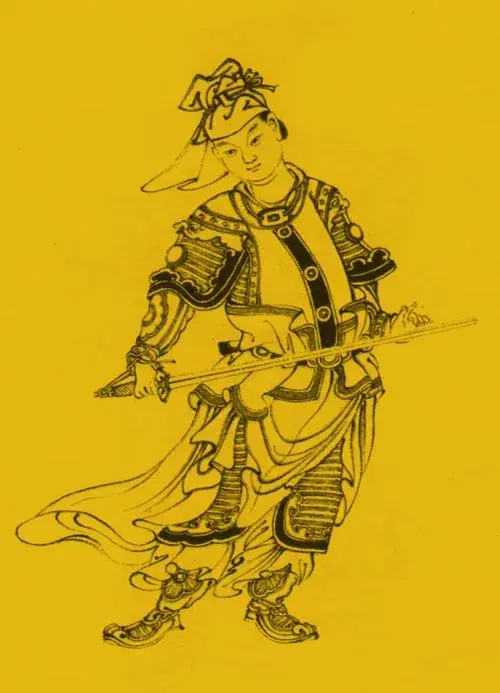
张德胜
Zhang Desheng (张德胜, 1328–1360), courtesy name Renfu, posthumously honored as Duke of Cai and canonized as Zhongyi, was an eminent founding military commander and naval admiral of the Ming Dynasty. A native of Hefei in Luzhou Prefecture, Zhang rose during the chaotic late Yuan Dynasty. Alongside Yu Tonghai and Liao Yongan, he established an entrenched water encampment at Lake Chao, organizing a disciplined fleet to protect…
Zhang Desheng (张德胜, 1328–1360), courtesy name Renfu, posthumously honored as Duke of Cai and canonized as Zhongyi, was an eminent founding military commander and naval admiral of the Ming Dynasty. A native of Hefei in Luzhou Prefecture, Zhang rose during the chaotic late Yuan Dynasty. Alongside Yu Tonghai and Liao Yongan, he established an entrenched water encampment at Lake Chao, organizing a disciplined fleet to protect regional communities. In 1355, Zhang accompanied the Lake Chao naval forces in submitting to Zhu Yuanzhang, receiving appointment as a Commander of Ten Thousand and spearheading the pivotal amphibious crossing of the Yangtze River to capture Caishi and Taiping, while capturing Yuan general Chen Yexian. Subsequently, Zhang campaigned tirelessly across Jiangnan and western Zhejiang, performing distinguished service in the captures of Jiqing, Zhenjiang, Changzhou, Xuanzhou, and Ningguo, rising to Assistant Administrator in the Bureau of Military Affairs. In 1359, he routed Chen Youliang's vanguard general Zhao Pingsheng at Zha Jiang Kou, recovering Chizhou; cooperating with Grand General Xu Da, he mounted night assaults across Anhui, defeating enemy detachments at Qingshan and Qianshan and slaying Chen Han general Guo Tai. During the critical Battle of Longwan in 1360, Zhang commanded the Ming vanguard fleet, fearlessly leading his ships into the enemy's formation, crushing Chen's armada, and pursuing the retreating fleet to Cihu. During the ferocious pursuit at Caishi, he fell mortally wounded in action at the age of thirty-three. Deeply mourning his sacrifice, Zhu Yuanzhang created him Duke of Cai, accorded him sacrifice in the Imperial Ancestral Temple, enshrined his portrait in the Temple of Meritorious Officials, and granted him the posthumous title Zhongyi.
Born into a farming family in Hefei; displayed early tactical talent, physical prowess, and mastery of naval combat.
Joined Yu Tonghai and Liao Yongan in gathering followers and building fortified water stockades across Lake Chao.
Submitted to Zhu Yuanzhang, destroyed Yuan water garrisons, crossed the Yangtze to storm Caishi, and captured Chen Yexian.
Crushed the Yuan stronghold at Fangshan, captured Chen Zhaoxian, occupied Jiqing, and was appointed Marshal of the Qinhuai Wing.
Captured Changzhou, Xuanzhou, and Ningguo; pacified Lake Tai and forced the surrender of regional garrisons.
Captured the Shipai garrison and Mataosha fortifications, earning promotion to Assistant Administrator in the Bureau of Military Affairs.
Routed Zhao Pingsheng at Zha Jiang Kou, captured Chizhou, and launched night strikes with Xu Da to slay Guo Tai at Qianshan.
Commanded the fleet to shatter Chen Youliang at Longwan; fell in battle during the fierce naval engagement at Caishi at age thirty-three.
Zhu Yuanzhang posthumously created him Duke of Cai and awarded high ministerial ranks.
Formally canonized with the posthumous name Zhongyi; his tablet was placed in the Imperial Ancestral Temple.
Zhang Desheng was born in Hefei, characterized by bold tactical vision, physical valor, and thorough mastery of infantry warfare and naval maneuvers. In 1352, during the turmoil of the Red Turban rebellions across the Huai River basin, local communities were overrun by bandits and rogue warlords. Zhang joined fellow regional commanders Yu Tonghai, Liao Yongan, and Liao Yongzhong, assembling their private vessels and kinfolk at Lake Chao to construct fortified aquatic outposts, awaiting political shifts. Hemmed in by Yuan commander Zuo Junbi at Luzhou and rebel commander Zhao Pingsheng at Huangdun, the Lake Chao navy faced mounting shortages of arms and grain.
In May 1355, learning that Zhu Yuanzhang was gathering forces at Heyang planning an amphibious southward offensive, Zhang resolved with Yu and Liao to submit their entire naval force. Upon joining Zhu, Zhang immediately demonstrated daring initiative, participating in the destruction of the Yuan river barricades under Manzi Haiya and overrunning the Tiechangguan and Xinshengsha stockades, capturing numerous war mounts and weapons to earn appointment as a Commander of Ten Thousand. Shortly thereafter, when Zhao Pingsheng conspired to revolt, Zhang and Sang Shijie uncovered the plot and exposed the conspiracy, forcing Zhao to flee and securing the integrity of the fleet.
In June 1355, Zhu Yuanzhang launched his historic crossing of the Yangtze. Commanding the vanguard assault boats, Zhang pierced the Yuan riverine cordons, startling the garrison at Niuzhu and capturing the cliffs of Caishi and Taiping Prefecture. When Yuan militia commander Chen Yexian mounted a massive counterattack against Taiping, Zhang coordinated with naval admiral Tang He to encircle Chen's water squadron while Xu Da and Deng Yu attacked by land, crushing the enemy and capturing Chen Yexian alive. In recognition of his valor, Zhang was appointed Brigade Commander of the Taiping Xingguo Wing, subsequently leading troops to take Lishui and Liyang.
In the spring of 1356, Manzi Haiya blocked the river at Caishi with heavy warships while Chen Zhaoxian entrenched 200,000 troops at Fangshan. Zhang and fellow commanders charged through heavy fire, routing the enemy, capturing Chen Zhaoxian, and seizing Jiqing (modern Nanjing). Elevated to Marshal of the Qinhuai Wing, he subsequently assisted in the siege of Changzhou, which fell in March 1357, elevating him to Judge in the Bureau of Military Affairs. He then captured Xuanzhou and Ningguo, absorbing the local long-spear infantry, sailed into Lake Tai to compel the surrender of Zhang Shicheng's commander Wang Gui, and occupied Mataosha to advance to Assistant Administrator in the Bureau of Military Affairs.
In 1358, former general Zhao Pingsheng defected to Chen Youliang and seized Chizhou, threatening Ming communications along the river. Zhang dispatched relief forces before joining Xu Da to pacify Yixing. In March 1359, Zhao led raiding columns against Qingyang and Shidai. Learning of the threat, Zhang mobilized his naval squadron and engaged Zhao at Zha Jiang Kou. Leading his men into the melee, Zhang routed Zhao's advance guard and joined Yu Tonghai to shatter the enemy main force, successfully recovering the strategic hub of Chizhou.
In September 1359, Grand General Xu Da and Zhang led an expeditionary force landing at Wuwei. Zhang executed a daring night march through torrential mud to ambush Fushan stockade, scattering the garrison under Commander Hu. Pursuing relentlessly, Zhang smashed the enemy remnants at Qingshan and advanced into the borderlands of Qianshan. When Chen Han general and state councilor Guo Tai crossed the Sha River to offer battle, Zhang personally spearheaded the frontal assault on the riverbanks, slaying Guo Tai in personal combat, capturing over a thousand pack animals and vast military stores, and securing Qianshan County. This sequence of rapid victories secured the western approaches of the Ming base.
In May 1360, Chen Youliang assembled his massive armada to capture Jinling. Zhu Yuanzhang deployed an ambush at Longwan, concealing Zhang Desheng and Zhu Hu with the core naval fleet outside the Longjiang barrier. When Chen's heavy dreadnoughts entered the shallows and were stranded by receding tides, the ambush was sprung. Zhang took supreme tactical command of the naval squadron, leading his ships straight into the enemy lines. With combat locked in fierce mutual slaughter, Zhang stood upon his prow, issued a thunderous battle cry, and directed his commanders into an all-out assault, causing Chen's armada to collapse in panic.
As the enemy fled, Zhu commanded Zhang and fellow admirals to conduct a relentless river pursuit. Zhang chased the broken enemy all the way to Cihu, setting fire to retreating transports and destroying dozens of ships. Pursuing further to the narrows of Caishi, he engaged Chen's desperate rearguard in a ferocious pitched battle. Fighting amidst an intense storm of enemy arrows at the helm of his flagship, Zhang was struck by multiple missiles and died heroically on the deck, aged thirty-three. Hearing of his demise, Zhu Yuanzhang wept bitterly over the loss of his indispensable commander.
During the decisive Yangtze River crossing in 1355, Zhang played the crucial role of tactical spearhead. Prior to the arrival of the Lake Chao mariners, Zhu Yuanzhang's northern soldiers possessed no experience in water warfare and were halted along the river's northern banks. Zhang's technical understanding of currents and amphibious tactics supplied the offensive capability Zhu desperately needed.
Charging under enemy fire, Zhang's fast cutters surprised and routed the Yuan defensive outposts at Niuzhu, securing an unshakeable bridgehead on the southern shore. When Chen Yexian attempted to dislodge the landing force with a massive counteroffensive, Zhang outflanked the enemy fleet, cutting off their aquatic retreat and capturing Chen alive. This victory permanently established Zhu Yuanzhang's presence south of the Yangtze, setting the foundations for dynastic expansion.
In the 1356 campaign to conquer Jiqing, Zhang demonstrated formidable siege and shock tactics. The Yuan authorities had established a formidable perimeter at Fangshan, anchoring hundreds of thousands of infantry and heavy cavalry to shield the city.
Zhang coordinated naval gunfire and amphibious landings, personally assaulting the palisades of Fangshan. His daring breach broke the enemy center and resulted in the capture of supreme commander Chen Zhaoxian. The collapse of this defensive perimeter forced the immediate surrender of Jiqing, providing Zhu Yuanzhang with his imperial capital.
In 1359, facing repeated raids by Chen Han commander Zhao Pingsheng, Zhang proved his capacity for independent theater command. Zhao was an experienced aquatic warrior renowned for martial agility, threatening Ming logistics between Jiangxi and the capital.
Interpreting the terrain at Zha Jiang Kou, Zhang deployed his ships in interlocking echelons, luring Zhao's vanguard into crossfire and shattering his squadron. Moving rapidly, he recaptured Chizhou, neutralizing an existential danger to Zhu's upper river defenses and demonstrating superior tactical dexterity.
Zhang's September 1359 expedition to Qianshan illustrated his mastery of rapid maneuver warfare. Landing secretly at Wuwei, he marched across rough mountain passes under cover of darkness, achieving complete tactical surprise against the Fushan garrison.
At the Sha River, confronting entrenched enemy forces under state councilor Guo Tai, Zhang chose an immediate, aggressive assault. Engaging Guo Tai directly, Zhang slew the hostile commander on the battlefield, captured thousands of transport animals, and liberated Qianshan. This decisive victory eliminated hostile resistance in western Anhui and demonstrated his prowess as an aggressive field commander.
The Battle of Longwan in 1360 was the existential conflict that decided the survival of Zhu Yuanzhang's realm. Facing overwhelming numerical odds, Zhu relied entirely on the discipline of his concealed naval arm. Zhang's leadership of the ambush squadron was flawless.
Charging into the stranded enemy fleet at the critical moment, Zhang's thunderous roar and aggressive ship maneuvering shattered Chen Youliang's elite forces. During the subsequent running battle, he torched enemy vessels at Cihu and pursued the remnants to Caishi. His death in the frontline tempest of arrows sealed an epochal victory, permanently extinguishing Chen Youliang's hope of conquering Jiangnan.
Although cut down in his thirty-third year, Zhang's loyalty earned eternal gratitude from the founding Ming monarch. In 1363, Zhu Yuanzhang posthumously created him Duke of Cai and promoted him to Manager of Governmental Affairs in the Jianghuai Secretariat. Upon the founding of the Ming Dynasty, his portrait was placed among the foremost heroes in the Temple of Meritorious Officials, and he was accorded sacrifice in the Imperial Ancestral Temple.
In 1373, Zhu Yuanzhang issued an imperial edict granting him the posthumous title Zhongyi to celebrate his sacrificial devotion. Because his biological son Zhang Xuan was still an infant, the emperor ordered his capable adoptive son Wang Xingzu (Zhang Tong) to hold the military command, later transferring the hereditary title back to Zhang Xuan when he came of age. For generations, Zhang's descendants held hereditary command rank in Luzhou, preserving the radiant legacy of their founding ancestor.
FIGURES ASSOCIATED WITH THIS DYNASTY