Birth into Imperial House
Born as grandson of Emperor Gaozu and second son of King Liu Fei of Qi.
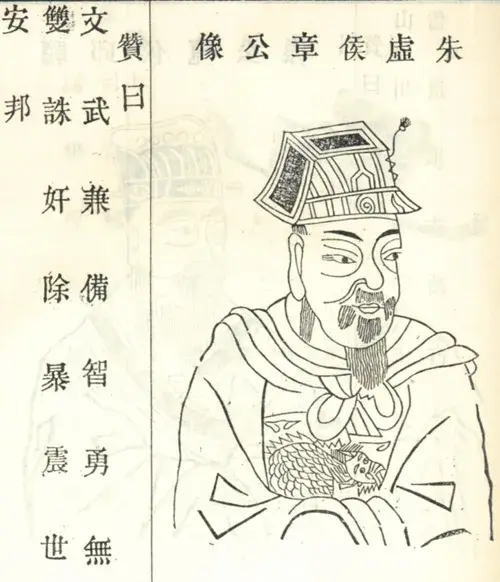
刘章
Liu Zhang (刘章, 200–177 BCE), posthumously honored as King Jing of Chengyang, was a native of Fengyi in Pei Commandery (modern Feng County, Jiangsu Province). He was a grandson of Emperor Gaozu of Han (Liu Bang) and the second son of Liu Fei, King Daohui of Qi. During the reigns of Emperor Hui and Empress Dowager Lu, the imperial Lu clan systematically usurped government authority and suppressed the Liu imperial clan.…
Liu Zhang (刘章, 200–177 BCE), posthumously honored as King Jing of Chengyang, was a native of Fengyi in Pei Commandery (modern Feng County, Jiangsu Province). He was a grandson of Emperor Gaozu of Han (Liu Bang) and the second son of Liu Fei, King Daohui of Qi. During the reigns of Emperor Hui and Empress Dowager Lu, the imperial Lu clan systematically usurped government authority and suppressed the Liu imperial clan. Possessing immense physical strength, fiery courage, and tactical acumen, Liu Zhang was created Marquis of Zhuxu in 186 BCE and wedded to the daughter of Lu Lu as part of Empress Lu's policy of marital alliance. In 182 BCE, Liu Zhang attended a state banquet hosted by Empress Dowager Lu and volunteered to act as the master of ceremonies enforcing martial law. During the feast, he sang the "Song of Plowing the Field" to subtly warn against foreign weeds choking the true crop and summarily decapitated a member of the Lu clan who fled the table without permission. His fearless enforcement of discipline stunned the Lu clan and rallied conservative statesmen and Liu clan princes around his leadership. Following the death of Empress Dowager Lu in 180 BCE, the Lu clan prepared a military coup to usurp the throne. Alerted by his wife, Liu Zhang dispatched secret messengers to urge his elder brother Liu Xiang, King of Qi, to march west on the capital, while he and his younger brother Liu Xingju coordinated as internal allies. When Grand Commandant Zhou Bo secured control of the Northern Army, Liu Zhang spearheaded a detachment of one thousand elite guards into the Weiyang Palace, cornering and slaying Chancellor Lu Chan in the imperial offices. Following the enthronement of Emperor Wen of Han, Liu Zhang was created the first King of Chengyang in 178 BCE. He passed away in 177 BCE at the age of twenty-four, leaving behind an enduring legacy of dynastic loyalty celebrated across the Shandong peninsula for generations.
Born as grandson of Emperor Gaozu and second son of King Liu Fei of Qi.
Created Marquis of Zhuxu by Empress Lu and married to the daughter of Lu Lu.
Acts as wine master under martial law, sings the Plowing Song, and executes a Lu clan deserter.
Empress Lu dies; Liu Zhang alerts King Liu Xiang of Qi to mobilize armies against the Lu clan.
Storms the Weiyang Palace with a thousand guards, personally executing Lu Chan to restore the Han.
Emperor Wen ascends the throne; Liu Zhang's fief is augmented by two thousand households.
Emperor Wen partitions the Kingdom of Qi, establishing Chengyang and making Liu Zhang its king.
Dies in Chengyang at the age of twenty-four after reigning for two years, granted the title King Jing.
Liu Zhang was born in 200 BCE during the seventh year of Emperor Gaozu's reign. His grandfather was Liu Bang, the founding emperor of the Han dynasty, and his father was Liu Fei, the eldest son of Gaozu who held the vast eastern realm of Qi. Raised in the cultural centers of Qi, Liu Zhang developed an imposing physique, exceptional martial skills, and a passionate devotion to the imperial Liu family.
Following the death of Liu Fei in 186 BCE, Liu Zhang's elder brother Liu Xiang succeeded as King of Qi. Seeking to placate and monitor the powerful Qi princely house, Empress Dowager Lu summoned the younger princes to the capital Chang'an, creating fifteen-year-old Liu Zhang the Marquis of Zhuxu. To bind him to her faction, Empress Lu arranged his marriage to the daughter of her nephew Lu Lu, the King of Zhao.
Living in Chang'an, Liu Zhang observed with intense grief as Empress Dowager Lu systematically eliminated Gaozu's sons. Princes such as Liu You were starved to death, Liu Hui committed suicide in despair, and ancestral principalities were arbitrarily handed over to Lu clan relatives like Lu Chan and Lu Lu. Liu Zhang frequently lamented the decline of imperial prestige among his confidants, privately resolving to seize the first opportunity to restore the rightful supremacy of the Liu house.
In 182 BCE, Empress Dowager Lu held a grand state banquet in the Weiyang Palace for imperial princes and Lu clan nobility. During the gathering, the empress appointed the twenty-year-old Marquis of Zhuxu to serve as the master of ceremonies overseeing the wine service. Liu Zhang stepped forward and boldly requested: "Your subject is descended from martial generals; I beg Your Majesty to permit me to enforce order strictly according to military discipline." Finding his request amusing and bold, Empress Lu assented.
As the banquet reached its height, Liu Zhang performed a sword dance. Concluding his performance, he offered to sing an agricultural folk song for the empress. Empress Lu smiled and asked: "You grew up in princely halls; what could you know of tilling the soil?" Liu Zhang replied: "I understand the principles of agriculture thoroughly."
Standing before the assembled nobility of the Lu clan, Liu Zhang sang in a resonant voice: "Deeply plow and thickly sow, yet seedlings must be spaced to grow; whatever is not of our true seed, root it out like a noxious weed!" The verses were an unmistakable allegory warning that the non-imperial Lu clan was choking the rightful crop of the Liu dynasty. Empress Dowager Lu fell into troubled silence, unable to rebuke him openly.
Moments later, an official of the Lu clan became intoxicated and attempted to slip away from the banquet without permission. Liu Zhang pursued him to the palace corridors, drew his sword, and decapitated the fleeing noble on the spot. Returning to the hall with his bloodstained blade, Liu Zhang reported with complete composure: "One guest fled the ranks; your servant has executed him according to military law!" The entire assembly was paralyzed with shock. Because Empress Lu had authorized the use of military discipline, she could not legally punish him, and the banquet was abruptly dissolved. Thenceforth, the Lu clan feared the young marquis, while conservative statesmen and imperial kinsmen recognized him as the vanguard of dynastic restoration.
On August 18, 180 BCE, Empress Dowager Lu died after dominating the empire for sixteen years. On her deathbed, she appointed Lu Lu as General-in-Chief over the Northern Army and Lu Chan as Chancellor over the Southern Army, commanding them to hold the palace gates and suppress any move by the Liu princes. Soon after the funeral, Lu Chan and Lu Lu finalized plans to stage a palace coup, eliminate conservative ministers, and formally seize the imperial throne.
Liu Zhang's wife was the daughter of Lu Lu; deeply conflicted, she revealed the coup plans to her husband. Recognizing that the fate of the dynasty hung in the balance, Liu Zhang sent a trusted courier on an express horse through Hangu Pass to alert his elder brother Liu Xiang in Qi.
In his secret dispatch, Liu Zhang wrote: "The Empress Dowager has passed, and the Lu clan plots insurrection. Your Highness must mobilize the entire army of Qi and march west upon the capital. My brother Liu Xingju and I will coordinate from within to eliminate the traitors. Once victory is achieved, the empire will surely acclaim Your Highness as the new Son of Heaven!"
Stirred by the message, King Liu Xiang executed the pro-Lu chancellor of Qi, mobilized tens of thousands of veteran soldiers, and marched west, allying with the kingdoms of Chu and Huainan. When Lu Chan dispatched Grand General Guan Ying with a massive army to block the Qi forces at Xingyang, Guan Ying halted his divisions and entered into a secret truce with the Qi princes, preparing to coordinate with loyalist ministers in Chang'an.
The advance of the Qi armies created immense panic among the Lu conspirators in Chang'an. However, Grand Commandant Zhou Bo and Chancellor Chen Ping were initially paralyzed, as the imperial armies were firmly controlled by the Lu family. Working as a vital liaison, Liu Zhang assisted Zhou Bo in orchestrating a ruse to induce Lu Lu to surrender the command seals of the Northern Army.
Once inside the Northern Army headquarters, Zhou Bo called upon the soldiers: "Let those who support the Lu clan bare their right arms, and those who support the Liu clan bare their left arms!" The entire garrison bared their left arms in an overwhelming roar of loyalty, transferring command of the northern forces to Zhou Bo.
At that moment, Chancellor Lu Chan, unaware that Lu Lu had surrendered his forces, attempted to force his way into the Weiyang Palace to seize the young puppet emperor. Aware that the Southern Army guarding the palace might still obey Lu Chan, Zhou Bo dared not abandon the Northern Army camp. Instead, he dispatched Liu Zhang at the head of one thousand elite shock troops to intercept the chancellor.
Liu Zhang stormed through the Sima Gate of the Weiyang Palace, scattering the palace guards. Lu Chan fled in terror through the palace arcades with Liu Zhang in relentless pursuit. Cornering the chancellor inside the warm chambers of the Palace Attendant's quarters, Liu Zhang drew his sword and executed Lu Chan on the spot. He then led his troops throughout Chang'an, rounding up and executing Lu Lu, Lu Tong, and their adherents, completely extinguishing the Lu clan and securing the throne for the Liu dynasty.
Following the destruction of the Lu clan, the senior ministers convened to deliberate on the imperial succession. Liu Zhang advocated passionately for his elder brother Liu Xiang. However, Zhou Bo and Chen Ping grew wary of Liu Xiang's maternal clan, particularly his fierce uncle Si Jun, fearing a repeat of the overbearing maternal relatives of the Lu era. The assembly ultimately selected the mild, filial Prince of Dai, Liu Heng, who ascended the throne as Emperor Wen.
Emperor Wen initially intended to fulfill an earlier promise by creating Liu Zhang the King of Zhao and his brother Liu Xingju the King of Liang. However, when the emperor learned that Liu Zhang had actively conspired to place his brother Liu Xiang on the throne rather than himself, his gratitude cooled significantly. Instead of major kingdoms, the emperor merely awarded Liu Zhang an additional two thousand households in his marquisate.
In 178 BCE, seeking to divide the enormous power of the Kingdom of Qi into smaller, manageable units, Emperor Wen partitioned Qi, carving out the territory of Chengyang Commandery and creating Liu Zhang the King of Chengyang, with his capital at Ju (modern Ju County, Shandong Province).
Taking up residence in Chengyang, Liu Zhang governed his people with benevolence and diligence, encouraging agriculture, lowering taxes, and maintaining peace across the coastal districts. However, frustrated by the unfulfilled promise of his earlier triumphs and the lingering suspicion of the imperial court, his health deteriorated rapidly. In 177 BCE, Liu Zhang died in Ju at the young age of twenty-four, having reigned over Chengyang for only two years. He was posthumously granted the title King Jing.
Despite his early death, Liu Zhang's heroism lived on in the folk traditions of the eastern seaboard. The people of Shandong, deeply moved by his bravery in challenging the Lu clan and preserving the Han house, established ancestral shrines dedicated to King Jing of Chengyang throughout the region. For over two centuries, commoners and regional magistrates offered continuous sacrifices at his temples. During the chaos of the late Xin dynasty, the peasant Red Eyebrow insurgents revered the divine memory of King Jing, ultimately crowning his direct descendant Liu Penzi as emperor to legitimize their claim to the Han heritage.
In 182 BCE, amidst the suffocating political dominance of the Empress Dowager's family, the twenty-year-old Liu Zhang displayed unmatched moral and physical valor by enforcing martial law during an imperial banquet.
His recitation of the "Song of Plowing the Field" and his summary execution of a fleeing Lu noble shattered the myth of the Lu family's absolute invincibility, transforming him into the foremost symbol of resistance for the Liu imperial house.
During the succession crisis of 180 BCE, Liu Zhang served as the vital catalyst for dynastic restoration. He alerted the armies of Qi to march on the capital, creating the strategic pressure that divided the rebel leadership.
When Zhou Bo secured the Northern Army, Liu Zhang led the frontline assault into the Weiyang Palace, personally cornering and slaying Chancellor Lu Chan to ensure the complete extermination of the usurpers and the salvation of the Han dynasty.
In 178 BCE, Liu Zhang was created the founding King of Chengyang, governing the eastern territories with justice and benevolence.
His untimely passing in 177 BCE triggered an extraordinary regional veneration across Shandong, where temples honoring King Jing of Chengyang flourished throughout the Western and Eastern Han dynasties, ultimately inspiring the crowning of his descendant Liu Penzi during the restoration wars.
FIGURES ASSOCIATED WITH THIS DYNASTY