Governance of Shu
Appointed Governor of Shu Commandery by King Zhaoxiang of Qin; initiated comprehensive surveys of the Min River drainage basin to formulate a systemic flood control plan.
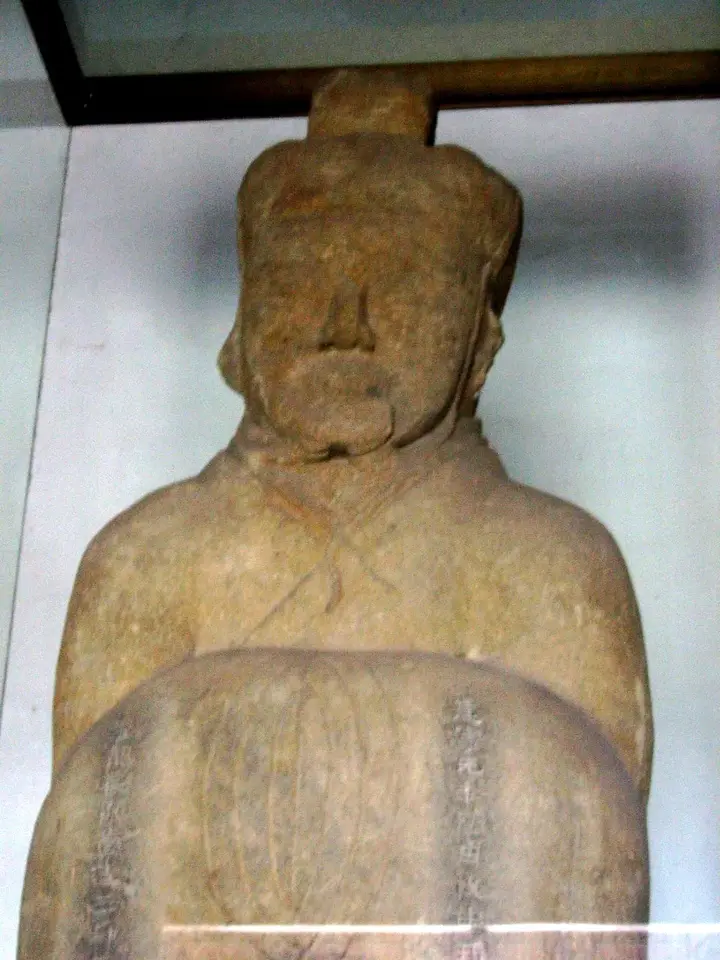
李冰
Li Bing (dates of birth and death unrecorded) was a preeminent hydraulic engineer and pioneering waterworks administrator of the Warring States period, serving as Governor of Shu Commandery under King Zhaoxiang of Qin around the mid-third century BCE. Prior to his administration, the Chengdu Plain was plagued by violent mountain torrents cascading from the upper reaches of the Min River, which deposited heavy gravel and…
Li Bing (dates of birth and death unrecorded) was a preeminent hydraulic engineer and pioneering waterworks administrator of the Warring States period, serving as Governor of Shu Commandery under King Zhaoxiang of Qin around the mid-third century BCE. Prior to his administration, the Chengdu Plain was plagued by violent mountain torrents cascading from the upper reaches of the Min River, which deposited heavy gravel and sediment across the lowlands. Consequently, the region fluctuated between devastating summer deluges and severe seasonal droughts. Upon assuming office, Li Bing conducted meticulous hydrological surveys of the river canyon where the Min River exits the mountains. Drawing upon the indigenous flood-management traditions of ancient Shu rulers, he engineered the world-renowned Dujiangyan Irrigation System. Operating without an artificial barrier dam, the integrated complex harnessed the river's kinetic momentum and topography through three interdependent components: the Fish Mouth (Yuzui) water-dividing dike, the Flying Sand (Feishayan) spillway, and the Bottle-Neck (Baopingkou) water-intake channel, supplemented by the Baizhang and Renzi dikes. This arrangement achieved an automated seasonal flow ratio of forty to sixty percent, natural silt desanding, and flood diversion. Beyond Dujiangyan, Li Bing spearheaded comprehensive waterworks throughout the Western Sichuan Plain. He constructed the Zhu-Li-Huo Weir (Luokou Weir) at Gaojingguan in Shifang, excavated the Pi and Jian (Jinjiang) rivers through the city of Chengdu, cleared hazardous reefs at Hunya along the Min and Dadu river junction, and bored the historic Guangdu salt well, initiating China's deep-well brine extraction industry. His engineering transformations eradicated flood hazards and transformed Sichuan into the fertile "Land of Abundance" (Tianfu Zhi Guo), providing the Qin state with the vast agricultural yields and logistical waterways essential for unifying China. Functioning continuously for over twenty-two centuries, Dujiangyan established Li Bing as an enduring cultural hero, revered as the "Master of the Sichuan Rivers."
Appointed Governor of Shu Commandery by King Zhaoxiang of Qin; initiated comprehensive surveys of the Min River drainage basin to formulate a systemic flood control plan.
Utilized the thermal expansion technique of alternating fire and cold water to split Mount Yulei, carving the Bottle-Neck channel and detaching the isolated Lidui hill.
Constructed the streamlined mid-river divide (Yuzui) with stone-filled bamboo cages (Macuo), establishing the four-to-six water division ratio between the Inner and Outer rivers.
Built the low-level overflow weir (Feishayan) to exploit helical flow dynamics, discharging over eighty percent of bed-load sediment back into the main river channel.
Excavated the Pi and Jian rivers directly through Chengdu to facilitate inland waterborne transit and city moat defense, subsequently drilling the Guangdu salt well.
Blasted rock reefs at Hunya to stabilize water navigation along the Dadu River junction, erecting stone human statues within the riverbed to gauge water levels.
Honored with princely titles and enshrinement in the Erwang Temple and Fulong Pavilion; commemorated annually during the Qingming Water Releasing Festival.
During the middle of the Warring States period, King Huiwen of Qin conquered the ancient kingdom of Shu in 316 BCE, establishing Shu Commandery to transform the Sichuan basin into a strategic granary and forward base. However, while the plain possessed expansive fertile soil, its economic potential was severely paralyzed by recurrent hydraulic disasters.
Originating in the alpine snowfields of the Min Mountains, the Min River flowed with immense kinetic force. During the spring and summer thaw accompanied by seasonal monsoons, massive volumes of water bearing boulders and coarse gravel rushed through narrow gorges before debouching onto the flat plain. Because the natural river channel was constricted and prone to siltation, catastrophic river breaches regularly submerged the lowlands. Conversely, during autumn and winter dry seasons, the elevated eastern expanse of the plain suffered crippling agricultural droughts.
Around 256 BCE, King Zhaoxiang of Qin appointed Li Bing, who was well versed in astronomical observation and water engineering, to serve as Governor of Shu. Rather than initiating immediate construction, Li Bing spent his early tenure conducting exhaustive field surveys along the Min River from the alpine gorges to the alluvial plains.
Traveling upstream through the Qiandi Gorge and the Mount Yulei narrows, he investigated river discharge, gradient differentials, and sediment composition. Consulting elderly farmers and native water conservators, he synthesized the river-channeling techniques of ancient Shu kings. Li Bing concluded that the core issues were excessive water velocity, sediment congestion, and the lack of an east-facing diversion intake into the plain. Consequently, he formulated a plan based on the principle of guiding the natural flow without constructing an obstructive cross-river barrier dam.
The central objective of Li Bing's design was to bifurcate the torrents of the Min River, directing an irrigation branch eastward into the Chengdu Plain while leaving the primary discharge channel to continue south toward the Yangtze River. The foremost technical obstacle was cutting an intake channel through the solid stone ridge of Mount Yulei at Guanxian.
Mount Yulei consisted of dense conglomerate bedrock that resisted standard iron chisels. With gunpowder centuries in the future, excavation proceeded at a painfully slow pace. To overcome this impasse, Li Bing devised the thermal fracturing method of heating rock with fire and quenching it with water.
Laborers piled dry timber against the rock face and set it ablaze. Once the cliff face was red-hot, buckets of freezing glacial river water were poured over the stone. The sudden thermal shock caused the brittle conglomerate to fissure and shatter, allowing workmen to break apart the rock using iron sledgehammers and levers.
After several years of labor, an artificial canal twenty meters wide and over forty meters deep was chiseled through the southern spur of the mountain. Resembling the narrow neck of a bottle, this channel was designated "Baopingkou" (Bottle-Neck Channel), while the separated mountain spur was named "Lidui" (Detached Hill). Baopingkou served as an intake gate through which the Min River was channeled eastward into the plain.
Having opened Baopingkou, allowing the entire river flow to surge unchecked into the channel would have submerged farmland and silted up irrigation canals with river gravel. To regulate inflow, Li Bing constructed a mid-stream diversion structure roughly one kilometer upstream from Baopingkou.
Using durable woven bamboo baskets filled with river cobbles (Macuo), workers layered flexible yet heavy gabions directly across the riverbed. This produced a streamlined divide shaped like the snout of a fish, known as "Yuzui" (Fish Mouth).
Yuzui bifurcated the Min River into the Outer River (the natural western channel for flood discharge) and the Inner River (the eastern canal directed toward Baopingkou). During low-water winter months, the natural concave curve of the riverbed directed sixty percent of the surface discharge into the Inner River to supply agriculture. In contrast, during summer flood peaks, the straight hydrodynamic trajectory forced over sixty percent of the floodwater down the broader Outer River, creating a self-regulating forty-to-sixty percent seasonal flow partition.
To eliminate the danger of silt choking the inner channels, Li Bing positioned a low overflow weir—the Feishayan (Flying Sand Spillway)—along the inner riverbank between Yuzui and Baopingkou.
The crest of Feishayan was calibrated to match the normal winter water surface. When excessive floodwaters entered the Inner River and encountered the narrow bottleneck of Baopingkou, the backwater pressure created a strong helical cross-current. Driven by centrifugal force along the curved river bend, surplus water and more than eighty percent of the bed-load gravel and heavy sand were swept upward over the crest of Feishayan and ejected back into the Outer River. This engineering design accomplished continuous automatic flood relief and desanding without mechanical floodgates.
Following the completion of the Dujiangyan headworks, Li Bing extended his hydraulic improvements across the Western Sichuan Plain and the Tuo River drainage basin.
To distribute the waters of the Inner River to the far corners of the plain, Li Bing directed the project to cut two major waterways through Chengdu. He engineered the Pi River around the northern and western perimeter of the city, and the Jian River (also known as the Jin River) across the southern ramparts. These channels served simultaneously as municipal defense moats, freshwater distribution channels, agricultural irrigation arteries, and navigable commercial waterways.
Along the upper reaches of the Tuo River, Li Bing addressed the perennial flooding caused by the Luo River (modern Shiting River) and Mian River (modern Mianyuan River) at Gaojingguan in Shifang. He directed the construction of the Zhu-Li-Huo Weir (Luokou Weir), tunneling through mountain passes to redirect the Luo River, eliminating flood dangers and fertilizing the fields of Shifang, Mianzhu, and Guanghan.
Furthermore, to mitigate the danger of navigation shipwrecks at the confluence of the Min and Dadu rivers near Leshan, Li Bing supervised the chiseling away of hazardous underwater reefs at Hunya, calming turbulence and securing reliable boat transport throughout southern Shu.
In addition to agricultural and transit hydraulic projects, Li Bing demonstrated keen insight into natural mineral resources and regional commerce. Investigating saline deposits across the Chengdu Basin, he organized the drilling of the Guangdu salt well in modern Shuangliu.
In ancient China, salt was a vital commodity and state revenue pillar. The development of the Guangdu brine well broke the dependence of the Sichuan region on costly imported salt, establishing the foundational technology for the ancient Sichuan well-salt industry and enriching the treasury of the Qin administration.
To safeguard the longevity of the Dujiangyan system, Li Bing established formal hydrological measurement systems and annual maintenance protocols. He carved stone human figures and submerged stone rhinos in the riverbed to serve as dynamic water gauges, prescribing that low-water levels should not expose the feet and high-water peaks should not submerge the shoulders.
Moreover, he formulated the six-character operational maxim: "Shen tao tan, di zuo yan" (Dig the beds deep, keep the dikes low), mandating that regional authorities dredge the inner riverbed down to the foundation stones each winter while strictly forbidding the raising of the Feishayan spillway. Li Bing died in office and was buried at Mount Zhang. Revered by generations of Sichuan inhabitants, he was deified as a guardian spirit of river waters, and Dujiangyan remains an enduring monument to human coexistence with natural hydrology.
Li Bing departed from traditional reservoir dam-building philosophies by conceiving the world's most sophisticated dam-free diversion system.
By working in harmony with the natural gradient of the river and utilizing hydrodynamic principles of centrifugal force and helical water circulation, he achieved large-scale diversion and flood mitigation without disrupting natural river ecology, setting an ancient benchmark for ecological engineering.
The three principal structures of Dujiangyan—Yuzui, Feishayan, and Baopingkou—function as an integrated hydraulic apparatus.
Yuzui executes seasonal macro-flow distribution; Baopingkou acts as a natural volumetric regulator shielding the plain; and Feishayan serves as an automatic safety valve and centrifugal sand expeller. Working in synergy, these components solved the persistent engineering dilemma of sediment clogging along sand-heavy riverways.
Li Bing established the earliest systematic water-level monitoring and canal dredging protocols recorded in hydrological history. His carved stone river statues served as visual hydrometric markers, while his maintenance rule "Dig the beds deep, keep the dikes low" provided a scientific code of practice.
This annual dredging tradition preserved the operational efficacy of the Dujiangyan system without degradation for more than two millennia.
Li Bing's waterworks reshaped the ecological geography and agricultural fortunes of Sichuan. The Chengdu Plain was converted into a drought-free agricultural sanctuary described as the "Land of Abundance" (Tianfu Zhi Guo).
The resulting agricultural surpluses, secure grain reserves, and inland water transit routes provided the material backbone that sustained Qin's military expansion, contributing directly to the defeat of rival states and the founding of the unified Chinese empire.
FIGURES ASSOCIATED WITH THIS DYNASTY