Birth
Born into a family of Islamic jurists in Tangier, Morocco.
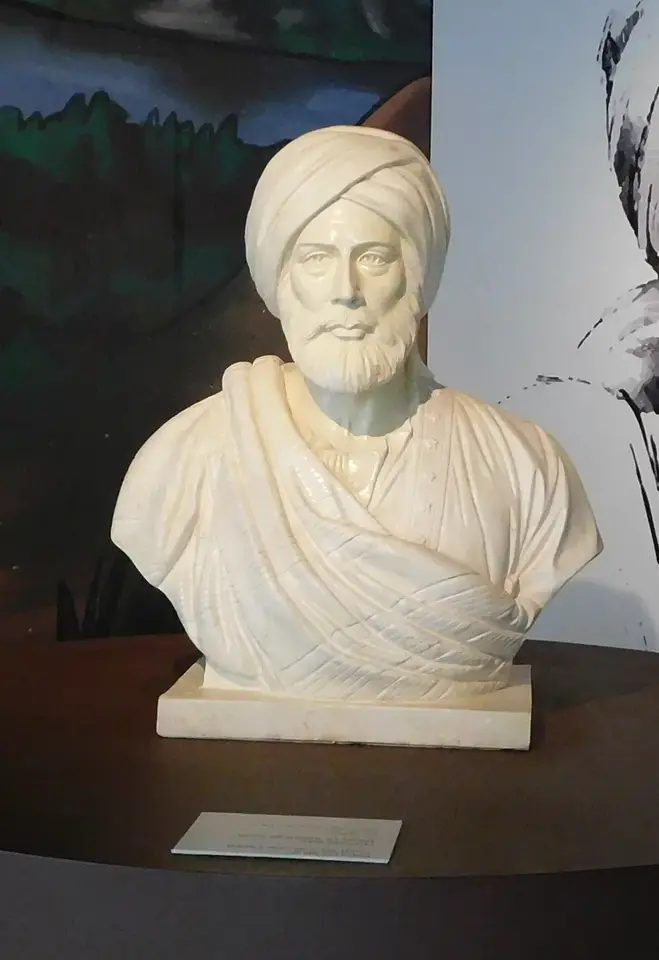
伊本·白图泰
Ibn Battuta (伊本·白图泰) was the most celebrated geographical traveler, explorer, and Islamic legal scholar of the fourteenth-century world. Born into an educated family of legal scholars in Tangier, Morocco, he departed on a pilgrimage to Mecca at the age of twenty-one, embarking on a remarkable thirty-year journey. His travels traversed North Africa, the Middle East, Eastern Europe, Central Asia, South Asia, Southeast Asia,…
Ibn Battuta (伊本·白图泰) was the most celebrated geographical traveler, explorer, and Islamic legal scholar of the fourteenth-century world. Born into an educated family of legal scholars in Tangier, Morocco, he departed on a pilgrimage to Mecca at the age of twenty-one, embarking on a remarkable thirty-year journey. His travels traversed North Africa, the Middle East, Eastern Europe, Central Asia, South Asia, Southeast Asia, Yuan Dynasty China, and Sub-Saharan West Africa, covering more than 75,000 miles across territory corresponding to over forty modern nations—the longest journey achieved before the advent of steam locomotion. Around 1345 to 1346, during the Zhizheng era of the Yuan Dynasty, Ibn Battuta arrived in China as an envoy of the Delhi Sultanate. Landing at Quanzhou (Zaiton), the premier hub of the Maritime Silk Road, he visited Guangzhou, Hangzhou, and the capital Dadu (Beijing), observing China's immense ocean-going junks, reliable paper currency system, advanced porcelain and silk industries, and well-regulated postal relay network. Upon returning to Morocco, he dictated his travels to scholar Ibn Juzayy under royal patronage, producing the renowned travelogue The Rihla, which stands alongside Marco Polo's memoirs as a supreme bridge between Eastern and Western civilizations.
Born into a family of Islamic jurists in Tangier, Morocco.
At age twenty-one, he set out alone for Mecca, beginning three decades of global travel.
Completed his first Hajj after crossing North Africa and Syria, vowing never to travel the same path twice.
Crossed the Hindu Kush into India, serving as a judge under the Delhi Sultanate for years.
Appointed by the Delhi Sultan as ambassador to the Yuan Dynasty, sailing eastward via Southeast Asia.
Landed at Zaiton port aboard a Chinese junk, traveling across Jiangnan and visiting Dadu.
Boarded an outbound trading vessel in Quanzhou to return to the Middle East and Morocco.
Commissioned by Sultan Abu Inan Faris to dictate his memoirs, recorded by Ibn Juzayy.
Passed away in Morocco while serving as a local judge at the age of seventy-three.
Ibn Battuta was born in the coastal port of Tangier, Morocco, into an educated Berber family that had produced generations of Islamic judges. From early childhood, he pursued legal and religious studies, mastering Arabic literature and jurisprudence. In 1325, twenty-one-year-old Ibn Battuta bade farewell to his parents, mounting a donkey to undertake the long pilgrimage to Mecca.
Traveling eastward along the North African coast, he traversed Algeria, Tunisia, and Libya before arriving in Cairo, Egypt. Awed by the bustling markets and ancient monuments along the Nile, he attempted to travel via the Red Sea, but local conflicts diverted him through Syria and Palestine. He visited Damascus and Jerusalem, completing his first Hajj in Mecca. The vastness of the outside world awakened an insatiable curiosity, inspiring his personal motto: never retrace a traveled road.
Following his first pilgrimage, Ibn Battuta crossed the Arabian Desert into Mesopotamia, visiting Basra, Isfahan, Shiraz, and Najaf before arriving in Baghdad under the Ilkhanate. Although Baghdad had suffered from previous Mongol sacks, it was gradually recovering. Ibn Battuta met Sultan Abu Sa'id and accompanied his retinue to Tabriz, a thriving hub along the overland Silk Road. He subsequently returned to Mecca for a second pilgrimage.
Unable to settle into sedentary life, he soon embarked on maritime exploration along the Red Sea, reaching Aden in Yemen. Utilizing monsoon winds, he sailed down the East African coast, visiting Mogadishu, Mombasa, Zanzibar, and Kilwa, investigating Swahili maritime trade in gold and ivory. Returning north with the monsoon, he explored Oman and the Strait of Hormuz before returning once more to Mecca.
Around 1330, Ibn Battuta resolved to seek fortune in India. To find guides, he traveled through Anatolia, boarding a Genoese vessel across the Black Sea to Kaffa in Crimea. Entering the Golden Horde steppes, he was received by Ozbeg Khan along the Volga River. When one of the khan's wives, a Byzantine princess, returned home to give birth, Ibn Battuta accompanied her retinue to Constantinople, marveling at the Hagia Sophia and meeting Emperor Andronikos III.
Returning to the steppes, he traveled east through Khwarazm, Bukhara, and Samarkand, crossing the snow-clad Hindu Kush to enter India in 1333. Sultan Muhammad bin Tughluq of the Delhi Sultanate welcomed the foreign scholar, appointing him a grand judge in Delhi with generous stipends, where he served for eight years.
In 1342, the Delhi Sultan appointed Ibn Battuta to lead an official embassy to the Yuan Dynasty. After surviving pirate ambushes off the Indian coast, he spent months in the Maldives serving as chief judge, climbed Adam's Peak in Ceylon, and visited Bengal and Sumatra.
In 1345, boarding an ocean-going merchant ship, he sailed with the monsoon to arrive at Quanzhou (Zaiton), the preeminent maritime port of Yuan China. Ibn Battuta was astonished by the immense harbor crowded with large junks equipped with private cabins and water-tight compartments. Local Muslim merchants and maritime trade officials received him warmly, providing comfortable lodgings. He examined Jingdezhen porcelain and Jiangnan silks, admiring their unsurpassed quality and affordability.
Leaving Quanzhou, Ibn Battuta traveled through Guangzhou and visited Hangzhou. In his travelogue, he described Hangzhou as the most magnificent city on earth, praising the scenic beauty of West Lake and the well-ordered urban quarters. Accompanied by government escorts, he sailed north along the Grand Canal to the imperial capital Dadu (Beijing). He marveled at the bustling canal commerce, recording lively markets and tea houses along the waterway.
During his travels, Ibn Battuta observed Yuan institutions with keen insight. He recorded the universal circulation of paper money, expressing wonder at how travelers used lightweight paper notes for major transactions under strict anti-counterfeiting laws. He commended the nationwide postal relay system (Yam) and public security, observing that merchants carrying fortunes could journey for months without fear of bandits.
In 1346, having completed his survey of major Chinese cities, Ibn Battuta sailed from Quanzhou on a return vessel. Crossing the Indian Ocean, he reached Morocco in 1349 after twenty-four years abroad. Yet he soon departed on further travels to the Kingdom of Granada in southern Spain and traversed the Sahara Desert to explore the Mali Empire and Timbuktu.
In 1354, Sultan Abu Inan Faris of the Marinid Dynasty ordered scholar Ibn Juzayy to record Ibn Battuta's oral memoirs. Over two years, they compiled the masterpiece The Rihla. Ibn Battuta spent his remaining years serving as a judge, passing away in Morocco in 1377 at age seventy-three.
Ibn Battuta provided the most authentic medieval external account of Quanzhou and Chinese naval architecture. He identified Quanzhou as one of the largest ports in the world, describing multi-masted junks constructed with watertight compartments that could accommodate hundreds of sailors and passengers. His observations form an indispensable Western reference for studying the Maritime Silk Road.
The Rihla offers an invaluable contemporary account of Yuan administration. Ibn Battuta precisely documented the legal tender status of paper currency, the operation of imperial post stations, and municipal procedures for foreign merchant registration. His records confirmed China's central role in fourteenth-century global trade networks.
Spanning three continents over three decades, Ibn Battuta's travels surpassed those of any contemporary explorer. The Rihla broke through regional isolation, offering a pan-Eurasian perspective on fourteenth-century civilizations that remains a cultural bridge for global history.
FIGURES ASSOCIATED WITH THIS DYNASTY