Entity Type: Historical Figure Dynasty: Qing Dynasty
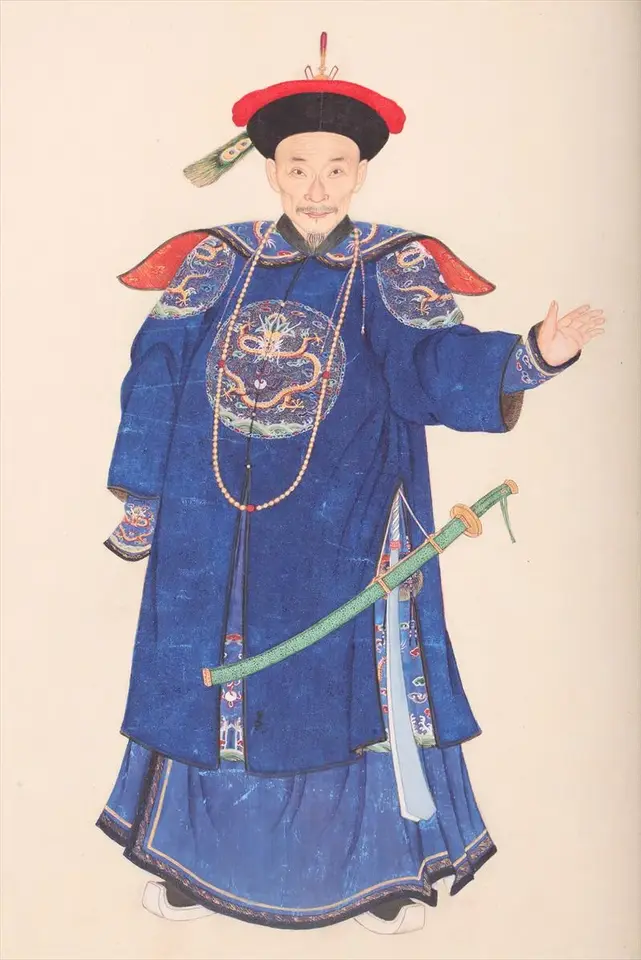
Historical figure
Hailancha (海兰察)
海兰察
Dolar Hailancha (多拉尔·海兰察, ? – April 22, 1793), belonging to the Evenk ethnic group originating from Heilongjiang and member of the Manchu Bordered Yellow Banner, was one of the most prominent military commanders during the Qianlong reign of the Qing Dynasty. Hailancha entered the military ranks from the humble background of an ordinary armored cavalryman in the Solon Division. Renowned for his consummate archery,…
Era not stated
PROFILE
Dolar Hailancha (多拉尔·海兰察, ? – April 22, 1793), belonging to the Evenk ethnic group originating from Heilongjiang and member of the Manchu Bordered Yellow Banner, was one of the most prominent military commanders during the Qianlong reign of the Qing Dynasty. Hailancha entered the military ranks from the humble background of an ordinary armored cavalryman in the Solon Division. Renowned for his consummate archery, horsemanship, and exceptional courage, he distinguished himself early in his career. In 1755, during the imperial expedition against the Dzungar Khanate, he pursued the rebellious tribal leader Bayar alone into the Tarbagatai Mountains, capturing him alive on horseback. In recognition of this extraordinary feat, Emperor Qianlong granted him the title "Erke Baturu", promoted him to imperial bodyguard, and ordered his portrait to be painted in the Hall of Purple Splendor for the first time. Over the following decades, Hailancha participated in nearly every major military campaign of the Qianlong reign. In the Sino-Burmese War, he led vanguard light cavalry deep into southern terrain, securing victories at Hanta and along the Gajiang River. During the arduous Second Jinchuan War, serving as the foremost vanguard commander under Grand Minister Agui, he scaled precipitous cliffs, breached hundreds of stone defensive towers, and played a decisive role in taking the fortress of Lewuwei. In 1781 and 1784, he served as assistant grand minister to quell the Muslim uprisings led by Su Forty-three and Tian Wu in Gansu. In 1787, collaborating with General Fuk'anggan, Hailancha crossed the strait to pacify the Lin Shuangwen rebellion in Taiwan, landing boldly at Lu'ermen, breaking the siege of Chiayi, and capturing Lin Shuangwen. In 1791–1792, when the Gurkhas invaded southern Tibet and plundered Tashilhunpo Monastery, Hailancha crossed the Himalayas, achieved six consecutive battlefield triumphs, pushed within tens of miles of Kathmandu, and compelled the Gurkha king to capitulate and offer tribute, for which he was elevated to First-Class Duke Chaoyong. Renowned for tactical brilliance and fearlessness, Hailancha had his portrait placed in the Hall of Purple Splendor four times. He died of exhaustion in Beijing in the spring of 1793, received the posthumous name "Wuzhuang", and was enshrined in the Temple of Manifest Loyalty.
- Noble Title
- First-Class Duke Chaoyong (一等超勇公)
- Posthumous Name
- Wuzhuang (武壮)
- Honorific Title
- Erke Baturu (额尔克巴图鲁)
- Ancestral Home
- Hulunbuir, Heilongjiang (Solon Division)
- Date of Death
- April 22, 1793 (Qing Qianlong 58, 3rd Month, 12th Day)
- Highest Office
- Senior Chamberlain of the Imperial Bodyguard concurrently Assistant Grand Minister, with Minister Title
- Major Offices
- Senior Bodyguard, Lieutenant General of the Plain Red Banner Mongol, Lieutenant General of the Bordered White Banner Manchu, Senior Chamberlain of the Imperial Bodyguard, Assistant Grand Minister
- Historical Identity
- Renowned military commander of the Qianlong era in the Qing Dynasty, First-Class Duke Chaoyong, core vanguard general of the Ten Great Campaigns, distinguished statesman four times commemorated in the Hall of Purple Splendor
LIFE TIMELINE
Relationship graph
BIOGRAPHY
Chronology
- 1755 (Qianlong 20) | Western Capture | Participated in the expedition against the Dzungars as a Solon cavalryman, captured the rebel chieftain Bayar in the Tarbagatai Mountains, received the title Erke Baturu, and had his portrait painted in the Hall of Purple Splendor.
- 1765 (Qianlong 30) | Pacifying Ush | Accompanied Brigade Commander Xinzhu to Xinjiang to put down the rebellion in Ush, earning promotion to imperial bodyguard.
- 1767 (Qianlong 32) | Burmese Expedition | Led light cavalry as the imperial vanguard through Huju Pass, attacking enemy strongholds at Laoguantun and ambushing elite Burmese forces.
- 1769 (Qianlong 34) | Victory at Gajiang | Advanced under Grand Secretary Fuheng through Wanren Pass, routed Burmese war elephants and wooden stockades along the Gajiang River, and was appointed Lieutenant General of the Bordered Yellow Banner Mongol.
- 1772 (Qianlong 37) | Deployment to Jinchuan | Transferred to Sichuan, launched night raids on the thirteen stockades around Meimei, captured strategic enemy stone redoubts, and defeated Tibetan forces at Mount Gongga.
- 1773 (Qianlong 38) | Retreat at Muguomu | After the northern main camp collapsed at Muguomu, Hailancha and Esente fought rearguard actions, gathering routed troops and securing the northern retreat line.
- 1774 (Qianlong 39) | Taking Mount Luobowa | Followed General Agui in fierce mountain assaults against stone towers amid rain and snow, securing the critical ridge of Mount Luobowa.
- 1776 (Qianlong 41) | Pacification of Jinchuan | Scaled rear cliffs across the turbulent Dajinchuan River into Lewuwei, compelling headman Sonam to surrender, earning elevation to First-Class Marquis Chaoyong and a second portrait in the Hall of Purple Splendor.
- 1781 (Qianlong 46) | Gansu Campaign | Appointed Assistant Grand Minister to quell the rebellion of Su Forty-three in Gansu, storming Hualin Mountain and crushing the insurgent forces.
- 1784 (Qianlong 49) | Fall of Shifengbao | Returned to Gansu to besiege Shifengbao, scaling cliffs to cut off the fortress's water supply and storming three gate lines, elevated to Second-Class Marquis Chaoyong.
- 1787 (Qianlong 52) | Crossing to Taiwan | Sailed across the Taiwan Strait alongside Fuk'anggan, landed at Lu'ermen, broke through rebel lines at Niuchoushan, and lifted the siege of Chiayi.
- 1788 (Qianlong 53) | Capture of Lin Shuangwen | Pursued insurgent forces through mountain ravines, captured rebel leader Lin Shuangwen at Laoquqi, pacified southern remnants under Zhuang Datian, and received a third portrait in the Hall of Purple Splendor.
- 1791 (Qianlong 56) | Repelling Gurkhas | Dispatched as Assistant Grand Minister alongside Fuk'anggan to Tibet after Gurkha forces plundered Tashilhunpo Monastery.
- 1792 (Qianlong 57) | Crossing Himalayas | Traversed Himalayan passes, secured six consecutive victories at Jilong and Mount Ji'ermu, compelled the Gurkha king to submit, elevated to First-Class Duke Chaoyong and fourth portrait in the Hall of Purple Splendor.
- 1793 (Qianlong 58) | Demise in Capital | Succumbed to chronic illness and battlefield exhaustion in Beijing in the third lunar month, granted imperial funeral rites, honored with posthumous title Wuzhuang, and enshrined in the Temple of Manifest Loyalty.
Life and Career
Rise from the Ranks and Western Triumph
Hailancha was born into the Solon Division in Hulunbuir, Heilongjiang. For generations, the Solon people relied on hunting, fishing, and horseback archery in the harsh northern woodlands, developing extraordinary endurance and physical prowess. Hailancha enlisted as a young man as an ordinary armored cavalryman. With immense physical strength and superb mastery of heavy bows, he distinguished himself in military drills and frontier hunts, quickly earning the admiration of his fellow soldiers and superior officers.
In 1755, the Qing court launched an imperial expedition against the Dzungar Khanate, and Hailancha marched west with the Solon detachment. Following the Qing takeover of Ili, the tribal noble Bayar turned against the empire, joining Amursana in open revolt. When Qing forces converged to track down the insurgents, Bayar fled into the rugged Tarbagatai Mountains to mount a defensive stand. Facing unfamiliar and precipitous terrain, Hailancha pursued the rebel band single-handedly for several days. Closing in under whistling arrows, he shot Bayar's mount with a powerful arrow, threw the chieftain to the ground, and captured him alive.
When news of this achievement reached Beijing, Emperor Qianlong personally praised Hailancha's valor, conferring upon him the imperial title "Erke Baturu" (meaning courageous warrior in Manchu). He was promoted from the ranks directly to second-class imperial bodyguard, shortly thereafter advanced to first-class bodyguard, and awarded hereditary knightly titles. Emperor Qianlong ordered his portrait to be painted in the Hall of Purple Splendor among the vanguard heroes of the western campaign, making him an acclaimed figure in imperial military circles.
In 1765, when a local disturbance erupted in Ush within the southern circuit of Xinjiang, Hailancha served under Brigade Commander Xinzhu to quell the unrest. In the assault on the fortifications of Ush, Hailancha braved rolling stones and arrows to mount the walls, helping restore regional peace. For his gallantry, he received promotions within the imperial bodyguard ranks and was stationed close to the imperial court in Beijing.
Burmese Wilderness Expeditions
In 1767, armed incursions along the Yunnan frontier led to the escalation of the Sino-Burmese War. Mingrui was appointed Governor-General of Yunnan and Guizhou concurrently General in Chief, and Hailancha was designated probationary lieutenant general, commanding elite Solon mounted warriors to serve as the front scouts. Marching through Huju Pass, Hailancha led his troopers through dense subtropical forests and rugged mountainous terrain toward the Burmese heartland.
Advancing toward Mangjie and Xinjie, Hailancha observed that Burmese forces were using the heavy forest cover and wooden barriers to lure imperial troops into an encirclement flanked by war elephants and heavy infantry. Leading light horsemen forward, Hailancha encountered Burmese scouting units at Hanta, killing three and capturing seven, and subsequently assaulted the fortified camp at Laoguantun, taking over two hundred enemy casualties. When Burmese reinforcements advanced from Mengmi, Hailancha established an ambush, inflicting four hundred casualties and breaking the enemy pincer.
In jungle skirmishes, Hailancha deployed experienced Solon hunters along forested heights on both flanks. When Burmese shock troops surged forward to pursue Qing decoy units, Hailancha charged their exposed flanks with armored cavalry. Intense volleys of arrows struck down mahouts and riders alike. Terrified war elephants panicked and trampled their own lines, enabling Qing troops to completely dismantle the defensive fortifications at Xinjie.
In 1769, Grand Secretary Fuheng led an imperial expedition against Burma, and Hailancha was again designated vanguard commander, crossing Wanren Pass along the Gajiang River. During the siege of Laoguantun, the Burmese defended fortified log stockades and deep moats. Hailancha led light cavalry to bypass the main redoubts under cover of night, crossing the Gajiang rapids to strike the enemy supply depot at Xibo, destroying supply craft and capturing elephant armor and firearms. Although the expedition ultimately suffered heavy losses from tropical pestilence, Hailancha's mobile tactical execution earned widespread praise, resulting in his promotion to Lieutenant General of the Bordered Yellow Banner Mongol.
Mountain Warfare in Jinchuan
In 1771, the tribal chieftains of Great and Lesser Jinchuan, Sonam and Senggesang, formed an alliance against Qing imperial authority, killing imperial envoys and triggering the Second Jinchuan War. The western Sichuan plateau was characterized by jagged peaks where local chieftains had erected hundreds of fortified stone towers and mountain stockades. In 1772, Hailancha was ordered to the Sichuan front, serving initially under Governor-General Altai and subsequently under General Wenfu.
Upon arriving at Lesser Jinchuan, Hailancha inspected the fortifications surrounding Meimei Stockade before leading nighttime assaults that captured thirteen stone redoubts, seized enemy ammunition caches, and repelled counterattacks along Mount Gongga. Emperor Qianlong rewarded his breakthroughs by naming him Lieutenant General of the Plain Red Banner Mongol.
In early 1773, Qing forces advanced toward the strategic pass of Xiling. Hailancha advanced through Sukenai, capturing two outpost towers and securing the heights behind Muguomu to link up with Brigade Commander Esente. Imperial troops hewed pathways through mountain ice, reaching Mount Gumubu'er within a single day. Facing ten interconnected stone towers blocking the defile, Hailancha and Esente divided their forces into six detachments, concentrating their main effort on the ninth and tenth towers. Leading his men through heavy crossfire, Hailancha directed the burning of the gates and cleared the pass.
In the summer of 1773, the Qing northern army suffered a major catastrophe at Muguomu. Exploiting dense fog and rugged terrain, local Tibetan warriors circumvented imperial outposts, killing General Wenfu and throwing Qing ranks into disarray. Hailancha remained steadfast amid the chaos. Working closely with Esente, he gathered several thousand routed soldiers, conducted a disciplined rearguard defense through narrow gorges, and checked repeated enemy pursuits, safely guiding wounded troops and baggage trains back to Dengchun and preserving the northern army from total collapse.
Campaigning with Agui and Final Victory
Following the disaster at Muguomu, Emperor Qianlong appointed veteran commander Agui to take overall charge of the campaign. Recognizing Hailancha's tactical brilliance and tenacity, Agui appointed him senior leader and commander of the right-wing vanguard. Agui and Hailancha discarded reckless frontal assaults in favor of methodical siege warfare, constructing linked fortifications, severing mountain water sources, and utilizing specialized incendiary weapons to reduce enemy stone towers.
In 1774, Agui and Hailancha launched concerted operations against the key gateway ridges of Mount Luobowa and Mount Sebengguo. Both ridges featured vertical rock faces crowned by mutually supporting stone towers. Wearing iron armor, Hailancha led a selected assault squad through snowstorms under cover of darkness, scaling frozen cliffs. Approaching the towers, he hurled firepots into the timber framework and engaged the defenders in close quarters with lances, breaking through the primary defense line and capturing the summit of Mount Luobowa.
Over the ensuing years, Hailancha operated continuously across rugged mountain redoubts at Ji'ermu, Kangbada, and Lamulamu, consistently spearheading attacks despite sustaining multiple arrow wounds. In the assault on Legi'erbo, he scaled sheer rock faces with a hundred Solon warriors to strike the defenders from behind, clearing one of the most obstinate obstacles on the route of advance.
In early 1776, imperial forces completed their encirclement of the main Jinchuan stronghold at Lewuwei and the cliffs of Gua'erya. Sonam concentrated his remaining elite fighters behind sheer gorges across the roaring Dajinchuan River. Hailancha led elite troops across the torrential current on reinforced rafts, scaled rear precipices using hanging vines, and struck the heart of the main fortress. Under a deluge of Qing arrows and incendiary projectiles, the defenses collapsed. Sonam surrendered with his clan, bringing the five-year Jinchuan campaign to an end.
Upon returning to Beijing, Hailancha was received outside the capital by Emperor Qianlong, promoted to First-Class Marquis Chaoyong, granted double-eyed peacock feathers, and appointed Senior Chamberlain of the Imperial Bodyguard. His portrait was painted for a second time in the Hall of Purple Splendor, with imperial poetic commendations celebrating him as an indispensable pillar of the realm.
Pacifying Gansu Insurgencies
In 1781, Su Forty-three of the Jahriyya Sufi order initiated an uprising in Xunhua, capturing Hezhou and advancing on Lanzhou, where imperial General Tuqinbao was killed in battle. Emperor Qianlong dispatched Hailancha as assistant grand minister alongside Grand Secretary Agui to oversee operations in Gansu.
Upon arriving outside Lanzhou, Hailancha observed that the insurgent forces had occupied the heights of Hualin Mountain, erecting earth and stone fortifications. Imperial court favorite He Shen had previously attempted disorganized frontal charges that resulted in severe troop losses. Hailancha openly rejected He Shen's imprudent tactical demands, aligning firmly with Agui's methodical plan of encirclement and targeted interdiction. During attacks on Longwei Mountain and Shuimogou, Hailancha led Alxa cavalry through hidden paths behind Hualin Mountain.
When insurgent fighters surged out of their trenches, Hailancha launched an ambush from concealed positions, feigning retreat before turning to execute an overwhelming counterattack. Despite sustaining a bullet wound to his leg while fighting on foot, Hailancha refused to yield ground. The insurgents became so intimidated that sightings of Hailancha on horseback caused widespread panic in their ranks. After conducting personal reconnaissance from Wuquan Mountain, Hailancha directed the final storming of Hualin Mountain, quelling the uprising after Su Forty-three was killed.
In 1784, a secondary uprising broke out under Li Fan in Yancha, with several thousand rebels consolidating their positions at Shifengbao in Tongwei. Shifengbao was an isolated mountain fortress flanked by vertical cliffs, accessible only through a single precipitous footpath and stocked with supplies and defensive projectiles. Hailancha was again dispatched to Gansu as assistant grand minister.
Arriving at Shifengbao, Hailancha rode around the perimeter in civilian attire for several days, identifying the secret ravine through which the garrison drew water. He immediately detached troops to cut off the water supply, depriving the stronghold of hydration. Hailancha then led assault units scaling the cliffs at night with iron grappling hooks and scaling ladders, breaching three outer defense gates and capturing the redoubt, for which he was promoted to Second-Class Marquis Chaoyong.
Trans-Strait Campaign in Taiwan
In late 1786, the Lin Shuangwen uprising broke out in Taiwan, spearheaded by the Tiandihui (Heaven and Earth Society) in Changhua. The insurrection spread rapidly across the island, attracting massive numbers of insurgents who besieged the walled prefectural center of Chiayi (Zhuluo) and Tainan. Imperial magistrate and garrison commander Chai Daji held Chiayi under desperate circumstances for months, with the besieged population reduced to consuming grass roots and boiled saddle leather.
In the autumn of 1787, Emperor Qianlong appointed Grand Secretary Fuk'anggan as General in Chief and Hailancha as Assistant Grand Minister, mobilizing over twenty thousand elite banner troops and regional forces to cross the sea. Heavy surf and fortified insurgent positions guarded traditional ports like Lukang. Hailancha advised an unexpected amphibious approach, directing the fleet through the shallow, lightly guarded waters of Lu'ermen on high tide, achieving a rapid and orderly landing.
Following the landing, Hailancha led vanguard cavalry south in an urgent relief march toward Chiayi. At Niuchoushan, Lin Shuangwen positioned over ten thousand rebel fighters behind deep trenches and earthworks. Observing the battlefield from an elevated ridge, Hailancha identified gaps along the rebel flanks. Leading Solon cavalry and Green Standard shock troops across watercourses directly into the insurgent center, Hailancha shattered the rebel lines, lifting the six-month siege of Chiayi amid celebrations from the rescued garrison and citizenry.
Qing forces pressed their advantage northward. Hailancha captured rebel posts at Dalunzhuang, cleared coastal strongpoints, and reduced defensive villages around Xinghuadian and Yuanlin. Confronting stubborn resistance at Zhonglin, Hailancha charged through gunfire to take Zhonglin, Dapulin, and Dapuwei.
Moving forward, imperial troops reoccupied the strategic center of Douliumen and advanced into the Shuishalian mountain region. As Lin Shuangwen fled, Hailancha tracked the rebel trail day and night, shooting Lin's mount with an arrow and capturing several key confederates before overrunning the rebel stronghold at Daliyi. Pursuing the insurgent chief deep into the rugged hills, Hailancha surrounded and captured Lin Shuangwen at Laoquqi. Hailancha and Fuk'anggan then advanced south to Langqiao (Hengchun), capturing southern rebel leader Zhuang Datian and completely restoring order across Taiwan. Emperor Qianlong rewarded Hailancha with four-dragon imperial robes, elevated him to First-Class Marquis Chaoyong, and placed his portrait in the Hall of Purple Splendor for a third time.
Himalayan Expedition and Gurkha Submission
In 1791, forces of the Kingdom of Gurkha (modern Nepal) invaded southwestern Tibet over trade disputes and currency friction, sacking Tashilhunpo Monastery in Shigatse and looting precious religious treasures. Outraged by this frontier violation, Emperor Qianlong ordered an imperial expedition under General in Chief Fuk'anggan and Assistant Grand Minister Hailancha, commanding ten thousand banner and regional troops to march into Tibet.
In early 1792, Hailancha and the imperial army marched through blizzards and high-altitude terrain, covering over two thousand miles to reach Shigatse. Hailancha and Fuk'anggan initiated a three-pronged counteroffensive, engaging Gurkha positions at Camushan and Jilong. Facing Gurkha mountain fighters armed with kukri blades and mountain ambushes, Hailancha directed Solon troops to counter with heavy lances and powerful composite bows, advancing behind wicker shields and driving the invaders completely out of Tibetan territory.
Pursuing the retreat, imperial forces scaled the snow-covered Himalayan passes at elevations exceeding five thousand meters, carrying the war directly into Gurkha territory. At the gorges of Mount Ji'ermu and Resuo Bridge, Gurkha forces demolished river crossings and held fortified stone watchtowers. Hailancha stationed archers on canyon heights to suppress defensive fire while leading surprise assault units across downstream rapids to envelop the fortifications from the rear, seizing Resuo Bridge.
Imperial forces advanced deep into Nepalese territory, securing six consecutive victories at Xiebulu and Duibumu and pushing to within tens of miles of Kathmandu at the defile of Yongling. Confronted with the overwhelming might of the imperial army, King Rana Bahadur Shah of Gurkha sought peace, sending high emissaries to Hailancha's camp with formal petitions of submission, swearing perpetual vassalage to the Qing emperor, and returning all plundered gold, religious artifacts, and imperial prisoners. This campaign firmly secured Tibet's frontier defense and established imperial authority across the Himalayan region.
Imperial Reception and Final Honor
Following the triumph in the Himalayas, the imperial forces returned to Beijing in the autumn of 1792. Emperor Qianlong praised Hailancha's extraordinary achievements in extreme alpine conditions, creating him First-Class Duke Chaoyong, granting him ministerial ranking, and bestowing the privilege of riding a horse within the Forbidden City. His portrait was painted for a fourth time in the Hall of Purple Splendor, an honor shared by only an elite handful of imperial commanders.
However, decades of continuous frontier service—the frozen crags of Jinchuan, the tropical swamps of Burma, and the extreme hypoxia and cold of the Himalayas—had severely worn down his physical constitution. During the journey back to Beijing, Hailancha suffered from chronic respiratory illness and physical exhaustion. Emperor Qianlong dispatched imperial court physicians to his residence with medicines and delicacies, but his condition continued to deteriorate.
On April 22, 1793 (Qianlong 58, 3rd Month, 12th Day), Hailancha passed away at his Beijing residence in his sixties. Deeply grieved, Emperor Qianlong issued an imperial decree commending his lifelong loyalty and battlefield valor, conferring the posthumous name "Wuzhuang", granting three thousand taels of silver for his funeral, allowing his eldest son Anlu to inherit the title of First-Class Duke Chaoyong, and enshrining Hailancha in the Temple of Manifest Loyalty in Beijing for perpetual imperial sacrifices.
Major Achievements
Legend of Rise from the Ranks
In Chinese military history, Hailancha represents a rare exemplar of an ordinary soldier who ascended to the highest rank of first-class duke solely through merit. Unbacked by aristocratic lineage or imperial clan ties, he advanced step by step from a Solon cavalryman through his physical strength, archery, and battlefield courage. In an era when Eight Banners discipline had substantially declined, Hailancha retained the rugged simplicity and resilience of northern hunters, living frugally and sharing hardships with common soldiers, widely regarded as the most formidable frontline warrior of the high Qing era.
Mountain Siege Master of Jinchuan
During the five-year Second Jinchuan War, Hailancha displayed unmatched prowess in high-altitude mountain warfare. Facing hundreds of fortified stone towers constructed by local chieftains along precipitous terrain, he developed tactical systems combining nocturnal cliff assaults, water interdiction, explosive demolitions, and concentrated projectile suppression. Never resorting to mindless frontal assaults, he personally scouted enemy weak points on vertical cliffs. His leadership in taking Meimei Stockade, Mount Luobowa, and Lewuwei proved decisive in eradicating a fortified resistance that had troubled the empire for decades.
Swift Amphibious Relief of Taiwan
The 1787 Taiwan campaign stands as a classic model of combined amphibious and land operations in Qing history. With Chiayi besieged for half a year and coastal defenses threatened, Hailancha demonstrated decisive tactical leadership as vanguard commander. Landing through the shallow, unguarded waters of Lu'ermen, his armored cavalry reopened communications between north and south. In the battle of Niuchoushan, he charged through rebel defensive barricades, broke the siege of Chiayi, and pursued insurgent leaders through mountainous forests until Lin Shuangwen was captured, swiftly restoring imperial governance.
Alpine Expedition across the Himalayas
The 1792 campaign against the Gurkhas was one of the most grueling high-altitude expeditions in military history. Leading troops across glaciated passes above five thousand meters, Hailancha overcame severe cold and altitude sickness to capture mountain forts along roaring glacial rivers. Driving deep into Nepalese territory, he spearheaded the crossing of Resuo Bridge, breached defensive stone bastions, and advanced to the perimeter of Kathmandu, compelling foreign adversaries to capitulate and securing the lasting territorial integrity and peace of southwestern Tibet.
Tactical Leadership and Battlefield Insight
Hailancha was an astute strategist with deep operational insight rather than a mere combat brawler. Contemporary statesmen praised his blend of tactical intelligence and fearlessness. Before entering battle, he consistently reconnoitered the terrain in plain attire, closely observing enemy movements for momentary vulnerabilities. Once an opening was discovered, he concentrated overwhelming force to pierce the adversary's formation. Unintimidated by political power, he opposed He Shen's reckless directives in Gansu and remained steadfastly loyal to Grand Minister Agui, demonstrating the uncompromising integrity of a veteran commander.
Fourfold Honors in the Hall of Purple Splendor
The Hall of Purple Splendor served as the supreme pantheon honoring imperial military achievements in the Qing Dynasty. From his capture of Bayar as a Solon horseman in 1755 to the Burmese, Jinchuan, Taiwan, and Gurkha campaigns, Hailancha had his portrait placed in the Hall of Purple Splendor four times, ranking among the foremost commanders of the Qianlong reign. Emperor Qianlong composed four personal poetic encomiums praising his ascent from an imperial bodyguard to a celebrated duke, cementing his legacy in eighteenth-century Chinese military history.
Personal Relationships
- Commander and Confidant: Agui, Grand Secretary of the Wuying Palace and Chief Grand Councilor, commander of the Jinchuan and Gansu campaigns who held Hailancha in the highest regard, forging a harmonious partnership.
- Joint Commander: Fuk'anggan, Duke of Wujie and General in Chief, supreme commander during the Taiwan and Tibet campaigns, with whom Hailancha coordinated effectively as frontline commander.
- Jinchuan Comrades: Esente and Ha Guoxing, valiant Qing generals who fought alongside Hailancha in multiple assaults on stone towers in Jinchuan and Burma.
- Court Adversary: He Shen, Grand Secretary of the Wenhua Palace and powerful court favorite, whose flawed commands in Gansu were repudiated by Hailancha, leading to unsuccessful covert attempts to defame Hailancha.
- Taiwanese Opponent: Lin Shuangwen, leader of the Tiandihui uprising in Taiwan who proclaimed himself Grand Marshal, pursued and captured by Hailancha at Laoquqi.
- Gurkha Monarch: Rana Bahadur Shah, King of Gurkha, who sued for peace, submitted tribute, and pledged vassalage following defeats by Hailancha's advancing army.
- Eldest Son: Anlu, who inherited the title First-Class Duke Chaoyong and died fighting White Lotus rebels at Dujiaping in Sichuan during the early Jiaqing reign, receiving the posthumous title Zhuangyi.
Historical Evaluation
- Emperor Qianlong: "He shot Bayar and was exceptionally promoted to bodyguard. Gradually advancing to lieutenant general, he participated in military planning. Facing secure stone towers and hazardous camps, he never failed to be first to scale the heights. Brave and strategic, his elevation to nobility was truly deserved." (Imperial Encomium for Fifty Heroes of Jinchuan)
- Zhao Erxun et al., Draft History of Qing, Biographies 118: "Hailancha possessed both valor and tactical intelligence. Before every battle, he observed the enemy in plain clothes on horseback, discerning their vulnerabilities before attacking with concentrated troops, regularly emerging victorious. Traversing numerous campaigns and venturing into extreme dangers without regard for himself, he was truly an outstanding general of his era."
- Cai Dongfan, Popular Romance of the Qing History: "In the Taiwan campaign, reliance was placed on Hailancha's courage to break through enemy lines and lift the siege of Chiayi immediately, breaking the insurgents' spirit. In the Gurkha campaign, without Hailancha's steadfast rearguard support, survival itself would have been in doubt, let alone victory."
- Zheng Guanying, Words of Warning in a Prosperous Age: "When the Jinchuan nests were destroyed, the military talents of Agui and Hailancha emerged, proving themselves eminent generals of their time."
Related Entries
- Second Jinchuan War
- Lin Shuangwen Rebellion
- Sino-Nepalese War
- Agui
- Fuk'anggan
- Portraits in the Hall of Purple Splendor
FIGURES ASSOCIATED WITH THIS DYNASTY
Bibliography
- Zhao Erxun et al., Draft History of Qing, Volume 331, Biography 118: Biography of Hailancha, Zhonghua Book Company punctuated edition.
- Qing Guit et al. (eds.), Veritable Records of Emperor Gaozong of Qing, Zhonghua Book Company photographic reprint.
- Agui et al. (comp.), Imperially Commissioned Strategy for Pacifying the Two Jinchuans, Imperial Palace edition.
- Fuk'anggan et al. (comp.), Imperially Commissioned Chronicle of Pacifying Taiwan, Taiwan Historical Documents Series.
- Fuk'anggan et al. (comp.), Imperially Commissioned Strategy for Subduing Gurkhas and Securing Tibet, Imperial Palace edition.