Birth in Coastal Salt Field
Born into an impoverished hereditary salt-boiling family in Anfengchang, Taizhou Prefecture.
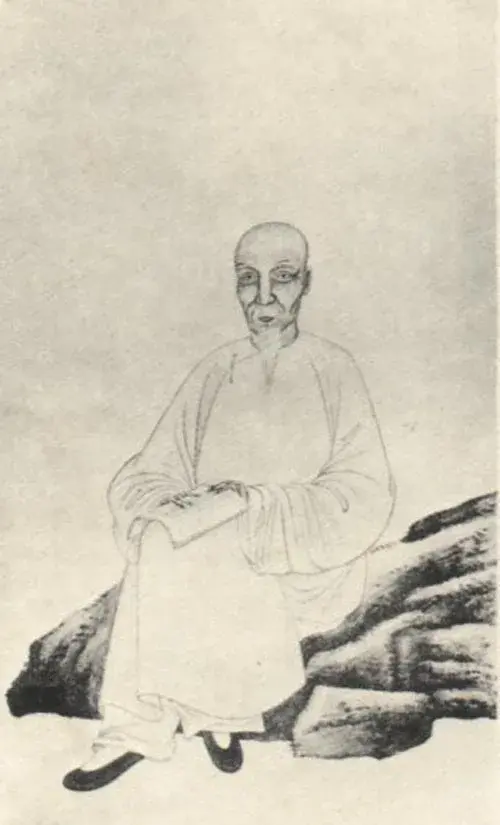
吴嘉纪
Wu Jiaji (吴嘉纪, March 18, 1618 – February 26, 1684), styled Binxian and known by his literary name Yehe, was a native of Anfengchang in Taizhou Prefecture (present-day Anfeng Town, Dongtai, Jiangsu Province). He was an eminent realist poet, scholar, and Ming loyalist commoner of the early Qing dynasty, celebrated by posterity as the Coastal Commoner and the Poet-Historian in Plain Clothes. Born into an impoverished household…
Wu Jiaji (吴嘉纪, March 18, 1618 – February 26, 1684), styled Binxian and known by his literary name Yehe, was a native of Anfengchang in Taizhou Prefecture (present-day Anfeng Town, Dongtai, Jiangsu Province). He was an eminent realist poet, scholar, and Ming loyalist commoner of the early Qing dynasty, celebrated by posterity as the Coastal Commoner and the Poet-Historian in Plain Clothes. Born into an impoverished household of hereditary salt-boiling laborers (Zaohu) along the Huainan coast, Wu Jiaji passed the prefectural examinations as a government student in his youth. Following the fall of Beijing and the massacre of Yangzhou during the Ming-Qing transition, he burned his examination books, relinquished all ambition for civil service, and retreated into lifelong seclusion within his thatched hut, named the Humble Cottage (Lou Xuan), in the salt marshes of Anfeng. Living in poverty alongside coastal salt workers who endured salt-marsh brine, official levies, and merchant exploitation, Wu Jiaji channeled their plight into realist poetry. His celebrated masterpieces, including Zhuyan Xing (Song of Boiling Salt), Haichao Tan (Lament on the Ocean Tide), and Guo Neizao (Passing the Inner Salt Pans), documented the suffering of coastal laborers, earning critical comparisons to Du Fu. In the early Kangxi era, literary master Wang Shizhen visited Wu Jiaji's seaside retreat and funded the printing of Louxuan Shi (Poetry of the Humble Cottage), bringing him nationwide renown. In 1678, when the Kangxi Emperor decreed the special Boxue Hongci examination, Wu Jiaji feigned illness to decline imperial recruitment, preserving his integrity as a Ming loyalist until his death at age sixty-seven.
Born into an impoverished hereditary salt-boiling family in Anfengchang, Taizhou Prefecture.
Qualified as a government student (Xiucai) in Taizhou, reading classics and historical treatises.
Mourned the suicide of the Chongzhen Emperor and the fall of the Ming, resolving to renounce civil examinations.
Retired to the salt marshes of Anfeng, building a modest thatched retreat named Lou Xuan (Humble Cottage) and styling himself Yehe.
Composed realistic masterpieces such as Zhuyan Xing and Haichao Tan amidst coastal tidal disasters and onerous taxes.
The young magistrate and literary master Wang Shizhen visited Wu Jiaji at his seaside cottage, initiating a lifelong friendship.
Wang Shizhen financed the publication of Louxuan Shi in Yangzhou, bringing Wu Jiaji nationwide literary acclaim.
Refused imperial recruitment to the Boxue Hongci examination, feigning grave illness to maintain his loyalist conscience.
Edited his later poetic compositions into Louxuan Shi Xu despite near-blindness and persistent poverty.
Passed away at his Humble Cottage in Anfeng at age sixty-seven, mourned by regional salt workers and literati.
Wu Jiaji was born on March 18, 1618, in Caoyan near Anfengchang, Taizhou Prefecture (present-day Dongtai, Jiangsu Province). Bordering the Yellow Sea, Anfengchang was a low-lying center of the Huainan salt administration, populated largely by hereditary salt-producing households known as Zaohu. These laborers lived under rigid state control, enduring backbreaking physical toil. Wu Jiaji's lineage had engaged in agriculture and salt-boiling for generations, possessing little arable land and living in poverty.
Endowed with exceptional memory, Wu Jiaji studied classical texts while assisting his parents in hauling brine and tending drying fields. In 1634, at age seventeen, he passed the prefectural examinations, qualifying as a government student. Celebrated for his classical erudition, he developed close friendships with scholars such as Mao Xiang (Mao Pijiang) and Zhou Rong.
In 1644, the Chongzhen Emperor committed suicide in Beijing as the Ming collapsed. In 1645, Qing armies swept south, capturing Yangzhou and executing Supreme Commander Shi Kefa before launching a devastating massacre across the city. The catastrophic slaughter and the enforcement of the queue order shattered Wu Jiaji's hopes for dynastic renewal. Scorning contemporaries who rushed to serve the new regime, he burned his examination essays, vowing never to seek office under the Qing and to live as an unbending Ming commoner.
In autumn 1645, Wu Jiaji returned to Anfengchang with his wife, Lady Wang. On an untended stretch of salt marshes near the seawall, he constructed a mud-walled, thatched dwelling which he named Lou Xuan (Humble Cottage), adopting the literary sobriquet Yehe (Wild Crane). His home was exposed to coastal winds, and during heavy storms, seawater flooded his earthen floor. Yet Wu Jiaji found peace within this austere dwelling, living on coarse grains with his wife.
During the Ming-Qing transition, salt workers in Huainan faced severe exploitation. To finance military campaigns, the Qing government imposed steep salt quotas while corrupt inspectors colluded with wealthy merchant cartels to suppress prices. Salt workers were forced to labor barefoot in winter mud, and those who concealed small amounts of salt were executed. Furthermore, tidal surges breached the seawalls, drowning thousands of coastal families.
Living among these laborers, Wu Jiaji rejected the frivolous, ornate conventions of late Ming salons, devoting his brush to recording the agony of his neighbors. He composed narrative poems including Zhuyan Xing (Song of Boiling Salt), Haichao Tan (Lament on the Ocean Tide), Guo Neizao (Passing the Inner Salt Pans), and Cheshui Xing (Song of Pumping Water). Depicting laborers boiling brine under a scorching sun and mourning families drowned by tidal waves, his verses shocked regional readers with their unvarnished reality.
For over a decade, Wu Jiaji remained an obscure coastal recluse. In 1661, twenty-eight-year-old Wang Shizhen was appointed judicial officer in Yangzhou. Committed to discovering literary talent, Wang Shizhen read manuscript copies of Wu Jiaji's poems circulating in the city.
Deeply moved, Wang Shizhen declared: "This is the authentic poetic history of our age! Emerging directly from genuine sorrow, his verse possesses monumental strength that rivals Du Fu; he is the foremost master of the Yangtze delta!" In 1663, Wang Shizhen traveled through difficult coastal roads to visit Wu Jiaji at his seaside cottage in Anfeng.
In the humble cottage, the two scholars conversed through the night by candlelight. Moved by Wu Jiaji's moral dignity amidst poverty, Wang Shizhen joined prominent scholars Wang Wan and Shao Qian in financing the publication of Wu Jiaji's poetry in four volumes. Wang Shizhen contributed an enthusiastic preface and distributed copies to prominent scholars across the realm. Louxuan Shi achieved immediate success, establishing the Coastal Commoner as an essential voice of early Qing literature.
As his literary fame spread, regional officials and wealthy merchants offered stipends and patronage, but Wu Jiaji declined all assistance. He preferred his independent life, sharing meager meals of coarse barley and working beside neighboring salt farmers.
In 1678, seeking to conciliate Jiangnan scholars and defuse Ming loyalism, the Kangxi Emperor decreed the special Boxue Hongci examination, directing provincial governors to recruit eminent recluses for appointments in the Hanlin Academy. Provincial and prefectural authorities placed Wu Jiaji at the head of their recommendation registers, sending emissaries with travel allowances to his home in Anfeng.
Zhuo Jiaji recognized the imperial summons as an attempt to co-opt his loyalist principles. He took to his bed, citing pulmonary hemorrhaging, failing eyesight, and advanced age. When officials pressed him, he began a hunger strike and composed poems affirming his resolve to die as a commoner rather than serve a foreign court. Fearing that coercive measures might spark unrest among coastal salt workers, authorities withdrew his nomination, allowing Wu Jiaji to preserve his loyalist conscience.
In his later years, Wu Jiaji suffered from failing health, losing his sight and teeth. Comforted by his devoted wife, he continued composing verses by dictation, compiling hundreds of later poems into Louxuan Shi Xu (Continuation of the Poetry of the Humble Cottage). His late works sustained his sorrow for the fallen Ming while reflecting on the hardships of laboring folk.
On February 26, 1684, Wu Jiaji passed away quietly in his Humble Cottage at age sixty-seven. At his death, his household lacked the funds for a coffin, and his burial was financed by salt workers and his longtime friend Mao Xiang. He was interred in the coastal reed marshes north of Anfeng. Thousands of local salt workers joined the funeral procession, mourning the poet who had given voice to their silent suffering.
Wu Jiaji's most transformative achievement was his pioneering development of a realist poetic history dedicated to coastal salt laborers. While classical poets had occasionally described peasant farming and rural retreats, the hereditary salt workers—who generated vital state revenues while enduring severe deprivation—had been largely ignored by the literary tradition.
Drawing from his lived experience in the Huainan marshes, Wu Jiaji broke through this omission. In Zhuyan Xing, he rendered the brutal toil of the salt pans: "Bitter is boiling salt, bitter is boiling salt; better to bear a daughter than a son... The sun bakes sea stones white, as laborers carry heavy loads across coastal sands... Hands wither and faces blacken like charred wood, while government runners demand taxes like executioners!"
In Haichao Tan, he chronicled the human devastation of tidal disasters that obliterated whole communities. His poetry documented the lives of common laborers with an honesty and compassion that stood alongside Du Fu's Three Officials and Three Partings as a high point of Chinese realist verse.
Wu Jiaji embodied the unbending moral integrity of the Ming loyalist intellectuals. Unlike contemporaries who claimed loyalist status while accepting patronage from Qing officials, Wu Jiaji maintained an ascetic independence.
He refused to take Qing examinations or shave his hair in deference to court fashion. When summoned to the prestigious Boxue Hongci examination in 1678, he risked death through a hunger strike to refuse imperial co-optation. Living in extreme poverty for four decades, he never authored a line of flattery toward the ruling house. His consistent moral conduct elevated him into a revered model of intellectual independence.
Artistically, Wu Jiaji's Louxuan Shi revitalized early Qing poetry. Late Ming and early Qing salons were saturated by the ornate, fragile verses of the Gongan, Jingling, and Yunjian schools, which emphasized delicate individual taste at the expense of substantive engagement with historical reality.
Wu Jiaji challenged this trend with a forceful, austere poetic voice. Synthesizing the rugged simplicity of Han-Wei folk ballads with the structural density of Du Fu's ancient-style verse, his poetry was praised by critics for its unadorned emotional intensity. His unvarnished language and focus on social crisis helped reshape early Qing aesthetics, influencing figures such as Wang Shizhen, Gu Yanwu, and Huang Zongxi. In the modern era, Liang Qichao observed that while many Ming literati fled into mountain retreats, Wu Jiaji was peerless in using commoner poetry to chronicle the suffering of the common people.
FIGURES ASSOCIATED WITH THIS DYNASTY