Birth in Shanyin
Born on January 13 into an impoverished scholarly family on the northern frontier of Shanxi.
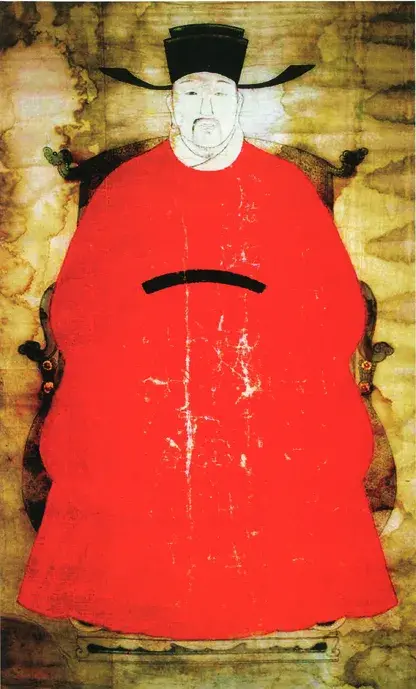
王家屏
Wang Jiaping (王家屏, 1537–1604), courtesy name Zhongbo and art name Duinan, was an illustrious statesman, venerable imperial lecturer, and Senior Grand Secretary during the Wanli era of the Ming dynasty, hailing from Shanyin County, Datong Prefecture, Shanxi Province. After obtaining his metropolitan jinshi degree in 1568, he entered the prestigious Hanlin Academy, subsequently serving for ten years as an Imperial Daily…
Wang Jiaping (王家屏, 1537–1604), courtesy name Zhongbo and art name Duinan, was an illustrious statesman, venerable imperial lecturer, and Senior Grand Secretary during the Wanli era of the Ming dynasty, hailing from Shanyin County, Datong Prefecture, Shanxi Province. After obtaining his metropolitan jinshi degree in 1568, he entered the prestigious Hanlin Academy, subsequently serving for ten years as an Imperial Daily Lecturer to the young Emperor Shenzong (the Wanli Emperor), earning universal esteem and imperial reverence for his dignified moral carriage and fearless didactic instruction. Elevated to the Grand Secretariat in 1584, Wang Jiaping distinguished himself by his strict impartiality, unwavering adherence to dynastic law, and complete refusal to curry favor with powerful court grandees or inner court eunuchs. Following the departures of Shen Shihang and Xu Guo, Wang assumed the office of Senior Grand Secretary in 1591 during the climax of the bitter Contest for the Dynastic Foundation. Vigorously upholding the sacred principle of primogeniture to protect the eldest imperial son, Zhu Changluo, Wang submitted twelve consecutive memorials urging the immediate investiture of the Crown Prince. When the emperor issued punitive decrees against outspoken censors and delayed the succession, Wang returned the imperial edict in protest and resigned his high office to retire to his northern border hometown. Canonized posthumously as Wenduan and honored as Grand Guardian, he is celebrated in Ming historiography as the most morally pure and uncompromising premier of the Wanli reign.
Born on January 13 into an impoverished scholarly family on the northern frontier of Shanxi.
Succeeded in the Shanxi provincial examination, acquiring the juren degree.
Placed second in the second class of the palace examination, admitted to the Hanlin Academy as a Bachelor.
Commissioned as Hanlin Senior Compiler, participating in the compilation of the Veritable Records of Emperor Shizong.
Appointed Imperial Daily Lecturer, instructing the young Wanli Emperor daily in historical statecraft.
Refused to join the nationwide sycophantic prayer ceremonies held during Grand Secretary Zhang Juzheng's fatal illness.
Appointed Vice Minister of Personnel and Grand Academician of the Dongge, entering the Grand Secretariat.
Resigned from office to observe full three-year filial mourning for his stepmother in Shanyin.
Reappointed Minister of Rites and Grand Academician of the Dongge, urging the secluded emperor to hold audiences and intervening in 1590 to spare Censor Luo Yuren.
Promoted to Senior Grand Secretary; mobilized cabinet pressure to demand the formal installation of the Crown Prince.
Returned the imperial rescript in protest over the persecution of censors, resigning his chancellorship to retire to Shanxi and later advising on Korean defense in 1593.
Died peacefully at his Fusuxianfang residence on January 22 at sixty-eight, posthumously canonized as Wenduan.
Wang Jiaping was born on January 13, 1537, in Shanyin County, Datong Prefecture, Shanxi. Datong was a vital strategic garrison on the northern frontier, frequently exposed to nomadic skirmishes and harsh desert winds. Although his family belonged to an ancient lineage of letters, by his father's generation the household had declined into severe poverty. His parents farmed rocky fields by day while teaching him classical texts by lamplight at night. Enduring cold and hunger, Wang developed an unyielding, resilient moral temperament.
At twelve, Wang passed the local examinations to become a government student. Mastering the Confucian classics, the historical annals, and Song Neo-Confucian philosophy, he cultivated a magnificent, austere literary style. In 1564, he passed the Shanxi provincial examination with flying colors. Venturing north through heavy blizzards in late 1567, he traveled to Beijing for the imperial metropolitan examinations.
In the spring of 1568, Wang attained second place in the second class of the palace examination, earning his jinshi degree. His examination memorial on frontier military defense and administrative evaluations won high praise from Emperor Muzong. Selected as a Hanlin Bachelor, he dedicated himself to the study of dynastic institutions. In 1570, he was commissioned as a Hanlin Senior Compiler and appointed to the editorial board of the Veritable Records of Emperor Shizong, displaying exemplary objectivity and historical rigor.
In 1572, Emperor Shenzong ascended the throne at the age of ten, with Senior Grand Secretary Zhang Juzheng directing state affairs. Zhang selected elite scholars of unimpeachable character to serve as Imperial Daily Lecturers in the Wenhua Hall. In 1573, Wang Jiaping was appointed Imperial Daily Lecturer and Director of Studies in the Directorate of Education.
Over the next ten years, Wang stood faithfully in the lecture pavilion. Unlike conventional lecturers who flattered the throne with euphemistic platitudes, Wang spoke with sonorous clarity and penetrating candor. Whenever addressing dynastic crises, monarchical extravagance, or sycophancy in ancient histories, he systematically linked classical lessons to contemporary imperial governance, urging the young ruler to practice vigilance and moral restraint. The young Wanli Emperor was profoundly impressed, regularly adjusting his robes and sitting in rapt silence whenever Wang approached, privately referring to him as "the truly upright gentleman."
During this era, Zhang Juzheng commanded supreme authority, and courtiers competed to win his favor. Wang admired Zhang's fiscal reforms but maintained strict professional distance, refusing to visit the Grand Secretary's private mansion or court his associates. In the summer of 1582, when Zhang lay dying, civil and military dignitaries flocked to Buddhist and Daoist temples to offer ostentatious prayers for his recovery. Wang Jiaping alone stood motionless in his ministerial chamber, sternly refusing to participate. When colleagues warned him of potential retribution, Wang replied: "The life and death of a minister is governed by Heaven and state law. As Confucian scholars, how can we stoop to the servile antics of superstitious courtesans!"
Following Zhang Juzheng's death, Emperor Shenzong assumed personal rule. In 1584, remembering Wang's pedagogical devotion, the emperor elevated him to Vice Minister of Personnel and Grand Academician of the Dongge, inducting him into the Grand Secretariat. Collaborating with Senior Grand Secretary Shen Shihang and Xu Guo, Wang handled imperial rescripts with strict adherence to dynastic statutes, refusing to bend policy to suit bureaucratic cliques.
In late 1586, Wang's stepmother passed away, and he immediately requested leave to observe ancestral mourning. Despite imperial entreaties to remain in office under extraordinary dispensation, Wang insisted on fulfilling the classical three-year mourning period in Shanyin. Following the completion of his mourning in 1589, Shen Shihang urged the emperor to recall him. Returning to Beijing as Minister of Rites and Grand Academician of the Dongge, Wang found the emperor slipping into chronic seclusion. On the emperor's birthday in 1589, Wang submitted an urgent petition that successfully persuaded the monarch to hold a rare public audience.
In December 1589, Censor Luo Yuren submitted his famous Four Admonitions memorial, courageously criticizing the sovereign for overindulging in wine, women, wealth, and wrath. Infuriated, the emperor summoned his cabinet to the Yude Palace in early 1590, displaying the memorial and demanding Luo's execution for treason. Wang Jiaping immediately petitioned to assume personal responsibility for failing to guide imperial conduct, shielding Luo from execution. Facing the enraged monarch, Wang eloquently argued that imperial magnanimity required tolerating blunt truth from loyal subjects, convincing the emperor to merely demote Luo to commoner status.
The most critical political crisis of the Wanli reign centered on the imperial succession. Emperor Shenzong doted upon his favorite consort, Noble Consort Zheng, desiring to elevate her son Zhu Changxun (the Prince of Fu) to the imperial throne, while completely neglecting his eldest son, Zhu Changluo. Conservative court ministers and supervisory censors demanded the installation of the eldest son in strict accordance with ancestral primogeniture.
During the 1590 Yude Palace audience, Wang urged the emperor to formally proclaim Zhu Changluo as heir apparent. The emperor equivocated, promising to delay the decision until the prince reached age fifteen. In the autumn of 1591, when the emperor again reneged on his promises and attacked petitioning officials, Grand Secretaries Xu Guo and Shen Shihang were forced out of office by factional crossfire. In late 1591, Emperor Shenzong formally appointed Wang Jiaping as Senior Grand Secretary.
Recognizing that imperial delay was a calculated ploy to displace the rightful heir, Wang made the succession issue his supreme priority. Over the course of a few months, he submitted twelve impassioned memorials imploring the throne to convene the installation ceremony, warning that tampering with ancestral succession rules would inevitably plunge the empire into factional slaughter.
In the spring of 1592, Supervising Secretary Li Xianke and several colleagues submitted memorials urging the sovereign to honor his commitment. Enraged by their persistence, Emperor Shenzong bypassed normal bureaucratic channels and issued an imperial rescript demoting Li Xianke to a remote border outpost and stripping his co-signers of half a year's salary.
When the punitive rescript arrived at the Grand Secretariat for routine formal drafting, Senior Grand Secretary Wang Jiaping took a stand that shocked the Forbidden City. Exercising the ancient prime ministerial veto power, Wang refused to endorse the imperial decree, wrapped the imperial rescript in its original packaging, and returned it directly to the inner palace accompanied by a blistering remonstrance. Wang declared that censors were fulfilling their constitutional duty, and that as Senior Grand Secretary, he would never affix his signature to an unrighteous decree designed to suppress public truth.
Emperor Shenzong was incandescent with rage and dispatched palace eunuchs to browbeat Wang in the cabinet chambers. Wang stood firm, removed his official robes, and submitted his formal resignation. Between February and March 1592, Wang submitted five successive retirement petitions, refusing to participate in palace examination evaluations. Realizing that Wang's moral stature made him impossible to intimidate or execute without provoking widespread rebellion among the scholar-elite, the emperor conceded and granted his retirement. In late March 1592, accompanied by thousands of weeping officials and students outside Beijing's gates, Wang departed for Shanxi.
Returning to his rural homestead in Shanyin, Wang constructed a modest thatched retreat named Fusuxianfang. When regional governors and generals offered to erect an opulent prime ministerial palace at public expense, Wang strictly declined, insisting that public revenue belonged to the frontier soldiers and impoverished peasants.
In 1593, when Toyotomi Hideyoshi invaded Korea, Ming military commissioner Gu Yangqian prepared an offensive expedition. Wang sent a strategic dispatch advising Gu to draw upon the historical lessons of the Spring and Autumn Annals, recommending that Ming forces prioritize fortification, mutual defense, and logistical support for Korea as an allied host rather than becoming bogged down in deep offensive quagmires. Although Gu failed to implement this strategy, prolonged military stalemates later vindicated Wang's strategic foresight.
In October 1601, facing universal civil resistance, Emperor Shenzong finally surrendered and formally invested Zhu Changluo as Crown Prince. Weeping with joy in his northern study, Wang drafted his celebratory memorial. Emperor Shenzong, feeling profound remorse over his past treatment of his venerable tutor, dispatched imperial emissaries with lavish gifts to comfort Wang. On January 22, 1604, Wang passed away peacefully at his Shanyin estate at sixty-eight. Posthumously granted the rank of Junior Guardian and later Grand Guardian under Emperor Xizong, he was canonized as Wenduan.
Wang Jiaping served as an Imperial Daily Lecturer for an entire decade, revitalizing the classical educational traditions of the Ming monarchy. Rather than treating palace lectures as perfunctory court ceremonies, he used them to instill profound Confucian ethical principles in the young Wanli Emperor.
His dignified personal conduct and uncompromising moral lectures earned him the profound respect of the monarch, who praised him as an exemplary gentleman. His pedagogical stewardship laid the groundwork for the institutional vigor of the early Wanli reign.
During the zenith of Zhang Juzheng's autocratic chancellorship, Wang demonstrated absolute institutional independence. By refusing to flatter the Grand Secretary's inner circle or participate in superstitious prayer ceremonies during Zhang's terminal illness, Wang established a heroic standard of moral autonomy for the scholar-official class.
Following Zhang's death, Wang refused to participate in vindictive purges, evaluating officials strictly on merit and administrative excellence rather than factional alignment, preserving institutional continuity across central ministries.
Throughout his tenure in the Grand Secretariat, Wang Jiaping stood as a fearless guardian of civil remonstrance. When Censor Luo Yuren risked execution for his scathing Four Admonitions memorial, Wang offered to take personal responsibility for the censor's perceived disrespect.
Through masterful court diplomacy during the Yude Palace audience, he persuaded the volatile emperor to commute Luo's sentence, safeguarding the tradition of outspoken dissent and maintaining vital communication channels between the court and the bureaucracy.
Wang Jiaping's defining historical achievement was his unyielding defense of legal primogeniture during the Contest for the Dynastic Foundation. Confronting Emperor Shenzong's covert schemes to displace the rightful heir apparent, Wang submitted twelve consecutive memorials demanding the immediate investiture of Crown Prince Zhu Changluo.
His historic veto of the imperial rescript penalizing Li Xianke and his subsequent voluntary resignation from the premiership shattered imperial ambitions to alter the succession line, ensuring dynastic stability and constitutional continuity for the late Ming empire.
Beyond court politics, Wang demonstrated profound geopolitical acumen. His strategic memorandum during the Japanese invasion of Korea articulated a sustainable doctrine of localized defense and allied support that anticipated modern military logistics.
In his twelve years of rural retirement, Wang lived with Spartan simplicity, donating his savings to repair the Sanggan River embankments and establishing the Nanzhou Academy to educate frontier youths. His collected works, including the Fusuxianfang Collection, stand as enduring literary masterpieces characterized by classical dignity, historical clarity, and profound moral rectitude.
FIGURES ASSOCIATED WITH THIS DYNASTY