Life Story
Aristocratic Heritage and Strategic Counsel
Yelü Yuzhi was born in 890 into the noble Mengfu branch of the Dila Tribe. His great-grandfather Yelü Salade and grandfather Yelü Xiamage were paramount Khitan clan chieftains; his father Yelü Ousi served as military leader (yiliyin) of the Dila Tribe during the Yaonian Khaganate period. Through this lineage, Yelü Yuzhi was a direct paternal cousin of Emperor Taizu (Yelü Abaoji), while his eldest brother Yelü Helu stood as Taizu's most trusted comrade-in-arms during the founding of the Khitan Empire.
Endowed with exceptional vigor and high ambition, Yelü Yuzhi distinguished himself through dedicated scholarship from early youth. Unusually for contemporary steppe nobles, he acquired deep mastery over Confucian statecraft, Buddhist doctrine, and Daoist philosophy, while excelling in archery, horsemanship, mathematics, and calligraphy. Fluent in the dialects of neighboring steppe and forest tribes, he served as a key staff adviser to Abaoji during the initial consolidation of the Khitan state, providing astute strategic counsel in military organization and tribal diplomacy.
The Conquest of Bohai and Elevation in Dongdan
In the winter of 925, Emperor Taizu launched a massive punitive campaign against the historic rival Bohai Kingdom, with Yelü Yuzhi accompanying the supreme imperial army. In the second lunar month of 926, Khitan forces compelled King Da Yanxuan to surrender at the capital of Huhan City. Emperor Taizu reorganized Bohai into the vassal kingdom of Dongdan, appointing Crown Prince Yelü Bei as its sovereign ("Human Emperor King"). Under the administrative system established for Dongdan, which mirrored Bohai institutions under the Central Platform Secretariat, the emperor appointed his brother Yelü Dila as Left Grand Minister, a veteran Bohai minister as Right Grand Minister, former Bohai Situ Da Suxian as Left Vice Minister, and Yelü Yuzhi as Right Vice Grand Councilor.
Although ranked fourth among the ministers at the outset, political circumstances transformed Yelü Yuzhi into Dongdan's sole effective ruler. Left Grand Minister Yelü Dila died of illness within a month of taking office. Because the other two senior ministers were former Bohai officials whom the Khitan court could not entrust with real military authority, and because Emperor Taizu died suddenly in July 926—leading to the enthronement of Emperor Taizong (Yelü Deguang) and the political house arrest of Prince Yelü Bei at the Supreme Capital—Yelü Yuzhi shouldered full regent authority over the newly acquired realm.
Pacifying Insurrections and Restoring Stability
Upon assuming supreme command over Dongdan, Yelü Yuzhi confronted violent widespread instability. The Bohai Kingdom had maintained two centuries of cultural and political sovereignty; its displaced elites and populace deeply resented Khitan dominance, instigating armed insurrections across multiple administrative circuits. Entrusted with supreme military powers, Yelü Yuzhi pursued a balanced strategy combining unyielding martial force with compassionate political reconciliation.
He deployed mobile Khitan detachments to swiftly crush rebellious insurgent leaders, eliminating strongholds before they could consolidate. Concurrently, he enforced strict military discipline, forbidding his forces from plundering peaceful communities, granting tax remissions, and welcoming regional governors who surrendered voluntarily. His pragmatic policies quickly re-established order across eastern Manchuria. In recognition of his feats in pacifying the borderlands, the Liao court elevated him to Defender-in-Chief and Grand Tutor, appointed him Commissioner of Salt and Iron, and enfeoffed him as the Founding Duke of Dongping Commandery with a fief of one thousand households. In 927, he was formally elevated to Left Prime Minister of Dongdan.
The Liangshui Relocation and Geopolitical Mastery
In the twelfth lunar month of 928, Yelü Yuzhi submitted a monumental memorial to Emperor Taizong that permanently reshaped the geopolitics of Northeast Asia. He argued that Huhan City had originally been chosen by Bohai kings out of fear of southern Chinese dynasties, situated amidst impassable mountain forests. Now firmly incorporated into the Liao realm, this remote outpost lay thousands of li from the Supreme Capital, draining massive garrison expenditures while remaining prone to rebellion. In contrast, the Liangshui basin (modern Liaoyang along the Taizi River) represented the fertile ancestral homeland of the Bohai people, boasting rich agrarian soils, extensive timber, iron mines, salt deposits, and abundant fisheries.
Yelü Yuzhi proposed relocating the entire Bohai administrative apparatus and population southward to Liangshui while their military cohesion remained fragmented. This policy would allow the displaced subjects to settle contentedly on productive farmland, permanently ending their inclination to revolt. Furthermore, stationing elite armies at Liangshui would construct an impregnable eastern flank for the Liao Empire, enabling Khitan armies—supported on the right by Turkic, Tangut, and Shiwei auxiliaries—to project overwhelming military power over northern China. Emperor Taizong warmly adopted the plan, immediately executing the relocation of Dongdan's capital to Liaoyang, establishing what later became the Eastern Capital (Dongjing) of the Liao dynasty.
Guarding the Eastern Realm and Passing
In 930, Prince Yelü Bei, increasingly fearful of his imperial brother Taizong's suspicions, escaped across the Bohai Gulf by ship to seek refuge in the Later Tang dynasty. Despite the potential for widespread panic caused by the nominal king's defection, Yelü Yuzhi remained remarkably composed. He took prompt measures to soothe regional anxieties, reinforced frontier garrisons, and maintained civic administration completely undisturbed, ensuring that Dongdan remained securely bound to the Liao crown.
In 938, after Emperor Taizong accepted the formal submission and territorial cession of the Sixteen Prefectures from Shi Jingtang of Later Jin, he conferred upon Yelü Yuzhi the high honorific title of Specially Advanced and Pillar of State, increasing his fief to 2,500 households. In August 941, Yelü Yuzhi traveled to the Supreme Capital to attend an imperial state ritual. Observing that Left Vice Minister Yelü Su of Bohai origin was abusing his authority through embezzlement and corruption, Yelü Yuzhi submitted an outspoken memorial demanding his prosecution. Before imperial authorities could conclude the investigation, Yelü Yuzhi succumbed to illness on the eleventh day of the eighth lunar month, dying in office at the age of fifty-two. Emperor Taizong mourned his demise and bestowed the posthumous name Wenhui ("Civil and Benevolent"). In 942, he was buried with supreme honors at Mount Chaogetu in Ar Horqin Banner.
Major Achievements
Consolidating Khitan Control over Bohai Territory
Yelü Yuzhi's primary historical achievement was preserving the stability of the Dongdan Kingdom during its most perilous founding years, transforming a volatile conquered territory into an enduring province of the Liao Empire. Following Emperor Taizu's unexpected demise, the Khitan succession struggle created a dangerous power vacuum in the east.
Possessing impeccable royal lineage as Taizu's cousin, Yelü Yuzhi stepped into the void as supreme administrator. By combining martial suppression against rebellious diehards with enlightened governance and judicial moderation toward surrendered communities, he averted the collapse of Khitan rule in the east. His steady stewardship allowed the Liao dynasty to completely absorb Bohai's sophisticated agrarian population and administrative heritage into its dual tribal-civil governing apparatus.
Spearheading the Strategic Relocation to Liaoyang
The southward transfer of the Dongdan population from Huhan City to the Liangshui valley stands as one of the most brilliant geopolitical maneuvers in medieval East Asian history. Formulated entirely by Yelü Yuzhi, this initiative solved both internal administrative vulnerabilities and imperial grand strategy.
By transplanting hundreds of thousands of Bohai farmers, craftsmen, and administrators into the fertile Liao River plain, Yelü Yuzhi eliminated the geopolitical base for northern frontier separatism while infusing the Khitan heartland with advanced agrarian and metallurgical expertise. This transformation established Liaoyang as the Eastern Capital of the Liao Empire, establishing a prosperous economic and logistics springboard that enabled Emperor Taizong to project decisive military force into northern China and seize the Sixteen Prefectures.
Exemplifying the Ideal Scholar-Statesman in Early Liao
Yelü Yuzhi represented the quintessential model of early Khitan aristocratic sinicization, bridging the steppe martial heritage with classical administrative wisdom. While early Khitan nobility focused predominantly on equestrian martial arts, Yelü Yuzhi mastered the Confucian canons, Buddhist metaphysics, Daoist philosophy, and imperial statecraft, alongside multiple regional dialects.
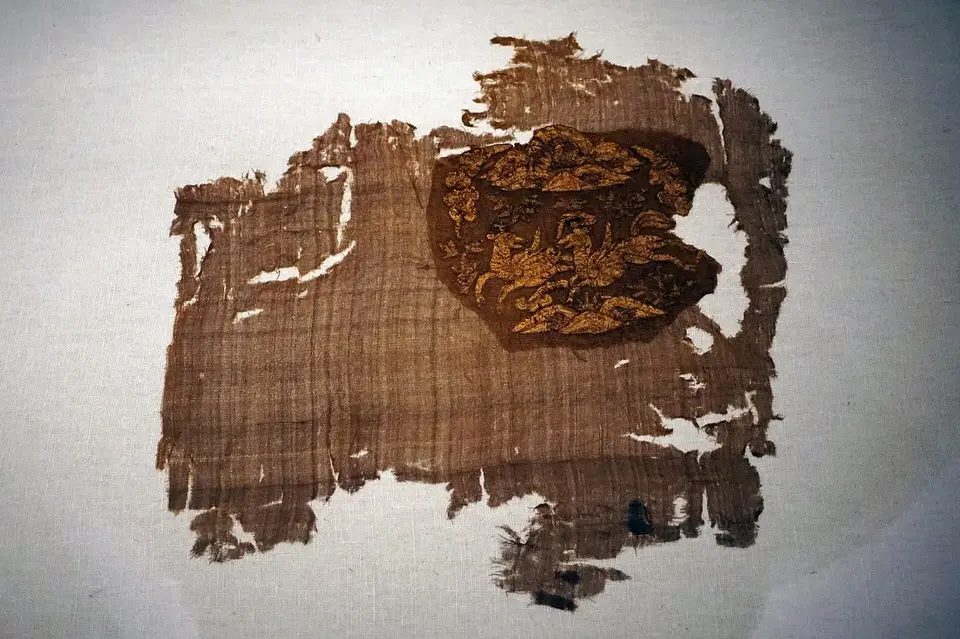
His epitaph records that "in the imperial halls he discussed the Five Canons, and entering Buddhist monasteries he washed away worldly delusions." Throughout his tenure, he instituted strict anti-corruption standards and promoted officials based on merit. The 1992 excavation of his intact tomb yielded exquisite white marble, Ding ware porcelain, and fine gold and silver filigree that attested to his sophisticated cultural tastes, making his archaeological discovery an invaluable milestone for understanding the early integration of steppe and Chinese civilizations.