Birth in the Eastern Palace
Born in the Forbidden City in Beijing on December 9 as the eldest son of Emperor Yingzong.
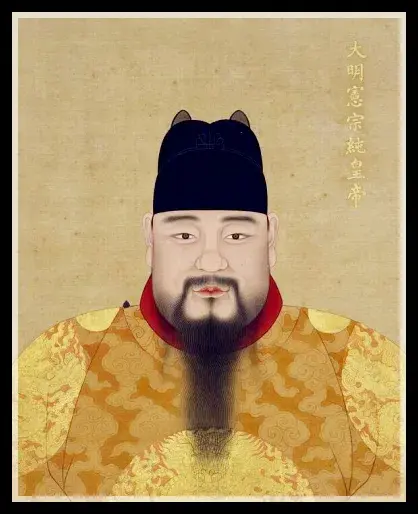
朱见深
Zhu Jianshen (December 9, 1447 – September 9, 1487), originally named Zhu Jianjun and later renamed Zhu Jianru and Zhu Jianshen, was a native of Fengyang, Zhili. He was the eldest son of Emperor Yingzong of Ming (Zhu Qizhen) and Empress Xiaosu, serving as the eighth emperor of the Ming Dynasty (reigned 1464–1487) under the era name Chenghua. Zhu Jianshen endured profound adversity during his youth: at the age of two, in the…
Zhu Jianshen (December 9, 1447 – September 9, 1487), originally named Zhu Jianjun and later renamed Zhu Jianru and Zhu Jianshen, was a native of Fengyang, Zhili. He was the eldest son of Emperor Yingzong of Ming (Zhu Qizhen) and Empress Xiaosu, serving as the eighth emperor of the Ming Dynasty (reigned 1464–1487) under the era name Chenghua. Zhu Jianshen endured profound adversity during his youth: at the age of two, in the wake of the Tumu Crisis, he was designated crown prince; in 1452, he was deposed and demoted to Prince of Yi by his uncle Emperor Jingtai; in 1457, following the Restration Coup, he was restored as heir apparent. Upon the death of Emperor Yingzong in 1464, the eighteen-year-old monarch ascended the throne. At the beginning of his reign, Zhu Jianshen demonstrated exceptional imperial magnanimity and political resolve. He promptly rehabilitated Minister of War Yu Qian, who had been unjustly executed on treason charges during the Restoration Coup, exonerating his family and restoring his titles. Overcoming strong opposition, he also restored the imperial title of Emperor Jingtai, repaired his mausoleum, and healed the traumatic rift within the imperial house. In civil governance, he appointed renowned prime ministers such as Li Xian, Peng Shi, and Shang Lu, dismissed the tyrannical Embroidered Uniform Guard commander Men Da, suppressed fabricated lawsuits, and revitalized military discipline, ushering in the praised Chenghua Good Governance. In domestic and border affairs, he dispatched Yuan Jie to pacify millions of displaced migrants in Jingxiang, establishing Yunyang Prefecture; suppressed the Yao uprisings in Guangxi; launched the Chenghua campaigns against the Jianzhou Jurchens in Liaodong; and sent generals such as Wang Yue deep into the steppe to inflict crushing defeats on the Tatar khans at Hongyan Lake and Weining Lake. However, Zhu Jianshen possessed a mild and hesitant character, and his middle and later years witnessed mounting administrative malpractices. He deeply favored Consort Wan, who was seventeen years his senior, allowing the inner court to infringe upon external administration. In 1477, he established the Western Depot, empowering the eunuch Wang Zhi to orchestrate widespread inquisitions. He extensively issued direct imperial appointments known as Chuanfeng officials, bypassing the Ministry of Personnel, and founded inner-court managed Imperial Manors, exacerbating gentry land engrossment. Zhu Jianshen was also highly accomplished in painting and literature, creating the renowned masterwork Picture of Unified Harmony (Yituan Heqi Tu), which reflected the syncretic fusion of the Three Teachings. On September 9, 1487, Zhu Jianshen died in Qianqing Palace at the age of thirty-nine. He was awarded the temple name Xianzong and interred in Maoling.
Born in the Forbidden City in Beijing on December 9 as the eldest son of Emperor Yingzong.
Following the Tumu Crisis, Prince of Cheng supervised the state, and Empress Dowager Sun decreed Zhu Jianshen crown prince.
Emperor Jingtai invested his own son Zhu Jianji as crown prince and demoted Zhu Jianshen to Prince of Yi.
Emperor Yingzong reclaimed the throne, restoring Zhu Jianshen as heir apparent, faithfully attended by Consort Wan.
Emperor Yingzong passed away; Zhu Jianshen ascended the throne, proclaimed the Chenghua era, and purged Men Da.
Issued an edict exonerating Yu Qian, restoring his former offices and bestowing sacrificial burials and pardons.
Dispatched Li Bing and Zhao Fu alongside Joseon forces to encircle the Jianzhou Jurchens, killing chieftain Dongshan.
Dispatched Wang Yue on a surprise raid against Tatar forces at Hongyan Lake, capturing herds and securing the Ordos loop.
Dispatched Yuan Jie to pacify the Jingxiang migrants and created Yunyang Prefecture in Huguang.
Founded the Western Depot before Lingji Temple under eunuch Wang Zhi, expanding secret police terror.
Dispatched Wang Yue and Wang Zhi on a nocturnal snow raid against Dayan Khan at Weining Lake, shocking the northern desert.
In response to widespread public outrage, permanently abolished the Western Depot and exiled Wang Zhi.
Following the death of Consort Wan in the first month, fell severely ill of grief; passed away on September 9 at the age of thirty-nine.
Zhu Jianshen was born in the Forbidden City in Beijing on December 9, 1447, as the eldest son of Emperor Yingzong (Zhu Qizhen) and Empress Xiaosu. In August 1449, Emperor Yingzong recklessly launched a personal military expedition against the Oirat Mongols, resulting in the catastrophic defeat at Tumu where the emperor was captured alive. Facing supreme national peril, Empress Dowager Sun placed Prince of Cheng Zhu Qiyu in charge of state affairs and designated the two-year-old Zhu Jianshen as imperial crown prince to steady public sentiment. Shortly thereafter, to prevent the Oirats from coercing the court with the captured monarch, Minister of War Yu Qian supported Zhu Qiyu ascending the throne as Emperor Jingtai.
In August 1450, Emperor Yingzong was repatriated to Beijing following peace negotiations, only to be subjected to rigorous confinement in the Southern Palace for seven years. Emperor Jingtai gradually sought to pass the imperial lineage to his own progeny. In May 1452, Emperor Jingtai bribed senior ministers and formally deposed Zhu Jianshen, demoting him to Prince of Yi and moving him into secluded inner quarters while appointing his own son Zhu Jianji as crown prince. In January 1457, generals Shi Heng and Xu Youzhen orchestrated the Restoration Coup, reinstating Emperor Yingzong. The ten-year-old Zhu Jianshen was formally reappointed crown prince under the name Zhu Jianru. During those tumultuous years of perilous seclusion, only the court palace maid Consort Wan, seventeen years his senior, remained vigilantly at his side, creating an unshakeable bond of emotional dependence.
On February 23, 1464, Emperor Yingzong passed away in Qianqing Palace. On February 28, the eighteen-year-old crown prince Zhu Jianshen formally ascended the imperial throne, proclaiming that the following year would be the first year of the Chenghua era. Immediately upon taking power, the young emperor demonstrated remarkable political insight and decisiveness. He arrested Commander of the Embroidered Uniform Guard Men Da, who had terrorized the capital in Yingzong's late years and conspired to eliminate Grand Secretary Li Xian. Zhu Jianshen exiled Men Da and executed his eunuch collaborators, while granting full imperial confidence to Li Xian and appointing prominent scholar-officials such as Peng Shi and Shang Lu to lead the Grand Secretariat.
In March 1465, Zhu Jianshen undertook the courageous step of rectifying historical injustices. Overcoming entrenched opposition from court factions that had benefited from the Restoration Coup, he issued an imperial edict formally exonerating Minister of War Yu Qian, who had saved the dynasty during the Beijing Defense but was executed on fabricated treason charges. Zhu Jianshen praised Yu Qian as a pillar of unwavering loyalty, restored his official titles, conferred grand sacrificial burials, and granted protective official positions to his descendants. Furthermore, the emperor rehabilitated officials punished under Jingtai, and later restored the imperial title of Emperor Jingtai, renovating his ancestral mausoleum and repairing deep psychological fissures within the ruling house.
In July 1464, Zhu Jianshen celebrated his imperial wedding with Empress Wu, a refined and cultured lady selected by Emperor Yingzong. However, the emperor harbored exclusive affection for Consort Wan, ignoring the new empress. Resenting Consort Wan's arrogance and disrespect toward palace hierarchy, Empress Wu ordered Consort Wan flogged. Upon learning of the incident, Zhu Jianshen was enraged and abruptly deposed Empress Wu after merely one month on the throne, banishing her to the cold palace. In October, Empress Wang was invested as the new empress, having learned prudence and deferring submissively to Consort Wan.
In 1466, Consort Wan gave birth to Zhu Jianshen's firstborn son, prompting the emperor to elevate her to Imperial Noble Consort. However, the infant prince died within a year, and Consort Wan never conceived again. Anxious over her declining youth, Consort Wan grew intensely jealous and suspicious, tightly policing the inner palace and resorting to toxic abortifacients whenever other palace women conceived. Although grand secretaries such as Peng Shi urged the emperor to broaden his imperial bedchamber to secure the succession, Zhu Jianshen remained obstinately devoted to Consort Wan, creating widespread anxiety across the bureaucracy over the prolonged absence of an heir.
During the early Chenghua era, extensive peasant unrest erupted in the rugged borderlands between Henan, Huguang, and Shaanxi. Millions of destitute refugees, displaced by severe flooding, droughts, and exorbitant taxation, had fled into the dense mountains of Jingxiang. Rebellious leaders such as Liu Tong and Shi Long organized uprisings, defeating local garrison troops. In 1465, Zhu Jianshen dispatched Duke of Baiguo Zhu Yong and Vice Censor-in-Chief Han Yong to lead large-scale military crackdowns. While Liu Tong was captured and executed, hundreds of thousands of displaced commoners remained hidden in the forested mountains, presenting a perpetual security threat.
Recognizing that purely military suppression could never resolve the root social crisis, Zhu Jianshen dispatched Vice Censor-in-Chief Yuan Jie in 1476 to conduct comprehensive relief and civil registration across Jingxiang. Yuan Jie spent months traversing rugged ravines, issuing tax remissions and granting permanent land holdings to over one hundred and thirteen thousand households comprising more than four hundred and thirty-eight thousand people. Acting on Yuan Jie's memorial, Zhu Jianshen established the new Yunyang Prefecture in Huguang, alongside a Regional Military Commission and subordinate county administrations, permanently transforming the turbulent hinterland into an orderly administrative region.
Along the northeastern frontier, the Jianzhou Jurchens under chieftain Dongshan repeatedly raided Ming border settlements, plundering livestock and capturing civilian populations. In September 1467, Zhu Jianshen assembled a force of fifty thousand troops under Regional Commander Zhao Fu and Liaodong Supreme Commander Li Bing, launching a three-pronged punitive campaign known as Plowing the Jianzhou Jurchen Steppe. Coordinated with allied Joseon troops, the Ming expeditionary armies penetrated deep into mountain fortresses, killing Dongshan, capturing hundreds of chieftains, and thoroughly breaking the military strength of the Jianzhou tribes.
Simultaneously, the Tatar Mongols under Manduul Khan and Dayan Khan continuously raided the Ordos region and the northwest frontiers. In 1473, Zhu Jianshen dispatched General Wang Yue to lead an elite cavalry force on a nocturnal long-range strike against the Tatar base camp at Hongyan Lake, capturing thousands of camels and cattle. In February 1480, Wang Yue and supervising eunuch Wang Zhi led twenty-one thousand elite horsemen through a blinding blizzard to execute a daring surprise assault on Dayan Khan's royal headquarters at Weining Lake. The Tatar khan escaped on horseback while the Ming troops seized countless standards, livestock, and armaments, establishing the most decisive northern border victories of the mid-Ming era.
Despite widespread belief that the emperor was childless, an imperial son was secretly born in the Forbidden City in 1470. Lady Ji, the cultured daughter of an indigenous chieftain captured during the Dateng Gorge campaign and assigned to manage the inner palace treasury, had attracted the emperor's attention and conceived. Fearing retribution from Consort Wan, the eunuch Zhang Min, palace maids, and the deposed Empress Wu secretly sheltered Lady Ji in the secluded Anle Tang, nurturing the young prince Zhu Youcheng in absolute secrecy for six years.
In May 1475, while Zhang Min was combing the emperor's hair, Zhu Jianshen sighed mournfully over his graying temples and lack of an heir. Zhang Min fell to his knees and revealed the existence of the six-year-old prince. Overjoyed, Zhu Jianshen immediately summoned his son, formally recognizing him as his successor. In November 1475, Prince Zhu Youcheng was invested as imperial crown prince. Although Consort Wan subsequently poisoned Lady Ji and attempted to subvert the succession, the firm protection of Empress Dowager Zhou and eunuch Huai En ensured Prince Zhu Youcheng survived to succeed the throne as Emperor Xiaozong.
In January 1477, unnerved by rumors of sorcery and palace intrigues, Zhu Jianshen established a new covert secret police organization known as the Western Depot (Xichang) outside Lingji Temple, appointing the ambitious young eunuch Wang Zhi as its superintendent. Surpassing the older Eastern Depot and Embroidered Uniform Guard in authority, Wang Zhi recruited thousands of agents to conduct warrantless arrests, brutal interrogations, and surveillance across the civil administration, triggering widespread terror among officials.
Outraged by the rampant abuse of power, Grand Secretary Shang Lu and Minister of War Xiang Zhong submitted a joint memorial to the throne, enumerating Wang Zhi's crimes and demanding the immediate dissolution of the Western Depot. Zhu Jianshen initially consented and dissolved the depot in May 1477. However, influenced by inner palace slanders, the emperor reinstated the Western Depot merely one month later and forced Shang Lu into retirement. It was not until January 1482, when Wang Zhi's factional purges alienated the broader court and his frontier military intrigues faltered, that Zhu Jianshen permanently abolished the Western Depot and exiled Wang Zhi to Nanjing.
In his later years, Zhu Jianshen grew deeply reclusive, refusing to hold open court audiences with external ministers and conducting affairs through inner court eunuchs. Grand Secretary Wan An sycophantically catered to the emperor's inclinations, shouting imperial acclamations to terminate policy discussions prematurely, earning the derogatory moniker the 'Long Live Minister'. Wan An even submitted confidential memorials detailing aphrodisiacs and esoteric longevity techniques to win royal favor, degrading the dignity of the Grand Secretariat.
Simultaneously, the emperor extensively granted direct imperial decrees bypassing the Ministry of Personnel and the Grand Secretariat, creating hundreds of irregular appointments known as Chuanfeng officials (Chuanfengguan). Corrupt eunuchs such as Liang Fang capitalized on this loophole, selling offices, titles, and monk certificates to disreputable merchants and charlatans. The imperial inner treasury, built up over decades, was squandered on religious ceremonies, esoteric elixirs, and exotic curiosities, severely undermining institutional integrity and demoralizing the civil service.
In January 1487, Consort Wan passed away suddenly from illness. Upon hearing the news, Zhu Jianshen was overwhelmed with sorrow and lamented that his own life would soon end as well. He suspended court sessions for seven days, posthumously honoring her with the lavish title of Imperial Noble Consort Gongsuduan Shenrongjing. In the following months, the emperor formally enfeoffed his remaining adult sons as regional princes, stabilizing imperial succession arrangements.
In August 1487, Zhu Jianshen fell gravely ill in Qianqing Palace. On September 9, 1487, he passed away at the age of thirty-nine. Before his death, he issued an imperial testamentary edict commanding Crown Prince Zhu Youcheng to revere Heaven, respect ancestral statutes, cultivate personal virtue, and diligently cherish the people. Zhu Jianshen was awarded the temple name Xianzong and interred in the Maoling Mausoleum in the Changping hills outside Beijing.
In 1465, the first year of the Chenghua era, extensive rebellions erupted among the Yao and Zhuang populations in Guangxi, who fortified themselves within the treacherous mountainous stronghold of Dateng Gorge. The insurgents raided regional cities across Guangdong and Guangxi, severing major river transport networks. Zhu Jianshen appointed Right Censor-in-Chief Han Yong and Regional Commander Zhao Fu to direct a massive joint expeditionary force comprising over thirty thousand imperial troops and local auxiliary forces.
Han Yong executed a meticulous encirclement campaign, advancing along riverways, constructing defensive stockades, and employing heavy firearms to blast through the insurgent redoubts. The imperial forces captured the main gorge fortresses, beheading over seven thousand rebels and capturing thousands of captives. Han Yong renamed Dateng Gorge to Duanteng Gorge ('Severed Vine Gorge') to mark the eradication of the insurgent stronghold. Zhu Jianshen established regular military posts and county seats across the pacified areas, permanently strengthening imperial administrative control over the Lingnan frontier.
In the southwestern borderlands of Sichuan, the indigenous Dushi Man (descendants of the ancient Bo people inhabiting Xuzhou Prefecture) frequently clashed with newly appointed civil magistrates following Ming centralization policies. When regional censor Wang Hao treacherous ambushed and slaughtered over two hundred and seventy tribal headmen during peace talks, the Dushi Man revolted in fury, ravaging several counties across Sichuan and Guizhou.
In 1467, Zhu Jianshen dispatched Minister of War Cheng Xin and General Li Jin to mobilize an imperial army of nearly one hundred and eighty thousand troops to crush the uprising. Overcoming precipitous cliffs and dense jungle terrain, the Ming armies systematically dismantled the mountain fortresses, inflicting severe casualties and extinguishing the threat of major southwestern rebellions for over a century. This campaign established a crucial precedent for military enforcement of administrative incorporation (Gaitu Guiliu) across southwestern ethnic frontiers.
Following the catastrophic annihilation of the Three Great Camps during the Tumu Crisis, Minister of War Yu Qian had established the Ten-Battalion Camp (Shi Tuan Ying) to maintain a combat-ready standing army around the capital. However, Emperor Yingzong disbanded this structure after his restoration due to personal animosity toward Yu Qian, plunging the capital defense forces into severe disorganization.
In 1466, Zhu Jianshen formally restored and expanded this tactical organization into the Twelve-Battalion Camp (Shi'er Tuan Ying). Each camp comprised ten thousand elite soldiers led by experienced drill commanders and overseen by seasoned noble generals. This institutional reform significantly restored the offensive capabilities of the metropolitan field forces, providing the veteran cavalry units that enabled Wang Yue to achieve his historic victories in the northern deserts. Nonetheless, the appointment of supervising eunuchs within the camps introduced bureaucratic interference that influenced later military command structures.
During Zhu Jianshen's reign, Ming imperial porcelain production reached an unprecedented zenith of artistic and technical sophistication through the creation of Chenghua Doucai ware. Imbued with an innate appreciation for delicate artistic refinement, the emperor personally supervised production guidelines at the imperial kilns in Jingdezhen. Chenghua porcelain was distinguished by its silky, jade-like white body, luminous soft glazes, and graceful decorative palettes that contrasted sharply with the bolder, heavier styles of the Yongle and Xuande eras.
Under the aesthetic influence of Consort Wan and imperial patronage, Jingdezhen artisans perfected the intricate 'contrasted colors' (Doucai) technique, combining underglaze cobalt blue outlines with overglaze enamel washes fired twice at high and low temperatures. Famous pieces such as the legendary Chenghua Doucai Chicken Cups and Tian-marked jars achieved peerless prestige among collectors throughout later dynasties. The remarkable achievements of the Chenghua imperial kilns established enduring benchmarks in global ceramic history.
During the middle and later Chenghua era, the emperor's reclusiveness facilitated the rise of opportunistic eunuchs and occult practitioners. Eunuch Liang Fang pandered to Consort Wan by presenting rare gems and novelties, rapidly depleting the substantial gold reserves accumulated in the imperial vaults since early Ming reigns. To generate revenue, Liang Fang initiated the widespread sale of offices, titles, and honors, introducing disreputable figures into the imperial presence.
Among the most notorious was Li Zisheng, a dismissed low-ranking clerk from Jiangxi who gained favor by demonstrating Thunder Magic and esoteric Daoist talismans, eventually securing appointment as Minister of the Office of Transmission (Tongzhengshi). Similarly, the charlatan monk Jixiao was appointed National Preceptor through eunuch mediation. When righteous officials like Lin Jun and Zhang Fu courageously memorialized against their corruption, Zhu Jianshen had them arrested, though eunuch Huai En intervened to save their lives. The ascendancy of these sycophants remained a grave stain on the Chenghua administration.
Although Ming cavalry achieved notable victories at Hongyan Lake and Weining Lake, mobile Tatar detachments continued to raid northern frontier zones. In 1484, when magistrate Li Sheng urged the court to establish military settlements and cultivate the Ordos loop, he was silenced and demoted for his outspoken remarks. Recognizing the prohibitive financial costs of open desert pursuit, frontier commanders advocated a defensive strategy centered on continuous fortified lines.
Under the direction of Yan-Sui Grand Coordinator Yu Zijun, the Ming government constructed over one thousand li of border walls and watchtowers extending from Huamachi to Huangfuchuan in 1474. Zhu Jianshen endorsed and expanded this defensive approach across the Xuan-Da and Shaanxi frontiers, initiating extensive wall-building programs that permanently transformed Ming northern defense from offensive expeditions into fortified trench and bastion warfare.
During the Chenghua period, severe breachings along the Yellow River and Huai River frequently disrupted the Grand Canal and devastated agricultural communities across northern and central China. In 1471, Zhu Jianshen appointed the incorruptible jurist Wang Shu as Vice Minister of Judicial Supervision to oversee river conservancy. Wang Shu personally directed dredging operations and dyke reinforcements, swiftly reopening vital aquatic transport corridors.
When catastrophic droughts and floods struck the Jiangnan and Jiang-Huai basins in subsequent years, Zhu Jianshen responded to ministerial appeals by authorizing the emergency diversion of northern tribute grain. Millions of shi of Grand Canal grain were directly halted and distributed from local granaries to feed starving populations, alongside sweeping tax remissions. The emperor's commitment to agricultural relief provided essential social stabilization during decades marked by environmental crises.
On the southwestern frontier, deep border conflicts erupted between the Mubang Pacification Commission and the indigenous chieftain of Mengmi in Yunnan. Eunuch Qian Neng, serving as imperial supervisor in Yunnan, accepted lavish jade bribes from Mengmi leaders, distorting imperial policy and entangling the frontier in decades of tribal warfare known historically as the Mengmi Crisis.
Concurrently, envoys from the Timurid Empire (Samarkand) attempted to travel by sea to Guangdong to present tribute lions. Maritime Superintendent Eunuch Wei Juan vigorously championed this maritime route to expand overseas customs revenue, but met vehement resistance from external ministries defending traditional ancestral tributary regulations. Zhu Jianshen ultimately decreed that Central Asian embassies must travel exclusively via inland overland routes, restraining eunuch enrichment while reinforcing a conservative foreign policy stance.
Among Zhu Jianshen's most celebrated domestic acts was the full posthumous exoneration of Yu Qian. When Emperor Yingzong was restored in 1457, factional conspirators had falsely condemned Yu Qian to death on treason charges. Upon ascending the throne, Zhu Jianshen ignored court factional opposition and issued a ringing edict declaring Yu Qian's absolute loyalty and monumental contributions to national preservation during the 1449 Beijing Defense.
The emperor restored Yu Qian's official titles, arranged state-funded sacrificial rituals, granted imperial pensions to his family, and conferred official ranks upon his descendants. By openly rectifying the single most controversial political injustice of the previous reign, Zhu Jianshen demonstrated rare royal magnanimity, winning universal acclaim from the scholar-gentry class and consolidating moral legitimacy for his regime.
Zhu Jianshen took decisive measures to heal the bitter dynastic breach between his father Emperor Yingzong and his uncle Emperor Jingtai. Following the 1457 coup, Emperor Yingzong had stripped Jingtai of his imperial title, demoted him to Prince of Cheng, and buried him outside the ancestral imperial tombs with reduced princely honors.
In December 1475, Zhu Jianshen formally restored his uncle's imperial title as Emperor Jingtai, ordered the renovation of his mausoleum at Jinshan, and instituted regular ancestral offerings. In dismissing factional remonstrances from conservative courtiers who recalled his own childhood deposition, Zhu Jianshen declared that past domestic grievances must yield to dynastic reconciliation, setting a profound historical example of imperial clemency.
The rugged mountain ranges surrounding Jingxiang had long served as a lawless sanctuary for hundreds of thousands of dispossessed peasants fleeing ecological catastrophes and economic hardship. When early Chenghua military expeditions crushed the armed rebellions of Liu Tong and Shi Long, the underlying displacement crisis remained unresolved.
By empowering Vice Censor-in-Chief Yuan Jie to conduct humane investigations and permanent land registration, Zhu Jianshen successfully pacified over four hundred thousand refugees without bloodshed. In December 1476, the emperor formally created Yunyang Prefecture along with associated garrisons and counties, integrating the lawless interior into the regular civil structure of Huguang Province, creating lasting social peace across the central empire.
During the late Tianshun and early Chenghua eras, Jianzhou Jurchen tribes under Dongshan repeatedly plundered Ming border commanderies in Liaodong, slaughtering civilians and capturing vital livestock. In 1467, Zhu Jianshen mobilized fifty thousand troops under Regional Commander Zhao Fu and Liaodong Supreme Commander Li Bing, executing a sweeping concentric encirclement.
Operating in coordination with ten thousand allied Joseon troops, the Ming expedition penetrated the remote mountain strongholds along the Hun and Po rivers, beheading rebel chieftains and securing the release of thousands of enslaved border residents. Known as Plowing the Jianzhou Jurchen Steppe, this decisive operation completely shattered Jurchen military coordination, ensuring border tranquility across Liaodong for decades.
Faced with persistent Tatar incursions into the Ordos region, Zhu Jianshen abandoned passive border defense in favor of aggressive pre-emptive strikes deep into the Mongolian steppe. In October 1473, General Wang Yue led an elite cavalry detachment on a rapid march across the desert, executing a surprise assault on the Tatar encampment at Hongyan Lake that resulted in substantial casualties and livestock captures.
In February 1480, Wang Yue and Wang Zhi selected twenty-one thousand elite horsemen from the metropolitan camps and Xuan-Da garrisons, advancing secretly under cover of night through severe winter blizzards. Launching a devastating dawn raid on Dayan Khan's royal tent at Weining Lake, the Ming cavalry routed the Tatar hosts, seizing flags, weapons, and thousands of livestock. These bold operations constituted the most remarkable deep-desert cavalry victories achieved by Ming armies since the reign of Emperor Yongle.
To counter perceived domestic subversion and palace conspiracies, Zhu Jianshen established the Western Depot in 1477, granting sweeping investigative authority to the eunuch Wang Zhi. The new agency operated independently of regular judicial organs, arresting prominent ministers, provincial governors, and common citizens on anonymous accusations.
Although Grand Secretary Shang Lu successfully secured the temporary dissolution of the agency, the emperor quickly restored it under inner palace pressure. For five years, the Western Depot functioned as a dreaded instrument of secret police terror, eroding bureaucratic morale and setting a perilous precedent for institutionalized eunuch dominance that recurred in later Ming reigns before its final abolition in 1482.
During the Chenghua era, the traditional bureaucratic appointment system administered by the Ministry of Personnel was severely compromised by the proliferation of Chuanfeng officials. Bypassing formal examinations, merit evaluations, and cabinet review, these titles were conferred directly by imperial inner decrees delivered by court eunuchs.
Sycophants, artisans, Daoist alchemists, and actors gained lucrative civil and military commissions through bribery and court favor. This practice degraded institutional administrative standards, expanded the imperial payroll with useless sinecures, and provoked persistent friction between the outer court civil officials and the inner palace apparatus.
In 1464, Zhu Jianshen established the first inner-court managed Imperial Manor (Huangzhuang) by confiscating prime agricultural land in Daxing County, placing it under the direct administration of palace eunuchs. This initiative was rapidly copied by empresses, imperial consorts, and powerful eunuch households.
Over subsequent decades, imperial manors multiplied across the metropolitan province, dispossessing local smallholders, eroding the regular tax base, and sparking extensive peasant tenant conflicts. The creation of imperial manors institutionalized the unchecked expansion of imperial estates, accelerating agrarian inequality across northern China.
To resolve chronic logistical inefficiencies in transporting grain along the Grand Canal to the capital, the Chenghua administration systematically expanded the grain commutation system (Gaizhi). Under this policy, southern peasants delivered grain to designated regional depots where professional transport corps assumed conveyance duties in exchange for standardized silver and cloth fees.
This administrative reform greatly alleviated peasant transportation burdens, reduced transport losses, and ensured the reliable delivery of four million shi of grain annually to the capital. By the late Chenghua period, metropolitan reserves in the Beijing and Tongzhou granaries exceeded twenty million shi, providing unprecedented fiscal security for the central government.
Zhu Jianshen was a remarkably gifted painter and calligrapher whose works synthesized Southern Song court academy realism with Zhejiang school brushwork. In 1465, to commemorate his accession and appeal for domestic concord, the emperor created the renowned hanging scroll Picture of Unified Harmony (Yituan Heqi Tu), depicting an intertwined figure embodying the harmonious unity of Daoism, Confucianism, and Buddhism.
In 1481, the emperor painted the vivid Auspicious Omens for the New Year (Suichao Jiazhao Tu), rendering Zhong Kui with vigorous ink brushwork, alongside refined depictions of landscapes, flowers, and Bodhidharma preserved in the Palace Museum and Taipei Palace Museum. Zhu Jianshen's artistic legacy established him as one of the most creatively distinguished monarchs in Chinese history.
Throughout historical records, evaluations of Zhu Jianshen acknowledge both his remarkable magnanimity and his administrative deficiencies. The History of Ming (Ming Shi) praised his imperial bearing: "Emperor Xianzong ascended the throne after enduring severe childhood tribulations. Upon taking the seat of majesty, he bestowed imperial honors upon Emperor Jingtai, redressed the grievous wrong of Yu Qian, checked Li Chun, and recalled Shang Lu, demonstrating the expansive magnanimity expected of an enlightened sovereign. During his early reign, the empire enjoyed peace, the court was staffed with distinguished elders, taxes were remitted, and punishments eased. The benevolent rule of the Renxuan era seemed reborn. Yet his reliance upon Wang Zhi allowed the Western Depot to run rampant, usurping authority and brandishing military intimidation. That a sovereign of such discernment was so thoroughly deceived before awakening underscores the peril of palace favoritism."
Historians such as Tan Qian noted in Guoque: "Relieving famine, investigating grievances, soliciting remonstrance, and auditing officials are continuously praised in historical annals. Yet the abuses of charlatan monks, favored eunuchs, and informal imperial appointments cannot be concealed. In that era, the court possessed venerable worthies, the gentry practiced integrity, and society enjoyed modest tranquility. In discussing Ming governance, scholars foremost praise the Chenghua and Hongzhi eras." Modern scholars emphasize that Zhu Jianshen was a complex, humane ruler whose trauma-shadowed youth fostered profound tolerance alongside an aversion to bureaucratic friction, leaving behind an empire free from existential foreign threats, economically prosperous, and artistically vibrant, even as inner court abuses presaged the institutional vulnerabilities of the late Ming dynasty.
FIGURES ASSOCIATED WITH THIS DYNASTY