Birth in Hunan
Born into a farming household in Xiangxiang County, Changsha Prefecture, Hunan Province.
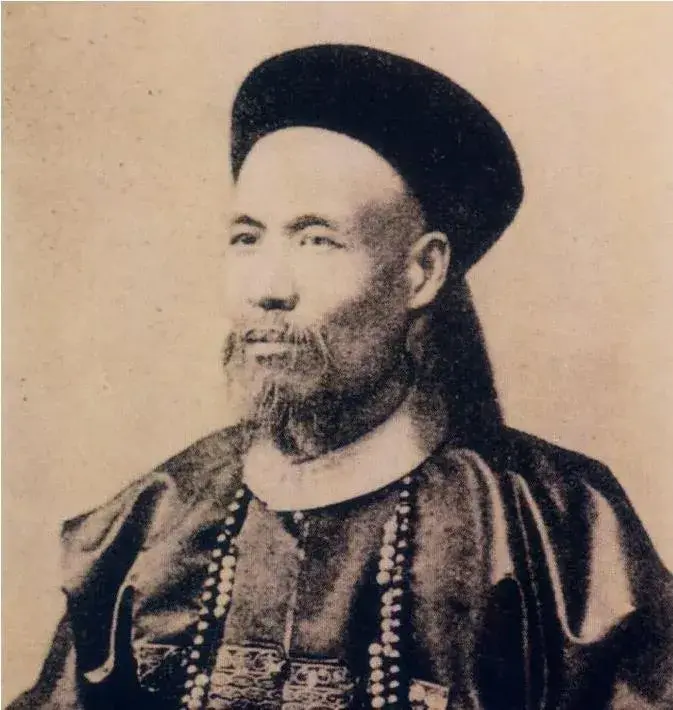
刘锦棠
Liu Jingtang (刘锦棠, June 16, 1844 – August 26, 1894), courtesy name Yizhai, was a prominent late Qing dynasty military commander, imperial statesman, and the founding governor of Xinjiang Province. Hailing from Xiangxiang, Hunan, Liu enlisted in the Xiang Army at a young age under his uncle Liu Songshan and campaigned extensively across central China against the Taiping and Nian rebellions. Following his uncle's death in…
Liu Jingtang (刘锦棠, June 16, 1844 – August 26, 1894), courtesy name Yizhai, was a prominent late Qing dynasty military commander, imperial statesman, and the founding governor of Xinjiang Province. Hailing from Xiangxiang, Hunan, Liu enlisted in the Xiang Army at a young age under his uncle Liu Songshan and campaigned extensively across central China against the Taiping and Nian rebellions. Following his uncle's death in action at the Siege of Jinjibao, Liu assumed command of the elite Old Xiang Army, successfully crushing the entrenched stronghold and subduing the prolonged rebellions across Shaanxi, Gansu, and Qinghai. Recognizing his extraordinary tactical acumen and steadfast discipline, Imperial Commissioner Zuo Zongtang appointed Liu as the frontline general commander for the grand campaign to recover Xinjiang from foreign-backed insurgent forces. During the western expedition, Liu executed the strategy of deliberate preparation followed by lightning-fast strikes. He swiftly swept across northern Xinjiang, recapturing Urumqi and surrounding strategic fortresses before forcing the mountain passes into the Tarim Basin. His relentless offensive broke the back of Yaqub Beg's regime and liberated the entire region within a year. Following the crisis over the Russian occupation of Ili, Liu commanded frontier defenses to bolster diplomatic negotiations that restored imperial territory. Upon the formal creation of Xinjiang Province in 1884, Liu became its inaugural governor, abolishing obsolete military systems, establishing regular civil prefectures and counties, reforming taxation, expanding agricultural irrigation, and laying the enduring foundations of modern governance in northwest China.
Born into a farming household in Xiangxiang County, Changsha Prefecture, Hunan Province.
Traveled to Jiangxi to join the Old Xiang Army under his uncle Liu Songshan, participating in campaigns against the Taipings.
Took over full command of the Old Xiang Army after Liu Songshan fell in battle during the assault on Jinjibao.
Completed encircling trenches and batteries, forcing Ma Hualong to surrender and pacifying the Ningxia basin.
Marched across Qinghai to strike rebel strongholds along the Datong River, securing the region and receiving appointment as Intendant of Xining.
Coordinated with imperial forces to breach the walls of Suzhou, clearing the Hexi Corridor and ending major hostilities in the northwest.
Recommended by Zuo Zongtang to lead the vanguard expeditionary army into Xinjiang as chief of headquarters operations.
Carried out a surprise march to capture Gumu, taking Urumqi, Manas, and Changji, completely clearing northern Xinjiang.
Breached the formidable pass at Daban and seized Toksun, advancing rapidly to reclaim the eight major oasis cities of the Tarim Basin.
Appointed Imperial Commissioner overseeing Xinjiang military affairs, fortifying defenses against Russian encroachment during the Ili negotiations.
Appointed the first Governor of Gansu-Xinjiang, leading the establishment of civil administrative machinery across the newly formed province.
Promoted to First Class Baron and Grand Guardian of the Heir Apparent before retiring to Hunan due to chronic illnesses.
Summoned by imperial decree to supervise Liaodong coastal defenses during the First Sino-Japanese War, but suffered a fatal stroke before departure at age fifty-one.
Liu Jingtang was born into a rural family in Xiangxiang, Hunan. His father, Liu Hourong, died in combat while resisting Taiping forces when Liu was merely ten years old. Growing up amidst chaos, Liu devoted himself to traditional histories and classical treatises on military strategy, cultivating a fearless and pragmatic temperament. In 1859, at the age of fifteen, he traveled to Jiangxi to join the Xiang Army detachment commanded by his paternal uncle, Liu Songshan. Liu served as an aide in operational planning, demonstrating keen strategic insight and earned his uncle's profound trust.
In 1864, during the final operations against Taiping remnants in southern Anhui, Liu showed exceptional composure in defending the Xiang Army headquarters at Qimen. His distinguished service was commended by Viceroy Zeng Guofan, who granted him civil credentials. Over the following years, Liu campaigned alongside his uncle across Anhui, Hubei, Henan, and Shandong against the mobile cavalry forces of the Nian Rebellion. Frequently leading surprise cavalry flank attacks, he rose through the ranks from lieutenant to lieutenant colonel, gaining wide recognition among the younger generation of Xiang Army commanders.
In 1869, the Qing court assigned the Old Xiang Army under Liu Songshan as the spearhead of Imperial Commissioner Zuo Zongtang's northwest expedition to suppress widespread unrest. In early 1870, during the protracted siege of the fortified stronghold at Jinjibao in Ningxia, Liu Songshan was fatally struck by artillery fire. Amid widespread panic, the twenty-six-year-old Liu Jingtang took charge, rallied the troops on the parapets, and stabilized the battle lines. Observing his fortitude and tactical mastery, Zuo Zongtang memorialized the throne to entrust him with the full command of the Old Xiang Army.
Confronting an intricate defensive network of over five hundred fortified outposts protected by flooded canals and muddy trenches, Liu adopted a method of meticulous siege warfare. He ordered the excavation of encircling moats measuring ten feet deep and thirty feet wide, erected siege ramparts, and deployed artillery around the clock. By early 1871, imperial forces systematically captured all peripheral outposts, compelling rebel commander Ma Hualong to surrender. In recognition of this feat, the Qing court awarded Liu hereditary ranks and the coveted Yellow Riding Jacket.
In 1872, Liu marched his army into Qinghai, executing long-range marches across rugged terrain to overcome insurgent forces along the Datong River and secure the regional center of Xining. In late 1873, Liu joined allied forces to encircle Suzhou in the Hexi Corridor. Directing relentless artillery bombardments against the battlements, he spearheaded the final storming of the city. The capture of Suzhou effectively restored imperial control over the entire Gansu corridor and extinguished the long-running northwest insurgencies, securing a solid logistical rear for future frontier campaigns.
In 1875, Zuo Zongtang received appointment as Imperial Commissioner to recover Xinjiang from Yaqub Beg, who had established a separatist regime backed by foreign powers. Zuo designated Liu Jingtang as his frontline field commander to direct the main strike force. In early 1876, Liu assembled his veteran units at Hami and made secret preparations, organizing swift transport columns across the arid desert to concentrate at Gucheng.
In autumn 1876, Liu commenced operations by adhering to the principle of deliberate logistical preparation followed by lightning execution. He dug irrigation canals at Fukang to secure drinking water for the troops, then launched a night march that took the fortified town of Gumu by surprise. Employing modern Krupp artillery, Liu destroyed the earthen fortifications and annihilated over six thousand defending soldiers under Bai Yanhu. The subsequent fall of Urumqi and Manas cleared the entirety of northern Xinjiang within a few short months.
In spring 1877, Liu led the main imperial army south across the Tian Shan range. He executed a sudden assault on the fortified pass at Daban, using artillery to blast the gates open and capturing the garrison. Pushing relentlessly toward Toksun, Liu induced total panic in the enemy leadership; Yaqub Beg took his own life as the front collapsed. Seizing this opportunity, Liu dispatched flying columns deep into the Tarim Basin, liberating Aksu, Ush, Kashgar, Yarkand, and Khotan in rapid succession. Within one year, the Qing dynasty recovered virtually all lost territories in Xinjiang except for Ili, and Liu was elevated to Second Class Baron.
In 1880, tension escalated with the Russian Empire over the occupation of the Ili Valley. The imperial court appointed Liu Jingtang to assist with Xinjiang military affairs and subsequently named him Imperial Commissioner. Liu constructed beacon towers and fortified batteries across key mountain passes in Hami and Turpan, positioning his battle-hardened regiments for potential combat. His resolute military posture provided essential leverage for envoy Zeng Jize during negotiations in Saint Petersburg, leading to the successful diplomatic restitution of the bulk of Ili.
In 1884, the Qing court approved joint proposals from Zuo Zongtang and Liu Jingtang to formally establish Xinjiang as a regular province, appointing Liu as its first governor with the concurrent title of Minister of War. Liu immediately dismantled the centuries-old military commandery system and the hereditary beg system, establishing four administrative circuits, multiple prefectures, and counties governed by appointed civilian magistrates. This monumental reform centralized judicial and fiscal power under uniform provincial authority.
During his tenure as governor, Liu prioritized land reclamation and water conservancy. He mobilized soldiers and local farming communities to clear hundreds of thousands of acres of wasteland and restored hundreds of underground karez channels and irrigation canals. He eliminated arbitrary local surcharges, instituted standard grain reserves, founded free Confucian academies, and built an extensive postal courier network. These far-reaching measures revitalized the local economy and consolidated frontier defense. In 1889, in recognition of his enduring administrative achievements, Liu was promoted to First Class Baron and Grand Guardian of the Heir Apparent.
In autumn 1889, exhausted by decades of relentless campaigning in harsh desert conditions and suffering from severe chronic rheumatism and vertigo, Liu repeatedly petitioned the throne for permission to retire. The imperial court granted him leave to return to Hunan while permitting him to retain his noble and honorary titles. In his native Xiangxiang, Liu lived in quiet seclusion, focusing on family affairs, local water projects, and clan charities, while refraining from involvement in national politics.
In summer 1894, the First Sino-Japanese War erupted, and imperial forces suffered grave setbacks on the Korean peninsula and in the Yellow Sea. Confronting an imminent threat to the Manchurian homeland, the Guangxu Emperor issued an urgent edict summoning Liu Jingtang back to active service to command Liaodong coastal defenses. Despite his grave illness, Liu made immediate preparations to answer the imperial call. However, on August 26, 1894, he suffered a sudden fatal stroke at his residence in Xiangxiang at the age of fifty-one. Mourning his loss, the court posthumously bestowed the highest honors, granted the posthumous name Xiangqin, and authorized shrines in Hunan and Xinjiang.
The recovery of Xinjiang stands as one of the most remarkable military achievements in modern Chinese history. Operating across vast, arid expanses against entrenched separatist forces, Liu demonstrated brilliant operational agility. Rather than advancing along predictable routes, he perfected long-range envelopments and rapid surprise assaults. At the battle of Gumu, his night crossing of the desert caught defenders unprepared, allowing his concentrated modern artillery to breach the walls within three days and crush the rebel field army.
During the southern campaign, Liu executed extraordinary marches across the Tarim Basin. Covering dozens of miles daily across arid terrain, his advance columns surprised garrison towns before reinforcements could organize. Liu strictly enforced discipline, forbidding looting and opening public granaries to feed local populations that had suffered under wartime conditions. His strategic speed and humane treatment won broad popular cooperation, accelerating the collapse of the foreign-sponsored regime.
Beyond his battlefield laurels, Liu served as the principal institutional architect of modern Xinjiang. Recognizing that the antiquated military rule established in the Qianlong era was unsuited for modern governance, he collaborated with Zuo Zongtang to draft comprehensive proposals transforming Xinjiang into a standard province. Upon taking office in 1884, he established the provincial capital at Dihua (modern Urumqi) and set up circuits and prefectures from the Altay Mountains to the southern oases.
Liu abolished the hereditary power of feudal begs in southern Xinjiang, replacing customary tyranny with standard statutory law and civil administration. By bringing taxation, censuses, and judicial procedures under regular bureaucratic control, he eradicated regional fragmentation and integrated Xinjiang firmly into the institutional framework of the Chinese state.
Liu understood that long-term border security depended entirely on economic sustainability and agricultural abundance. To overcome the logistical challenge of hauling grain from the interior, he spearheaded agricultural reclamation, organizing garrison troops and incoming migrants to till newly cleared lands. He personally inspected desert water systems, guiding the repair and expansion of irrigation canals throughout Turpan, Hami, and Aksu.
To secure the frontier against external invasion, Liu reorganized provincial garrisons into standardized infantry and cavalry formations trained in modern firearms. He constructed permanent defensive outposts and watchtowers along strategic frontiers and developed an efficient relay system connecting remote oasis towns with administrative capitals. This comprehensive defense infrastructure established a formidable deterrent that protected China's northwestern borders for decades.
FIGURES ASSOCIATED WITH THIS DYNASTY