Birth
Born in the Ili River valley as the sixth son of Erdeni Batur Khong Tayiji; recognized as the eighth Wensa Living Buddha.
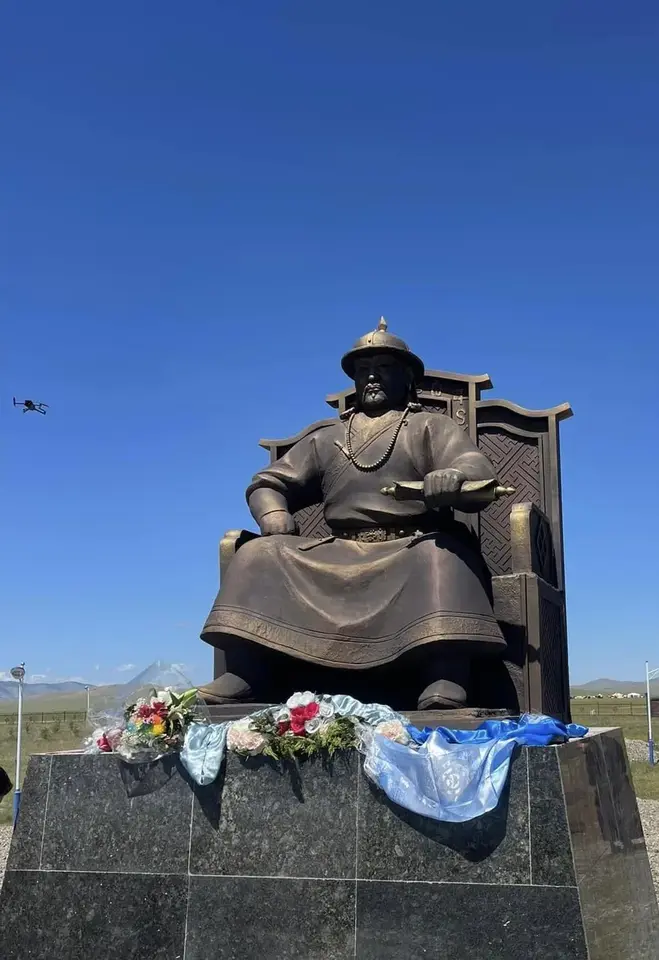
噶尔丹
Choros Galdan (绰罗斯·噶尔丹, 1644–1697 CE), titled Boshugtu Khan, was the formidable ruler of the Dzungar Khanate and a towering figure in seventeenth-century Eurasian steppe history. Born the sixth son of Erdeni Batur Khong Tayiji, Galdan was recognized in infancy as the eighth incarnation of the Wensa Living Buddha (Ensa Khutuktu). He traveled to Tibet in his youth, studying Buddhist metaphysics and statecraft under the Fourth…
Choros Galdan (绰罗斯·噶尔丹, 1644–1697 CE), titled Boshugtu Khan, was the formidable ruler of the Dzungar Khanate and a towering figure in seventeenth-century Eurasian steppe history. Born the sixth son of Erdeni Batur Khong Tayiji, Galdan was recognized in infancy as the eighth incarnation of the Wensa Living Buddha (Ensa Khutuktu). He traveled to Tibet in his youth, studying Buddhist metaphysics and statecraft under the Fourth Panchen Lama and the Fifth Dalai Lama. In 1670 CE, after his elder brother Sengge was assassinated in a succession conspiracy, Galdan disrobed, returned to the Ili valley, and crushed the usurpers to assume leadership as Khong Tayiji. Reorganizing military and civil administration, he unified the Four Oirat confederations by crushing Ochirtu Chechen Khan of the Khoshut in 1677 CE. The Fifth Dalai Lama bestowed upon him the title "Boshugtu Khan," formalizing the establishment of the Dzungar Khanate. Galdan subsequently conquered the Yarkent Khanate in the Tarim Basin, brought the Kazakh Steppe under his sway, and occupied Central Asian trading hubs including Tashkent and Samarkand. Aiming to resurrect a pan-Mongol empire, Galdan launched a full-scale invasion of Khalkha Mongolia in 1688 CE, driving hundreds of thousands of refugees south to seek Qing protection. In 1690 CE, advancing to within several hundred li of Beijing, he clashed with Qing forces at the Battle of Ulan Butung, where his fortified "camel redoubt" was shattered by imperial artillery. Cut off from his home base in Ili by his rebellious nephew Tsewang Rabtan, Galdan suffered a catastrophic defeat at the Battle of Jao Modo in 1696 CE against General Fiyanggu, during which his heroic consort Lady Anu fell in combat. Trapped in the Kobdo wilderness during the Kangxi Emperor's third expedition, Galdan died of illness and poison on May 3, 1697 CE at the age of fifty-four.
Born in the Ili River valley as the sixth son of Erdeni Batur Khong Tayiji; recognized as the eighth Wensa Living Buddha.
Relinquished tribal inheritance rights and traveled to Lhasa; received monastic ordination from the Fifth Dalai Lama and studied under the Fourth Panchen Lama at Tashilhunpo.
Returned to the Ili valley; served as a senior ecclesiastical arbiter and conducted diplomatic negotiations with Russian envoys.
Disrobed following the assassination of his brother Sengge; led a cavalry dash into the Altai Mountains, slaying the rebel Chechen Tayiji.
Formally succeeded as Khong Tayiji; married his brother's widow Lady Anu and received diplomatic confirmation from both Beijing and Lhasa.
Defeated and slew his maternal grandfather Ochirtu Chechen Khan of the Khoshut, achieving uncontested dominance over the Four Oirat tribes.
Invested with the title "Boshugtu Khan" by the Fifth Dalai Lama; conquered the Yarkent Khanate in the Tarim Basin, installing the Afaqi Khojas as local governors.
Campaigned across the Kazakh Steppe, storming Tashkent, Samarkand, and Bukhara, taking the son of Tauke Khan as hostage.
Mobilized thirty thousand musketeers across the Khangai Mountains, routing the Tüsheet Khan and driving the Khalkha Mongols to submit to the Qing.
Betrayed by his nephew Tsewang Rabtan, who seized the Dzungar home base in Ili, severing Galdan's logistical retreat.
Invaded Inner Mongolia; fought Qing armies at Ulan Butung, where his camel fortress was breached by imperial heavy artillery.
Encircled by General Fiyanggu at Jao Modo during Kangxi's second expedition; his army was crushed and Queen Anu was killed in action.
Cornered in the wilderness of Kobdo during Kangxi's third expedition; died of poison and disease on May 3; his ashes were surrendered to Beijing.
Choros Galdan was born in 1644 CE in the fertile pastures of the Ili River valley. He belonged to the noble Choros clan of the Dzungar Mongols, who traced their ancestry to Esen Taishi, the formidable Oirat conqueror of the fifteenth century. His father, Erdeni Batur Khong Tayiji, had consolidated the nomadic tribes of northwestern China into the nascent Dzungar confederation. His mother, Lady Yum-Agas, was the daughter of Shukhur Daiching, ruler of the Torghuts.
Shortly after his birth, high-ranking lamas of the Gelug school arrived in Dzungaria from Lhasa. They identified the infant as the eighth reincarnation of the Wensa Living Buddha (Ensa Khutuktu), an incarnate lineage possessing immense prestige across the Tibetan plateau. In 1652 CE, the eight-year-old Galdan, using his title as the Wensa Living Buddha, sent tribute missions to Beijing with his father, meeting the Fifth Dalai Lama at Zhangjiakou.
Gifted with a sharp intellect and martial charisma, Galdan was devoted to Buddhist doctrine while privately practicing swordsmanship and mounted archery. Observing his son's extraordinary talents, Batur Khong Tayiji wished to name him heir apparent. However, Galdan declined in deference to his elder brother Sengge, choosing instead to embark on a monastic path. In 1656 CE, Galdan journeyed to Lhasa.
At the Jokhang Temple, the Fifth Dalai Lama administered his novice vows and spiritual initiation. Galdan then relocated to Tashilhunpo Monastery in Shigatse, where he studied Madhyamaka philosophy and tantric treatises under the revered Fourth Panchen Lama, Lobsang Chökyi Gyaltsen. Following the Panchen Lama's passing in 1662 CE, Galdan returned to Lhasa to study directly under the Fifth Dalai Lama. During his decade in central Tibet, Galdan established his own monastic estate, mastered Tibetan and classical Mongolian, and translated canonical texts into Oirat clear script, establishing an unparalleled spiritual network.
In late 1666 CE, following the death of the great Oirat scholar Zaya Pandita, Galdan accompanied his sister-in-law Lady Tsewang-Zalmo back to Dzungaria. Emerging as the preeminent ecclesiastical dignitary of the western Mongols, he conducted religious ceremonies and engaged in high-level diplomacy. In 1668 and 1669 CE, he received Russian embassies under Berlin and Ruzitskiy, demonstrating stern authority by briefly imprisoning Russian envoys in retaliation for Russian harassment of Dzungar merchants in Siberia.
In September 1670 CE, a bloody succession crisis shattered Dzungaria. Dissident princes Chechen Tayiji and Zotov Batur conspired against and assassinated Galdan's elder brother, the ruler Sengge Khong Tayiji. The Dzungar encampments fell into utter chaos as loyalists scattered.
Hearing the news, Galdan cast off his monastic robes, took up arms, and declared his return to secular rule. Gathering a thousand cavalry loyal to his deceased brother, he launched a lightning strike across the Altai Mountains. Chechen Tayiji met him with ten thousand warriors. In the ensuing clash, the twenty-seven-year-old former monk charged into the enemy vanguard, slaying over a hundred riders with his lance. Inspiring his men to victory, Galdan pursued Chechen to the Altai passes, executing him on the field, while Zotov fled to Qinghai.
In early 1671 CE, Galdan formally assumed the title of Khong Tayiji of the Dzungars. Adhering to the steppe custom of levirate marriage, he married Sengge's widow, Lady Anu, grand-niece of the Khoshut ruler. Galdan reorganized tribal administration, invited displaced clans back to Ili, enacted clear legal codes, promoted agriculture, and established ordnance workshops for muskets and chainmail. In 1672 CE, the Kangxi Emperor formally recognized his legitimacy, and the Fifth Dalai Lama conferred upon him the official copper seal of Khong Tayiji.
Securing internal control, Galdan embarked on systematic territorial expansion. His principal rival was Ochirtu Chechen Khan, supreme ruler of the neighboring Khoshut Mongols and Galdan's maternal grandfather. The two leaders clashed over grazing lands and regional hegemony. In January 1677 CE, Galdan launched a surprise offensive, routing the Khoshut forces and slaying Ochirtu Khan. Absorbing the Khoshut and subjugating the Dörbet and Torghut remnants, Galdan unified the Four Oirat confederations under Dzungar supremacy.
In 1678 CE, the Fifth Dalai Lama bestowed upon Galdan the supreme title "Danzen Boshugtu Khan" ("Khan Who Upholds the Teachings"). Galdan became the first Dzungar ruler to bear the title of Khan, transforming the tribal union into the centralized Dzungar Khanate.
That same year, a religious civil war broke out in the Tarim Basin. The Afaqi Khojas, leaders of the White Mountain faction of Sufism, were ousted by the Black Mountain faction and the ruler of the Yarkent Khanate. Khoja Afaq fled to Tibet, where the Fifth Dalai Lama provided him with letters of introduction to Galdan. Recognizing an opportunity to dominate the Silk Road, Galdan led an army across the icy passes of the Tian Shan in late 1678 CE.
Dzungar cavalry stormed Aksu and Ush, laying siege to Kashgar and Yarkent. Galdan captured Ismail Khan, extinguishing the Chagatai lineage that had ruled southern Xinjiang for over three centuries. He established the Hakim Beg system to collect annual tributes of silver, cotton, and grain, installing Khoja Afaq as his regional surrogate while keeping Khoja kinsmen as hostages in Ili.
Turning westward, Galdan attacked the Kazakh Steppe between 1682 and 1684 CE. Despite initial setbacks, he warned Tauke Khan that he would wage seasonal war until his hair turned grey. The following year, his cavalry captured Tashkent, Samarkand, and Bukhara, taking Tauke Khan's son as a hostage to Lhasa. By 1685 CE, Galdan had established his permanent capital in the Ili River valley, commanding an empire spanning from the Altai Mountains to Lake Balkhash and the Pamir plateau.
Galdan's ambitions expanded toward pan-Mongol unification. Conceiving of a shared realm under his rule ("I rule the north, while You rule the south"), he turned his attention to the Khalkha Mongols of Outer Mongolia, who were embroiled in feuds between the Tüsheet Khan and the Zhasagt Khan.
In 1686 CE, the Kangxi Emperor convened a reconciliation conference at Kuren-Belchir. During the talks, the First Jebtsundamba Khutuktu (brother of the Tüsheet Khan) sat on equal footing with the Dalai Lama's envoy. Galdan, revering the Dalai Lama, denounced the Khutuktu's perceived blasphemy. Tensions escalated in 1687 CE when the Tüsheet Khan murdered the Zhasagt Khan and killed Galdan's younger brother, Dorjizhab.
Using his brother's death as a casus belli, Galdan crossed the Khangai Mountains in 1688 CE with thirty thousand elite troops equipped with Russian-style heavy matchlocks (zamburak). In sweeping engagements, Galdan routed the Khalkha armies, pillaged Erdene Zuu Monastery, and drove the Khalkha population into headlong flight toward the Great Wall. Over a hundred thousand Khalkha refugees fled to Inner Mongolia, begging the Kangxi Emperor for imperial protection.
However, Galdan's triumphs were undermined by domestic betrayal. His nephew Tsewang Rabtan, son of the late Sengge, had discovered Galdan's plots to assassinate him. In late 1688 CE, Tsewang Rabtan led a rebellion in the west, capturing the Ili River valley and severing Galdan's logistical base. Trapped on the eastern steppes, Galdan turned to the Russian Empire, sending envoys to Irkutsk and Nerchinsk to request military assistance.
In May 1690 CE, Galdan marched into Inner Mongolia, crushing Qing frontier outposts at the Battle of the Ulgui River. By July, his vanguard stood at Ulan Butung, only seven hundred li from Beijing. The Kangxi Emperor resolved to command the imperial forces in person, mobilizing one hundred thousand troops under Prince Fuquan.
On September 3, 1690 CE, the Battle of Ulan Butung commenced. Galdan arranged over ten thousand camels bound together on their knees, reinforced with wet felt and wooden breastworks, creating a fortified "camel redoubt" (tuocheng). Dzungar marksmen fired from behind the barricades. The Qing army deployed heavy field artillery, bombarding the camel line until breaches were torn open. In the melee, imperial uncle Tong Guogang was killed by musket fire. As dusk fell, Galdan feigned a willingness to surrender, using the diplomatic truce to slip away into the northern wastes with his surviving cavalry.
Following his escape from Ulan Butung, Galdan operated in the barren steppes of Kobdo and the Kherlen River, reduced to fewer than six thousand followers. In 1691 CE, the Kangxi Emperor presided over the Dolon Nor assembly, formalizing the submission of the Khalkha banners and incorporating Outer Mongolia into the Qing Empire.
In late 1695 CE, desperate for food, Galdan led his remaining troops down the Kherlen River, raiding livestock and claiming that Russian armies were arriving to support him. In February 1696 CE, the Kangxi Emperor launched his second personal expedition, dispatching three grand armies across the Gobi Desert. The emperor commanded the central column, while General Fiyanggu advanced from Guihua with forty-six thousand troops to cut Galdan's retreat.
Fearing the imperial standard, Galdan fled westward without offering battle. On June 12, 1696 CE, his exhausted force marched directly into Fiyanggu's ambush at Jao Modo (modern Zuunmod, south of Ulaanbaatar). Qing troops seized the high ground on Mount Khentii, raining cannon fire into the valley. In the desperate fighting, Queen Anu donned armor and led a ferocious countercharge to cover her husband's retreat, perishing from bullet wounds. Galdan broke through the cordon with only a few dozen horsemen.
The defeat at Jao Modo broke the Dzungar expeditionary force. Back in Xinjiang, Tsewang Rabtan barred the mountain passes, while the oasis cities of the Tarim Basin expelled Dzungar garrisons. The Russian Empire refused him sanctuary, and Qing garrisons sealed the southern trails to Tibet.
In early 1697 CE, Galdan's son Septen Baljur was captured at Hami and escorted to Beijing. The Kangxi Emperor launched his third expedition, establishing headquarters in Ningxia. Reduced to fewer than a hundred starving retainers in the wastes of Ach-Amtat, Galdan slaughtered his last horses for food.
On May 3, 1697 CE (the thirteenth day of the intercalary third month), cornered and facing capture, Galdan died of illness and poison at the age of fifty-four. His remaining commanders, Danzila and Noyan Gelong, cremated his remains, surrendering his ashes and his daughter Zunchehai to General Fiyanggu. Galdan's remains were delivered to Beijing, marking the conclusion of a decade-long conflict that reshaped northern Eurasia.
Galdan's transformation of the Dzungar confederation represented a watershed moment in seventeenth-century Eurasian history. Prior to his accession, the Oirats were divided into rival autonomous units.
Relying on his spiritual authority as an incarnate lama and his military decisiveness, Galdan subjugated the Khoshut, Dörbet, and Torghut tribes, ending decades of internecine warfare.
His formal investiture as "Boshugtu Khan" by the Fifth Dalai Lama in 1678 CE created the first centralized Dzungar state. He promulgated unified legal statutes, organized bureaucratic councils, and laid the institutional foundation that enabled Dzungaria to rival the Qing and Russian empires for over eight decades.
Galdan displayed exceptional strategic reach by extending nomadic authority over sedentary oasis civilizations. By conquering the Yarkent Khanate in 1678 CE, he brought the trade networks of the Tarim Basin under Dzungar control.
His establishment of the Hakim Beg administrative system allowed local Muslim elites to govern agrarian communities while funneling revenue, cotton, and grain to the pastoral north.
His westward campaigns into the Kazakh Steppe secured control over the Chu and Talas river basins, incorporating commercial cities such as Tashkent and Samarkand into a continental trading empire.
Galdan's invasion of Khalkha in 1688 CE inadvertently precipitated the permanent political integration of Outer Mongolia into China. By devastating the Khalkha tribes, he eliminated the possibility of an independent northern Mongolian federation.
Faced with annihilation, the Khalkha religious and secular leaders turned to the Qing Dynasty for salvation, culminating in the 1691 Dolon Nor assembly, where the Khalkha banners formally pledged allegiance to the Kangxi Emperor.
Galdan's military threat compelled the Qing court to establish direct civil and military administration across the Mongolian plateau, fundamentally altering the frontier map of China.
Throughout his campaigns against the Qing Empire, Galdan proved himself one of the most formidable adversaries the Manchu dynasty ever faced. He pioneered tactical innovations by outfitting his cavalry with heavy Russian-style matchlocks and establishing the celebrated "camel redoubt" (tuocheng), turning pack animals into mobile fortifications.
His resilience enabled him to survive the artillery barrages of Ulan Butung and sustain an army in the wilderness for years without an agrarian base.
His ultimate failure underscored the geopolitical limits of nomadic pastoralism against a unified, technologically superior agrarian empire, closing the era of nomadic conquests across northern China.
FIGURES ASSOCIATED WITH THIS DYNASTY