Birth in Fujian
Born into a scholar-gentry lineage in Shaxian; displayed profound moral seriousness and devoted himself to the classical canon.
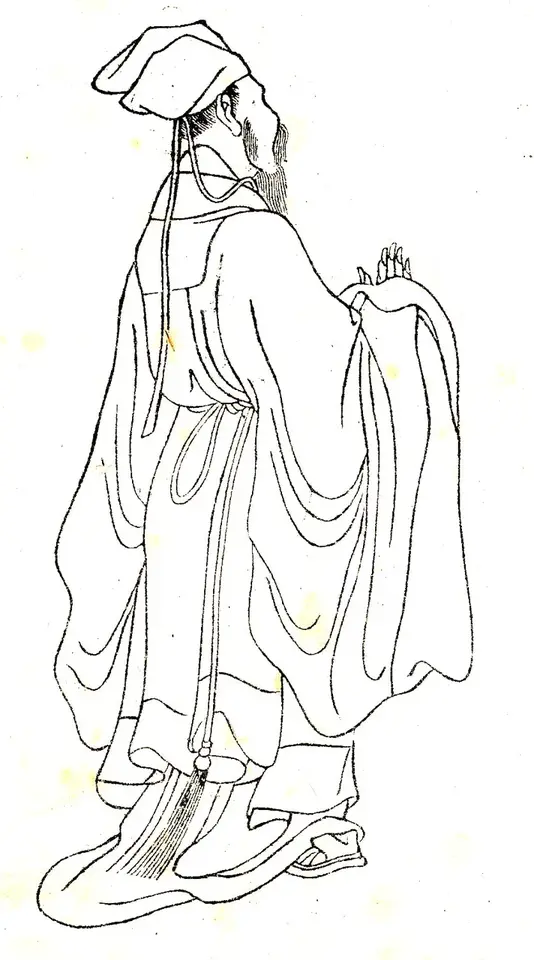
罗从彦
Luo Congyan (罗从彦, 1072 – 1135), courtesy name Zhongsu, universally revered as Master Yuzhang, was a native of Shaxian in Nanjian Prefecture (present-day Shaxian District, Sanming, Fujian Province). He was an eminent Neo-Confucian philosopher, educator, and foundational thinker during the Northern and Southern Song transition, serving as an indispensable intellectual bridge linking Northern Song Cheng-school learning with…
Luo Congyan (罗从彦, 1072 – 1135), courtesy name Zhongsu, universally revered as Master Yuzhang, was a native of Shaxian in Nanjian Prefecture (present-day Shaxian District, Sanming, Fujian Province). He was an eminent Neo-Confucian philosopher, educator, and foundational thinker during the Northern and Southern Song transition, serving as an indispensable intellectual bridge linking Northern Song Cheng-school learning with Southern Song Zhu Xi's synthesis. Dedicated to sagehood from his youth, he studied under Wu Yi before learning that fellow countryman Yang Shi (Master Guishan) had mastered the Cheng brothers' teachings. Driven by spiritual passion, Luo Congyan traveled hundreds of li on foot and sold his ancestral fields to finance journeys to Luoyang and Xiaoshan to seek instruction. In 1112, he formally entered Yang Shi's studio, absorbing the master's teachings. Historian Huang Zongxi later observed that among Yang Shi's disciples, Luo Congyan was the least haughty, yet the transmission of the Way ultimately relied upon him. After concluding his studies, Luo Congyan secluded himself in the mountains of Shaxian and Yanling for over two decades, renouncing official ambitions to meditate on the Book of Changes, Analects, Mencius, and Doctrine of the Mean. He authored foundational treatises including Zun Yao Lu (Records in Reverence of Yao), Tai Heng Lu, and Zhongyong Shuo, pioneering the doctrine of cultivating quietude as the essential method to perceive the Heavenly Principle in the state before emotional activation. In 1130, he passed the imperial special examination, subsequently serving as Registrar of Boluo County in Huizhou. In office, he practiced the benevolent Kingly Way, urged administrative simplicity, restrained official avarice, and founded Dia'ao Academy. Passing away at his post in 1135, he was so impoverished that his coffin remained in Guangdong for years before kin could afford burial in Fujian. Luo Congyan transmitted his teachings to Li Tong, who in turn instructed Zhu Xi, establishing Luo Congyan as the direct intellectual progenitor of the Min School. Emperor Lizong posthumously honored him as Wenzhi and enshrined his spirit within the Confucian Temple.
Born into a scholar-gentry lineage in Shaxian; displayed profound moral seriousness and devoted himself to the classical canon.
Hearing that Yang Shi had inherited the Cheng brothers' learning, he traveled on foot across mountains to seek his guidance.
Sold ancestral fields to finance a pilgrimage to Luoyang, studying the Book of Changes and cosmological metaphysics.
Formally enrolled under Yang Shi at Xiaoshan; served with humble devotion, returning south with all the master's manuscript teachings.
Retreated to Mount Luofu and Yanling for over twenty years; authored the Zun Yao Lu, Tai Heng Lu, and commentaries on the classics.
Accepted Li Tong as his foremost disciple, instructing him in silent contemplation to perceive the balanced mind before activation.
Succeeded in the special imperial examinations; despite entering official registers, he maintained his ascetic lifestyle.
Appointed Registrar of Boluo County in Huizhou; implemented benevolent governance, equalized levies, and founded Dia'ao Academy.
Died at his official post in Boluo at age sixty-four; his family lacked funds for burial until kin aided the return of his remains to Shaxian.
Emperor Lizong conferred the posthumous title Wenzhi, enshrinement in the Confucian Temple, and court titles.
Luo Congyan was born in 1072 in Shuibei Street, Shaxian, Nanjian Prefecture. Descending from the prominent Yuzhang Luo clan, his family had long emphasized classical scholarship and moral discipline. From childhood, Luo Congyan was dignified and calm, shunning frivolous amusements. In his youth, he studied under local Confucian master Wu Yi, examining the Six Classics with relentless dedication.
However, observing that contemporary civil service examinations prioritized superficial literary flourishes and rote memorization, Luo Congyan lamented that such pursuits failed to ground spiritual existence. In 1100, hearing that his fellow prefectural scholar Yang Shi had studied directly under Cheng Hao and Cheng Yi, attaining the essence of the Heavenly Principle, Luo Congyan was filled with spiritual aspiration. Learning that Yang Shi held office in Zhejiang, the twenty-nine-year-old scholar traveled on foot across hundreds of li of rugged mountain trails, enduring rain and hunger to present himself at Yang Shi's residence. Yang Shi perceived his unwavering commitment and moral purity, offering warm praise and profound philosophical guidance.
To pursue the ultimate origins of Neo-Confucian doctrine, Luo Congyan took the extraordinary step of selling his modest ancestral farmlands to finance an expedition to Luoyang, examining the Book of Changes and cosmological principles, displaying rare dedication to the pursuit of truth.
In 1112, learning that Yang Shi was governing Xiaoshan County, Luo Congyan journeyed there to enroll formally as a resident disciple. At the time, Yang Shi was actively directing the massive Xianghu water conservancy project. Luo Congyan remained by his side, observing how classical benevolence was translated into practical engineering while posing philosophical inquiries during evening respites.
Among Yang Shi's many gifted students, Luo Congyan was the most reserved and grounded. Free from rhetorical flashiness or competitive vanity, he sat in contemplation daily, transcribing his master's oral instructions, commentaries, and analytical treatises in meticulous script. After years of study, Yang Shi recognized his profound realization, bestowing his entire collection of lecture drafts and Cheng-school manuscripts upon him. When Luo Congyan departed for Fujian, he packed every text carefully, leading contemporaries to remark that he studied for years and wrapped up all the books to return.
In the Records of Song and Yuan Confucians, Ming philosopher Huang Zongxi famously remarked that while other disciples of Yang Shi were celebrated for brilliant eloquence, Luo Congyan was the least haughty in demeanor, yet the transmission of the southern Neo-Confucian lineage rested entirely upon his shoulders.
Upon returning to Fujian, Luo Congyan abandoned worldly examination ambitions. From 1119 to 1131, while northern China fell to Jurchen invasions and chaos engulfed the empire, Luo Congyan remained in quiet seclusion in the Dongtian retreat of Shaxian and the valleys of Yanling, living on coarse vegetarian fare and engaging in continuous philosophical writing.
During these years, Luo Congyan established his doctrine of cultivating quietude as the central method of self-cultivation. He advocated that scholars should quiet the mind through seated meditation to restrain roving delusions, emphasizing the mind's central governing role. Sitting quietly each day, he contemplated the harmonious atmosphere of the mind before feelings of joy, anger, sorrow, or delight arose, asserting that silent contemplation was both the engine of learning and the foundation of moral character. In these quiet years, he composed the Zun Yao Lu, Tai Heng Lu, Commentaries on the Analects and Mencius, and Explanation of the Doctrine of the Mean, laying the theoretical foundation of the Southern School.
During this period, Yanping scholar Li Tong traversed rugged terrain to become his student. Recognizing Li Tong's tranquil integrity, Luo Congyan transmitted the method of quietude to him, instructing him to perceive the Heavenly Principle in silent meditation, forging the crucial link leading to Zhu Xi.
In 1130, amidst the devastation of the Jurchen invasions, Emperor Gaozong established a special imperial examination to recruit unheralded scholars. Urged by colleagues and provincial education officials, Luo Congyan sat for the examination and attained his Jinshi degree.
In 1132, at age sixty-one, Luo Congyan was appointed Registrar of Boluo County in Huizhou, Guangdong. Boluo was a remote coastal jurisdiction known for humid heat and rough local customs. Undeterred by disease and distance, Luo Congyan assumed his post, applying his philosophical principles to practical administration. He advocated classical Kingly governance, implementing policies of administrative simplicity and tax restraint, ensuring that corvee duties were equitably distributed and preventing clerks from extorting the peasantry.
To address the shortage of schools, Luo Congyan founded the Dia'ao Academy in Xianfudu. He donated his meager official salary to establish ferry crossings and endowed agricultural fields, using the revenues to support impoverished scholars, and personally expounded the Great Learning and Doctrine of the Mean. During his leisure, he explored Mount Luofu, lecturing within the Zhuming Cave and planting the seeds of Neo-Confucian education across Guangdong.
In 1135, having exhausted his health through relentless administrative labor in the subtropical climate, Luo Congyan passed away in his official residence at Boluo at age sixty-four. Throughout his life, he remained incorruptible; upon his death, his residence contained only several boxes of books and a single cloth blanket, with no savings left behind. His family was so destitute that they could not afford the transportation costs to return his coffin to Fujian, forcing his remains to be sheltered temporarily in a Huizhou Buddhist monastery. Several years later, a clan relative named Luo You was appointed Vice Prefect of Huizhou; weeping at the tragedy, he raised funds from local officials to escort the coffin back to Shaxian for interment at Mount Dongtian.
Although Luo Congyan held modest office and died in poverty, his contribution to Chinese intellectual history was monumental. Having inherited Yang Shi's core teachings at Xiaoshan, he instructed Li Tong at Mount Luofu; Li Tong subsequently mentored Zhu Xi for over a decade in Yanping, enabling Zhu Xi to synthesize the northern masters and create the mature Min School. In 1241, Emperor Lizong posthumously honored Luo Congyan as Gentleman for Court Discussion, conferred the title Wenzhi, and enshrined his spirit within the Eastern Cloister of the Confucian Temple.
Luo Congyan played an irreplaceable historical role as the preserver and protector of Neo-Confucian transmission. Following the death of the Cheng brothers and the fall of the Central Plains, their teachings faced extinction. Working under Yang Shi, Luo Congyan chose quiet obscurity, spending decades gathering, transcribing, and refining the core manuscripts of Cheng learning. His perseverance ensured that the philosophical doctrines of the Heavenly Principle survived the chaos of the Jin invasions and were planted permanently in southern China.
Luo Congyan made an original theoretical contribution to Neo-Confucian spiritual cultivation by advancing Yang Shi's meditative techniques into a systematic methodology centered on cultivating quietude. He instructed scholars to sit in silent composure to perceive the balanced state of the mind before feelings arise, restraining erratic desires and nourishing the original moral mind. This meditative approach was passed directly to Li Tong and became the foundational practice of Zhu Xi's early intellectual development.
Luo Congyan's twenty-volume work Zun Yao Lu (Records in Reverence of Yao) represents a major contribution to Song political thought. Drawing upon the governance of Song founders Taizu and Taizong, he articulated the principles of classical Kingly rule, asserting that sovereigns must honor ancestral precedents, cherish upright ministers, suppress personal desires, and practice administrative simplicity. Severely criticizing Wang Anshi's reforms and Cai Jing's fiscal extortion, the Zun Yao Lu integrated metaphysics with imperial administration, providing a comprehensive manual for rectifying sovereign conduct.
Luo Congyan's greatest achievement was nurturing Li Tong (Master Yanping). During his seclusion in Shaxian, Luo Congyan passed his complete philosophical system, classical commentaries, and meditative methods to Li Tong. Through this pure transmission, Li Tong guided Zhu Xi for over a decade, culminating in the birth of the Min School. As Qing scholar Quan Zuwang concluded, the emergence of Zhu Xi in Min learning was initiated by Master Yuzhang.
FIGURES ASSOCIATED WITH THIS DYNASTY