Noble Birth
Born into the premier Xiao consort lineage, excelling in classics, lyric poetry, and instrumental music from childhood.
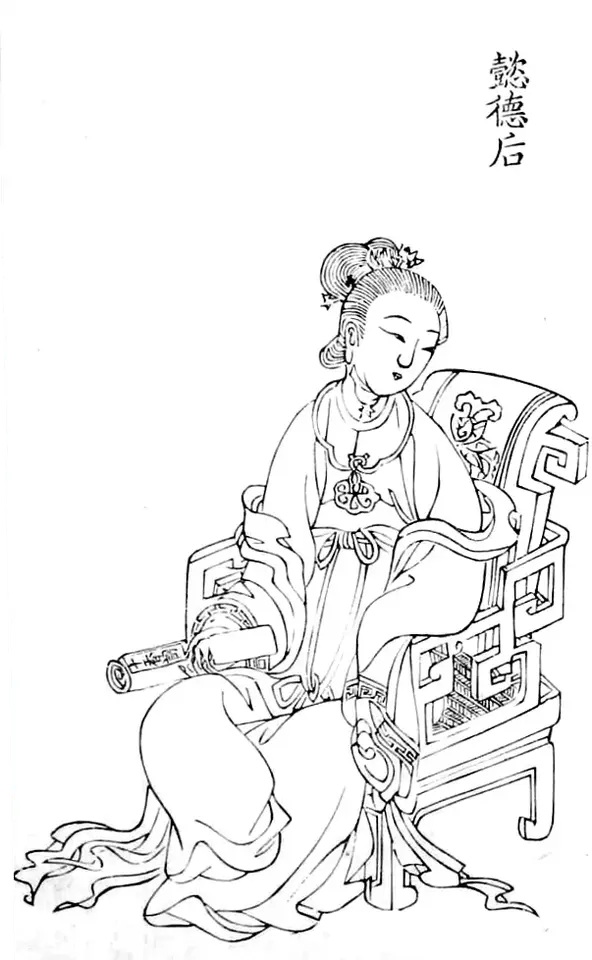
萧观音
Xiao Guanyin (萧观音, June 17, 1040 – December 23, 1075) was the first empress of Emperor Daozong of Liao (Yelu Hongji) and the most celebrated literary figure and poet of the Liao Dynasty. Hailing from the prestigious Xiao consort clan, she was a maternal granddaughter of Emperor Shengzong of Liao and the daughter of Bureau of Military Affairs Chancellor Xiao Xiaohui. Endowed with exceptional beauty, intellect, and profound…
Xiao Guanyin (萧观音, June 17, 1040 – December 23, 1075) was the first empress of Emperor Daozong of Liao (Yelu Hongji) and the most celebrated literary figure and poet of the Liao Dynasty. Hailing from the prestigious Xiao consort clan, she was a maternal granddaughter of Emperor Shengzong of Liao and the daughter of Bureau of Military Affairs Chancellor Xiao Xiaohui. Endowed with exceptional beauty, intellect, and profound moral integrity, she possessed formidable mastery of classical Han and Khitan literature and achieved unmatched virtuosity in playing the zheng and the pipa. Because of her grace and benevolent demeanor, her kin likened her to the Bodhisattva Guanyin, adopting it as her personal name. In 1053, Xiao Guanyin married Yelu Hongji when he was the King of Yan and Zhao. Following his imperial enthronement as Emperor Daozong in 1055, she was consecrated as empress. In 1056, she accompanied Daozong on his autumn hunting expedition, composing her famed seven-character quatrain at the Tiger-Taming Forest, which moved the emperor to praise her as a transcendent literary genius. Together, the imperial couple compiled the poetry anthology Sovereign and Subjects of One Mind, Han and Pastoral People Sharing the Same Custom. Upholding rigorous Confucian palace propriety, she repeatedly urged Daozong to curtail excessive hunting excursions that imperiled state security and firmly expelled the treasonous consort servant Dandeng. These upright remonstrances alienated the indulgent sovereign, prompting her to compose the renowned ten-poem suite The Courtyard of Turning Hearts to plead for reconciliation. In 1075, the scheming Prime Minister Yelu Yixin, dreading the political ascendancy of Crown Prince Yelu Jun, orchestrated a ruthless conspiracy to eliminate the empress. Aided by Chancellor Zhang Xiaojie and the vengeful servant Dandeng, they fabricated the salacious Ten Fragrances Poem, tricked Xiao Guanyin into transcribing it in her calligraphy, and framed her for adultery with court musician Zhao Weiyi. Blrinded by fabricated evidence and cruel torture confessions, Daozong brutally struck her with an iron mace and decreed her execution by hanging with white silk at the age of thirty-six. Before her death, she composed the monumental Lament on My Demise. Her grandson, Emperor Tianzuo, posthumously rehabilitated her in 1101, reinterring her at the Qingling Mausoleum as Empress Xuanyi. Her surviving corpus remains the apex of Liao Dynasty poetic achievement.
Born into the premier Xiao consort lineage, excelling in classics, lyric poetry, and instrumental music from childhood.
Wedded Yelu Hongji, then King of Yan and Zhao, winning deep affection through virtue and cultural refinement.
Yelu Hongji ascended the imperial throne as Emperor Daozong, formally investing Xiao Guanyin as empress.
Composed the iconic quatrain during the autumn hunt; Daozong hailed her as a foremost literary genius of the realm.
Authored five-character regulated poems on cultural unity, compiled into an imperial anthology presented to the Empress Dowager.
Gave birth to Crown Prince Yelu Jun; severely rebuked the arrogant consort of Prince Yelu Zhongyuan for improper behavior.
Formally warned Daozong against perilous wilderness hunts; estranged by the court, she composed the ten-song Courtyard of Turning Hearts.
Framed by Yelu Yixin and Zhang Xiaojie with forged verses; forced to commit suicide by hanging at thirty-six, and posthumously vindicated as Empress Xuanyi by Emperor Tianzuo in 1101.
Xiao Guanyin was born on June 17, 1040, during the reign of Emperor Xingzong of Liao. Her mother was Princess Yue, a daughter of Emperor Shengzong, and her father was Xiao Xiaohui, a paramount statesman and Chancellor of the Northern Bureau of Military Affairs. Legends record that on the eve of her birth, her mother dreamed that the radiant full moon dropped into her bosom and rose toward the zenith, only to be suddenly swallowed by a celestial hound. Xiao Xiaohui interpreted the omen as portending that his newborn daughter would attain supreme worldly exaltation yet meet an untimely, tragic end.
From early youth, Xiao Guanyin exhibited extraordinary intellectual aptitude. She read extensively across the Confucian classics, historical annals, philosophical treatises, and literary collections. Endowed with tall stature, elegant poise, and delicate features, she maintained solemn decorum in all social interactions. Beyond her literary prowess, she attained unrivaled mastery of musical composition and performance, playing both the twenty-one-stringed zheng and the four-stringed pipa with transcendent artistry. Her extended clan revered her consummate blend of moral dignity and physical elegance, comparing her to the merciful Bodhisattva Guanyin, after whom she was affectionately named.
In 1053, Emperor Xingzong appointed his eldest son, Yelu Hongji, to oversee both the Northern and Southern Bureaus of Military Affairs, granting him the title of Prince of Yan and Zhao. Attracted by Xiao Guanyin's sterling reputation for virtue and erudition, Yelu Hongji formally betrothed and married her. The princely couple shared a harmonious intellectual partnership, frequently engaging in literary composition and musical performances within the princely palace.
In August 1055, Emperor Xingzong passed away, and Yelu Hongji ascended the throne as Emperor Daozong. In December of that year, Daozong formally invested Xiao Guanyin as empress. In early 1057, civil and military officials conferred upon the monarch the title of Heavenly Blessed Emperor, while Xiao Guanyin was elevated with the title of Empress of Sincere Virtue, assuming maternal authority over the Liao Empire.
A curious omen was recorded during her investiture: a length of pure white silk floated down from the air onto the imperial table, inscribed with the characters for thirty-six. Courtiers flatteringly proclaimed that it foretold thirty-six years of prosperous reign for the new empress. Xiao Guanyin listened in silence, unaware that it presaged her tragic death at thirty-six years of age.
As empress, Xiao Guanyin utilized her profound knowledge of Chinese classics and pastoral lore to assist her husband in civil administration. Daozong, an enthusiastic patron of literature who was well-versed in both Khitan traditions and Han poetics, regularly exchanged verses with her during seasonal encampments and court banquets.
In August 1056, during Daozong's autumn hunting expedition at the Tiger-Taming Forest, the emperor surveyed the gathered cavalry banners and requested that the empress compose an impromptu poem. Xiao Guanyin composed a majestic seven-character quatrain without hesitation: "Awe-inspiring power sweeps ten thousand leagues across the southern realm; marching east, our banners can overturn the Yalu River. When all divine and monstrous beings tremble in sheer terror, how could the fiercest tiger refuse to yield?" The verse captured the martial dominance of the Liao Empire over the Song Dynasty and Goryeo while honoring the monarch's hunter bravery. Daozong displayed the composition to his ministers, proclaiming her a transcendent genius. The following morning, the emperor brought down a charging tiger with a single arrow, drawing thunderous acclaim from his assembled guards.
In the autumn of 1057, Daozong composed a major piece asserting that the rulers and people of the Liao state shared common civilizational bonds with antiquity. Xiao Guanyin harmonized with a five-character regulated poem comparing the Liao court to the golden age of Emperor Shun and celebrating the universal sway of ritual culture. Deeply moved, Daozong gathered their reciprocal poems into an official anthology entitled Sovereign and Subjects of One Mind, Han and Pastoral People Sharing the Same Custom, presenting it to Grand Empress Dowager Xiao Tali.
In 1058, Xiao Guanyin gave birth to Crown Prince Yelu Jun, solidifying dynastic succession. During the congratulatory receptions, the consort of Prince Yelu Zhongyuan flaunted provocative dress and flirtatious manners. Xiao Guanyin addressed her with unbending severity, lecturing that highborn noblewomen must govern themselves with gravity and modesty rather than superficial coquetry. The reprimanded consort harbored deep rancor, goading her husband and son toward rebellion. Although the 1063 Zhongyuan Rebellion was swiftly suppressed, it enabled the ambitious general Yelu Yixin to seize power as Chancellor of the Southern Bureau. Because Xiao Guanyin's illustrious kin refused to bow before his rising autocracy, Yelu Yixin nurtured persistent resentment against her.
Nomadic Khitan traditions placed supreme emphasis on seasonal migrations and aggressive mounted hunting. Daozong possessed great personal courage and rode a prized steed named Feidian, capable of covering vast distances in a single day. The sovereign routinely plunged deep into treacherous mountain gorges in reckless pursuit of game, leaving imperial bodyguards far behind.
Emulating the virtuous Tang consort Xu Hui, Xiao Guanyin submitted a formal memorial remonstrating with the emperor. Drawing on classical precedent, she highlighted how King Mu of Zhou's obsession with far-flung expeditions weakened royal authority and how King Taikang of Xia lost his throne through reckless amusement. She pleaded that the emperor observe the Daoist injunction that excessive hunting deranges human judgment and adopt Han Emperor Wen's prudent restraint, avoiding unnecessary risks to the imperial person.
Although Daozong nominally acknowledged her sincerity, he resented her austere criticism for dampening his athletic pursuits. The monarch gradually distanced himself from the central palace, visiting her chambers with decreasing frequency.
Simultaneously, female captives from the defeated Zhongyuan rebellion were assigned to menial court duties. Among them was Dandeng, an adept player of the zheng and pipa who envied Xiao Guanyin's musical reputation. When Dandeng boasted of her musical superiority among court musicians, Xiao Guanyin summoned her to court, engaging in a four-day competition across twenty-eight modal keys in which Dandeng was thoroughly outmatched. Later, when Daozong summoned Dandeng to entertain him with seductive performances, Xiao Guanyin intervened, cautioning that women from traitorous houses might harbor vengeful ambitions akin to Yu Rang and banishing Dandeng to external quarters. Dandeng vowed revenge against the empress.
As imperial visits ceased in the late Xianyong era, Xiao Guanyin suffered deep emotional anguish in her lonely pavilion. Yearning to rekindle their earlier marital warmth, she composed the ten-song suite The Courtyard of Turning Hearts. The lyrics meticulously captured the desolate palace atmosphere through domestic imagery—sweeping the hall, dusting the ivory couch, changing the embroidered pillow, smoothing the emerald coverlet, trimming the silver lamp, and tuning the zheng—praying that the emperor would reconsider and return.
When court musicians failed to adapt the subtle melodies, she summoned court master Zhao Weiyi to set the songs to music. Zhao worked throughout the day to arrange the orchestral score, while Xiao Guanyin listened and played alongside him from behind a protective curtain. Yet instead of restoring imperial affection, the artistic collaboration provided fuel for malicious conspirators.
In the summer of 1075, eighteen-year-old Crown Prince Yelu Jun was entrusted with participating in state governance. The young prince exhibited sharp judicial discernment and actively checked the corrupt influence of Northern Chancellor Yelu Yixin. Recognizing that the crown prince's accession would mean his own downfall, Yelu Yixin conspired with Han Chancellor Zhang Xiaojie to destroy the prince's strongest palace protector, his mother Xiao Guanyin.
Learning of the banished servant Dandeng's enmity toward the empress, and noting that Dandeng's sister was married to imperial music official Zhu Dinghe, Yelu Yixin procured the Ten Fragrances Poem, an erotic, decadent verse composed in the southern style. Yelu Yixin instructed Dandeng to approach Xiao Guanyin under false pretenses.
Dandeng visited the empress, claiming the verse was an extraordinary artistic masterpiece by a Song Dynasty empress. She flattered Xiao Guanyin by pleading for a handwritten copy in the empress's legendary running-grass calligraphy so that it could be revered as a peerless cultural relic. Unsuspecting and appreciative of the poem's linguistic polish, Xiao Guanyin personally transcribed the entire piece, appending her own contemplative seven-character quatrain Reflections on the Past at the end.
Armed with the manuscript, Yelu Yixin and Zhang Xiaojie directed Dandeng and Zhu Dinghe to stage a formal confession, claiming they had uncovered a treasonous romantic liaison between the empress and musician Zhao Weiyi, offering Xiao Guanyin's handwritten transcription as irrefutable physical proof.
Upon reviewing the dossier, Daozong flew into an irrational fury and interrogated Xiao Guanyin. Weeping, the empress defended her honor: "I have dedicated my life to the imperial state, rising to maternal primacy over all subjects. Having reared the heir to the throne and loving grandchildren, how could I sink into debauchery? Moreover, the poem speaks of harvesting mulberry leaves and silkworm rites, customs practiced in southern realms but unknown in our northern court!" Deafen by anger, Daozong struck her violently across the head with a heavy iron mace, knocking her unconscious.
The investigation was handed over to Yelu Yixin and Zhang Xiaojie, who subjected Zhao Weiyi and fellow musician Gao Changming to excruciating tortures, driving iron spikes through their limbs and burning their flesh until false confessions were extracted. Vice Chancellor Xiao Weixin protested courageously that the empress was the sacred mother of the empire whose integrity must not be destroyed by slave gossip, but his pleas were discarded.
When reviewing the final judgment, Daozong paused over the quatrain Reflections on the Past, observing that it merely lamented the historical downfall of Zhao Feiyan in Han times. However, Zhang Xiaojie offered a treacherous misinterpretation: "The characters for Zhao clan and solitary shadow in the verse deliberately conceal the name of Zhao Weiyi!" Convinced by this slanderous fabrication, the paranoid emperor ordered the extermination of Zhao Weiyi's clan, the execution of Gao Changming, and the forced suicide of Empress Xiao Guanyin.
On December 23, 1075, imperial messengers entered the inner quarters bearing the decree and a length of white hanging silk. Crown Prince Yelu Jun and the young princesses rushed to the pavilion, weeping uncontrollably and begging to sacrifice their own lives to spare their mother. The emissaries rebuffed them under strict imperial orders.
Xiao Guanyin requested a final audience with the emperor to utter a parting statement, but Daozong refused. Realizing her fate was sealed, she comforted her grieving children, adjusted her official attire, and faced north toward the imperial pavilion, performing four solemn prostrations. Seizing brush and paper, she composed her monumental final work, Lament on My Demise, in classical Sao rhapsodic meter, declaring her blameless devotion to the ancestral shrines and decrying the venomous slander that defiled the palace. Concluding with the heroic resolve that physical death was inevitable and life not to be craved at the cost of honor, she calmly placed the white silk about her neck and ended her life at age thirty-six.
Still consumed by wrath, Daozong ordered her royal vestments stripped from her body, commanding that her remains be wrapped in a crude straw mat and transported back to her father's estate. The empire mourned her cruel demise in silence. Crown Prince Yelu Jun wept over her bier, swearing vengeance upon Yelu Yixin. In 1077, fearing royal retribution, Yelu Yixin engineered another treason conspiracy, causing Yelu Jun to be deposed and secretly assassinated in prison at age twenty.
Xiao Guanyin's final composition, Lament on My Demise (Jue Ming Ci), stands as a monumental elegy in classical Sao rhapsodic meter, channeling the moral indignation of Qu Yuan and Cai Wenji to affirm her spotless loyalty before ending her life.
In 1083, Yelu Yixin's treasonous conspiracies were finally unmasked, and an enlightened Daozong ordered the treacherous chancellor strangled and his faction purged. In 1101, following Daozong's death, Yelu Jun's son ascended the throne as Emperor Tianzuo. The new sovereign immediately rehabilitated his grandmother, conferring the posthumous title of Empress Xuanyi and transferring her remains in a grand imperial cortege to be interred beside Daozong at the Qingling Mausoleum. Tianzuo ordered the corpses of Yelu Yixin and Zhang Xiaojie exhumed and desecrated, while executing the surviving conspirators Dandeng and Zhu Dinghe, finally rectifying the tragic miscarriage of justice.
Xiao Guanyin stands as the foremost poet and undisputed literary master of the Liao Dynasty, leaving behind the largest surviving corpus of high-caliber verse in northern dynastic history.
Her poetic range encompassed ancient Chu-style Sao laments, five-character regulated verse, seven-character quatrains, and musical lyric ci songs. In her official occasional poems, such as Tiger-Taming Forest and Sovereign and Subjects of One Mind, she dismantled the conventional sentimentalism of palace chamber poetry. Writing from the vantage point of a pastoral empress, her brushwork conveyed immense structural vigor, sweeping geopolitical breadth, and authentic cultural pride.
Conversely, her ten-piece suite The Courtyard of Turning Hearts remains the crowning jewel of Liao lyric poetry, praised by Chinese literary historians for rivaling the finest song lyricists of the Tang and Five Dynasties eras. Her final masterpiece, Lament on My Demise, fused the emotional gravitas of Qu Yuan's Nine Declarations with the raw anguish of Cai Wenji's Poem of Sorrow and Indignation, exemplifying an unyielding female spirit confronting political injustice.
Xiao Guanyin's The Courtyard of Turning Hearts represents an extraordinary cycle of ten interconnected palace lament songs. Characterized by opulent diction and poignant sorrow, the suite systematically captures ten intimate domestic stages of anticipation:
The first song depicts sweeping the secluded palace hall across overgrown moss; the second describes dusting the ivory bed where the solitary empress tosses in distress; the third portrays replacing fragrant pillows soaked with tears; the fourth laments smoothing emerald coverlets alone without imperial companionship; the fifth captures hanging embroidered curtains while dimming night pearls to hide her weeping countenance; the sixth details smoothing silk mats while mourning human frailty; the seventh reflects upon cold jade sleeping mats; the eighth describes trimming solitary silver lamps that flicker in desolation; the ninth portrays rekindling bronze incense burners to revive her weary spirit; and the tenth culminates in playing the resonant zheng against mournful wind and rain outside the window.
Through these delicate vignettes, Xiao Guanyin wove a rich psychological tapestry of devoted marital affection, creating a masterwork that remains a precious gem of classical palace lyricism.
Xiao Guanyin played a profound role in promoting the intellectual concept of cultural convergence between the Khitan rulers and the broader Han cultural world.
In her response poem Sovereign and Subjects of One Mind, Han and Pastoral People Sharing the Same Custom, she explicitly situated the Liao state within the lineage of ancient sage-kings Yao and Shun, rejecting the notion that Khitan society was inherently peripheral or barbaric. Her verses highlighted how classical ritual governance, literature, and educational institutions were embraced across the northern frontier, demonstrating an expansive imperial consciousness that transcended ethnic divisions. Her writings serve as vital documentary evidence for understanding the cultural integration of northern dynasties into the pluralistic tapestry of Chinese civilization.
Throughout her tenure as empress, Xiao Guanyin governed the inner quarters with strict adherence to Confucian propriety and clan discipline, establishing a standard of regal decorum.
She did not hesitate to publicly admonish the consort of Prince Yelu Zhongyuan for vanity and frivolous conduct, demanding that aristocratic ladies serve as models of gravity. She repeatedly risked imperial displeasure to remonstrate against dangerous hunting expeditions, urging the monarch to prioritize state stability over reckless pastimes. Her discernment was equally evident in her resolute exclusion of the untrustworthy servant Dandeng from inner palace service. Her unwavering devotion to moral principle inspired the upright character of Crown Prince Yelu Jun, securing her reputation as an exemplary empress of the northern realm.
Xiao Guanyin's extraordinary intellect, complex life, and tragic martyrdom have left an indelible legacy in Chinese history and literature.
Emperor Daozong remarked enthusiastically upon reading her poem at Tiger-Taming Forest: "The Empress is truly a foremost literary genius of our age!"
During the height of the false accusations, Vice Chancellor Xiao Weixin boldly defended her: "Empress Sincere Virtue is wise, solemn, and upright, radiating moral grace across the palaces; having borne the imperial heir, she is the pillar of the state and the mother of the empire! How can her standing be compromised by the idle gossip of a disgraced slave?"
The Liao historian Wang Ding reflected sorrowfully in his famous work Fen Jiao Lu: "The disasters that overtake a state invariably spring from infinitesimal origins. Had the Empress survived, the Crown Prince would have remained safe, and the sovereign would not have brought disgrace upon his own kin. Her death led directly to the destruction of the heir and the dynasty's veteran ministers—a calamity unmatched in dynastic records."
The modern dramatic scholar Wu Mei observed: "The Huixinyuan lyrics combine superlative lyrical sentiment and refined verse, reaching depths that even northern Song masters could scarcely surpass."
The Qing literary critic Xu Qiu remarked in Ciyuan Congtan: "Her songs are sorrowful yet devoid of fury, capturing the deepest subtleties of lyric tradition. Because the tunes of Liu Yong had not yet reached the northern steppe, Xiao Guanyin's poetry inherited the pure, evocative spirit of the High Tang and Five Dynasties."
The prominent Qing scholar Zhu Yizun composed a poignant lyric lamenting her fate: "In the Courtyard of Turning Hearts, ask the fragrant tiles if any trace of Xiao's name remains; mourning antiquity with deep feeling, seeking burned pepper scent among worm-eaten pages."
FIGURES ASSOCIATED WITH THIS DYNASTY