Birth in Western Frontier
Born in Xi County of Hanyang; immerses himself in canonical classics and Daoist treatises.
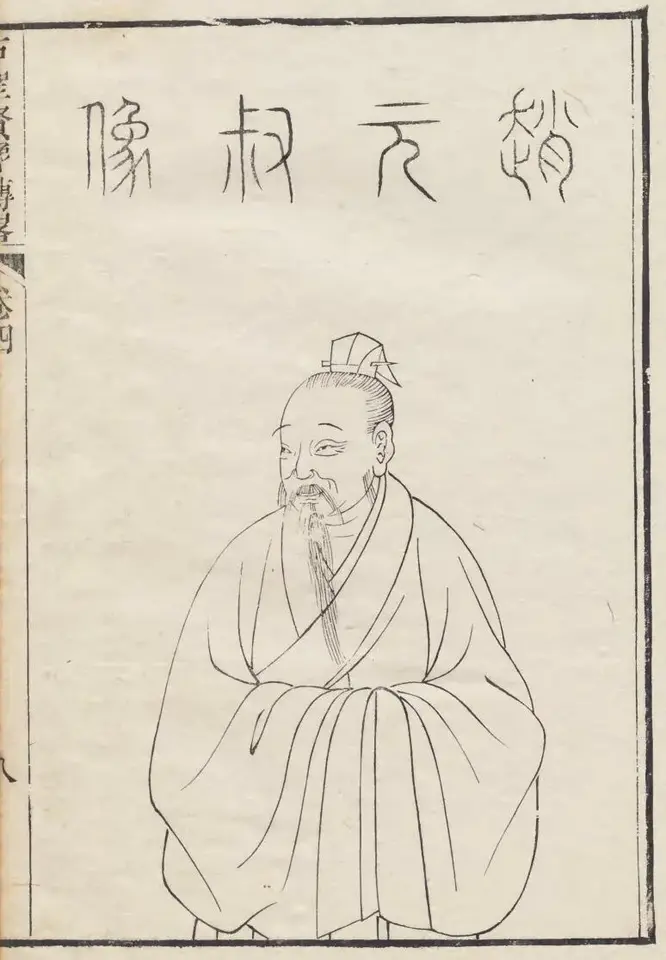
赵壹
Zhao Yi (赵壹, c. 122 – c. 196 CE), originally named Zhao Yi with the courtesy name Yuanshu, was a native of Xi County in Hanyang Commandery, Liangzhou (modern Honghe Town, Li County, Longnan, Gansu Province). He was an illustrious literary master, rhapsodist, and trenchant political philosopher during the reigns of Emperor Ling and Emperor Xian in the late Eastern Han dynasty, celebrated across northwestern China as the…
Zhao Yi (赵壹, c. 122 – c. 196 CE), originally named Zhao Yi with the courtesy name Yuanshu, was a native of Xi County in Hanyang Commandery, Liangzhou (modern Honghe Town, Li County, Longnan, Gansu Province). He was an illustrious literary master, rhapsodist, and trenchant political philosopher during the reigns of Emperor Ling and Emperor Xian in the late Eastern Han dynasty, celebrated across northwestern China as the paramount "Luminary of Longyou." Renowned for his uncompromising moral integrity and fiery prose, his masterpiece Rhapsody on Piercing the Age and Resenting Evil (Cishi Jixie Fu) is universally acclaimed as the supreme milestone of political satire and lyrical protest in classical Chinese literature. Endowed with an imposing physical stature, an elegant beard, and vast erudition, Zhao Yi was naturally proud and fiercely intolerant of moral mediocrity. Refusing to flatter regional elites or corrupt bureaucrats, he suffered severe ostracism from his provincial peers, composing his celebrated early masterwork Rhapsody on the Impoverished Bird (Qiongniao Fu) to lament his vulnerability. In 178 CE (the first year of Guanghe), appointed as Hanyang's annual reporting officer to Luoyang, his forthright brilliance captivated Excellency of Works Yuan Feng and Intendant of Henan Yang Zhi, catapulting him to empire-wide renown. As eunuch corruption devastated central governance, his outspoken integrity led corrupt regional officials to fabricate capital charges against him; he was saved from execution only through the intervention of the celebrated frontier general Huangfu Gui. Thoroughly disillusioned, he rejected repeated imperial summons, living in rural retirement in Longyou until his death. His surviving works, including Cishi Jixie Fu, Qiongniao Fu, and Against Cursive Script (Fei Caoshu), established the realistic and critical spirit of the subsequent Jian'an literary era.
Born in Xi County of Hanyang; immerses himself in canonical classics and Daoist treatises.
Persecuted by corrupt regional gentry; composes Rhapsody on the Impoverished Bird to express moral grief.
Appointed Commandery Reporting Officer; his encounters with Yuan Feng and Yang Zhi ignite a sensation across the capital.
Falsely accused and imprisoned on capital charges by regional officials; rescued by General Huangfu Gui.
Devastated by the commercial sale of offices and political sycophancy, authors the satirical masterpiece Cishi Jixie Fu.
Declines imperial recruitment edicts issued under the seal of Emperor Xian, embracing rural hermitage.
Passes away peacefully in his ancestral retreat in Hanyang amid regional warlord conflicts.
Zhao Yi was born in Xi County of Hanyang Commandery in Liangzhou (modern frontier region between Li County and Tianshui, Gansu Province). Since Emperor Wu expanded the Han frontiers, Liangzhou had served as a vital geopolitical corridor connecting the Central Plains with Central Asia, blending martial frontier valor with profound traditions of canonical scholarship. Born into an intellectual family of local standing, Zhao Yi possessed an imposing physical frame, a majestic flowing beard, and a penetrating gaze that commanded immediate reverence.
Beyond his commanding physical presence, Zhao Yi was endowed with consummate literary genius. He immersed himself in the Classic of Poetry, the Classic of Documents, the Spring and Autumn Annals, and the philosophical writings of Laozi and Zhuangzi, composing texts characterized by vigorous rhetorical force. However, Zhao Yi possessed an unyielding moral spine; he was fiercely outspoken, inherently proud, and harbored deep loathing for sycophancy. In an era when powerful aristocratic clans dominated local appointments through fraudulent recommendations, Zhao Yi refused to flatter commandery officials, earning bitter envy and isolation from local gentry.
During the transitional reigns of Emperor Huan and Emperor Ling, court eunuchs and imperial in-laws monopolized central power, while extortionate officials preyed upon regional commanderies. When Zhao Yi repeatedly condemned corrupt administrative abuses in Hanyang, he incurred the wrath of the commandery administrator and entrenched magnates. Colluding with local magistrates, these corrupt officials fabricated charges against him, subjecting him to relentless political encirclement.
Confronting mortal peril, Zhao Yi composed his four-character lyrical masterpiece, Rhapsody on the Impoverished Bird (Qiongniao Fu). In this poignant composition, he allegorized his desperate plight as an exhausted bird pursued relentlessly by fierce falcons through thorns and briars, its plumage torn, its perch denied, and its life hanging by a thread. He forwarded this poetic plea to upright friends across the region, appealing to human conscience. Characterized by profound elegiac melancholy and exquisite allegorical precision, the work captured not only his personal persecution, but also the tragic fate of honest intellectuals in the dying decades of the Eastern Han.
In 178 CE (the first year of Guanghe), recognized across Liangzhou for his undeniable literary brilliance and administrative acuity, Zhao Yi was appointed Commandery Reporting Officer (Shangji Li) by the Hanyang commandery administration. Charged with presenting the commandery's annual fiscal, demographic, and judicial records to the imperial throne, Zhao Yi traveled across the mountain passes to the imperial capital of Luoyang.
At that time, two towering figures dominated metropolitan scholar-official society: Excellency of Works Yuan Feng (brother of Grand Tutor Yuan Wei and father of warlords Yuan Shao and Yuan Shu) and Intendant of Henan Yang Zhi. Celebrated for their moral prestige and character appraisal, their mansions were besieged daily by thousands of ambitious literati who approached them with obsequious dread. Knowing that submitting an ordinary calling card would cause him to be overlooked among mediocre petitioners, Zhao Yi decided to confront the capital's grandees with uncompromising intellectual boldness.
Zhao Yi first visited the palace of Excellency of Works Yuan Feng, who was hosting a lavish banquet for dozens of eminent dignitaries. Without awaiting formal announcement by gate attendants, Zhao Yi adjusted his robes and strode directly into the grand reception hall. Struck by his towering stature and noble demeanor, Yuan Feng immediately commanded his attendants to escort Zhao Yi to the absolute seat of honor. Over cups of wine, Yuan Feng questioned him on frontier administration and grand strategy; Zhao Yi spoke with electrifying clarity, dissecting the structural malaise of the empire with razor-sharp precision. The assembled guests sat in breathless astonishment, and Yuan Feng warmly embraced him as an intellectual equal.
Departing from Yuan Feng's residence, Zhao Yi proceeded immediately to the mansion of Intendant of Henan Yang Zhi. Yang Zhi was renowned for his austere, aloof disposition. Arriving during the scorching midday heat, Zhao Yi found Yang Zhi reclining in his private bedchamber while junior clerks handled callers outside. Disregarding all ceremonial taboos, Zhao Yi pushed open the bedchamber door, strode to the foot of Yang Zhi's couch, sat upon the bedframe, and shouted: "When a peerless hero of all under Heaven like Zhao Yuanshu is standing before you, why does the Intendant of Henan remain slumbering?"
Startled by the voice, Yang Zhi sat upright and beheld Zhao Yi's blazing eyes and bristling beard. Recognizing that this visitor harbored no trace of obsequious terror, Yang Zhi felt profound reverence rather than anger. Leaping from his couch and adjusting his garments, Yang Zhi invited Zhao Yi to sit beside him. The two men engaged in an exhaustive dialogue on dynastic history, eunuch corruption, and statecraft, speaking with exhilarating candor. Stunned by his brilliance, Yang Zhi struck the table and exclaimed: "Truly an extraordinary genius of the realm!" Yang Zhi ordered a banquet prepared, and the two formed a lifelong bond of profound mutual devotion.
Because Yuan Feng and Yang Zhi were the twin arbiters of scholar-official esteem, their unprecedented recognition of an obscure reporting officer from Liangzhou astonished the capital. Within days, metropolitan ministers and scholars vied with one another to seek his acquaintance, establishing Zhao Yi as an empire-wide intellectual sensation.
Metropolitan acclaim, however, could not shield Zhao Yi from the corrupt regional power dynamics of Liangzhou. Returning to Hanyang, his moral indignation burned even hotter. Appalled by the wholesale auction of official posts and the merciless taxation imposed upon impoverished peasants, he clashed repeatedly with local officials, openly castigating administrative malfeasance in full view of the court.
Infuriated by his defiance, corrupt commandery magistrates resolved to destroy him. Around 180 CE, the commandery administrator fabricated charges of sedition and lese-majeste against Zhao Yi, casting him into the death row dungeon. Shackled in heavy iron chains, Zhao Yi was subjected to brutal torture, with local magistrates preparing his immediate execution. Paralyzed by the magistrate's violent tyranny, his regional friends dared not intervene.
Fortunately, the celebrated frontier general Huangfu Gui—one of the three legendary military heroes known as the "Three Luminaries of Liangzhou"—was residing in retirement in the region. Long revering Zhao Yi's unbending character, Huangfu Gui was outraged upon learning of his impending execution. Disregarding his own safety, the septuagenarian general rushed to the commandery headquarters, confronted the administrator, and cast off his official robes, pledging his own lifelong military titles and honors to guarantee Zhao Yi's release. Intimidated by Huangfu Gui's immense military prestige and royal favor, the magistrate capitulated, commuting the death sentence and releasing Zhao Yi. Rescued from the jaws of death, Zhao Yi formed an unbreakable bond of gratitude with Huangfu Gui.
Having survived brutal imprisonment, Zhao Yi recognized that the Han dynasty had decayed beyond redemption. During the Zhongping era of Emperor Ling, the imperial court issued sweeping edicts offering high ministerial rank to recruit Zhao Yi into the central bureaucracy.
Gazing upon the imperial summons, Zhao Yi sighed: "Public office is a trap; the worldly arena is a cesspool. Rather than compromising my integrity in an impure age, how much nobler to roam the verdant hills of Longyou as a free man!" He pleaded fatal illness, flatly declining all imperial overtures.
In his final years, Zhao Yi retired to his ancestral estate in Xi County, building a simple thatched cottage and sustaining himself through farming. He dedicated his remaining years to literary composition, channeling his fury against tyrannical despots and deep compassion for suffering commoners into immortal masterpieces: Rhapsody on Piercing the Age and Resenting Evil (Cishi Jixie Fu) and Against Cursive Script (Fei Caoshu). As regional warlord rivalries engulfed China, Zhao Yi passed away peacefully at home in his seventies, leaving behind an immortal legacy of moral defiance.
Zhao Yi's paramount monument in literary history is his satirical rhapsody Cishi Jixie Fu. This masterwork stands as the earliest, most concentrated, and most devastating socio-political indictment in classical Chinese literature. While contemporary Han rhapsodies by Ban Gu and Zhang Heng favored sweeping panegyrics extolling metropolitan grandeur and imperial hunts, Zhao Yi directed his brush straight into the bleeding contradictions of social injustice.
In the rhapsody, Zhao Yi lamented that the moral order of ancient sage kings had vanished, declaring his contemporary world to be a dark age where virtue was trampled and sycophancy rewarded. Utilizing cascading parallelisms and incisive metaphors, he unmasked bureaucratic reality: "The powerful amass vast wealth, while the weak despair in squalor," "Flattery flourishes daily, while upright scholars perish," and "Better to be a shattered vessel of jade than a preserved tile of clay." He fiercely condemned the corrupt upstarts who usurped high office through deceit.
This masterpiece definitively dismantled the timid conventions of court poetry, establishing a fearless paradigm of political satire. Literary theorist Liu Xie praised it in The Literary Mind and the Carving of Dragons as "soaring in moral righteousness and clear in diction," serving as the direct intellectual ancestor of the Jian'an poetic style and Du Fu's later social realism.
Zhao Yi's second transformative contribution to Chinese literature was his innovation of the "lyrical short rhapsody" exemplified by Rhapsody on the Impoverished Bird (Qiongniao Fu). At a time when grand rhapsodies were weighed down by encyclopedic lengths and obscure vocabularies, Zhao Yi pioneered concise, allegorical, and deeply personal poetic expressions.
Comprising just over a hundred characters, Qiongniao Fu employed four-character meters to evoke the terror of an exhausted bird hunted by falcons. The bird served not merely as a symbol of Zhao Yi's personal plight, but as a universal archetype of the beleaguered scholar-official crushed by autocratic despotism. This work established a vital stylistic bridge that inspired the nature-allegory rhapsodies of Cao Zhi, Ruan Ji, and Lu Ji during the Wei and Jin dynasties.
Beyond his literary genius, Zhao Yi was a foundational pioneer in the history of Chinese art criticism. His essay Against Cursive Script (Fei Caoshu) represents the earliest surviving theoretical treatise in Chinese aesthetics dedicated to the cultural, ethical, and sociological dimensions of calligraphy.
During the reign of Emperor Ling, the rise of cursive masters like Zhang Zhi ignited an obsessive craze among aristocratic youth in Luoyang. Officials and scholars neglected their civil duties and canonical studies, spending their days copying cursive brushstrokes until their teeth and sleeves were blackened with ink. Viewing this through the lens of political philosophy, Zhao Yi recognized this formalistic obsession as a symptom of cultural decadence.
In Fei Caoshu, Zhao Yi argued that writing was fundamentally an instrument of statecraft and governance, warning that cursive script could not serve administrative governance or military records. He criticized contemporary nobles for chasing empty fashion while abandoning civic responsibility, demanding that intellectuals return to pragmatic governance. His essay established an enduring moral foundation for classical Chinese calligraphic philosophy.
Zhao Yi's life represents the unyielding moral spine of the Chinese literati during the collapse of the imperial order. Following the Disaster of the Partisan Prohibitions, when the intelligentsia was cowed into silence or sycophancy, Zhao Yi maintained absolute personal autonomy.
Whether bursting into Yang Zhi's private bedchamber with heroic audacity, confronting death row with unyielding dignity, or spurning imperial court appointments, Zhao Yi embodied the highest ideals of moral purity. Historian Fan Ye commemorated him alongside Mi Heng in the Book of the Later Han, celebrating his uncompromising genius and cementing his legacy as a timeless symbol of intellectual independence.
FIGURES ASSOCIATED WITH THIS DYNASTY