Entering Official Career
Awarded the Junior Fifth Rank, Lower Grade, and subsequently appointed Assistant Minister of Central Affairs.
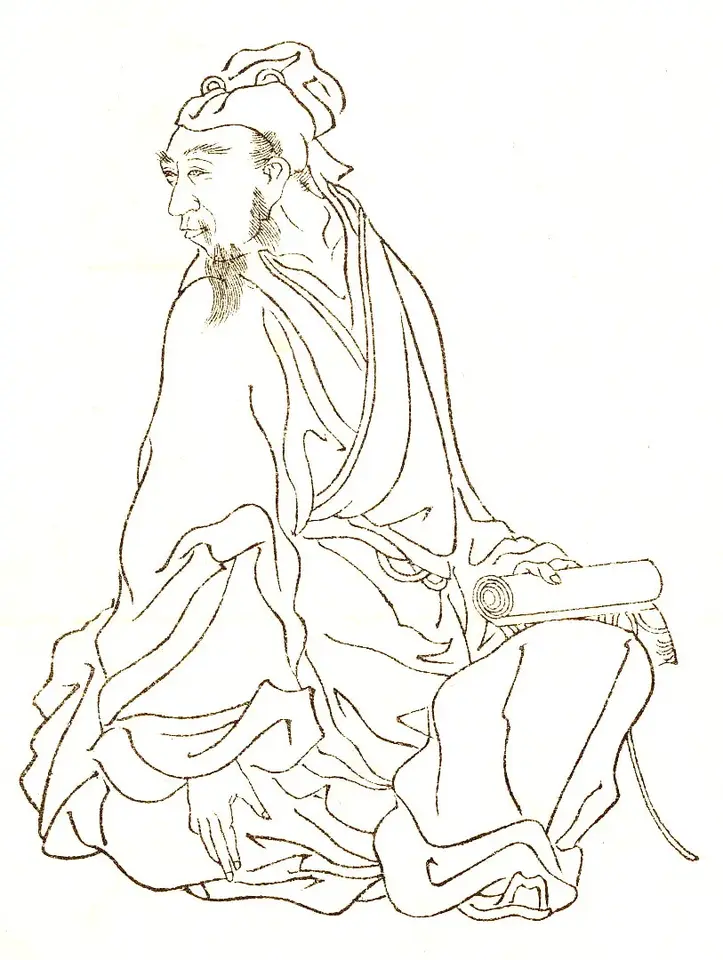
藤原清河
Fujiwara no Kiyokawa (藤原清河, d. 778), known in China as Heqing (河清), was a distinguished Japanese statesman, aristocrat of the prominent Northern Fujiwara clan, and the fourth son of Fujiwara no Fusasaki. In 750, Empress Koken formally commissioned him as the Chief Ambassador of the Japanese Embassy to the Tang Court. Heading a massive mission with Kibi no Makibi and Otomo no Komaro as Vice Ambassadors, Kiyokawa embarked on an…
Fujiwara no Kiyokawa (藤原清河, d. 778), known in China as Heqing (河清), was a distinguished Japanese statesman, aristocrat of the prominent Northern Fujiwara clan, and the fourth son of Fujiwara no Fusasaki. In 750, Empress Koken formally commissioned him as the Chief Ambassador of the Japanese Embassy to the Tang Court. Heading a massive mission with Kibi no Makibi and Otomo no Komaro as Vice Ambassadors, Kiyokawa embarked on an extraordinary voyage across the East China Sea that marked the cultural zenith of the Nara period. Upon arriving at Chang'an, Kiyokawa was warmly received by Emperor Xuanzong of Tang, who praised Japan as a noble realm of propriety and gentlemen, commanding Abe no Nakamaro to guide the embassy through the imperial archives and ancestral shrines. In 753, Kiyokawa visited Yangzhou to invite Master Jianzhen to Japan. On the return voyage, however, Kiyokawa's flagship was driven off course by a furious storm and wrecked on the coast of southern Annam. Surviving shipwreck and hostile tribesmen, he returned to Chang'an, where the outbreak of the An Lushan Rebellion permanently blocked his return to Japan. Emperor Xuanzong appointed him Director of the Palace Library and Lord Specially Advanced. He died in Chang'an in 778, mourned deeply by both courts and posthumously elevated to Junior First Rank in Japan.
Awarded the Junior Fifth Rank, Lower Grade, and subsequently appointed Assistant Minister of Central Affairs.
Promoted to the Junior Fourth Rank, Lower Grade, and appointed to the Council of State as an Assistant Administration Commissioner upon Empress Koken's enthronement.
Commissioned in the ninth month by Empress Koken as Ambassador of the Japanese Embassy to the Tang Court.
Promoted to Senior Fourth Rank, Lower Grade, and received the symbolic ceremonial sword from Empress Koken before sailing with four ships.
Objected to court seating precedence behind Silla at the New Year audience in Chang'an, securing top diplomatic honor; visited Yangzhou to persuade Jianzhen to travel east.
Departed Yangzhou in the eleventh month; flagship caught in a typhoon and wrecked in southern Annam, surviving alongside Abe no Nakamaro.
Reached Chang'an after an arduous journey; entered Tang service under the Chinese name Heqing as Director of the Palace Library and Lord Specially Advanced.
Empress Koken dispatched Ambassador Gao Yuandu to escort him home, but Emperor Suzong declined due to dangerous wartime conditions of the An Lushan Rebellion.
His daughter Xiniang, born to a Chinese wife in Chang'an, traveled to Japan with returning envoys to visit her ancestral homeland.
Passed away in Chang'an in late winter; posthumously awarded Grand Defender of Luzhou by Emperor Daizong and Junior Second Rank in Japan.
Fujiwara no Kiyokawa belonged to the powerful Northern branch of the Fujiwara clan, born as the fourth son of Fujiwara no Fusasaki and a daughter of Katano no Ason. His younger maternal brother was Fujiwara no Uona. Endowed with scholarly brilliance and profound mastery of classical Chinese texts and court etiquette, he was earmarked early for high state leadership.
In 740, Kiyokawa received the Junior Fifth Rank, Lower Grade. The following year, he was appointed Assistant Minister of the Ministry of Central Affairs, participating directly in court affairs. In 743, he advanced to Senior Fifth Rank, Lower Grade, while concurrently serving as Governor of Yamato, administering agricultural affairs and civilian welfare. In 745, he reached Senior Fifth Rank, Upper Grade, and was promoted to Junior Fourth Rank, Lower Grade, in 746.
Following the accession of Empress Koken in 749, Kiyokawa was elevated to the prestigious councilor status of Sangi, officially entering the innermost circle of state decision-making.
In the ninth month of 750, Empress Koken decreed the dispatch of a grand diplomatic mission to the Tang Empire. Recognizing Kiyokawa's administrative distinction and refined deportment, the court appointed him Chief Ambassador. Otomo no Komaro was named Vice Ambassador, and distinguished scholar Kibi no Makibi was subsequently appointed as an additional Vice Ambassador. The delegation encompassed hundreds of officials, scholars, physicians, and Buddhist monastics, including Fujiwara no Sukio.
In the intercalary third month of 752, the fleet prepared to sail from Naniwa Port. Kiyokawa was promoted to Senior Fourth Rank, Lower Grade, and received the ceremonial Sword of State from Empress Koken in a solemn imperial audience. Empress Koken also dispatched Korean dignitaries to entertain the crew and composed an imperial poem honoring the mission.
Before embarking, Kiyokawa held solemn rites at Kasuga Shrine, offering waka poetry to pray for sea safety and an auspicious return. The armada of four vessels sailed into the treacherous waters of the East China Sea, successfully navigating maritime perils to reach the Chinese mainland.
Kiyokawa led the mission along official post routes to the Tang capital of Chang'an, where he was granted an audience with Emperor Xuanzong. Xuanzong was deeply impressed by Kiyokawa's scholarly poise and impeccable observance of protocol, lauding Japan as a realm of refined virtue and propriety.
Emperor Xuanzong commanded Abe no Nakamaro, a long-serving Japanese scholar-official in Tang service, to serve as official host, guiding the delegation through the imperial library storehouses and the Three Teachings Hall of Taiqing Palace. Furthermore, imperial painters were commissioned to paint portraits of Kiyokawa and Kibi no Makibi to be enshrined in the imperial collection.
On New Year's Day of 753, Emperor Xuanzong held the grand universal audience at Daming Palace. When imperial protocol officers positioned foreign envoys, they initially seated the Tibetan delegation first and the Japanese embassy second on the west side, while placing Silla at the head of the east side.
Viewing this as an unacceptable diplomatic demotion, Kiyokawa and Otomo no Komaro raised an immediate, forceful protest before the imperial court. They argued that Silla was historically a tributary neighbor that should never take precedence over Japan. Emperor Xuanzong affirmed Kiyokawa's principled petition and ordered the order reversed, seating Japan at the head of the eastern row and moving Silla below, triumphantly preserving Japanese diplomatic honor.
In the autumn of 753, having fulfilled their diplomatic duties, the Japanese mission prepared for departure. Emperor Xuanzong composed a farewell poem and assigned Chief Minister Jiang Tiaowan of the Court of State Ceremonial to escort them to Yangzhou, instructing Huainan Commissioner Wei Fangjin to ensure ample provisions. Abe no Nakamaro received special imperial permission to accompany the embassy home.
While in Yangzhou, Kiyokawa and Abe no Nakamaro visited Master Jianzhen at Yangguang Temple. Despite having suffered five failed crossing attempts and loss of sight, Jianzhen remained steadfast in his monastic vow to transmit the vinaya precepts. Kiyokawa formally and earnestly invited the venerable master to sail with the embassy, pledging full logistical support. Jianzhen consented and boarded the fleet in secrecy.
In the eleventh month of 753, the four ships set sail from the mouth of the Yangtze. Heavy gales soon struck the fleet on the open sea, scattering the ships. The second ship, carrying Jianzhen, along with two other vessels, safely made landfall in Japan; however, the flagship carrying Kiyokawa and Abe no Nakamaro was battered by violent headwinds and driven thousands of miles southwest to the hostile shores of southern Annam.
The vessel was shattered upon coastal reefs. Upon reaching shore, the surviving envoys and crew were ambushed by local tribesmen, resulting in the death of over half of the 170-man contingent. Kiyokawa and Abe no Nakamaro fought bravely alongside their companions, eluding captivity and escaping into mountainous jungles until Tang military detachments arrived to rescue them.
In the sixth month of 755, escorted by local Tang officials after two years of arduous overland travel, Kiyokawa and Abe no Nakamaro finally returned to Chang'an. With sea routes severed and maritime passage untenable, they had no alternative but to remain in the imperial capital.
Recognizing Kiyokawa's exceptional erudition and resilience, Emperor Xuanzong bestowed upon him the prestige title Lord Specially Advanced, appointed him Director of the Palace Library, and granted him the Chinese name Heqing. Kiyokawa served diligently in cataloging, preserving, and collating imperial state archives, earning wide respect among Tang scholar-officials.
Shortly thereafter, the catastrophic An Lushan Rebellion erupted, throwing northern China into chaos and blocking travel routes. Kiyokawa followed the court through years of upheaval, and prospects of returning to Japan steadily faded.
The Japanese court never abandoned hope for his repatriation. In 759, Emperor Junnin dispatched an escort mission under Ambassador Gao Yuandu through Bohai, concurrently granting Kiyokawa the remote appointment of Junior Third Rank, Governor of Hitachi, and Minister of Personnel.
When Gao reached Chang'an, however, Tang forces were still actively suppressing rebel remnants. Emperor Suzong issued an imperial rescript declining permission for Kiyokawa's departure on grounds of grave travel hazards, directing Gao to return home alone while retaining Heqing in court service. Another Japanese naval repatriation effort planned in 761 was similarly halted by warfare.
Resigned to exile after decades away from his homeland, Kiyokawa married a Chinese woman in Chang'an and fathered a daughter named Xiniang. When another Japanese embassy reached Chang'an in 777, Kiyokawa was too elderly and frail to attempt the journey. In 778, his daughter Xiniang boarded the returning Japanese ship to visit her ancestral homeland, receiving an honorable welcome from Emperor Konin and the court.
In late 778, Kiyokawa passed away in his residence in Chang'an. Emperor Daizong expressed profound sorrow and posthumously conferred upon him the title Grand Defender of Luzhou.
In the second month of 779, news of his passing reached Nara. Emperor Konin and the entire court mourned deeply, conferring the posthumous Junior Second Rank. Subsequent Japanese embassies to Tang China regularly held commemorative rites in his honor. In 803, Emperor Kanmu elevated him to Senior Second Rank, and in 836, Emperor Ninmyo conferred the ultimate rank of Junior First Rank.
Commissioned as Chief Ambassador in 750, Kiyokawa shouldered the highest state mission of mastering Tang legal, political, and Buddhist culture. He supervised the assembly of four grand ships, diplomatic gifts, and a delegation of hundreds of scholars, physicians, and monastics, laying the groundwork for the cultural apex of the Nara period.
During the New Year ceremony of 753 at Chang'an, Kiyokawa demonstrated remarkable diplomatic courage by openly challenging the seating arrangement that ranked Japan below Silla. His eloquent representation convinced Emperor Xuanzong to overturn the protocol and place Japan at the head of the foreign delegations, establishing a landmark precedent in East Asian diplomatic history.
During his stay in Yangzhou, Kiyokawa recognized the profound significance of Master Jianzhen for establishing proper monastic ordination in Japan. His personal entreaties and provision of maritime transport ensured the successful transmission of the Vinaya school to Nara, profoundly enriching Japanese Buddhist architecture, art, and medicine.
In his service as Director of the Palace Library, Kiyokawa contributed significantly to the preservation and transmission of East Asian classical texts. His poems were anthologized in Japan's earliest poetry collection, the Man'yoshu, and his portrait was permanently enshrined in the Tang imperial collection, cementing his lasting legacy in Sino-Japanese cultural exchange.
FIGURES ASSOCIATED WITH THIS DYNASTY