Birth and Upbringing
Born into a scholar-official family in Nieyang, Nanyang; immersed himself in classical treatises and pulse diagnosis.
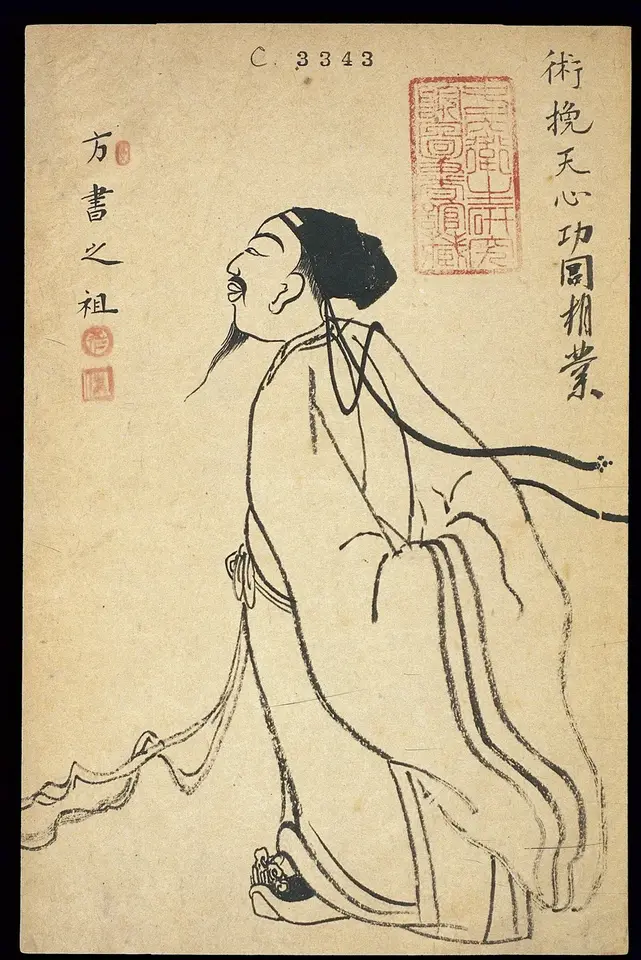
张伯祖
Zhang Bozu (张伯祖), courtesy name Pinji (品济), was a native of Nieyang in Nanyang Commandery (modern Dengzhou and Zhenping, Henan Province). He was an illustrious clinical physician and medical educator of the mid-to-late Eastern Han dynasty, celebrated throughout Chinese history as the master and mentor of the "Sage of Medicine," Zhang Zhongjing. Living during the reigns of Emperors Huan and Ling, Zhang Bozu possessed profound…
Zhang Bozu (张伯祖), courtesy name Pinji (品济), was a native of Nieyang in Nanyang Commandery (modern Dengzhou and Zhenping, Henan Province). He was an illustrious clinical physician and medical educator of the mid-to-late Eastern Han dynasty, celebrated throughout Chinese history as the master and mentor of the "Sage of Medicine," Zhang Zhongjing. Living during the reigns of Emperors Huan and Ling, Zhang Bozu possessed profound natural acumen and modest virtue. Devoting his entire life to the healing arts, he mastered classical canons such as the Yellow Emperor's Inner Classic, the Classic of Difficult Issues, and the ancient pharmacopoeias, cultivating exceptional diagnostic precision in analyzing pulse dynamics and visceral imbalances. Adhering to the clinical ethos that "every diagnosis requires profound contemplation," he treated cold damage disorders, seasonal pestilences, and chronic miscellaneous diseases with unmatched efficacy across Nanyang and Jingzhou. In clinical therapeutics, Zhang Bozu pioneered external administration by creating the "honey suppository formulation" (mijian dao fang), the earliest recorded suppository treatment in the history of traditional Chinese medicine. By gently cooking honey until it solidified into a rectal suppository, he resolved intestinal dryness and severe constipation without resorting to harsh purgative decoctions that drained bodily fluids and damaged vitality. Recognizing the extraordinary potential of young Zhang Zhongjing, Zhang Bozu accepted him as a disciple, passing on his lifelong clinical insights, diagnostic pulse secrets, and pattern differentiation methods. Zhang Zhongjing absorbed his master's teachings in full, ultimately synthesizing them into the monumental medical classic Treatise on Cold Damage and Miscellaneous Diseases. Through his pioneering clinical innovations and noble pedagogical devotion, Zhang Bozu established a timeless benchmark in the history of Chinese medical education.
Born into a scholar-official family in Nieyang, Nanyang; immersed himself in classical treatises and pulse diagnosis.
Traveled extensively to master ancient prescriptions, practicing medicine with exceptional diagnostic accuracy.
Invented the honey suppository therapy to resolve acute dryness constipation, pioneering rectal drug delivery.
Recognized the genius of young fellow-townsman Zhang Zhongjing, taking him as an apprentice and imparting his medical knowledge.
Mentored Zhang Zhongjing to master pattern differentiation, enabling him to thoroughly absorb and advance his teachings.
Continued healing patients in Nanyang until his passing in his sixties, his teachings forming the core of the Cold Damage School.
Zhang Bozu was born during the middle Eastern Han dynasty in Nieyang County, Nanyang Commandery. Since the early Han dynasty, Nanyang had been a cultural and economic heartland that produced many founding generals under Emperor Guangwu, fostering a vibrant intellectual tradition in classical scholarship and medical arts. Born into a respected gentry lineage, Zhang Bozu studied the Confucian Classics in his youth. Yet, rather than pursuing an ordinary bureaucratic career, he developed a passionate devotion to the medical arts, dedicated to relieving human suffering.
During the mid-second century, virulent epidemics swept repeatedly across the Central Plains. Witnessing widespread devastation, Zhang Bozu collected folk prescriptions while studying canonical texts including the Yellow Emperor's Inner Classic, the Suwen, the Lingshu, and Bian Que's treatises on pulse diagnosis. He was noted for rigorous deliberation in clinical encounters, asserting that "every diagnosis requires profound contemplation, and pattern differentiation must strike the fundamental root." His mastery of the four diagnostic examinations and pulse palpation allowed him to uncover hidden pathogenic mechanisms that ordinary physicians overlooked, earning him immense respect throughout Nanyang.
Throughout his clinical career, Zhang Bozu displayed remarkable therapeutic flexibility, boldly innovating new modalities of drug delivery. Confronting the common complication of febrile depletion where severe fever caused intestinal fluids to dry out, leading to fecal impaction, contemporary practitioners routinely administered harsh purgatives containing rhubarb and mirabilite. While effective in clearing heat, these harsh remedies severely damaged spleen-stomach vitality and induced critical collapse in frail, elderly, or exhausted patients.
To overcome this clinical dilemma, Zhang Bozu developed the "honey suppository formulation" (mijian dao fang). He simmered pure honey in a bronze vessel over a gentle flame until it achieved a thick, moldable consistency. While still warm, he hand-rolled the honey into smooth, tapered cylindrical rods roughly the size of a finger. Once cooled and hardened, the suppository was inserted into the rectum. The sweet, lubricating properties of honey softened dry stool locally, promoting evacuation without damaging interior stomach qi or exhausting precious bodily fluids. This non-invasive rectal therapy represented a milestone in Chinese pharmaceutical history, antedating similar European rectal applications by more than a millennium.
Zhang Bozu's greatest contribution to Chinese cultural history lay in his role as a medical educator. During the late reign of Emperor Huan, young Zhang Zhongjing lost his father and witnessed the deaths of numerous clan members to pestilence, prompting him to dedicate his life to medicine. Recognizing the youth's intelligence, moral rectitude, and tenacity, Zhang Bozu accepted him as a formal disciple.
Over several years of intensive clinical instruction, Zhang Bozu held nothing back, passing on his entire treasury of proven prescriptions, diagnostic principles, and pulse secrets. Rather than merely teaching formulas, he instilled in Zhang Zhongjing the holistic philosophy of pattern differentiation (bianzheng lunzhi) and the dynamics of six-channel pathogen transmission. Contemporary statesman He Yong famously remarked: "Zhang Zhongjing's skill has surpassed even that of Bozu." Grounded in Zhang Bozu's meticulous training, Zhang Zhongjing absorbed his master's medical legacy in full, ultimately creating the immortal classic Treatise on Cold Damage and Miscellaneous Diseases.
In his later years, Zhang Bozu continued to practice medicine in Nanyang, treating rich and poor alike with equal compassion. For destitute patients, he dispensed medicines free of charge; in critical cases, he frequently kept vigil beside the patient's bed to monitor shifts in the pulse. In his final years, he compiled his effective prescriptions into hand-copied clinical scrolls, widely circulated among local physicians.
Zhang Bozu passed away in the late second century in his sixties. Following his death, the people of Nanyang revered his memory as a virtuous healer. His clinical wisdom and innovative therapies were preserved within Zhang Zhongjing's monumental Treatise on Cold Damage, and his honey suppository formulation remains an active, effective treatment in modern clinical practice.
Zhang Bozu's most enduring historical legacy was discovering, educating, and inspiring Zhang Zhongjing, universally venerated as China's "Sage of Medicine." During an era when esoteric medical knowledge was jealously guarded within exclusive family guilds, Zhang Bozu broke through sectarian secrecy.
Historical accounts in He Yong's biography and Zhang Gao's Song dynasty medical treatise Yi Shuo confirm: "Zhang Bozu of the same commandery was a skilled physician; Zhongjing apprenticed under him, acquiring his complete transmission while surpassing him in subtle insight." From pathogen etiology to the nine pulse positions and exterior-interior treatment principles, Zhang Bozu provided the essential empirical scaffolding that enabled Zhang Zhongjing to author the Treatise on Cold Damage and Miscellaneous Diseases.
Zhang Bozu's foremost pharmacology innovation was the invention of the honey suppository formulation (mijian dao fang). Recognizing the inherent perils of oral purgatives in patients suffering from fluid exhaustion and bodily depletion, he pioneered local rectal administration.
By heating honey into solid suppositories that melted inside the rectum to induce gentle peristalsis, he revolutionized external therapeutics. This formulation was adopted in full by Zhang Zhongjing into the Treatise on Cold Damage under the Yangming channel section, remaining a gold standard for over eighteen centuries and standing as the earliest documented rectal suppository in global medical history.
In an age when medical practice was often clouded by divination and superstition, Zhang Bozu championed a strictly empirical approach to clinical medicine. He established the standard of correlating pulse dynamics with bodily symptoms (mai zheng he can).
He insisted that every diagnosis must synthesize the speed, depth, and rhythm of the pulse with the patient's complexion, vocal resonance, tongue coating, and medical history. This rigorous clinical method, refined and systematized by Zhang Zhongjing, became the foundational diagnostic cornerstone of both the Cold Damage and Warm Disease schools of traditional Chinese medicine.
FIGURES ASSOCIATED WITH THIS DYNASTY