Birth in Hexian
Born in the magisterial compound of Hexian, Guangxi; studied the Cheng-Zhu Neo-Confucian classics from an early age.
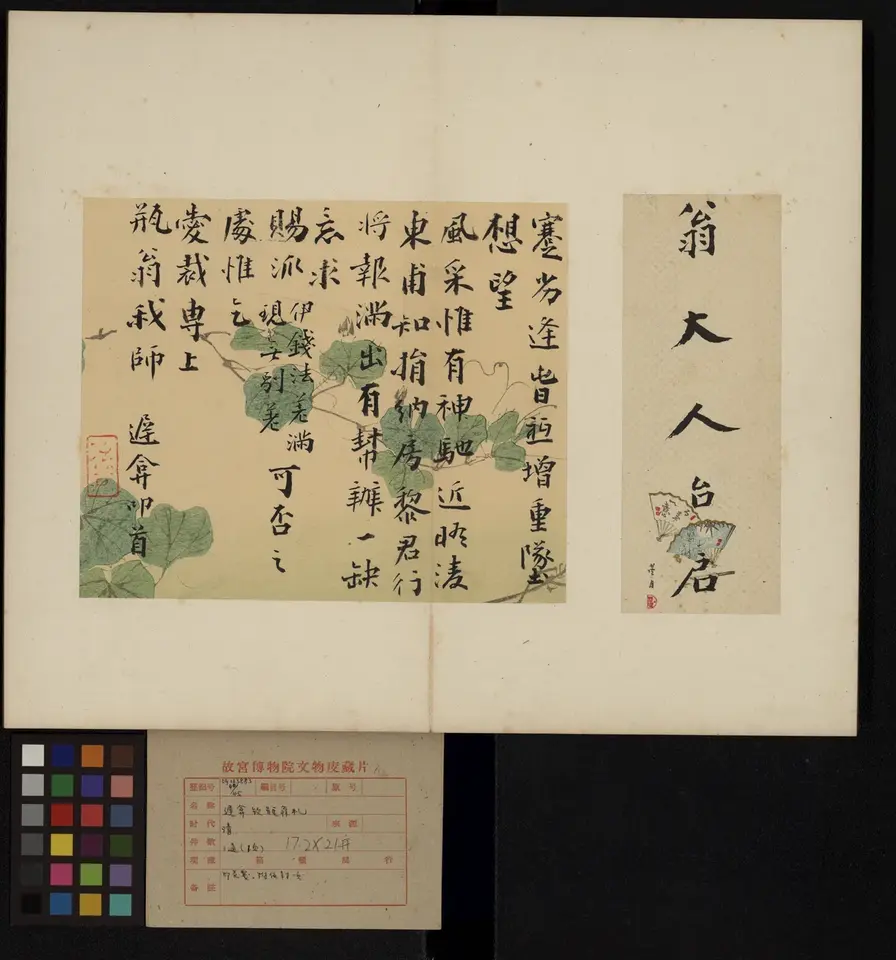
李鸿藻
Li Hongzao (李鸿藻, 1820–1897), courtesy name Lansun and art name Shisun, native of Gaoyang, Zhili (modern Gaoyang, Hebei), was a prominent statesman, imperial preceptor, Neo-Confucian scholar, and the acknowledged leader of the "Pure Stream" (Qingliu) faction during the late Qing dynasty. A devoted practitioner of the Cheng-Zhu school of Neo-Confucianism, he earned his metropolitan degree (jinshi) in 1852, entered the…
Li Hongzao (李鸿藻, 1820–1897), courtesy name Lansun and art name Shisun, native of Gaoyang, Zhili (modern Gaoyang, Hebei), was a prominent statesman, imperial preceptor, Neo-Confucian scholar, and the acknowledged leader of the "Pure Stream" (Qingliu) faction during the late Qing dynasty. A devoted practitioner of the Cheng-Zhu school of Neo-Confucianism, he earned his metropolitan degree (jinshi) in 1852, entered the Hanlin Academy, and served as commissioner of education in Henan. In 1860, on the recommendation of Grand Secretary Peng Yunzhang, Li Hongzao was appointed imperial preceptor to teach the young heir Zaichun (the future Tongzhi Emperor). Following the accession of the Tongzhi Emperor, Li earned the deep trust of Empress Dowager Ci'an and Empress Dowager Cixi, being appointed to the Hongde Hall and joining the Grand Council in 1865. Throughout more than a decade of tutoring the emperor, Li Hongzao instructed with moral rectitude and uncompromising ethical admonition. In 1868, when the Western Nian rebels threatened the metropolitan province of Zhili while Li was observing mourning in his native village, he submitted an influential memorial advocating a unified theater command under an imperial prince, which stabilized the north. When the young monarch and Empress Dowager Cixi proposed to spend millions reconstructing the Old Summer Palace (Yuanmingyuan), Li Hongzao placed public welfare above imperial favor, repeatedly protesting until the costly project was rescinded. As head of the Qingliu faction during the Guangxu era, Li served in the Zongli Yamen. When Chonghou signed the humiliating Treaty of Livadia with Tsarist Russia in 1879, Li led the court resistance that rejected the treaty, imprisoned Chonghou, and dispatched Zeng Jize to negotiate the Treaty of Saint Petersburg, which successfully restored significant sovereign territory in Ili. During the First Sino-Japanese War in 1894, Li Hongzao returned to the Grand Council, collaborating with Weng Tonghe to support war against Japanese aggression and bitterly protesting the cession of territory in the Treaty of Shimonoseki. He died in office in 1897 at age seventy-eight, and the Guangxu Emperor posthumously conferred upon him the highest honorific title of Wenzheng and appointed him Grand Tutor to the Crown Prince.
Born in the magisterial compound of Hexian, Guangxi; studied the Cheng-Zhu Neo-Confucian classics from an early age.
Passed the metropolitan civil examination (jinshi); appointed bachelor and compiler in the Hanlin Academy; served as Education Commissioner of Henan.
Recommended by Grand Secretary Peng Yunzhang; formally commissioned by imperial edict to tutor the eldest imperial prince Zaichun.
Appointed Grand Councilor; participated in central decision-making and was elevated to Sub-Chancellor of the Grand Secretariat.
While in filial mourning, submitted a military memorial proposing a unified command structure under an imperial prince to crush the Nian invasion.
Promoted to Censor-in-Chief; vehemently memorialized against the lavish expenditure proposed to reconstruct the Yuanmingyuan.
Appointed Minister of the Zongli Yamen and Minister of War; later promoted to Associate Grand Secretary and Minister of Personnel.
Strongly denounced Chonghou's concession of Ili territory; successfully advocated rejecting the draft treaty and dispatching Zeng Jize to renegotiate in Russia.
Dispatched as imperial commissioner to direct breach-closing conservancy works along the flooded Yellow River at Zhengzhou.
Reappointed to the Grand Council upon the outbreak of the First Sino-Japanese War; fiercely advocated armed resistance against Japanese aggression.
Vehemently opposed ratifying the Treaty of Shimonoseki; advocated delaying approval and relocating the national capital to continue resistance.
Passed away at his Beijing residence at age seventy-eight; granted the posthumous name Wenzheng and title of Grand Tutor to the Crown Prince.
Li Hongzao was born in the official yamun of Hexian, Guangxi, where his father, Li Chetong, was serving as county magistrate. The family traced its origins to an established scholarly lineage in Gaoyang County, Baoding Prefecture, Zhili. From his youth, Li Hongzao was characterized by disciplined rectitude, profound modesty, and an unswerving commitment to Cheng-Zhu Neo-Confucian philosophy. In 1852, he passed the imperial civil examinations with the prestigious jinshi degree, entering the Hanlin Academy as a bachelor. After three years of training, he was confirmed as a compiler and later selected as vice examiner for the Shanxi provincial examinations, followed by an appointment as Education Commissioner of Henan. In Henan, Li strictly enforced examination discipline, penalized bureaucratic irregularities, and actively patronized moral scholar-candidates, earning high acclaim across the northern scholarly elite.
In 1860, as Anglo-French forces approached Beijing, the Xianfeng Emperor sought refuge at the Rehe Mountain Resort in Chengde. With the imperial heir Zaichun (the future Tongzhi Emperor) reaching schooling age, the emperor instructed his cabinet to recommend a preeminent Confucian scholar possessing exemplary virtue to direct the prince's education. Grand Secretary Peng Yunzhang recommended Li Hongzao without hesitation. In early 1861, an imperial edict summoned Li Hongzao to Rehe, where he was formally installed as preceptor to the imperial heir, assuming the profound responsibility of shaping the moral and political outlook of the future monarch.
Following the enthronement of the Tongzhi Emperor and the establishment of the coregency under Empress Dowager Ci'an and Empress Dowager Cixi, Li Hongzao was accorded exceptional honor. He was assigned to daily duty in the Hongde Hall, where the young sovereign received instruction. In 1862, he was promoted to lecturer and rapidly advanced through ministerial grades to Sub-Chancellor of the Grand Secretariat and Acting Vice Minister of Revenue. Li conducted imperial lessons with rigorous moral discipline. On one notable occasion, the young Tongzhi Emperor playful scribbled flippant drawings during calligraphy instruction. Standing respectfully before the desk, Li gently grasped the emperor's wrist and stated with unyielding gravity: "Your Majesty's heart is not tranquil; pray rest for a while." Profoundly sobered by his preceptor's uncompromising dignity, the emperor apologized and corrected his posture.
In 1865, the empress dowagers issued an imperial decree ordering Li Hongzao to serve as a Grand Councilor, inducting him into the central executive leadership of the empire. When his mother passed away in 1866, Li petitioned to retire for customary three-year filial mourning. Deeply relying on his wisdom, Empress Dowager Cixi issued an extraordinary decree citing historical precedents under the Yongzheng and Qianlong emperors, directing him to observe only a hundred days of mourning before resuming his imperial teaching and cabinet responsibilities. Cixi urged him to "convert filial piety into loyalty." Li Hongzao, however, firmly adhered to classical ritual proprieties, repeatedly submitting memorials requesting complete retirement. Despite interventions by Prince Gong and fellow Neo-Confucian elders such as Wo Ren, Li persisted in his petitions, finally moving the empress dowagers to grant him leave to complete the full term of mourning.
In 1868, while Li Hongzao was residing in Gaoyang, the Western Nian cavalry swept northward into the capital province of Zhili, throwing Beijing into a state of panic. Recognizing that the various provincial field commanders lacked unified coordination, Li drafted a strategic memorial to the throne. He proposed appointing an imperial prince as supreme general in Beijing, assigning Zuo Zongtang and Li Hongzhang to command eastern and western blocking columns at Baoding and Hejian, deploying mobile shock troops under Chen Guorui, and securing logistics through the Viceroy of Zhili. The court adopted his operational blueprint in full, placing all regional forces under Prince Gong's unified authority and successfully crushing the Nian offensive. Upon completing his mourning period, Li was reinstated as Vice Minister of Rites, concurrently serving in the Hongde Hall and the Grand Council.
In 1871, Li Hongzao was elevated to Censor-in-Chief of the Censorate and granted the honorific title of Junior Guardian of the Crown Prince. During this period, with the Taiping and Nian rebellions defeated, the Tongzhi Emperor and Empress Dowager Cixi proposed to spend vast state resources to reconstruct the ruined Yuanmingyuan. At a time when national treasuries were exhausted and foreign powers posed continuous threats, Li Hongzao fearlessly risked imperial disfavor to oppose the project. He memorialized that with rebellions only recently contained, the throne ought to prioritize administrative revitalization and civilian recovery rather than squandering state funds on non-essential palace luxuries. Supported by Prince Gong and other high ministers, Li's steadfast resistance compelled the court to abandon the reconstruction.
When the Tongzhi Emperor fell fatally ill in late 1874, Li was authorized to review and annotate imperial memorials. Following the young emperor's premature death, Li felt personal remorse for failing to prevent the sovereign's early demise, submitting a memorial impeaching himself for inadequate guidance and voluntarily relinquishing his position in the Hongde Hall.
Entering the Guangxu era, Li Hongzao emerged as the foremost patron and intellectual leader of the "Pure Stream" (Qingliu) faction, which championed administrative purity, Confucian rectitude, and active political criticism. Energetic young censors and literati such as Bao Ting, Zhang Peilun, Chen Baochen, and Zhang Zhidong revered Li as their intellectual mentor. Operating within the Grand Council, Li used his influence to protect principled censors from palace retribution. When Censor Wang Pengyun nearly faced execution for condemning expenditures on the Summer Palace (Yiheyuan), Li interceded vigorously to save his life. Similarly, when Empress Dowager Cixi sought to punish censors who criticized the Guangxu Emperor's frequent excursions to her residence, Li intervened, warning that punishing remonstrating officials would alienate the empire's loyal subjects.
In 1876, Li Hongzao was appointed Minister of the Zongli Yamen. In 1878, the Qing court dispatched Chonghou to St. Petersburg to negotiate the return of the Xinjiang territory of Ili, which had been occupied by Russia. In 1879, Chonghou exceeded his imperial instructions and signed the disastrous Treaty of Livadia in the Crimea, surrendering the strategic Tekes River valley, granting major commercial privileges, and agreeing to pay an immense indemnity. The treaty provoked furious indignation across China.
Li Hongzao led the metropolitan resistance. In imperial conferences, he forcefully argued that the treaty surrendered core sovereign territory and vital mountain passes, insisting that the draft treaty be repudiated and Chonghou placed on trial. Mobilizing the Qingliu censors, Li generated immense pressure that convinced the court to sentence Chonghou to death and appoint Zeng Jize (Marquis Zeng) to renegotiate the terms in St. Petersburg. Backed by Li's resolute support at court, Zeng Jize concluded the Treaty of Saint Petersburg in 1881, successfully recovering the Tekes valley and strategic passes, thereby preserving Chinese sovereignty over northwestern borderlands.
In the autumn of 1887, the Yellow River suffered a catastrophic dike collapse at Zhengzhou in Henan, inundating vast areas across Henan, Anhui, and Jiangsu. The Guangxu Emperor appointed Li Hongzao as imperial commissioner to oversee flood prevention and dike reconstruction. Working under arduous conditions, Li personally directed emergency works along the riverbanks. When autumn crests breached temporary embankments, Li submitted a self-critical memorial requesting a temporary suspension of construction until floods abated. Although briefly stripped of rank for administrative delays, he remained on site as acting Director-General of Waterways, meticulously reorganizing structural engineering plans that ultimately facilitated the successful closure of the breach. In 1888, his ranks and honors were fully restored on the occasion of the emperor's wedding.
In 1894, the outbreak of the First Sino-Japanese War brought an existential military crisis to the empire. Confronted by widespread defeatism and compromise among court officials, the Guangxu Emperor reappointed Li Hongzao to the Grand Council to oversee military policy. Li stood firmly in the pro-war faction alongside Grand Secretary Weng Tonghe, advocating resolute resistance against Japanese aggression. Li repeatedly urged the mobilization of national military forces and the reinforcement of front-line units, fiercely criticizing the appeasement policies of Li Hongzhang and Sun Yuwen.
Despite these efforts, the Beiyang Fleet was destroyed and Chinese forces suffered defeats across Liaodong and Shandong due to systemic logistical corruption. In April 1895, Li Hongzhang signed the Treaty of Shimonoseki, which ceded Taiwan, the Pescadores, and the Liaodong Peninsula, along with an indemnity of two hundred million taels. When the draft reached Beijing, Li Hongzao and Weng Tonghe wept openly in the cabinet. They vehemently urged the emperor to withhold ratification, proposing to relocate the capital to Shaanxi and continue resistance. Although imperial pressure from Empress Dowager Cixi ultimately forced ratification, Li's unwavering defense of Chinese national sovereignty cemented his reputation as one of the most principled statesmen of the late Qing period.
Following the war, Li Hongzao was assigned as Minister of Personnel while retaining his title as Associate Grand Secretary. Broken by years of relentless toil and national grief, his health deteriorated steadily. In the summer of 1897, he submitted a memorial requesting retirement. The Guangxu Emperor sent court physicians with imperial medicines to attend him, expressing deep concern for his former preceptor. On July 31, 1897, Li Hongzao passed away at his Beijing residence at the age of seventy-eight. Overcome with grief, the Guangxu Emperor declared court mourning, allocated three thousand taels for the funeral, awarded Li the highest posthumous name for civil officials, Wenzheng (Cultured and Upright), and elevated him to Grand Tutor to the Crown Prince.
Throughout his long tenure as preceptor to the Tongzhi Emperor, Li Hongzao adhered strictly to Neo-Confucian moral rectitude. During the mid-Tongzhi period, when the court planned to exhaust national funds on reconstructing the ruined Yuanmingyuan, Li courageously memorialized against the project, successfully convincing the throne to rescind the decree and protecting the empire's precarious treasury.
Between 1879 and 1881, Li Hongzao spearheaded the court resistance against Chonghou's humiliating Treaty of Livadia. Through unyielding debates, he secured the repudiation of the concession, the prosecution of the negotiator, and the dispatch of Zeng Jize to negotiate the Treaty of Saint Petersburg, which successfully restored thousands of square kilometers of strategic border territory in northwestern Xinjiang.
During the 1894–1895 First Sino-Japanese War, Li Hongzao was recalled to the Grand Council, where he provided steadfast political support to the Guangxu Emperor's anti-aggression policy. At the conclusion of the war, he and Weng Tonghe vigorously fought against the ratification of the Treaty of Shimonoseki, embodying the highest traditions of literati integrity and patriotic resistance.
FIGURES ASSOCIATED WITH THIS DYNASTY