Passing the Jinshi Examination
Obtained the Jinshi degree in the highest tier, initially appointed Professor in Yingzhou and Compiler in the Palace Library before rising to Director of the Imperial Academy.
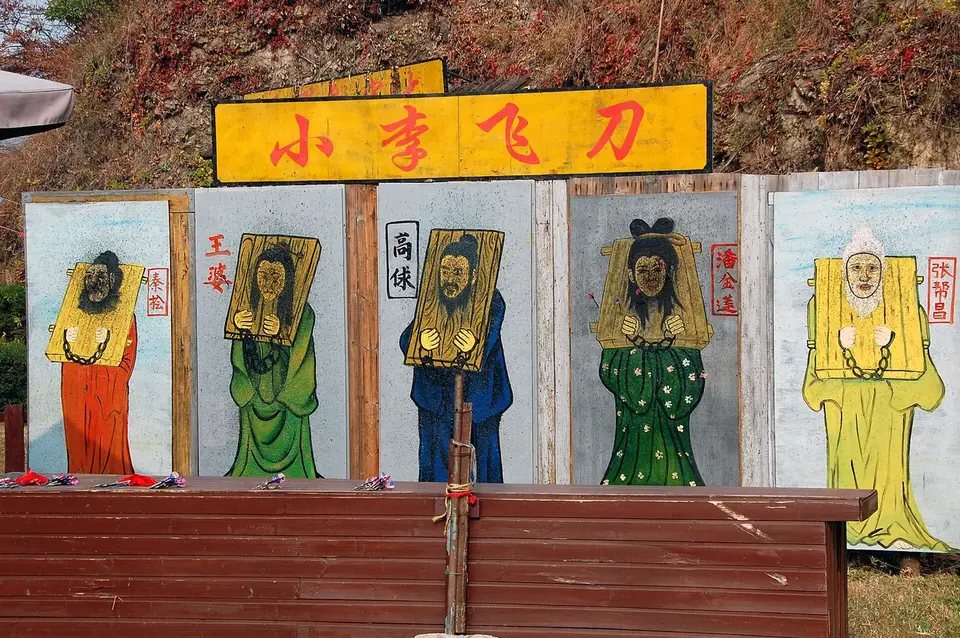
张邦昌
Zhang Bangchang (张邦昌, 1081–1127), courtesy name Zirong, was a native of Dong'e, Chizhou (modern Dong'e County, Shandong Province). He was a senior civil minister and grand councilor during the late Northern Song dynasty and the puppet ruler of the short-lived Da Chu regime established by the Jurchen Jin dynasty during the Jingkang Incident. Emerging from the imperial examinations during the Huizong reign, Zhang steadily…
Zhang Bangchang (张邦昌, 1081–1127), courtesy name Zirong, was a native of Dong'e, Chizhou (modern Dong'e County, Shandong Province). He was a senior civil minister and grand councilor during the late Northern Song dynasty and the puppet ruler of the short-lived Da Chu regime established by the Jurchen Jin dynasty during the Jingkang Incident. Emerging from the imperial examinations during the Huizong reign, Zhang steadily climbed the ranks of the bureaucracy, eventually aligning with the peace faction led by Wang Boyan and Bai Shizhong. Following the Jurchen invasion of Kaifeng in 1126, he was dispatched to the Jin camp alongside Prince Kang (Zhao Gou) as a hostage and negotiated territorial concessions. During the fall of Kaifeng in 1127, the Jin forces deposed the Zhao imperial house and forcefully coerced Zhang Bangchang into assuming the imperial throne of Da Chu under threat of massacring the civilian populace. Throughout his thirty-three-day reign, Zhang observed the decorum of a subject, refusing imperial regalia and quarters. Upon the Jin army's northern withdrawal, he immediately abolished the puppet throne, restored Empress Dowager Meng to regent status, preserved the dynastic altars, and personally surrendered the state seals to Emperor Gaozong in Yingtian. Despite his surrender of power, persistent accusations of high treason from the Southern Song court led to his exile and compelled suicide in Tanzhou in late 1127.
Obtained the Jinshi degree in the highest tier, initially appointed Professor in Yingzhou and Compiler in the Palace Library before rising to Director of the Imperial Academy.
Promoted from Hanlin Academician to Right Vice Director of the Department of State Affairs; elevated to Left Vice Director in November and Vice Director of the Chancellery in 1121.
Besieged in Kaifeng by Jin forces, strongly advocated capitulation and accompanied Prince Kang Zhao Gou to the Jin camp as hostage to surrender the three northern garrisons.
Returned from the Jin camp and promoted to Junior Protector and Right Grand Councilor, quickly advancing to Grand Chancellor (Taizai) and Vice Director of the Chancellery.
Ordered to visit the Jin military headquarters in the first month; forcibly detained upon arriving outside the walls and coerced to usurp the throne.
Received the Jin imperial patent and seals on the first day of the third month, weeping aloud while assuming the title and strictly adhering to ministerial decorum.
Following the Jin abduction of Emperors Huizong and Qinzong, invited Empress Dowager Meng to administer court in April and dispatched memorials supporting Zhao Gou.
Traveled in May to Yingtianfu to prostrate himself and surrender the imperial seals to Emperor Gaozong, initially receiving titles of Grand Protector and Prince of Tong'an.
Severely impeached by Censor Li Gang and others, demoted to Vice Military Commissioner of Baojing and banished to Tanzhou; ordered to commit suicide by hanging in September.
Zhang Bangchang was born in Dong'e, Chizhou in 1081 during the Northern Song dynasty. In 1102, during the first year of the Chongning era under Emperor Huizong, he passed the imperial civil examinations as a Jinshi. Over the following two decades, Zhang served in various central and regional posts, including Director in the Ministry of Rites, Vice Minister of War, and Vice Director of the Secretariat. Because of his bureaucratic efficiency and political adaptability, he earned the confidence of court grandees and the imperial throne.
During the Xuanhe era, the Song dynasty formed an alliance with the Jurchen Jin dynasty to destroy the Liao Empire. Following the fall of Liao, Jin cavalry pushed southward toward the Song heartland. During the Jingkang era, as Emperor Qinzong ascended the throne, the court split into militant war and capitulationist peace factions. Zhang Bangchang, aligned with peace advocates such as Bai Shizhong and Li Bangyan, argued for pacifying Jin demands through diplomatic concessions and financial reparations, fiercely opposing military confrontation advocated by Prime Minister Li Gang.
When the Jin army first besieged Kaifeng in early 1126, the Jin command demanded massive indemnities, the cession of the Three Garrisons of Taiyuan, Zhongshan, and Hejian, and high-ranking hostages consisting of an imperial prince and a grand councilor. Emperor Qinzong appointed his ninth brother, Prince Kang (Zhao Gou), as Territorial Cession Commissioner, and appointed Zhang Bangchang as Vice Commissioner to serve as hostages in the Jin headquarters at Cizhou.
Upon arrival, Jin commander Wanyan Zongwang observed Zhao Gou's calm demeanor and exceptional archery, suspecting that the Song court had substituted a general's son for the imperial prince. Conversely, Zhang Bangchang wept continuously and exhibited uncontrollable terror in captivity, convincing the Jin officers that Zhang was indeed a genuine high-ranking minister. Consequently, the Jin released Zhao Gou while detaining Zhang, demanding Prince Su (Zhao Shu) as a replacement.
In February 1126, a provisional peace was concluded, and Jin forces withdrew northwards with the approach of spring. Released from captivity, Zhang Bangchang returned to Kaifeng. Emperor Qinzong, commending his diplomatic endurance, elevated him to Junior Protector and Right Vice Director of the Department of State Affairs, and subsequently promoted him to Grand Councilor and Director of the Chancellery. While in power, Zhang strictly enforced the cession decrees, instructing northern garrisons to abandon fortifications, severely undermining Northern Song frontier defenses.
In the first month of 1126 (Jingkang 1), the Jurchen Jin eastern army commanded by Wanyan Zongwang swept south, crossing the Yellow River and laying siege to Kaifeng. Terrified, Emperor Huizong hurriedly abdicated to Crown Prince Zhao Huan (Emperor Qinzong) and fled south to escape the danger.
Surrounding the capital, the Jin demanded colossal indemnities of gold and silk, the cession of the three strategic northern prefectures—Taiyuan, Zhongshan, and Hejian—and the dispatch of an imperial prince and a grand councilor to the Jin camp as hostages. Aligning with the appeasement faction led by Chancellor Bai Shizhong and Li Bangyan, Zhang Bangchang fervently advocated full capitulation to Jin demands while fiercely opposing the armed defense advocated by General Li Gang.
Emperor Qinzong subsequently appointed his younger brother, Zhao Gou, Prince of Kang, as Peace Envoy for Territorial Cession, with Zhang Bangchang serving as Vice Envoy with the rank of Right Vice Director of the Department of State Affairs; both were dispatched to the Jin camp as hostages. Arriving at the Jin headquarters in Cizhou, Zongwang observed Zhao Gou's calm demeanor and exceptional marksmanship—hitting the bullseye three consecutive times—and suspected that the Song court had sent a disguised warrior in place of a genuine imperial prince. Conversely, seeing Zhang Bangchang trembling with terror and weeping incessantly, the Jin commanders became convinced that Zhang was a genuine high minister; they released Zhao Gou while detaining Zhang Bangchang, demanding Prince Zhao Shu as Zhao Gou's replacement.
In the second month, a peace treaty was concluded, and the Jin forces withdrew northward as the weather warmed, allowing Zhang Bangchang to return to court. Commending his diplomatic service, Emperor Qinzong elevated him to Junior Protector, Right Grand Councilor, and Vice Director of the Chancellery, and soon promoted him to Grand Chancellor (Taizai) and Vice Director of the Department of Chancellery, placing the highest central authority in his hands. During his tenure, Zhang rigidly enforced the territorial concessions, dispatching officials to compel the three northern garrisons to surrender without resistance, which directly led to the collapse of the Song frontier defenses.
In late 1126, Jin armies under Wanyan Zonghan and Wanyan Zongwang converged once again on Kaifeng, breaching the outer ramparts and capturing both Emperor Huizong and Emperor Qinzong. Jin leaders decided to abolish the imperial rule of the Zhao house and establish an ethnic Han puppet emperor to manage the central plains.
Jin authorities dispatched collaborators Wu Kai and Mo Chou into the inner city, issuing an ultimatum to the surviving Song court bureaucracy to nominate an alternative ruler with a different surname within three days, threatening to slaughter the entire population of Kaifeng if they failed to comply. Song officials initially submitted petitions pleading for the preservation of the Zhao dynastic line or the regency of Empress Dowager Meng, but Jin commanders rejected all appeals and specifically demanded Zhang Bangchang.
On the fifteenth day of the first month of 1127, Zhang Bangchang, who had been dispatched outside the city on a diplomatic errand, was seized and detained by Jin troops. On the first day of the third month, Jin officials informed Zhang of their decision to install him as emperor. Horrified by the prospect of dynastic treason, Zhang wept bitterly, attempted suicide, and engaged in a hunger strike, declaring to his attendants that accepting the crown would constitute an unpardonable sin against Heaven and earth.
However, the Jurchen commanders maintained their ultimatum, while collaborator Wang Shiyong locked the Song officials in the Imperial Library, utilizing general Fan Qiong's armed troops to compel their signatures. Only Imperial Academy student Xie Yingqi refused to sign, and Censor-in-Chief Qin Hui was arrested by the Jin for opposing the deposition of the Zhao family. On the seventh day of the third month of 1127, guarded by Jin soldiers and flanked by defected officials, Zhang was escorted to Xuanhe Gate and formally enthroned in the Department of State Affairs as Emperor of Da Chu, adopting the Jin calendar era Tianhui.
Recognizing the illegitimacy of his position, Zhang Bangchang spent his thirty-three-day reign adhering meticulously to the protocol of a subject rather than a sovereign.
He adamantly refused to occupy the imperial palatial halls such as Daqing Hall or Chongzheng Hall, setting up his temporary administrative desk outside Xuande Gate. He declined to wear imperial yellow robes, dressing exclusively in standard ministerial robes. During audiences with court officials, he sat facing east rather than facing south as an emperor would, insisting that officials greet him with common ministerial etiquette rather than imperial prostrations.
Furthermore, he prohibited the use of imperial vermilion ink and imperial seals, issuing administrative decisions as personal letters rather than imperial edicts, and styling himself as a humble servant instead of using the imperial first-person pronoun. When Wang Shiyong addressed him as monarch, Zhang reprimanded him sharply. He rejected proposals to recruit concubines from the imperial harem and forbade his relatives from adopting titles of imperial nobility.
In late March 1127, as the main Jin armies departed northward with the captured Song emperors, imperial clansmen, and palace treasures, Zhang dressed in plain white mourning clothes, offered farewell toasts at the Jin barracks, and wept openly while immediately discarding the yellow cloak forced upon him by Jin commanders.
Following the Jurchen army's departure across the Yellow River, imperial censor Lu Haowen secretly urged Zhang Bangchang that popular compliance was merely the result of fear of Jin brutality, and that returning sovereign authority to the Song dynastic house was his only path to redemption.
Embracing this counsel, Zhang Bangchang issued a decree on the fifth day of the fourth month stripping himself of the Chu imperial title. He formally invited Empress Dowager Meng (former Empress Yuanxiu of Emperor Zhezong) to preside over court affairs behind the screen in Yanfu Palace, declared a general amnesty, and restored the Northern Song dynastic calendar.
Concurrently, Zhang dispatched secret emissaries carrying a letter sealed in wax to Prince Kang Zhao Gou, who was rallying loyalist forces in Hebei and Shandong, explaining his involuntary enthronement and urging Zhao Gou to ascend the throne without delay.
On the first day of the fifth month of 1127, Zhao Gou was enthroned at Yingtianfu (modern Shangqiu, Henan), founding the Southern Song dynasty as Emperor Gaozong. Two days later, Zhang Bangchang arrived at Yingtianfu dressed in plain civilian attire, knelt weeping at the base of the palace terrace to acknowledge his guilt, and formally presented the Song imperial state seals and court records to Gaozong. Seeking to stabilize the newly founded regime, Gaozong pardoned Zhang, bestowed upon him the title of Grand Protector, and enfeoffed him as Prince of Tong'an.
Despite Gaozong's initial leniency, Southern Song loyalist ministers refused to tolerate Zhang's acceptance of the puppet throne. Newly appointed Prime Minister Li Gang and Censor-in-Chief Zhang Jun submitted impassioned memorials asserting that ministerial loyalty formed the cornerstone of the state: while Zhang had returned power, his failure to die for his dynasty and his acceptance of barbarian investiture constituted unforgivable treason. Li Gang threatened to resign unless Zhang was executed.
Additionally, censorial investigations revealed that during his occupation of the inner palace, Zhang Bangchang had received gifts from Consort Li (a concubine of Emperor Huizong) and had allegedly spent an evening intoxicated in Funing Hall, drawing grave charges of desecrating the imperial harem.
Confronted with immense political pressure, Emperor Gaozong rescinded Zhang's titles in June 1127, demoting him to Deputy Military Commissioner of Zhaohua and banishing him to Tanzhou (modern Changsha, Hunan) under strict surveillance. In September 1127, Gaozong dispatched imperial inspector Gao Li to Tanzhou with a secret imperial decree commanding Zhang's execution. Upon hearing the decree at Tianning Temple, Zhang lamented his tragic fate, wept bitterly, and ultimately hanged himself from the temple rafters at the age of forty-seven.
During the transition from Xuanhe to Jingkang, Zhang Bangchang served as Assistant Peace Envoy alongside Prince Kang in the Jin military camp. Yielding to Jin intimidation, he actively suppressed loyalist resistance represented by Li Gang, signed the capitulation that ceded Taiyuan, Zhongshan, and Hejian, and issued orders compelling frontier commanders to surrender, effectively dismantling the Song dynasty's northern defensive perimeter.
Amid the Jingkang catastrophe and the capture of the two emperors, Jin commanders issued an ultimatum to execute the entire populace of Kaifeng unless a puppet ruler was chosen. Facing the threat of mass extermination and armed intimidation by collaborator generals, Zhang reluctantly accepted the Jurchen investiture in the temporary hall of the Department of State Affairs, becoming the titular emperor of Da Chu—the first foreign-installed puppet regime established on Han Chinese soil by a northern nomadic power.
Throughout his thirty-three-day puppet reign, Zhang Bangchang scrupulously maintained ministerial humility, refusing imperial titles, halls, and yellow vestments. Once Jin troops retreated northward, he decisively abolished the Chu imperial title, shed the imperial garb, welcomed Empress Dowager Meng to Yanfu Palace to conduct regent government, and restored the legitimate Song era calendar, successfully preserving Kaifeng's imperial altars and its civilian population.
Upon the retreat of the Jurchen armies, Zhang dispatched covert envoys to advise Prince Kang to assume the throne. In May 1127, he traveled in plain robes to Yingtianfu, knelt in repentance, and surrendered the ancestral jade seals of the Northern Song back to Emperor Gaozong, facilitating the rapid legitimation and ideological consolidation of the nascent Southern Song dynasty.
FIGURES ASSOCIATED WITH THIS DYNASTY