Entity Type: Historical Figure Dynasty: Qing Dynasty
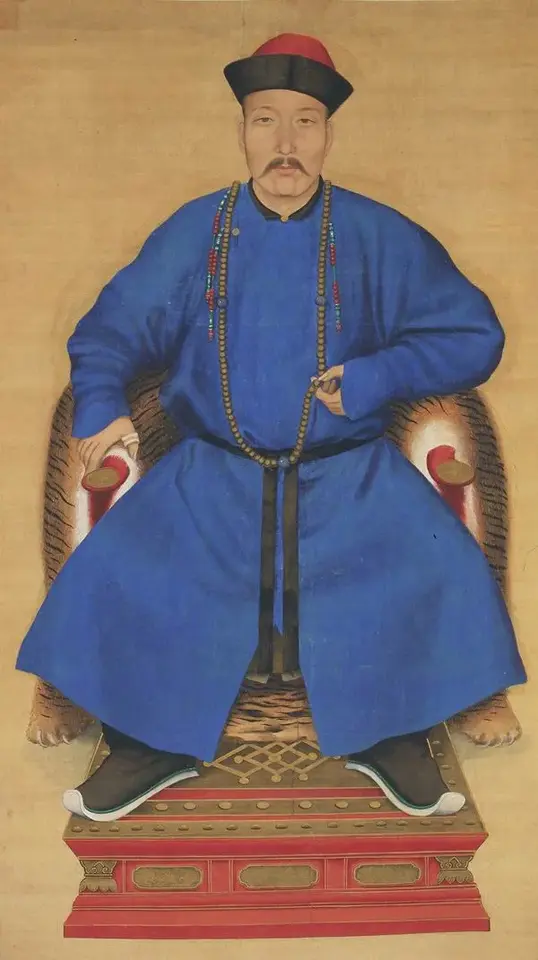
Historical figure
Tsering (策凌)
策凌
Borjigit Tsering (博尔济吉特·策凌, ? – 1750), also transcribed as Celing, belonging to the Mongol Khalkha group and a twentieth-generation descendant of Genghis Khan, was a preeminent military commander and frontier statesman throughout the Kangxi, Yongzheng, and Qianlong reigns of the Qing Dynasty. In 1692, Tsering accompanied his grandmother to submit to the Qing court from Tamir. Recognizing his extraordinary poise, the Kangxi…
Era not stated
PROFILE
Borjigit Tsering (博尔济吉特·策凌, ? – 1750), also transcribed as Celing, belonging to the Mongol Khalkha group and a twentieth-generation descendant of Genghis Khan, was a preeminent military commander and frontier statesman throughout the Kangxi, Yongzheng, and Qianlong reigns of the Qing Dynasty. In 1692, Tsering accompanied his grandmother to submit to the Qing court from Tamir. Recognizing his extraordinary poise, the Kangxi Emperor conferred upon him the rank of light chariot commander and ordered him to be educated within the imperial palace. In 1706, Tsering married the Kangxi Emperor's tenth daughter, Princess Heshuo Chunkexu, receiving the title Imperial Son-in-Law of the Second Rank, the rank of beizi, and an imperial mandate to lead his people back to pasture along the Tamir River, establishing a vital bastion of imperial authority in northern Mongolia. During the Yongzheng and Qianlong reigns, Tsering distinguished himself as the indispensable bulwark against the eastward aggression of the Dzungar Khanate. In 1727, he collaborated with imperial envoy Tulisen to demarcate the Sino-Russian central frontier, concluding the Treaty of Kyakhta and securing China's northern border from Shabina Dabaga to the Argun River, for which he was elevated to Prince of the Second Rank. In 1731, following General Fu'erdan's devastating defeat at Hoton Nor, the Dzungars launched a massive invasion across Khalkha. Tsering orchestrated a counter-ambush at Suke'aldaqu, routing the elite Dzungar cavalry and recovering vast numbers of plundered livestock. For this feat, the Yongzheng Emperor created him Prince Chaoyong of the First Rank (with perpetual hereditary transmission). In 1732, when thirty thousand Dzungar warriors attempted to destroy the revered Tibetan Buddhist center of Erdene Zuu (Guangxian Temple), Tsering trapped and encircled them with coordinated artillery bombardments and cavalry charges, killing over ten thousand invaders in the renowned Battle of Erdene Zuu. For this triumph, he was elevated to Imperial Son-in-Law of the First Rank and had his portrait commemorated in the Hall of Purple Splendor. In 1733, he was appointed the inaugural Left Vice General Who Pacifies Frontiers, governing northern military administration from Uliastai. Upon his passing in 1750, he received the posthumous name "Xiang" and the rare distinction of enshrinement in the Imperial Ancestral Temple.
- Noble Title
- Prince Chaoyong of the First Rank (和硕超勇亲王, with hereditary transmission)
- Posthumous Name
- Xiang (襄)
- Native Place
- Tamir, Khalkha Mongolia (modern Arkhangai Province, Mongolia)
- Date of Death
- 1750 (Qing Qianlong 15, 2nd Month, 5th Day)
- Highest Office
- Left Vice General Who Pacifies Frontiers, Imperial Son-in-Law of the First Rank (Gulun Efu), League Leader
- Major Offices
- Imperial Son-in-Law of the Second Rank (Heshuo Efu), Prince of the Second Rank (Duoluo Junwang), Prince Chaoyong of the First Rank, Left Vice General Who Pacifies Frontiers, Jasagh of the Sain Noyon Tribe of Khalkha
- Historical Identity
- Eminent Mongol commander of the Qing Dynasty, Prince Chaoyong of the First Rank, 20th generation descendant of Genghis Khan, supreme commander of the Battle of Erdene Zuu, merit statesman enshrined in the Imperial Ancestral Temple
LIFE TIMELINE
Relationship graph
BIOGRAPHY
Chronology
- 1692 (Qing Kangxi 31) | Submission to Imperial Court | Accompanied his grandmother Gechule Khatun from Tamir to Beijing, awarded a light chariot commandership, and admitted into the palace for inner court instruction.
- 1706 (Qing Kangxi 45) | Imperial Marriage | Married the Kangxi Emperor's tenth daughter, Princess Heshuo Chunkexu, granted the title Imperial Son-in-Law, and returned to Tamir with his followers.
- 1715 (Qing Kangxi 54) | Frontier Defense at Tui River | Dispatched to the Tui River to guard northern border defenses against Dzungar forces under Tsewang Rabtan, mastering alpine logistics.
- 1723 (Qing Yongzheng 1) | Elevation to Beile | Elevated to Prince of the Third Rank (Beile) by the Yongzheng Emperor and officially appointed Jasagh over his Khalkha tribal domains.
- 1727 (Qing Yongzheng 5) | Treaty of Kyakhta | Served as plenipotentiary envoy with Tulisen to demarcate the central Sino-Russian frontier, concluding the Treaty of Kyakhta and earning promotion to Prince of the Second Rank.
- 1731 (Qing Yongzheng 9) | Reversal at Suke'aldaqu | Following the Qing catastrophe at Hoton Nor, ambushed advancing Dzungar raiders at Suke'aldaqu, created Prince Chaoyong of the First Rank with hereditary status.
- 1732 (Qing Yongzheng 10) | Battle of Erdene Zuu | Decisively encircled and destroyed an invading Dzungar army of thirty thousand at Erdene Zuu, elevated to Imperial Son-in-Law of the First Rank.
- 1733 (Qing Yongzheng 11) | Government at Uliastai | Appointed the inaugural Left Vice General Who Pacifies Frontiers, establishing his headquarters at Uliastai to direct defense across Outer Mongolia.
- 1740 (Qing Qianlong 5) | Frontier Consolidation | Fortified Uliastai, instituted extensive military farming colonies, and developed a durable defense network across northern Mongolia.
- 1750 (Qing Qianlong 15) | Demise at Uliastai | Passed away in his military headquarters at Uliastai; Emperor Qianlong suspended court for three days, bestowed the posthumous name Xiang, and ordered his enshrinement in the Imperial Ancestral Temple.
Life and Career
Golden Clan Lineage and Imperial Education
Tsering belonged to the Mongol Borjigit clan and was a twentieth-generation direct descendant of Genghis Khan. His lineage traced through Tumengken (Banjur), the celebrated ancestor of the Sain Noyon tribe of Khalkha Mongolia. Tumengken had enthusiastically embraced the Gelug school of Tibetan Buddhism, earning the venerated title "Sain Noyon" (meaning wise and noble leader in Mongolian) from the Dalai Lama. Tumengken's eighth son Danjin fathered Namjale, and Tsering was born as Namjale's son.
During the late seventeenth century, northern Khalkha Mongolia faced severe destruction from the aggressive eastern invasions launched by Galdan Khan of the Dzungar Khanate. In 1688, Galdan led his armies across the Khangai Mountains, forcing Khalkha tribal chieftains to seek the protection of the Qing imperial court. In 1692, following the death of his parents, Tsering's grandmother Gechule Khatun led the young Tsering and his younger brother Gonggerabuteng across thousands of miles from the Tamir River basin (in modern Arkhangai Province, Mongolia) to pledge allegiance to the Kangxi Emperor in Beijing.
The Kangxi Emperor received the family with great honor in the Forbidden City, perceiving immense promise in the young Mongol aristocrat. The emperor conferred upon Tsering the hereditary military title of third-class light chariot commander, granted the family a residence in the capital, and issued an exceptional order for Tsering to be reared and educated inside the imperial palace. Over the next decade, Tsering immersed himself in classical Confucian, Manchu, and Mongol texts while training in mounted archery on the imperial parade grounds, winning the personal affection of the emperor.
In 1706, having reached adulthood, Tsering was selected by the Kangxi Emperor to marry his tenth daughter, Princess Heshuo Chunkexu. Tsering was invested as an Imperial Son-in-Law of the Second Rank and granted the noble ranking of beizi. Shortly after the marriage, Emperor Kangxi permitted Tsering to lead his original tribal followers back to their ancestral pasturelands along the Tamir River, establishing fortified camps to serve as a vital northern bulwark protecting the Qing empire against hostile steppe incursions.
Frontier Patrols and the Treaty of Kyakhta
In 1715, when the Dzungar Khan Tsewang Rabtan attacked Hami and penetrated into Tibet, the northwestern frontier erupted in war. The Kangxi Emperor dispatched armies along the northern route, commanding Tsering to join imperial forces at the Tui River (modern Tuin River in Mongolia). Patrolling the alpine steppes and the Khangai ranges under freezing conditions, Tsering became intimately familiar with northern terrain and the mobile skirmishing tactics of Dzungar cavalry, acquiring invaluable military experience.
In 1723, the Yongzheng Emperor ascended the throne and demonstrated profound trust in Tsering's abilities, elevating him to Prince of the Third Rank (Beile) and appointing him Jasagh over his Khalkha subjects. In 1724, when the Qinghai uprising led by Lobsang Danjin threatened to spill northward, Tsering maintained strict vigilance across the mountain passes, preventing rebel fugitives from linking up with northern tribes and preserving peace across Khalkha.
In 1727, aggressive probes by Tsarist Russian Cossacks along the Selenga River and around Kyakhta threatened Qing sovereignty. The Yongzheng Emperor appointed Tsering alongside Grand Secretary Tulisen as imperial plenipotentiaries to negotiate the delimitation of the central Sino-Russian frontier with the Russian representative Sava Vladislavich. Possessing thorough knowledge of northern waterways and seasonal grazing boundaries, Tsering defended imperial territorial claims with unyielding resolve.
After prolonged negotiations, the sides concluded the landmark Treaty of Burinsky and Treaty of Kyakhta. These treaties precisely demarcated over six thousand kilometers of frontier from Mount Shabina Dabaga to the Argun River, erecting boundary cairns along the Chuku River. This achievement preserved imperial sovereignty over the vast Mongol lands south of Lake Baikal and established legal foundations for frontier commerce at Kyakhta. In recognition of this diplomatic triumph, Emperor Yongzheng promoted Tsering to Prince of the Second Rank (Duoluo Junwang).
Hoton Nor Catastrophe and Counterstroke at Suke'aldaqu
In 1729, Emperor Yongzheng resolved to eliminate the Dzungar threat by mounting dual expeditionary campaigns: Prince Xibao advanced along the western route, while General Fu'erdan commanded the northern route. Tsering was named vice general of the northern army to assist Fu'erdan.
In the summer of 1731, Fu'erdan recklessly advanced from Khovd into the wilderness, falling into a trap orchestrated by Dzungar commanders Big Tsering Dondup and Small Tsering Dondup at Hoton Nor (south of modern Lake Uvs). The engagement resulted in an overwhelming Qing disaster: over ten thousand imperial troops were destroyed, senior commanders fell on the battlefield, and Fu'erdan escaped with only a handful of survivors.
The disaster at Hoton Nor left the northern frontier completely exposed. Emboldened by victory, Galdan Tsering ordered Small Tsering Dondup to lead thirty thousand elite cavalry east across the Khangai Mountains to lay waste to Khalkha and assault Tsering's headquarters at Tamir. Panic gripped the steppe, with tribal leagues preparing to abandon their pastures and flee south.
Amid this crisis, Tsering remained calm. He reassured the local tribes, dispatched messengers to coordinate defense lines, and ascended the heights of the Khangai Mountains to scout enemy movements. Calculating that the Dzungar riders were exhausted by their rapid march and encumbered by thousands of captured animals, Tsering prepared an ambush at the narrow gorge of Suke'aldaqu. When the Dzungar vanguard rode into the ravine, Tsering charged with his Khalkha cavalry, engaging the invaders in hand-to-hand combat. Tsering personally cut down the enemy vanguard commander (the son of Big Tsering Dondup), routed the forward divisions, and recaptured over ten thousand heads of livestock, compelling the surviving Dzungars to withdraw behind the Orkhon River.
The triumph at Suke'aldaqu arrested the collapse of the northern front. Overjoyed by the news, Emperor Yongzheng issued an imperial decree praising Tsering as an indispensable pillar of the state, elevating him to Prince Chaoyong of the First Rank with perpetual hereditary transmission. Furthermore, the emperor established the Sain Noyon Tribe out of the nineteen banners under Tsering's jurisdiction, designating him as league leader and officially expanding Khalkha from three historical divisions to four.
Decisive Triumph at the Battle of Erdene Zuu
In the autumn of 1732, Galdan Tsering mobilized his entire military strength of over thirty thousand heavy cavalry under Small Tsering Dondup to invade Khalkha once more. Their strategic objective was to sack Erdene Zuu (honored as Guangxian Temple by the Qing court), the historic center of the Gelug school in Outer Mongolia, slaughter the monks, and incite a general rebellion across the Mongol steppes.
In response, Tsering formulated a plan to lure the enemy into an encirclement beneath the walls of the sacred monastery. Mingling his cavalry with imperial units, he retreated deliberately, drawing the Dzungar host onto the plains west of Erdene Zuu. At dawn on September 21, as the Dzungar columns prepared to storm the temple walls, hidden imperial batteries and cavalry reserves emerged from the surrounding heights. Tsering, along with Vice General Tardai and General Ma'erqi, deployed dozens of heavy cannon and swivel guns in a fortified vehicle perimeter, opening a ferocious crossfire into the massed Dzungar ranks.
Exploding shells shattered the Dzungar cavalry formations, throwing horses and riders into panic. Seeing the enemy line fracture, Tsering brandished his saber and led his Khalkha cavalry in a sweeping flank charge, severing the Dzungar escape route toward the Khangai Mountains. Qing infantry advanced behind heavy shields and lances, while flanking horsemen closed the ring. A desperate day-and-night melee ensued across the plains, resulting in the total destruction of the invading force. Small Tsering Dondup fled into the mountains with a tiny remnant.
Tsering pursued the fleeing enemy for hundreds of miles to the Tui River on the southern slopes of the Khangai range, cutting down retreating units as they attempted to cross the freezing waters. Over ten thousand Dzungar warriors were killed on the battlefield, hundreds of officers captured, and immense quantities of weapons and livestock seized.
The Battle of Erdene Zuu was one of the most decisive engagements in the century-long Qing-Dzungar conflict. It completely extinguished Galdan Tsering's ambitions of conquering Mongolia, forcing the Dzungar Khanate onto the defensive. When news reached Beijing, Emperor Yongzheng celebrated the victory in the Palace of Heavenly Purity, elevating Tsering to Imperial Son-in-Law of the First Rank, granting him imperial four-dragon robes, yellow belts, double-eyed peacock feathers, and ordering his portrait to be painted in the premier position in the Hall of Purple Splendor.
Administration of Uliastai and Supreme Honors
In 1733, the Qing court established the headquarters of the Left Vice General Who Pacifies Frontiers at Uliastai (modern Tosontsengel, Zavkhan Province, Mongolia) to serve as the permanent supreme military command for Outer Mongolia. Emperor Yongzheng appointed Tsering as the inaugural general, vesting him with full authority over all banner garrisons and the four Khalkha leagues.
Assuming his duties, Tsering governed Uliastai with exceptional administrative skill. He erected postal relay stations, perimeter watchtowers, and beacon mounds extending across thousands of miles of northern frontier. To eliminate logistical bottlenecks, he cleared tens of thousands of acres of military agricultural colonies around Uliastai, allowing garrison soldiers to alternate between grazing and farming. He arbitrated inter-tribal disputes impartially, protected trade caravans, and provided relief during winter blizzards, binding the Khalkha people firmly to the imperial crown.
In 1736, the Qianlong Emperor ascended the throne, honoring Tsering with the title Senior Grand Tutor to the Crown Prince and arranging an imperial marriage for his son Sengge Rinchen (Chenggunzhab). Throughout Tsering's two decades of governance at Uliastai, the Dzungars were so intimidated by his preparedness that they never dared cross the Khangai Mountains again.
On February 5, 1750, Tsering passed away in his command tent at Uliastai in his seventies. Deeply shaken by his death, the Qianlong Emperor suspended court for three days, personally composed funerary elegies, and bestowed ten thousand taels of silver for the funeral. Tsering received the posthumous title "Xiang" and was granted the extraordinary honor of enshrinement in the Imperial Ancestral Temple, an honor accorded to only twenty-six civil and military officials throughout the entire Qing Dynasty. His son Chenggunzhab succeeded him as Prince Chaoyong and Left Vice General, continuing his family's legacy of northern frontier service.
Major Achievements
Savior of Northern Mongolia
Following the catastrophe at Hoton Nor in 1731, Qing military power in the north was on the brink of total collapse, and the Khalkha leagues faced imminent devastation. In this desperate hour, Tsering mounted a decisive counter-offensive at Suke'aldaqu, seizing back the initiative and restoring stability to the northern frontier. His tenacity prevented northern Mongolia from falling under Dzungar domination, safeguarding the imperial territorial perimeter at a critical juncture.
Tactical Mastery at the Battle of Erdene Zuu
The 1732 Battle of Erdene Zuu represents a classic masterpiece of high-altitude mountain warfare in Chinese military history. Facing numerically superior and aggressive Dzungar invaders, Tsering utilized the terrain around the sacred Buddhist complex to coordinate artillery barrages with deep cavalry envelopments, destroying over ten thousand elite enemy warriors. This engagement fundamentally reversed the balance of power between the Qing Empire and the Dzungar Khanate, ending Dzungar expansion toward the east.
Demarcation of the Central Sino-Russian Border
During the 1727 border negotiations, Tsering displayed remarkable diplomatic fortitude and geopolitical insight. Drawing upon his intimate knowledge of northern geography and grazing customs, he resisted Russian encroachment and facilitated the signing of the Treaty of Kyakhta. This treaty established a stable northern frontier spanning thousands of miles, securing imperial territories south of Lake Baikal and enabling the Qing court to concentrate its resources on resolving the Dzungar conflict.
Founder of the Sain Noyon League
Tsering's historical contributions extended into the lasting administrative reorganization of Outer Mongolia. In recognition of his battlefield feats, the Qing court established the Sain Noyon Tribe as the fourth independent Khalkha league, investing Tsering with perpetual hereditary princely rank. Over nearly two decades at Uliastai, he instituted military farming colonies, established relay networks, and integrated autonomous nomadic communities into an effective imperial defense system.
Rare Enshrinement in the Imperial Ancestral Temple
Throughout the Qing Dynasty, enshrinement in the Imperial Ancestral Temple was the supreme posthumous honor attainable by an imperial subject, granted to only twenty-six statesmen and commanders. Tsering was among the very few Mongol princes to receive this distinction. From his arrival in the Forbidden City as a young refugee to his service as a celebrated field commander and diplomat, Tsering stood as the preeminent exemplar of the integration of Mongol nobility into the Qing state.
Personal Relationships
- Great-Grandfather: Tumengken (Banjur), founding ancestor of the Khalkha Sain Noyon tribe, honored as Sain Noyon by the Dalai Lama.
- Grandmother: Gechule Khatun, who brought the young Tsering to Beijing in 1692 to submit to the Qing dynasty.
- Father-in-Law: The Kangxi Emperor, who oversaw Tsering's education in the palace and granted his daughter in marriage.
- Imperial Sovereign: The Yongzheng Emperor, who elevated Tsering to Prince Chaoyong, established the Sain Noyon Tribe, and appointed him Left Vice General.
- Mourning Sovereign: The Qianlong Emperor, who suspended court upon Tsering's death, bestowed the posthumous title Xiang, and ordered his enshrinement in the Imperial Ancestral Temple.
- Eldest Son: Chenggunzhab, who inherited the title Prince Chaoyong, married an imperial princess, and served as Left Vice General.
- Battlefield Adversary: Galdan Tsering, Khan of the Dzungars who launched repeated invasions into Khalkha and was consistently repelled by Tsering.
- Campaign Opponent: Small Tsering Dondup, Dzungar general routed by Tsering at Suke'aldaqu and Erdene Zuu.
- Military Deputies: Tardai and Ma'erqi, Qing commanders who assisted Tsering in executing the envelopment at Erdene Zuu.
Historical Evaluation
- The Yongzheng Emperor: "Tsering is endowed with innate loyalty and valor, diligently serving the state. In times of national peril, he threw himself into battle, reversed the tide of defeat, broke formidable foes across the Khangai plains, and cleared the borders at Guangxian. He is truly an indispensable statesman of the realm!" (Veritable Records of Emperor Shizong of Qing)
- The Qianlong Emperor: "In pacifying the frontiers, Tsering's merit stands supreme. Loyal, brave, and sagacious, he was peerless in his time. Commemorated in the Hall of Purple Splendor and enshrined in the Imperial Ancestral Temple, his fame shall endure forever!" (Veritable Records of Emperor Gaozong of Qing)
- Zhao Erxun et al., Draft History of Qing, Volume 296, Biography 83: Biography of Tsering: "Tsering was loyal, steadfast, and deeply versed in military strategy. At Hoton Nor, when the army retreated, his line remained unshaken; at Erdene Zuu, his achievements were unmatched. The office of Left Vice General Who Pacifies Frontiers began with Tsering and was continued by his son Chenggunzhab. Father and son displayed enduring loyalty and martial glory across the northern steppe, truly serving as the Great Wall of our northern borders."
- Wei Yuan, Military History of the Holy Dynasty, Volume 3: "The Battle of Erdene Zuu was the greatest triumph in the history of the Qing-Dzungar wars. Tsering, through the strength of a single prince, shattered a cunning and ferocious adversary, preserving the sacred yellow hat centers of northern Mongolia. His achievements rival those of Zhao Chongguo and Li Mu in ancient times."
Related Entries
- Battle of Erdene Zuu
- Battle of Hoton Nor
- Dzungar–Qing Wars
- Treaty of Kyakhta
- Sain Noyon Tribe
- Portraits in the Hall of Purple Splendor
FIGURES ASSOCIATED WITH THIS DYNASTY
Bibliography
- Zhao Erxun et al., Draft History of Qing, Volume 296, Biography 83: Biography of Tsering, Zhonghua Book Company punctuated edition.
- Qing Gui et al. (eds.), Veritable Records of Emperor Gaozong of Qing, Zhonghua Book Company photographic reprint.
- Ortai et al. (comp.), Imperially Commissioned Strategy for Pacifying the Dzungars, Imperial Palace edition.
- Wei Yuan, Military History of the Holy Dynasty, Volume 3: Yongzheng's Dual Expeditions Against Galdan Tsering, Zhonghua Book Company punctuated edition.
- Zhang Mu, Records of Mongol Nomad Pastoral Territories, Volume 8: Sain Noyon Tribe of Khalkha, Zhonghua Book Company punctuated edition.