Birth in Changyi
Born in the princely capital of Changyi to Liu Bo, King Ai of Changyi, and grandson of Emperor Wu's favored Consort Li.
海昏侯刘贺
Liu He (92–59 BCE), a native of Changyi County in the Kingdom of Changyi (present-day southern Juye, Shandong Province), was a grandson of Emperor Wu of Han (Liu Che), son of Liu Bo (King Ai of Changyi), the ninth emperor of the Western Han dynasty (deposed after reigning twenty-seven days, known in historiography as the Deposed Emperor of Han), and subsequently the first Marquis of Haihun. In 88 BCE, his father passed…
Liu He (92–59 BCE), a native of Changyi County in the Kingdom of Changyi (present-day southern Juye, Shandong Province), was a grandson of Emperor Wu of Han (Liu Che), son of Liu Bo (King Ai of Changyi), the ninth emperor of the Western Han dynasty (deposed after reigning twenty-seven days, known in historiography as the Deposed Emperor of Han), and subsequently the first Marquis of Haihun. In 88 BCE, his father passed away, and five-year-old Liu He inherited the princely throne of Changyi in 86 BCE. In April 74 BCE, following the death of Emperor Zhao of Han without heirs, Regent Huo Guang and senior ministers summoned nineteen-year-old Liu He to Chang'an to ascend the imperial throne. Unwilling to serve as Huo Guang's puppet, Liu He aggressively promoted his personal retainers from Changyi and ignored traditional mourning protocol, issuing 1,127 imperial orders for goods and offices during his twenty-seven days in power. Huo Guang, allied with General of Chariots and Cavalry Zhang Anse and Chancellor Yang Chang, obtained an imperial edict from Empress Dowager Shangguan to depose Liu He, banishing him to his former estate in Shanyang under close surveillance while executing over two hundred of his followers. In 63 BCE, satisfied that Liu He posed no political threat, Emperor Xuan of Han enfeoffed him as Marquis of Haihun, transferring his household to Haihun County in Yuzhang Commandery (modern Xinjian District, Nanchang, Jiangxi Province). Liu He died in 59 BCE at age thirty-three. Scientific excavations of his intact tomb in Nanchang since 2011 have yielded tens of thousands of artifacts—including gold hoardings, royal bronze bells, and lost bamboo manuscripts such as the Qi Analects—providing unprecedented archaeological insight into Western Han imperial culture.
Born in the princely capital of Changyi to Liu Bo, King Ai of Changyi, and grandson of Emperor Wu's favored Consort Li.
Inherits the princely title at age five following his father's death, becoming the second King of Changyi.
Summoned to Chang'an by Regent Huo Guang to succeed Emperor Zhao as the ninth emperor of the Western Han.
Deposed after twenty-seven days by Huo Guang over imperial control and mourning infractions; interned in Shanyang.
Enfeoffed as Marquis of Haihun with four thousand households by Emperor Xuan; relocated to Yuzhang Commandery.
Dies of chronic illness in his marquisate at age thirty-three; his domain is temporarily dissolved.
Liu He was born in 92 BCE in the princely seat of Changyi. His father, Liu Bo, was the son of Emperor Wu and his celebrated consort Lady Li, and had been created the first King of Changyi in 99 BCE. Following the catastrophic Wugu Witchcraft Catastrophe in 91 BCE, the imperial succession was left unresolved. In 88 BCE, King Ai Liu Bo died. In 86 BCE, five-year-old Liu He was formally installed as the second King of Changyi following the accession of his youthful uncle, Emperor Zhao of Han.
Situated on the fertile plains of the Central Plains, Changyi was a prosperous kingdom with rich agricultural yields and commercial vitality. Raised under the tutelage of prominent Confucian mentors including Grand Tutor Wang Ji and Chancellor Gong Sui, Liu He grew into a tall, handsome youth. However, he was restless, volatile, and passionately fond of horseback riding, falconry, hunting, and musical entertainment, frequently disregarding formal ritual restraints.
During the prolonged illness of Emperor Zhao, Liu He indulged in hunts, associating casually with stablesmen, grooms, and kitchen clerks. Grand Tutor Wang Ji repeatedly admonished him, submitting memorials warning that princes who failed in moral cultivation risked dynastic ruin. Later, mysterious omens troubled the palace, including strange bloodstains upon the royal seat. Chancellor Gong Sui wept as he warned that blood was a sign of misfortune presaging palace abandonment, urging the prince to reform, but Liu He continued his carefree lifestyle.
On June 5, 74 BCE, twenty-one-year-old Emperor Zhao passed away in Weiyang Palace without leaving an heir, sparking a severe succession crisis. General-in-Chief Huo Guang, directing the imperial regency, eliminated older contenders such as Liu Xu, King of Guangling. Deeming Liu Bo's lineage politically unencumbered and viewing nineteen-year-old Liu He as young and compliant, Huo Guang, in consultation with Zhang Anse and Chancellor Yang Chang, dispatched imperial commissioners to Changyi to summon the prince to assume the imperial regency and succession.
The imperial edict arrived in Changyi at midnight. Overjoyed, Liu He ordered torches lit and mobilized more than two hundred retainers, including Chancellor An Le and Chamberlain for the Palace Attendants Gong Sui, departing at noon.
Traveling with reckless urgency, Liu He covered 135 li between Changyi and Dingtao in a single afternoon and night, riding multiple relay horses to death along the highway. At Gong Sui's urgent plea, Liu He sent fifty attendants back. En route, he sought out prized roosters at Jiyang, procured special bamboo walking canes, and permitted retainers to force local women into baggage wagons at Hongnong. When imperial envoys reprimanded the retainers at Hu County, Gong Sui arrested the offending servant to protect the prince's reputation.
Arriving at Ba outside Chang'an, the Minister of the Guards presented the imperial carriage. At dawn on July 18, 74 BCE, the convoy reached the Guangming East Gate. Gong Sui reminded the prince that protocol required ritual weeping upon sighting the capital gates, but Liu He claimed his throat was too sore to cry. Upon reaching Weiyang Palace, he conducted mourning rites, accepted the imperial seal, and ascended the throne as the ninth emperor of the Western Han, elevating Emperor Zhao's widow Empress Shangguan to Empress Dowager.
Once enthroned, relations between the young sovereign and Regent Huo Guang rapidly deteriorated. Liu He was unwilling to serve as a figurehead while all civilian ministries and palace guards remained under Huo Guang's control. Seeking to build an independent power base, Liu He aggressively promoted his two hundred Changyi retainers into pivotal central offices.
He unlawfully distributed imperial seals and multicolored sashes reserved for commandery governors and feudal lords to his personal followers. He altered the imperial tallies from imperial yellow feathers to scarlet plumage, and unlocked the imperial treasuries to distribute vast stores of gold coins, swords, and silks to favored companions.
During the sacred imperial mourning period, Liu He repeatedly breached dietary restrictions, demanding daily banquets from the palace kitchen. When the chief steward refused, Liu He dispatched servants outside the palace to purchase pigs and poultry, commanding palace guards to admit them without inspection. At night, he held banquets in Wenshi Hall with his brother-in-law, summoning musicians and performers into the inner halls.
Furthermore, before conducting the inaugural sacrifice at the ancestral temple of Emperor Gaozu, Liu He dispatched envoys with three imperial sacrifices to the tomb of his late father in Changyi, styling himself the Successor Son Emperor. Over twenty-seven days, his couriers carried out 1,127 imperial orders demanding goods and conferring titles. When Erudite Scholar Xiahou Sheng and Chamberlain Fu Jia remonstrated, Liu He bound Fu Jia in chains and imprisoned him, completely fracturing the political equilibrium with the court aristocracy.
Recognizing that Liu He was uncontrollable and that the Changyi faction was infiltrating the palace guards, Huo Guang resolved to depose the emperor. He convened a secret council with Zhang Anse and Minister of Finance Tian Yannian, obtaining the support of the inner court.
On August 14, 74 BCE, Huo Guang summoned the ministers to Chengming Hall. When Huo Guang outlined the necessity of deposition, Tian Yannian drew his sword, declaring that any who hesitated should be executed immediately. Intimidated, Chancellor Yang Chang and the ministers prostrated themselves in assent.
Huo Guang led the assembly to Empress Dowager Shangguan. The teenage empress dowager sat in ceremonial armor surrounded by armed guards. As Liu He returned from morning audience, palace eunuchs shut the gates of Wenshi Hall behind him, trapping the Changyi retainers outside. Zhang Anse led imperial cavalry to arrest over two hundred Changyi officials, locking them in the judicial dungeons.
Huo Guang led Liu He before the throne, where the imperial secretary read a lengthy indictment enumerating 1,127 transgressions. The Empress Dowager approved the petition for deposition. When Huo Guang commanded Liu He to kneel, Liu He protested: "I have heard that even an unprincipled ruler will not lose his realm if he possesses seven outspoken ministers!" Huo Guang sternly retorted: "The Empress Dowager has decreed your deposition; you are no longer the Son of Heaven!"
Huo Guang personally stripped the imperial seals from Liu He's waist and presented them to the empress dowager. He escorted Liu He out of Jinma Gate to the Changyi mansion. Over the following days, all two hundred of Liu He's Changyi retainers were executed at the public execution ground; before their deaths, they lamented that failing to act decisively had brought their slaughter.
Following Liu He's deposition, Huo Guang and Zhang Anshi enthroned Emperor Wu's great-grandson Liu Bingyi (renamed Liu Xun) as Emperor Xuan of Han. The Kingdom of Changyi was abolished and converted into Shanyang Commandery. Although stripped of imperial and royal status, Liu He was granted a private maintenance estate of two thousand households and permitted to retain his vast ancestral movable wealth, living under house arrest in his former residence at Shanyang.
Throughout the early years of his reign, Emperor Xuan remained deeply suspicious of his royal uncle. He appointed the astute official Zhang Chang as Grand Administrator of Shanyang with secret imperial orders to monitor Liu He's daily conduct. Zhang Chang conducted unannounced visits and submitted exhaustive secret memorials reporting that Liu He, then in his late twenties, was severely crippled by chronic arthritis, walking with a cane, with sparse graying hair and an emaciated visage. He spent his days in seclusion with his sixteen concubines, twenty-two children, and domestic servants, speaking with apparent dullness and displaying no political ambition. Reassured by these reports that Liu He was broken in body and mind, Emperor Xuan finally ceased his active apprehension.
In March 63 BCE (the third year of the Yuankang era), Emperor Xuan issued a compassionate decree formally creating Liu He the "Marquis of Haihun" with a taxable fief of four thousand households, assigning his domain to remote Haihun County in Yuzhang Commandery (modern Xinjian District, Nanchang, Jiangxi). Transporting his substantial ancestral Changyi assets and imperial relics, Liu He made the arduous trek south across the Yangtze River, establishing his estate beside Lake Poyang.
In the humid southern climate, Liu He lived in quiet reclusion, though local magistrates maintained vigilant surveillance. During the Shenjue era, an administrative clerk reported that during a drinking conversation with Yangzhou Regional Inspector Ke, Ke had asked why Liu He had not barricaded the palace gates and executed Huo Guang during the 74 BCE crisis, to which Liu He allegedly sighed: "I missed the opportune moment, and regret it too late!" Alarmed ministers urged his arrest for treason, but Emperor Xuan chose leniency, merely reducing his fief by three thousand households while leaving one thousand to maintain ancestral sacrifices. In September 59 BCE (the third year of the Shenjue era), broken by constant anxiety, declining health, and political despair, Liu He died at his estate at the age of thirty-three. His marquisate was subsequently restored to his youngest son, Liu Daizong, in 46 BCE.
Liu He's brief twenty-seven-day reign stands as a crucial turning point in Western Han history. His accession and dramatic deposition epitomized the intense clash between imperial authority and bureaucratic regency. The formal deposition orchestrated by Huo Guang established an institutional precedent for removing a reigning sovereign through imperial edicts and cleared the path for the accession of Emperor Xuan, inaugurating the celebrated mid-Han renaissance.
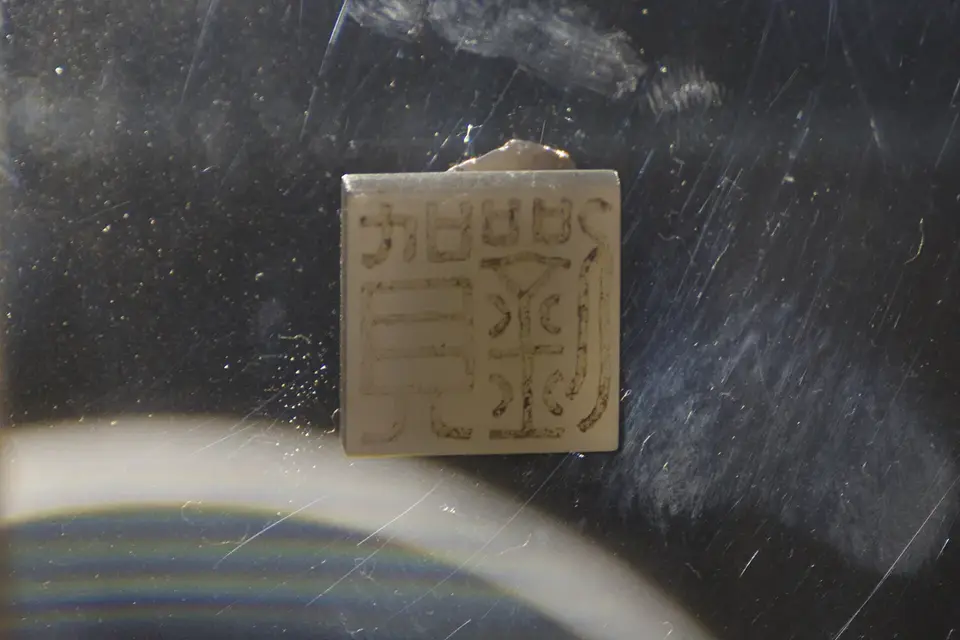
Since 2011, systematic archaeological excavations at Guansi Village in Nanchang, Jiangxi, uncovered the intact tomb complex of Liu He. The site represents the best-preserved and most structurally complete Western Han marquisate cemetery ever discovered.
Archaeologists recovered over ten thousand cultural relics, including the largest gold deposit ever unearthed in a single Han tomb—comprising hundreds of gold ingots, hoof-shaped gold bars, and gold plates—alongside complete sets of bronze bells, chiming stones, and the earliest known lacquer folding screen depicting Confucius.
Crucially, the tomb yielded over five thousand inscribed bamboo slips, including long-lost texts of the Confucian Book of Songs, Book of Rites, and the Qi Analects, missing for over eighteen centuries. This landmark discovery revolutionized the historical understanding of Liu He, demonstrating his literary culture and refuting the simplistic historical caricature of him as an ignorant buffoon.
FIGURES ASSOCIATED WITH THIS DYNASTY