Imperial Birth
Born in Chengqian Hall of Taiji Palace; named Chengqian with courtesy name Gaoming by Emperor Gaozu.
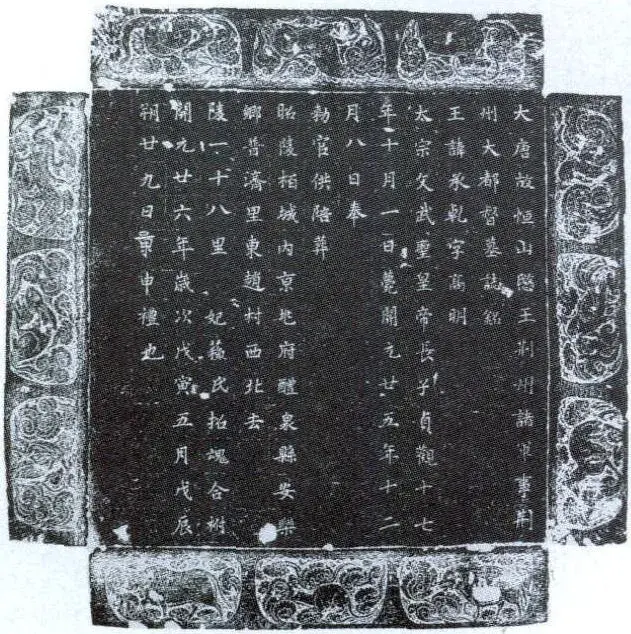
李承乾
Li Chengqian (李承乾, 619 – January 4, 645), courtesy name Gaoming, was a native of Chengji in Longxi (present-day Qin'an County, Gansu Province). He was the eldest legitimate son of Emperor Taizong of Tang (Li Shimin) and Empress Wende (Lady Zhangsun). Born in the Chengqian Hall of Taiji Palace, his grandfather Emperor Gaozu (Li Yuan) personally bestowed his name, signifying inheriting the imperial enterprise and governing the…
Li Chengqian (李承乾, 619 – January 4, 645), courtesy name Gaoming, was a native of Chengji in Longxi (present-day Qin'an County, Gansu Province). He was the eldest legitimate son of Emperor Taizong of Tang (Li Shimin) and Empress Wende (Lady Zhangsun). Born in the Chengqian Hall of Taiji Palace, his grandfather Emperor Gaozu (Li Yuan) personally bestowed his name, signifying inheriting the imperial enterprise and governing the universe. He was created Prince of Hengshan in 620 and transferred as Prince of Zhongshan in 624. Following Taizong's ascension in 626, the eight-year-old Li Chengqian was invested as Crown Prince. Taizong appointed premier Confucian masters Lu Deming and Kong Yingda to instruct him in the classics, designating veteran statesman Li Gang as Grand Preceptor to the Crown Prince. In his youth, Li Chengqian was quick-witted, dutiful, and respectful toward mentors, winning acclaim across the empire. During the early Zhenguan era, Emperor Taizong repeatedly commissioned Li Chengqian to hear legal appeals at the Eastern Palace and appointed him regent in Chang'an during imperial tours to Luoyang and Qizhou. The prince demonstrated careful judgment and administrative acumen. However, as he grew older, a severe foot ailment left him with a permanent limp, wounding his self-esteem and fostering paranoia. Frustrated by harsh, rigid remonstrations from his tutors Yu Zhining and Zhang Xuansu, and threatened by Taizong's lavish favoritism toward his younger brother Li Tai, Prince of Wei, Li Chengqian fell into despair. In 643, fearing deposition, Li Chengqian plotted a coup alongside Prince of Han Li Yuanchang, Minister of Personnel Hou Junji, and imperial son-in-law Du He. The plot was uncovered, and Taizong, unwilling to execute his son, reduced him to commoner status and exiled him to Qianzhou, creating Prince of Jin Li Zhi crown prince. Li Chengqian died in exile in January 645 at age twenty-seven. In 739, Emperor Xuanzong posthumously created him Prince Min of Hengshan and reinterred him at Zhaoling Mausoleum.
Born in Chengqian Hall of Taiji Palace; named Chengqian with courtesy name Gaoming by Emperor Gaozu.
Created Prince of Hengshan; transferred as Prince of Zhongshan in 624, tutored by Confucian scholars Lu Deming and Kong Yingda.
Invested as Crown Prince at age eight upon Taizong's accession; an empire-wide amnesty was declared.
Decreed to hear legal appeals at the Eastern Palace; his equitable judgments won widespread praise from ministers.
Wed the eldest daughter of Su Dan, Assistant Director of the Palace Library; honored by grand imperial banquets.
Empress Zhangsun passed away; suffering from a foot illness that caused a limp, he grew rebellious, adopting nomadic customs.
Li Tai finished the Kuodi Zhi and received unprecedented favors exceeding the heir apparent; in fear, Chengqian dispatched assassins against Li Tai.
Allied with Hou Junji and Li Yuanchang to launch a palace coup; the plot was exposed, and he was deposed and exiled to Qianzhou.
Died in exile in Qianzhou at age twenty-seven; Emperor Taizong suspended court sessions and buried him with the rites of a commandery duke.
His grandson Li Shizhi petitioned the throne; Emperor Xuanzong posthumously restored him as Prince Min of Hengshan, reinterring him at Zhaoling.
In 619, Li Shimin, then Prince of Qin, and his consort Lady Zhangsun celebrated the birth of their eldest legitimate son in the Chengqian Hall of Taiji Palace. Tang Gaozu Li Yuan cherished this grandson, naming him Chengqian with the courtesy name Gaoming after the hall of his birth. In classical statecraft, Chengqian carried the profound connotation of inheriting the imperial mandate and presiding over the cosmic realm, reflecting the high aspirations invested in him from infancy.
In 620, while still an infant, Li Chengqian was created Prince of Hengshan. In 622, Li Shimin appointed Zhangsun Jiaqing, grand-nephew of Empress Zhangsun, as his study companion. In 624, he was transferred to Prince of Zhongshan. Following the pacification of Wang Shichong in Luoyang, Li Shimin assigned Confucian masters Lu Deming and Kong Yingda from his Eighteen Scholars to instruct Li Chengqian in the classics. Naturally sharp-witted and articulate, the young prince displayed graceful manners and upright decorum, embodying the expectations of an ideal heir apparent.
Following the Xuanwumen Incident in June 626, Li Shimin ascended the imperial throne as Emperor Taizong. In October, Taizong issued an edict investing the eight-year-old Li Chengqian as Crown Prince, proclaiming an empire-wide amnesty. Taizong placed supreme importance on the prince's moral education, selecting revered statesmen to guide the Eastern Palace, appointing venerable elder Li Gang as Junior Preceptor and later Grand Preceptor to the Crown Prince.
During his adolescence, Li Chengqian adhered strictly to Confucian propriety and filial respect. In 629, when Grand Preceptor Li Gang suffered from severe foot ailments and could enter the palace only by litter, Li Chengqian descended from the palace steps, personally guided the litter into Shengping Hall, and bowed deeply before his tutor. Delighted by his humility, Emperor Taizong commended his conduct, while officials lauded the prince as a benevolent and respectful future sovereign.
In May 630, seeking to cultivate the prince's governing capability, Emperor Taizong issued an edict authorizing Li Chengqian to hear legal petitions in the Eastern Palace. The decree stipulated that litigants dissatisfied with rulings by the Department of State Affairs could appeal to the Crown Prince for final adjudication. Sitting in judgment at age twelve, Li Chengqian weighed evidence rigorously, issuing equitable decisions that conformed to law and justice, earning the deep respect of judicial officers.
Beginning in 632, when Emperor Taizong conducted inspection tours to Qizhou and Luoyang, the Crown Prince was designated regent in Chang'an, managing central administration with Right Vice Director of the Department of State Affairs Gao Shilian. During these regencies, Li Chengqian handled memorials efficiently, convening departmental directors to resolve military and civilian matters without administrative errors. In 635, he married the eldest daughter of Su Dan; in 638, the birth of his eldest son Li Jue prompted Taizong to grant an empire-wide amnesty for prisoners, marking the zenith of the Crown Prince's prestige.
However, as Li Chengqian entered adulthood, a sudden affliction of the feet permanently crippled one leg, leaving him with a noticeable limp. In an imperial court where physical dignity and physical perfection were prized, this impairment wounded the prince's pride, instilling an acute fear of deposition. Furthermore, the death of Empress Zhangsun in 636 deprived him of maternal warmth and emotional mediation, leaving him increasingly isolated.
To escape his psychological burdens, Li Chengqian developed bizarre behavioral eccentricities. He recruited over a hundred young Turkic retainers into the Eastern Palace, pitched a massive white yurt in the palace courtyards, donned sheepskin robes, and carved boiled mutton with short daggers. He even staged mock funerals for Turkic Khans, lying rigid while his followers circled him on horseback, wailing and cutting their faces, seeking reckless release from overwhelming anxiety.
To correct the prince, Taizong appointed stern scholars including Yu Zhining, Zhang Xuansu, and Kong Yingda to advise the Eastern Palace. However, these mentors adopted rigid, confrontational remonstrations, comparing minor expenditures and theatrical amusements to the depravities of ancient tyrants Jie and Zhou. Rather than guiding the prince, these harsh rebukes intensified his resentment, driving him to conceal his vices outwardly while secretly plotting assassinations against his critical tutors.
The succession crisis escalated dramatically due to Emperor Taizong's excessive indulgence toward his second son, Li Tai, Prince of Wei. Intellectually gifted and devoted to scholarship, Li Tai was permitted to establish his own literary academy and compile the massive geographical gazetteer Kuodi Zhi. Taizong showered Li Tai with boundless gifts, exempted him from departing for his regional fief, allowed him to ride in palanquins within the palace, and provided allowances surpassing those of the Crown Prince. Ambitious court opportunists rallied around Li Tai, creating an open challenge to the heir apparent.
Terrified by Li Tai's ascendance and shaken by Taizong's execution of his favorite musician Chengxin, Li Chengqian felt trapped. Haunted by the memory of the Xuanwumen Incident, he concluded that losing the succession meant certain death. In 642, he sent assassins to murder Li Tai, but the attempt failed.
Cornered, Li Chengqian decided on a desperate gamble. He allied with disgruntled commander Hou Junji, Minister of Personnel; imperial uncle Li Yuanchang, Prince of Han; Guard Commander Li Anyan; and imperial son-in-law Du He, forming an armed conspiracy to storm the imperial palace and force Taizong's abdication, mirroring the coup of 626.
In April 643, Prince of Qi Li You launched an abortive rebellion in Qizhou. During the interrogation of Li You's conspirator Gegan Chengji, the prisoner exposed Li Chengqian and Hou Junji's impending palace coup to escape execution. Stunned and grief-stricken, Taizong ordered Zhangsun Wuji, Fang Xuanling, Xiao Yu, and Sun Fuga to investigate, confirming the plot.
Before the assembled court, Taizong wept, lamenting that while the law demanded execution, he could not bring himself to execute his own eldest son. Messenger Lai Ji stepped forward, urging the emperor to remain a compassionate father while sparing the prince's natural life. Taizong demoted Li Chengqian to commoner status and banished him to Qianzhou, while executing Hou Junji, Du He, and ordering Li Yuanchang to commit suicide.
Addressing the succession, Taizong recognized that if Li Tai were made crown prince, both Li Chengqian and the gentle Li Zhi, Prince of Jin, would be eliminated; however, if Li Zhi were named heir, both elder brothers would be spared. Taizong chose Li Zhi (Emperor Gaozong).
In January 645, Li Chengqian died of illness and melancholy in Qianzhou at age twenty-seven. Mourning his loss, Taizong suspended court sessions and buried him with the rites of a commandery duke. In 739, Li Chengqian's grandson Li Shizhi, serving as chancellor, petitioned Emperor Xuanzong for his grandfather's reburial. Xuanzong posthumously elevated Li Chengqian to Prince Min of Hengshan and Grand Commander-in-Chief of Jingzhou, reinterring his remains within Zhaoling Mausoleum beside his parents.
During the formative years of the Zhenguan reign, the young Li Chengqian served as the empire's legitimate heir apparent, projecting an image of Confucian decorum and filial piety. His humble prostrations before veteran preceptor Li Gang and attentive study of statecraft reassured court ministers following the bloody divisions of the Xuanwumen Incident, solidifying the moral foundation of dynastic succession across the empire.
Li Chengqian was far from an incompetent heir. During his early twenties, when assigned to review judicial grievances and oversee state affairs as regent during Taizong's absences, he exhibited remarkable executive competence. Analyzing complex cases and balancing legal statutes with popular welfare, he handled memorials with precision, earning the trust of elder statesmen and demonstrating genuine potential as a future ruler.
In 639, Emperor Taizong approved the establishment of Chongwen Hall within the Eastern Palace, gathering prominent scholars and archiving classical literature. Under Li Chengqian's patronage, the academy hosted profound philosophical debates synthesizing Confucianism, Buddhism, and Daoism, assembling intellectual elites to edit state compendia. Chongwen Hall enriched the administrative culture of the Eastern Palace and contributed significantly to early Tang scholarly achievements.
Li Chengqian's tragic transformation from an exemplary crown prince into a desperate rebel offers an enduring case study in imperial succession politics. Taizong's pedantic expectations toward his heir, contrasted with unchecked favoritism toward Li Tai, disrupted primogeniture stability, driving the Crown Prince into armed revolt. The painful ordeal forced Taizong to prioritize fraternal preservation, ultimately selecting the benevolent Li Zhi and ensuring a peaceful transition toward the prosperous Yonghui era.
FIGURES ASSOCIATED WITH THIS DYNASTY