Birth in Longxi
Born in Didao as the grandson of Former Liang General Li Yan and descendant of Li Guang.
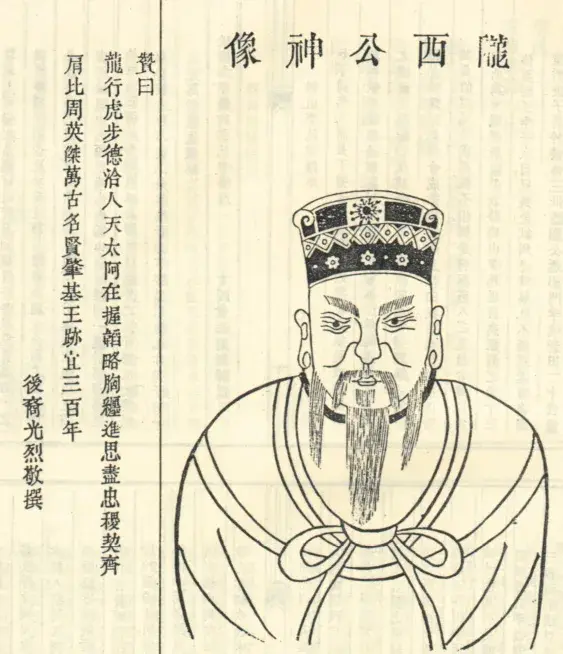
351 CE–417 CE
李暠
Li Gao (李暠, 351 – March 417), courtesy name Xuansheng and childhood name Changsheng, hailing from Didao in Longxi (modern Lintao, Gansu), was the sixteenth-generation descendant of the Han general Li Guang and the founding sovereign of Western Liang during the Sixteen Kingdoms period. Honored with the temple name Taizu and posthumous title King Wuzhao, he was later venerated by Emperor Xuanzong of Tang as Emperor Xingsheng.…
Li Gao (李暠, 351 – March 417), courtesy name Xuansheng and childhood name Changsheng, hailing from Didao in Longxi (modern Lintao, Gansu), was the sixteenth-generation descendant of the Han general Li Guang and the founding sovereign of Western Liang during the Sixteen Kingdoms period. Honored with the temple name Taizu and posthumous title King Wuzhao, he was later venerated by Emperor Xuanzong of Tang as Emperor Xingsheng. Renowned in his youth for mastering Confucian classics, military strategy, and archery, he served successively as Magistrate of Xiaogu and Administrator of Dunhuang under Northern Liang. In 400, following his victory over Suo Si, he was proclaimed Duke of Liang by local elites, establishing Western Liang and upholding the Eastern Jin as legitimate suzerain. Reigning for seventeen years, Li Gao relocated the capital to Jiuquan, repeatedly repelling incursions by Juqu Mengxun of Northern Liang. Domestically, he integrated military garrisons with agrarian cultivation, opening tens of thousands of mou of agricultural colonies along Yumen and Yangguan while resettling over 23,000 displaced households through tax relief. He established the Jinggong Hall to patronize scholars and erected imperial academies, making Hexi an enduring sanctuary for Han civilization amid northern turmoil. Diplomatically, he balanced relations with Eastern Jin and Later Qin while projecting authority over the Western Regions, revitalizing the Silk Road and laying deep aristocratic foundations for the rise of the Guanlong nobility in the Sui and Tang eras.
Born in Didao as the grandson of Former Liang General Li Yan and descendant of Li Guang.
Duan Ye established Northern Liang and appointed the esteemed Li Gao as Magistrate of Xiaogu.
Following Meng Min's death, local elites elevated Li Gao as Administrator of Dunhuang.
Juqu rival Suo Si attacked Dunhuang; Li Gao counterattacked and Duan Ye executed Suo Si in apology.
Six commanderies proclaimed Li Gao Duke of Liang; ascended the throne under era Gengzi, honoring Jin.
Moved the capital from Dunhuang to Jiuquan, altering the era to Jianchu and building Wangsui Tower.
Dispatched Prince Li Xin to smash Northern Liang invaders outside Jiuquan, capturing Juqu Bainian.
Passed away in Jiuquan Palace at sixty-seven; interred in Jianshi Mausoleum and later honored by Tang as Emperor Xingsheng.
Li Gao was born in 351 in Didao of Longxi, courtesy name Xuansheng, childhood name Changsheng, originating from the preeminent Longxi Li clan and inheriting the martial tradition of the Han Dynasty general Li Guang. His grandfather Li Yan had served Former Liang founder Zhang Gui, rising to General of the Martial Guard and Marquis of Anshi, while his father Li Chang enjoyed widespread renown for virtue but died prematurely, leaving Li Gao to be raised as a posthumous child by his mother. Endowed with lofty aspirations, composure, and benevolence, Li Gao was immersed from infancy in the refined scholarly traditions of the Wei-Jin gentry.
During his youth, Li Gao displayed remarkable literary talent and an insatiable thirst for knowledge. He read extensively across Confucian canonical texts and dynastic histories, excelling in verse and rhapsodic prose, winning the admiration of Hexi scholar-officials. Yet he was no cloistered pedant; witnessing the collapse of Former Liang and the chaotic barbarian devastations across the northern plains, he practiced equestrian archery, swordplay, and ancient military treatises including Sun Tzu and Wuzi, aspiring to restore peace to Chinese civilization and embodying the attributes of a cultured scholar-general.
Following the rise of Later Liang under Lü Guang, Li Gao entered officialdom due to his illustrious lineage and administrative talent. In 397, Later Liang officers Duan Ye and Juqu Mengxun rebelled at Zhangye to establish Northern Liang, with Duan Ye claiming the governorship of Liangzhou and appointing Dunhuang Administrator Meng Min as Governor of Shazhou, while summoning Li Gao to serve as Magistrate of Xiaogu. At Xiaogu, Li Gao governed diligently, reduced burdensome levies, resettled impoverished refugees, and repaired irrigation channels, transforming the desolate border outpost into a flourishing and peaceful county.
Following Meng Min's demise, Dunhuang Commander Guo Qian and administrative officer Suo Xian recommended Li Gao as General of Tranquil Martiality and Administrator of Dunhuang. Seeking to appease Longxi Han elites, Duan Ye sanctioned the appointment, conferring upon Li Gao the titles General Who Pacifies the West and Colonel of Western Barbarians. However, Li Gao's immense popularity aroused the bitter jealousy of Northern Liang commander Suo Si, who slandered him to Duan Ye as an ambitious separatist, prompting Duan Ye to dispatch Suo Si with five hundred cavalry in a surprise march to seize Dunhuang.
When Suo Si's vanguard arrived twenty li outside Dunhuang, Li Gao initially contemplated riding out to welcome him to demonstrate innocence, but county magistrate Zhang Miao and advisor Song Yao vehemently dissuaded him. Song Yao analyzed the strategic landscape, arguing that Duan Ye was weak and indecisive while Northern Liang commanders were fractured by factional strife, urging Li Gao to capitalize on Dunhuang's natural bastions rather than surrender passively. Convinced by their counsel, Li Gao dispatched his sons Li Xin and Li Rang at the head of elite cavalry, executing a nocturnal ambush outside Dunhuang that routed Suo Si's force.
Suo Si fled back to Zhangye, and Li Gao promptly dispatched an emissary bearing a petition to Duan Ye, detailing Suo Si's treasonous attempts to sow border discord while reiterating his own unwavering loyalty to regional peace. Duan Ye had long grown suspicious of Suo Si's arrogance; realizing that Li Gao held formidable defenses, he executed Suo Si and sent his head to Dunhuang in apology, promoting Li Gao to General Who Stabilizes the West and Commander of Military Affairs West of Liangzhou. Through this decisive defensive campaign, Li Gao eliminated factional rivals and secured absolute authority over the far western border.
In 400, observing the endless wars between Later Liang and Northern Liang, Administrator Tang Yao of Jinchang united with Zhang Miao and magistrates across six commanderies to publish a manifesto proclaiming Li Gao as Generalissimo, Governor of Shazhou, Duke of Liang, and Administrator of Dunhuang. Acceding to the universal yearning of Han refugees for security and stability, Li Gao ascended the altar in the southern suburbs of Dunhuang in November, proclaimed a general amnesty, and adopted the era Gengzi, officially founding the Western Liang regime.
At the founding of the state, Li Gao exhibited the foresight of an enlightened sovereign. Though establishing an autonomous regime at Dunhuang, he adhered strictly to the legitimacy of the Eastern Jin, styling himself a loyal vassal in imperial edicts to consolidate the allegiance of the Longxi scholar-gentry. He instituted administrative offices, appointing Song Yao as Chief Attendant in charge of state secrets and placing Guo Qian and Suo Xian over the military. He enforced strict military discipline, forbade soldiers from looting civilians, and erected defensive garrisons east of Yumen Pass to establish a durable sanctuary.
In its infancy, Western Liang faced grave peril, surrounded by predatory oasis kingdoms to the west and relentless assaults from Juqu Mengxun's Northern Liang to the east. Li Gao pursued a grand strategy of allying with distant powers to confront nearby enemies, sending tributary missions to Eastern Jin while exchanging goodwill embassies with Southern Liang and Later Qin to form a diplomatic counterweight against Northern Liang. Simultaneously, he campaigned westward, capturing frontier outposts beyond Yumen Pass and pacifying nomadic tribes along the desert fringes, securing control over the eastern Silk Road.
Having stabilized Dunhuang, Li Gao turned his attention to the fertile and densely populated Jiuquan corridor. In 405, he led court officials, aristocratic clans, and royal cavalry eastward, officially relocating the Western Liang capital from Dunhuang to the fortress city of Jiuquan and adopting the era Jianchu. Moving to Jiuquan granted Western Liang access to rich agricultural acreage and lush Qilian Mountain pastures, while erecting an advanced military bastion directly threatening Northern Liang's capital at Zhangye, inaugurating the golden zenith of Western Liang statehood.
Following the move, Northern Liang ruler Juqu Mengxun viewed Western Liang as his supreme competitor, repeatedly launching tens of thousands of fierce horsemen against Jiuquan and Dunhuang. Li Gao maintained disciplined defense, exploiting the Qilian terrain and desert wastes to build fortified earthworks and implement scorched-earth tactics, repeatedly repelling Northern Liang assaults at Jiankang and Linsong. In 410, Li Gao dispatched Crown Prince Li Xin with elite cavalry, routing Juqu Mengxun's army outside Jiuquan, slaying thousands, and capturing the famed general Juqu Bainian, crushing Northern Liang's annexation ambitions.
Alongside defensive triumphs, Li Gao sponsored urban expansion at Jiuquan, building palaces, fortifications, and the towering Wangsui Tongtian Observatory to regulate astronomical rites and governance. He welcomed prominent Han scholars fleeing northern wars, constructing academies and lecturing halls, transforming Jiuquan into an intellectual sanctuary for Han classical civilization amid Sixteen Kingdoms turbulence. Balancing statecraft with literary patronage, he authored treatises and composed rhapsodies with scholars, earning enduring historical acclaim as the enlightened master of Hexi.
In his twilight years, Li Gao remained tirelessly dedicated to imperial administration. Observing the momentous northern expedition of Eastern Jin general Liu Yu against Later Qin, he dispatched naval embassies southward to Jiankang, presenting horses, bows, and western treasures to demonstrate loyalty. Emperor An of Jin issued an imperial decree honoring Li Gao's defense of Chinese culture, appointing him Palace Attendant, Grand Commander of Guanxi Military Affairs, General Who Stabilizes the West, Governor of Liangzhou, and Duke of Wuxing, granting Western Liang official legitimacy from the Chinese dynastic center.
In his final years, Li Gao devoted immense care to mentoring his chosen heir, Li Xin. He repeatedly admonished Li Xin to practice humility, frugality, and benevolence, warning him that Juqu Mengxun was treacherous and militarily formidable, instructing him to maintain defensive bastions and avoid aggressive offensives. Li Gao composed the Jinggong Hall Inscription and inscribed family instructions upon palace screens, urging his sons to maintain fraternal harmony. His sagacious guidance reflected the profound wisdom and statesmanship of an experienced dynastic founder.
In March 417, King Wuzhao Li Gao passed away peacefully in the front hall of Jiuquan Palace at sixty-seven. Civil and military officials observed solemn mourning rites, conferring the posthumous title King Wuzhao and temple name Taizu, laying him to rest in Jianshi Mausoleum amid the widespread grief of diverse frontier peoples. Crown Prince Li Xin succeeded to the throne under era Jiaxing; however, lacking his father's strategic patience, Li Xin ignored the deathbed injunctions and was subsequently lured into an ambush and destroyed by Juqu Mengxun, precipitating the fall of Western Liang.
Though the collapse of Western Liang could not avert the broader fragmentation of the Sixteen Kingdoms, Li Gao's descendants forged an unparalleled legacy in Chinese history. The Longxi Li lineage evolved over centuries into the premier aristocratic house of the Guanlong governing bloc through the Northern Wei, Western Wei, and Northern Zhou dynasties. Li Gao's fourth-generation descendant Li Hu served as Grand Commandant of Western Wei, while his fifth-generation descendant Li Bing was enfeoffed as Duke of Tang. When Li Yuan founded the Tang Dynasty, he honored Li Gao as royal progenitor, and Emperor Xuanzong posthumously elevated him as Emperor Xingsheng.
Regarding economic revitalization and frontier development, Li Gao implemented agrarian-military colonies and extensive land reclamation. Recognizing that oasis grain reserves determined dynastic survival, he established state-operated military colonies along Yumen Pass and Yangguan Pass. He decreed that garrison soldiers engage in drill during agricultural lulls and farm during planting seasons, diverting snowmelt from the Qilian Mountains to irrigate arid desert plains, achieving self-sufficiency in border grain supplies and eliminating the costly transport of supplies from the interior.
Li Gao vigorously championed private agriculture and benevolent taxation. He ordered prefectures to survey land registers, redistributing abandoned estates to destitute refugees without charge and exempting newly reclaimed farmlands from agricultural taxes and corvée for three years. During sowing and harvesting seasons, he mandated that local magistrates inspect fields to encourage sericulture and farming, strictly forbidding cavalry mounts from trampling civilian crops. These supportive measures generated bumper harvests across Hexi, filling state granaries with immense grain surpluses.
Simultaneously, Li Gao protected the security and commercial vitality of the Silk Road. He refurbished post stations along desert routes, deploying patrols to suppress nomadic banditry while granting low-tariff protections to Sogdian and western merchants, allowing them to establish official trading lodges in Jiuquan and Dunhuang. Western horses, Khotan jade, and textiles flowed east in exchange for Central Plains silks, paper, and ironware, generating abundant customs revenues that fortified Western Liang's financial foundations.
In cultural preservation and academic patronage, Li Gao rendered outstanding historical contributions toward safeguarding Huaxia civilization. At a time when northern China lay ravaged by barbarian warfare, Li Gao embraced Confucianism with open vision, establishing imperial colleges and provincial academies at Jiuquan and engaging eminent scholars such as Song Yao as imperial professors. He presided over monthly academic examinations, personally testing scholars and appointing distinguished graduates to civil offices, ensuring that classical ritual, music, and textual learning endured intact in the Hexi sanctuary.
Beyond promoting education, Li Gao was an accomplished scholar-emperor and rhapsodist. Possessing refined literary style and profound erudition, he composed renowned masterpieces including Rhapsody on Expressing My Aspirations, Admonitions of Guangling, and Rhapsody on Grand Wine, which were praised by later dynasties and collected in Xiao Tong's Selections of Refined Literature. He supervised the compilation of statutory codes and revised astronomical calendars while cataloging over ten thousand scrolls of imperial library books, transforming Western Liang into an oasis of classical refinement.
To dismantle aristocratic gatekeeping and recruit talented administrators, Li Gao innovatively established the Jinggong Hall in Jiuquan. The hall provided stipends, lodgings, and libraries for impoverished scholars seeking refuge from across the realm, appointing officials based on merit rather than pedigree. Through this recruitment system, displaced Han-Wei elites and Hexi masters assembled at Jiuquan, imbuing the Western Liang administration with unmatched classical decorum and influencing the later reforms of the Northern Wei and the Sui-Tang administrative renaissance.
In domestic jurisprudence and civil administration, Li Gao rejected the draconian penal laws of the Later Liang regime, steadfastly pursuing judicial leniency and humane governance. Upon taking power, he abolished archaic corporal mutilations and collective family punishments, formulating a temperate penal code that forbade judicial torture. In capital cases, he enforced strict appellate reviews requiring joint concurrence between the governor's office and the imperial judiciary, ensuring that judicial verdicts remained fair and uncorrupted, fostering social harmony throughout his realm.
Confronted with waves of displaced families fleeing Sixteen Kingdoms warfare, Li Gao instituted compassionate resettlement policies. He dispatched relief commissioners with grain and cloth to border crossings, welcoming Han and barbarian refugees fleeing from Zhangye, Guzang, and Guanzhong. He allocated homesteads, arable land, oxen, and farming tools to refugees, establishing resettlement bureaus to protect their livelihood; historical records confirm that Western Liang absorbed and resettled over 23,000 households, immensely expanding the state's core labor force and tax base.
In ethnic governance, Li Gao displayed remarkable tolerance and foresight. Ruling over a diverse population of Lushui Hu, Yuezhi, Dingling, and Qiang tribes, he adopted policies of indirect rule that respected indigenous customs, appointing tribal chieftains as military commanders to patrol border passes. He prosecuted Han gentry who exploited tribal laborers and prohibited magistrates from forcibly altering nomadic livelihoods, fostering multi-ethnic integration through common agriculture and securing domestic ethnic harmony across seventeen peaceful years.
In external geopolitics and regional diplomacy, Li Gao demonstrated consummate diplomatic finesse. Confronting hostile neighbors, he recognized that his small state could not sustain warfare on multiple fronts, steadfastly adhering to the strategy of allying with distant powers to resist immediate foes. By dispatching tribute embassies across the southern seas to Eastern Jin, he secured unassailable moral legitimacy; by maintaining peaceful relations with Later Qin, he prevented Northern Liang from forming external coalitions against Western Liang, safeguarding his regional buffer.
Directing statecraft toward the Western Regions, Li Gao extended the reach of Chinese civilization and international commerce. Exploiting Dunhuang's position as the gateway to Central Asia, he unified the territories west of Yumen Pass and dispatched diplomatic missions to Shanshan, Karasahr, and Kucha, renewing the Han-Jin tributary protectorate system. The oasis kingdoms respected Western Liang authority, sending princes to serve as imperial guards and delivering tribute of fine steeds and jade, restoring Silk Road vitality to unprecedented levels.
Throughout his seventeen-year struggle against Northern Liang, Li Gao maintained unyielding strategic composure. He expanded boundaries whenever Northern Liang was entangled with Southern Liang or Western Qin, while feigning retreat and entrenching fortified positions whenever Juqu Mengxun invaded with superior numbers, repeatedly ambushing enemy hosts along the Qilian foothills. Through intellectual brilliance and moral authority, Li Gao carved out a flourishing haven of classical civilization from the crucible of war, earning the enduring reverence of generations of historians.
FIGURES ASSOCIATED WITH THIS DYNASTY