Birth in Xiangyin
Born on April 11 in western Xiangyin, Changsha Prefecture, demonstrating exceptional precocity and devotion to classical studies.
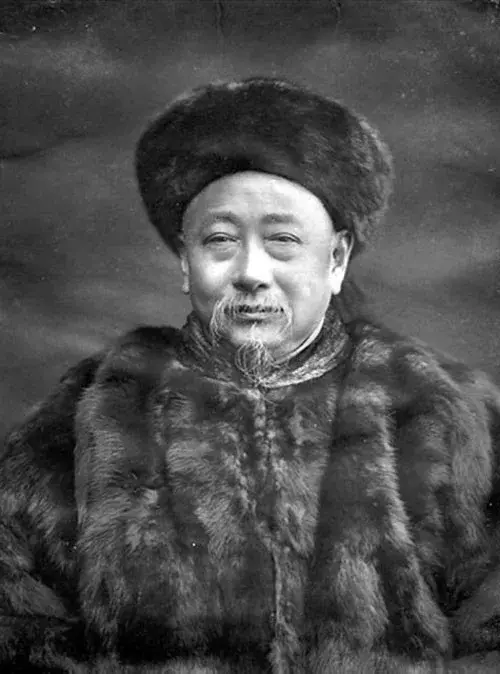
郭嵩焘
Guo Songtao (郭嵩焘, 1818–1891), courtesy name Yunxian, was a native of Xiangyin, Hunan Province. He was an outstanding statesman, pioneering diplomat, and profound institutional thinker of the late Qing dynasty, widely celebrated as modern China's first permanent overseas diplomatic minister and a prominent trailblazer who opened Chinese eyes to Western political civilization. In his early years, Guo studied at the prestigious…
Guo Songtao (郭嵩焘, 1818–1891), courtesy name Yunxian, was a native of Xiangyin, Hunan Province. He was an outstanding statesman, pioneering diplomat, and profound institutional thinker of the late Qing dynasty, widely celebrated as modern China's first permanent overseas diplomatic minister and a prominent trailblazer who opened Chinese eyes to Western political civilization. In his early years, Guo studied at the prestigious Yuelu Academy in Changsha, where he forged lifelong friendships with Zeng Guofan and Liu Rong, dedicating himself to the Hunan school of empirical statecraft and pragmatic scholarship. After obtaining his Metropolitan Graduate degree in 1847, he entered government service. When the Taiping forces besieged Changsha and swept through central China in 1852, Guo played a pivotal historical role by repeatedly urging Zeng Guofan to overcome personal hesitations and organize regional militias, thereby co-founding the Xiang Army. Observing the naval dominance of the Taiping rebellion along the Yangtze River, he took the initiative to propose the construction of large warcraft and the formation of a riverine navy, which decisively turned the strategic tide in favor of the Qing forces. He was later appointed to the imperial Southern Study in Beijing, but was subsequently demoted after fearlessly exposing pervasive fiscal corruption along the Shandong coastline and clashing with the influential Mongol prince Sengge Rinchen. During the Tongzhi era, he served effectively as Lianghuai Salt Controller and Acting Governor of Guangdong, where he suppressed Taiping remnants and initiated modern industrial arsenals, before being forced into retirement due to friction with conservative Manchu officials. In 1875, Guo was recalled to imperial service at the recommendation of Grand Councillor Wenxiang and presented his visionary memorial on coastal defense, arguing that genuine Western strength lay not in firearms or gunboats, but in sound civil governance, legal accountability, and commercial enterprise. Following the Margary Affair, the Qing court appointed him Imperial Commissioner to Britain to convey apologies and establish resident diplomatic relations. Arriving in London in early 1877 as China's first minister to the West, and later concurrently accredited to France, he established China's earliest overseas embassy. His travel journal, Record of an Envoy's Journey to the West, documented Western democratic assemblies, public education, and scientific industry, but provoked vitriolic condemnation among reactionary court literati, leading to the imperial suppression and destruction of its printing blocks. Despite domestic slander, Guo vigorously protected Chinese sovereignty in Europe, thwarting British attempts to intervene in Yakub Beg's rebellion in Xinjiang and inaugurating modern consular offices in Singapore, San Francisco, and Yokohama to protect overseas Chinese laborers. Beset by malicious defamation fabricated by his conservative deputy Liu Xihong, Guo resigned and returned to Hunan in 1879, where he faced hostile protests by orthodox local gentry. He spent his final twelve years in scholarly seclusion beneath Mount Yuchi, writing voluminous works on classical scholarship, historical analysis, and statecraft, while sponsoring anti-opium societies. He passed away in 1891 without imperial posthumous honors due to lingering conservative malice. Modern historians unanimously recognize Guo Songtao as a visionary pioneer who transcended narrow cultural chauvinism, grasped the tectonic shifts in global civilization, and laid the ideological groundwork for modern Chinese institutional reform.
Born on April 11 in western Xiangyin, Changsha Prefecture, demonstrating exceptional precocity and devotion to classical studies.
Passed the county examination to become a government student, studying practical learning at Yanggao Academy in Xiangyin.
Enrolled at Yuelu Academy in Changsha, forming intimate intellectual bonds with Zeng Guofan and Liu Rong.
Passed the provincial civil service examination to obtain the Juren degree; subsequently failed the metropolitan examinations twice.
Entered the secretarial staff of the Zhejiang Education Commissioner in Hangzhou; witnessed the British naval bombardment and collapse of coastal defenses during the First Opium War.
Passed the metropolitan examination on his fifth attempt to attain the Jinshi degree, appointed Bachelor of the Hanlin Academy; returned home shortly after to observe mourning for his parents.
Taiping forces besieged Changsha; Guo repeatedly visited Zeng Guofan's residence to persuade him to organize provincial militia, laying the foundation of the Xiang Army.
Led relief forces to aid Jiang Zhongyuan at Nanchang; drafted a strategic proposal to build over one hundred warships and train riverine units, for which he was promoted to Hanlin Compiler.
Arrived in Beijing to serve in the Hanlin Academy; earned the high esteem of Grand Minister Sushun and was summoned by Emperor Xianfeng to serve in the Southern Study.
Assigned to assist Sengge Rinchen with defense in Tianjin; dispatched to audit hidden maritime customs revenues along the Shandong coast, clashing with entrenched regional corruption.
Slandered by Sengge Rinchen and demoted by two official grades; retained nominal status in the Southern Study but remained politically marginalized.
Appointed Grain Intendant of Su-Song-Tai and subsequently Salt Controller of Lianghuai, successfully reforming salt transit fees to finance military campaigns.
Promoted to Acting Governor of Guangdong; eradicated remnants of the Taiping rebellion, reorganized coastal customs, and advocated domestic artillery manufacture.
Relieved of official duty following political conflicts with Governor-General Ruilin; returned to Changsha to teach at Chengnan Academy and Sixian Lecture Hall for nearly a decade.
Recommended by Wenxiang and appointed Judicial Commissioner of Fujian; submitted a comprehensive maritime defense memorial; following the Margary Affair, designated Imperial Envoy to Britain and Senior Vice Minister of War.
Set sail from Shanghai with thirty attendants aboard a Western steamer; authored the daily travel journal Record of an Envoy's Journey to the West.
Presented credentials to Queen Victoria, establishing China's first permanent overseas diplomatic mission; his published journal sparked conservative furor in Beijing and was banned by imperial decree.
Appointed concurrently as Minister to France; successfully opposed British diplomatic recognition of Yakub Beg in Xinjiang; proposed establishing Chinese consulates in Singapore and San Francisco.
Resigned amid malicious accusations fabricated by Vice Minister Liu Xihong; arrived in Changsha to face defamatory banners and violent crowds organized by xenophobic literati; retired to Mount Yuchi.
Died peacefully at his rural estate on July 18 at age seventy-three; Li Hongzhang's petition for posthumous honors was rejected by the Board of Rites due to conservative prejudice.
Guo Songtao was born in the spring of 1818 in western Xiangyin County, Changsha Prefecture, Hunan Province. Endowed with exceptional intellect and literary flair, he commenced his early training at the local Yanggao Academy. In 1835, at age seventeen, he passed the civil service examination to become a licentiate, and in the following year entered the venerable Yuelu Academy in Changsha. Yuelu Academy had long championed the core tenets of the Huxiang intellectual tradition, emphasizing empirical rigor, moral fortitude, practical governance, and disdain for speculative metaphysics. At Yuelu, Guo developed a close comradeship with Zeng Guofan and Liu Rong. The three young scholars constantly debated classical statecraft and geopolitical affairs, forging a mutual bond that shaped their shared historical destiny.
Despite his brilliant intellect, Guo encountered severe setbacks in the imperial examinations. Although he passed the Hunan provincial examination to obtain his Juren degree in 1837, his initial attempts at the triennial metropolitan examinations in Beijing in 1838 and 1840 ended in disappointment. In 1840, disappointed by his failure, he accepted an invitation to serve as a private secretary under the Zhejiang Provincial Education Commissioner in Hangzhou. This posting coincided with the outbreak of the First Opium War. Stationed near the frontline of the conflict, Guo observed firsthand the devastating precision of British naval artillery and the catastrophic breakdown of Qing coastal garrisons at Dinghai and Zhenhai. The shocking technological superiority of Western steam warships and long-range ordnance deeply disabused him of conventional complacency, instilling an enduring conviction that China must comprehend Western realities rather than rely on empty classical pedantry.
In 1847, Guo achieved success on his fifth attempt at the metropolitan examinations, earning the Jinshi degree and an appointment as Bachelor of the Hanlin Academy. However, shortly after entering official life, the successive deaths of both his parents required him to withdraw from public service and return to Xiangyin to observe standard filial mourning. In late 1852, the Taiping rebellion reached a critical climax when insurgent armies laid siege to Changsha and seized Wuchang, throwing the entire Yangtze valley into turmoil. The Qing court ordered Zeng Guofan, who was likewise at home observing mourning, to organize provincial militia in Hunan. Feeling constrained by local bureaucratic apathy and the sheer peril of military leadership, Zeng repeatedly declined the imperial commission.
Recognizing Zeng's exceptional organizational gifts, Guo braved treacherous roads to visit Zeng's residence multiple times, ardently persuading him that saving the homeland and defending Chinese civilization demanded his immediate leadership. Zeng was ultimately moved to accept the charge and established the Xiang Army. Guo immediately entered Zeng's inner circle, drafting strategic directives, mobilizing logistical finances, and securing critical material resources. In the fifth month of 1853, Taiping forces surrounded the city of Nanchang in Jiangxi. Guo rushed to Jiangxi to assist Commander Jiang Zhongyuan. During the grueling tactical fighting, Guo noticed that Taiping victories relied heavily on their undisputed mastery of the Yangtze River waterways via flotillas of transport and assault boats.
Guo promptly submitted his seminal proposal for organizing a naval force to Jiang Zhongyuan and Zeng Guofan, urging the imperial court to order the urgent construction of over one hundred large warships in Hunan, Hubei, and Sichuan, while recruiting seasoned river boatmen into disciplined naval battalions. Zeng Guofan embraced this operational concept entirely, creating the Xiang Army naval branch at Hengzhou. This riverine fleet broke the Taiping logistical stranglehold, reclaimed command of the Yangtze waterways, and proved indispensable in the eventual recapture of Wuchang, Jiujiang, Anqing, and Tianjing. In recognition of his strategic contribution, Guo was rewarded with the substantive rank of Compiler in the Hanlin Academy. Over the next three years, he traveled across Hunan, Jiangxi, and Zhejiang to oversee military fundraising, frequently stopping in Shanghai where he inspected foreign steamships, translation offices, and Western scientific institutions.
In the winter of 1856, Guo traveled north to Beijing to assume his post as Hanlin Compiler. In the capital, his profound scholarship and practical grasp of national affairs caught the attention of Sushun, the influential President of the Board of Revenue and Grand Minister. Sushun was known for his rigorous administrative style, uncompromising hostility toward bureaucratic corruption, and unprecedented willingness to promote talented Han Chinese scholars to high imperial office. Under Sushun's sponsorship, Guo was granted several private imperial audiences with Emperor Xianfeng, who was thoroughly impressed by his strategic acuity and appointed him to concurrent service in the imperial Southern Study.
Emperor Xianfeng personally instructed Guo that duty in the Southern Study was not merely to compose literary documents, but to immerse himself in pragmatic treatises on statecraft, exhorting him to become an indispensable administrator capable of directing major military and civil operations. In early 1859, as the Second Opium War escalated, the imperial court dispatched Guo to Tianjin to assist the formidable Mongol general Sengge Rinchen in supervising coastal defenses at the Dagu Forts. However, Sengge Rinchen harbored disdain for civilian literati and treated Guo with cold insolence. Their differing strategic temperaments and administrative philosophies led to constant friction.
In the autumn of 1859, the court ordered Guo to inspect the maritime ports along the Shandong coast to investigate systemic evasion and embezzlement of sea-transport customs revenues. Sengge Rinchen appointed his confidant Li Xiang to accompany him as co-investigator. Unbending in his personal rectitude, Guo declared strict operational rules upon arriving in Shandong, refusing all official welcoming banquets, lavish guesthouses, and monetary gifts. Through thorough audits of local ledgers, he uncovered entrenched networks of bribery among magistrates and sub-officials who pocketed revenues and levied arbitrary surcharges four times higher than the statutory tariff. Guo moved vigorously to prosecute corrupt officials, seal loopholes, and introduce local transit dues to fund military defense.
Guo's unsparing anti-corruption campaign provoked violent resentment among regional gentry networks and accompanying military officers. In late 1859, Sengge Rinchen seized upon technical procedural omissions, including Guo's establishment of customs collection bureaus before formal consultation with Shandong Governor Wenyu, and submitted an aggressive memorial impeaching Guo for arbitrary conduct that supposedly provoked popular unrest. In early 1860, Guo was compelled to return to Beijing in disgrace. The imperial court penalized him with a two-grade demotion. Although he retained his posting in the Southern Study, he was stripped of meaningful administrative authority.
This political ordeal deepened Guo's understanding of systemic decay within the Qing bureaucracy. In a heartfelt letter to Zeng Guofan, he pointed out that the true disease of the state was not excessive administrative leniency, but rather the pervasive habit of concealing rot behind rigid formalistic regulations. He argued that draconian punishments merely treated superficial symptoms while causing deeper institutional damage, maintaining that reducing superfluous penal codes and cultivating honest administration represented the only viable path to dynastic survival.
In 1862, Guo was appointed Grain Intendant of the Su-Song-Tai Circuit, and was soon promoted to Salt Controller of the vital Lianghuai administrative region. The Jiangnan and Lianghuai sectors were the economic lifeblood of imperial revenues at a time when the Xiang Army was waging a climactic war of attrition around Nanjing, completely dependent on salt duties and commercial surcharges for military funding. Operating in a war-torn environment, Guo suppressed salt smuggling syndicates, reorganized official salt transports, eliminated illegal transit extortions, and channeled massive supplies of grain, silver, and modern weaponry to Zeng Guofan's frontlines.
In the autumn of 1863, Guo was elevated to Acting Governor of Guangdong. Governing Guangdong was an extraordinarily demanding assignment, marked by endemic banditry, incursions by Taiping remnants under Prince Shi Li Shixian, and delicate civil-foreign disputes in the treaty port of Guangzhou. Guo acted with decisive energy, coordinating provincial military garrisons to encircle and annihilate the invading Taiping units in eastern Guangdong, while instituting comprehensive audits of maritime customs and salt revenues to curb official embezzlement.
During his tenure in Guangzhou, Guo demonstrated remarkable industrial foresight. Influenced by early modern enterprises such as the Anqing Arsenal and Jiangnan Machine Works, he established a local weapons foundry in Guangzhou, recruiting Western artisans to instruct Chinese workers in modern lathe operations, metal casting, and gunpowder production. However, his unyielding intolerance for bribery and refusal to collude in bureaucratic patronage provoked intense hostility from the conservative Manchu Governor-General Ruilin and regional elites. Ruilin repeatedly obstructed Guo's fiscal allocations and joined conservative gentry in submitting fabricated complaints to the throne.
Tired of endless factional harassment and unwilling to compromise his integrity, Guo was granted permission to vacate his post on grounds of illness in 1866. He withdrew to Changsha, turning down numerous invitations to reenter provincial secretariats. Over the next nine years, he presided as lead lecturer at the Chengnan Academy and Sixian Lecture Hall. He attracted brilliant disciples, lecturing on practical statecraft, maritime geography, astronomical calculations, and institutional history, fostering an intellectual climate that nurtured Hunan's vibrant reformist movement.
In early 1875, following the accession of Emperor Guangxu, Grand Councillor Wenxiang recognized the urgent need for seasoned administrators versed in foreign affairs and petitioned the two Empress Dowagers to recall Guo Songtao to imperial service. Guo was appointed Judicial Commissioner of Fujian. Coinciding with the great imperial debate over maritime versus inland frontier defense, the throne solicited strategic memorials on modernization from senior officials. Guo submitted his groundbreaking Memorial on Coastal Defense Matters, spanning ten thousand words. He boldly contended that Western global ascendancy rested upon constitutional governance, clean administration, and trust between the state and populace, rather than mere armaments. He warned that if China only imitated Western gunboats and weaponry while ignoring governance and commerce, it could never achieve true independence.
Around the same time, the Margary Affair erupted on the southwestern border. Augustus Raymond Margary, an interpreter with the British consular service, led an armed expedition from Burma across the Yunnan frontier without formal imperial travel authorization, resulting in a violent confrontation with indigenous tribes and his death. British Minister Thomas Wade exploited the incident to exert severe pressure, threatening military retaliation at Yantai and demanding substantial reparations along with a high-level imperial apology mission to London led by a senior dignitary. To the orthodox Qing literati, embarking on a diplomatic mission to Europe was viewed as an unspeakable national humiliation equivalent to exile among barbarians, and no official volunteered.
In the eighth month of 1875, the imperial court issued an edict designating Guo Songtao as Imperial Envoy and Minister Plenipotentiary to Great Britain, accompanied by the concurrent rank of Senior Vice Minister of War. Guo thereby became China's first permanent diplomatic envoy dispatched abroad. The announcement ignited a storm of outrage among reactionary scholars in the capital. Literati composed vicious couplets to ridicule him, branding him a traitor and lackey of Westerners.
Convinced that national survival and historical duty superseded personal honor, Guo calmly accepted the appointment. In the eleventh month of 1875, he submitted a memorial demanding that Yunnan Governor Cen Yuying be held accountable by the Board of Civil Appointments for provocative mismanagement, while castigating armchair moralists who indulged in empty xenophobic rhetoric. Empress Dowager Cixi granted him several audiences, offering imperial reassurance. In the winter of 1876, Guo led a delegation of thirty secretaries, translators, and attaches from Shanghai aboard a Western steamer, inaugurating China's formal diplomatic engagement with the Western world.
During his two-month ocean voyage to London, Guo recorded detailed daily entries documenting maritime geography, colonial governance, Western social customs, and navigation technology, titling the collection Record of an Envoy's Journey to the West. He praised the open dialogue between rulers and citizens in European parliamentary systems and frankly diagnosed the systemic flaws behind China's international weakness. When the Zongli Yamen published the manuscript in Beijing, it triggered unprecedented vitriol among fundamentalist literati.
Hanlin Compiler He Jinshou and several censors filed formal memorials impeaching Guo for blaspheming Confucian orthodoxy and allegedly displaying disloyalty toward China. Under intense political pressure from court reactionaries, the Qing court issued an edict commanding the destruction of the printing blocks and banning further circulation of the book. Undaunted by domestic hostility, Guo presented his credentials to Queen Victoria at Buckingham Palace in early 1877, formally establishing the Chinese Legation in London. In 1878, he was concurrently appointed Minister to France.
In London and Paris, Guo dedicated his time to examining Western civilization. Despite approaching his sixtieth year, he attended debates in Parliament, visited the Royal Greenwich Observatory, the British Museum, Oxford and Cambridge universities, leading printing presses, and modern manufacturing centers. In the autumn of 1877, he visited an electrical installation near London and tested Alexander Graham Bell's newly invented telephone. Speaking through the apparatus across several stories to his attache Zhang Deyi, Guo became the first Chinese official to personally experience and document electronic telephonic communication.
During this period, General Zuo Zongtang was conducting his military campaign to recover Xinjiang from Yakub Beg's rebel forces. British authorities, eager to safeguard their colonial buffer in India, attempted to compel the Qing government to recognize Yakub Beg's breakaway regime and planned to dispatch an official British envoy to Kashgar. Guo immediately lodged firm diplomatic protests with British Foreign Secretary Lord Derby, demonstrating through international law that Xinjiang had been an integral part of Chinese territory since antiquity and that foreign recognition of an armed rebel constituted an illegal infringement upon Qing sovereignty. British authorities abandoned the planned mission, allowing Zuo's forces to reclaim the entire territory.
Witnessing the exploitation endured by Chinese laborers in Southeast Asia and the Americas, Guo submitted an urgent memorial in August 1877 advocating the establishment of overseas consulates. The Qing court approved the measure, appointing Hu Xuanze as China's first consul in Singapore in 1878, followed by new consulates in San Francisco and Yokohama. In Europe, Guo also looked after the first contingent of Chinese naval cadets studying in Britain and France, forming an intellectual friendship with young Yan Fu and encouraging him to study the foundational principles of Western philosophy and legal systems.
Guo's diplomatic successes aroused intense resentment from his deputy, Liu Xihong. Liu was an arch-conservative ideologue who covertly compiled dossiers of petty grievances against Guo, submitting secret memorials that accused him of compromising imperial dignity. Liu claimed that Guo had committed grave moral crimes by donning a Western woolen coat against freezing winds at a coastal battery, standing in respect when the Emperor of Brazil entered a reception hall, and perusing a musical program at a royal concert in Buckingham Palace.
Reactionary factions in Beijing rallied behind Liu's allegations, showering the court with calls for Guo's severe punishment. Exhausted by internal sabotage and external betrayal, Guo tendered his resignation in late 1878. After completing a formal handover to his successor, Zeng Jize, in early 1879, he sailed back to China. When his steamer arrived in Changsha in May 1879, violent crowds organized by xenophobic local gentry gathered along the docks with placards denouncing him as a traitor, threatening to burn down his house. Senior provincial authorities treated the returning envoy with blatant disrespect.
Guo bore this public humiliation with stoic dignity and retired to his rural estate at the foot of Mount Yuchi in Xiangyin, adopting the style "Old Man of Yuchi." He refused all further involvement in provincial politics, devoting his remaining years to prolific scholarship. He completed monumental works including Collected Writings of the Studio of Self-Cultivation, Scholarly Notes on the Records of the Grand Historian, and Critical Inquiries into the Book of Rites. Even in quiet seclusion, he remained alert to international affairs, writing letters to Li Hongzhang regarding the Sino-French War and naval preparedness, while organizing an anti-opium society in Changsha to combat the social scourge of drug addiction.
Guo Songtao passed away peacefully at his home on July 18, 1891, at the age of seventy-three. Following his death, Li Hongzhang petitioned the throne to grant the deceased statesman standard posthumous honors and commission an official biography in the Imperial Historiography Institute. However, reactionary officials in the Board of Rites intervened, asserting that Guo's overseas diplomatic publications had caused unpardonable controversy, and the court refused the request. Guo had once composed a prophetic couplet: "After a hundred generations and a thousand ages have passed, people will finally comprehend who this man was." Modern history has fully vindicated his farsighted wisdom and enduring historical contributions.
In the early stages of the Taiping rebellion, insurgent forces capitalized on their naval superiority along the middle reaches of the Yangtze River, seizing strategic cities with devastating speed. Traditional Qing naval units under the Eight Banners and Green Standard Army were plagued by outdated junk craft, corruption, and cowardice, leaving the vast interior river systems entirely defenseless. In May 1853, Guo Songtao was dispatched to Nanchang to assist Jiang Zhongyuan's besieged troops.
Inspecting frontline positions along the Gan River, Guo identified that the key to Taiping tactical mobility lay in their unified command of riverine shipping. He concluded that purely land-based infantry defense would inevitably result in strategic isolation and defeat. Guo promptly presented his Proposal on Training a Riverine Navy to Jiang Zhongyuan and Zeng Guofan, recommending that the imperial government bypass decrepit military yards, utilize private and gentry funds in Hunan and Sichuan to harvest timber, and build over one hundred modernized river combat craft modeled after coastal fast-sailing designs.
Zeng Guofan acted decisively on Guo's blueprint, establishing an expansive naval shipyard at Hengzhou under the tactical command of Peng Yulin and Yang Zaifu. The resulting Xiang Army riverine fleet established naval control over the Yangtze waterways, playing a decisive role in the major victories at Xiangtan, Yuezhou, Tianjiazhen, Jiujiang, and Anqing. Guo's timely strategic foresight provided the decisive naval arm that secured the eventual victory of the Xiang Army.
During the early decades of the Self-Strengthening Movement, leading court reformers adhered rigidly to the formula of "Chinese learning for substance, Western learning for practical utility," believing that China's traditional institutional framework was complete and required only the acquisition of Western military hardware. Guo Songtao was the first Chinese statesman of his generation to break through this philosophical boundary.
In his 1875 Memorial on Coastal Defense Matters, Guo systematically articulated an advanced doctrine of national modernization. He directly challenged the mainstream obsession with military weaponry, emphasizing that Western power derived from disciplined civil administration, public education, legal codification, and commercial prosperity. He asserted that developing modern industrial production, commercial trade, and mining represented the indispensable foundation for genuine defense.
During his diplomatic service in Europe, Guo explicitly rejected traditional xenophobic cosmology in his Record of an Envoy's Journey to the West, observing that Western nations possessed venerable historical civilizations that matched their institutional sophistication. He commended parliamentary institutions for fostering political communication and urged Chinese literati to abandon hollow chauvinism in order to study modern statecraft. His writings anticipated the institutional reforms advocated by Kang Youwei and Liang Qichao two decades later.
Under the ancestral laws of the Qing dynasty, Chinese subjects who emigrated abroad were long regarded as outcasts or potential traitors, leaving them completely exposed to exploitation and physical abuse by colonial authorities in the Americas and Southeast Asia. Following the opening of treaty ports, hundreds of thousands of Chinese indentured laborers were transported overseas under inhumane conditions.
During his voyage to Europe, Guo observed the thriving Chinese communities in Singapore and Penang, noting their industry alongside their complete lack of legal protection from the imperial government. In London, Guo studied international law and the diplomatic practices of Western nations, concluding that permanent consular posts constituted an essential mechanism of state sovereignty and civic protection. In August 1877, he formally memorialized the throne, urging the court to abandon its antiquated bias against overseas migrants and establish consulates across major foreign trade centers.
The imperial government accepted Guo's advice, appointing the prominent overseas Chinese merchant Hu Xuanze as the first consul in Singapore in 1878, followed by the establishment of consulates in San Francisco and Yokohama. This diplomatic reform marked the historic birth of modern China's consular protection apparatus, securing official legal standing and diplomatic shelter for Chinese diaspora communities across the globe.
As China's first resident minister in the West, Guo recognized that the ancient tribute system was defunct and that China had to navigate the international community using modern international law and professional diplomatic protocol. He maintained a posture of dignified courtesy and legal acumen, successfully dismantling Western prejudices regarding Chinese governance.
During his residency in London and Paris, Guo's sophisticated manners, profound erudition, and adherence to international diplomatic etiquette earned him widespread acclaim among European diplomats and journalists, who described him as the most cultivated Eastern statesman they had encountered. When national sovereignty was at stake, however, he demonstrated unyielding resolve.
In 1877, during the Qing campaign to recover Xinjiang, British authorities plotted to enforce a diplomatic compromise that would legitimize Yakub Beg's breakaway regime and planned to dispatch an official British envoy to Kashgar. Guo intervened forcefully, submitting written protests to the British Foreign Office citing established international law to prove that Xinjiang was an indivisible part of China and that foreign recognition of an armed rebel constituted an act of hostile intervention. His timely diplomatic pressure compelled the British cabinet to cancel the envoy's departure, shielding General Zuo Zongtang's forces from diplomatic interference and preserving the territorial integrity of China's western frontiers.
FIGURES ASSOCIATED WITH THIS DYNASTY