Entity Type: Historical Figure Dynasty: Qing Dynasty
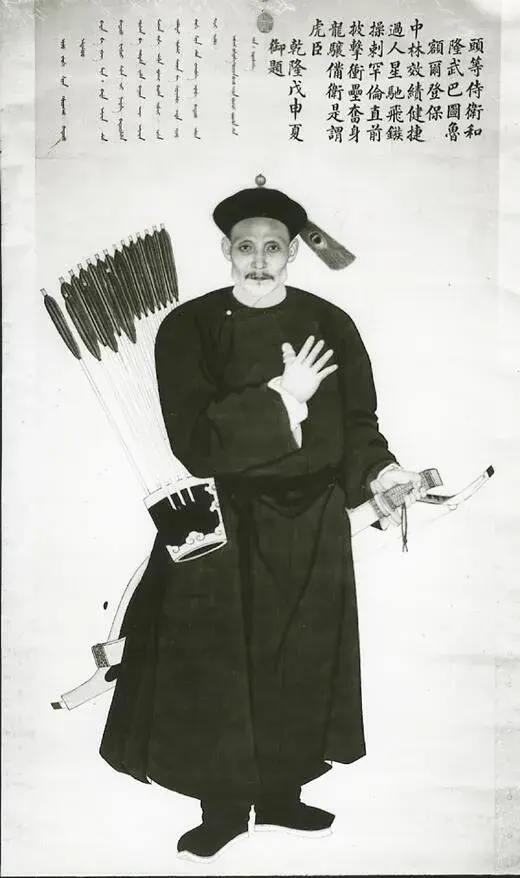
Historical figure
Eldemboo (额勒登保)
额勒登保
Gwalgiya Eldemboo (瓜尔佳·额勒登保, 1748–1805), courtesy name Zhuxuan, a member of the Manchu Plain Yellow Banner originating from Jilin Ula (modern Jilin City, Jilin Province), was a preeminent military commander throughout the Qianlong and Jiaqing reigns of the Qing Dynasty. Born into humble origins as an imperial tribute pearl gatherer, Eldemboo entered military service as an ordinary armored horseman. In 1773, he participated in…
Era not stated
PROFILE
Gwalgiya Eldemboo (瓜尔佳·额勒登保, 1748–1805), courtesy name Zhuxuan, a member of the Manchu Plain Yellow Banner originating from Jilin Ula (modern Jilin City, Jilin Province), was a preeminent military commander throughout the Qianlong and Jiaqing reigns of the Qing Dynasty. Born into humble origins as an imperial tribute pearl gatherer, Eldemboo entered military service as an ordinary armored horseman. In 1773, he participated in the Second Jinchuan War, scaling frozen cliffs and storming stone defensive towers under heavy fire, earning the imperial honorific "Baturu" and promotion to imperial bodyguard. Over the subsequent two decades, he participated in nearly every major frontier campaign of the empire, serving in the suppression of the 1781 Gansu sectarian uprising, the 1787 expedition against the Lin Shuangwen rebellion in Taiwan, and the 1791 Himalayan expedition against invading Gurkhas, twice earning enshrinement in the Hall of Purple Splendor. In 1796, the massive White Lotus Rebellion erupted across Hubei, Sichuan, and Shaanxi, involving hundreds of thousands of insurgents fighting across rugged mountain ranges. Following Emperor Qianlong's death and the fall of He Shen in 1799, the Jiaqing Emperor appointed Eldemboo as Grand Minister Commander-in-Chief with supreme civil and military authority across the three northwestern provinces. Eldemboo discarded the passive positional defense practiced by his predecessors in favor of a dynamic strategy of persistent pursuit across mountain ranges, coordinated pincers, fortified mountain stockades, and interdiction of insurgent grain supplies. Operating in close partnership with General Delingtai through the gorges of the Qinling and Daba mountains, he eliminated key rebel hosts under Yao Zhifu, Qi Wangshi, Wang Sanhuai, Xu Tiande, and Leng Tianlu, bringing the nine-year rebellion to an end. For these achievements, he was created First-Class Marquis Weiyong and Senior Grand Tutor to the Crown Prince. Eldemboo died of exhaustion in camp in the autumn of 1805 at fifty-eight. Deeply grieved, Emperor Jiaqing visited his capital residence in person, posthumously elevated him to First-Class Duke Weiyong, conferred the posthumous name "Zhongyi", and granted him enshrinement in the Imperial Ancestral Temple.
- Courtesy Name
- Zhuxuan (珠轩)
- Noble Title
- First-Class Marquis Weiyong (一等威勇侯, posthumously First-Class Duke Weiyong)
- Posthumous Name
- Zhongyi (忠毅)
- Honorific Title
- Yongwu Baturu (勇武巴图鲁)
- Native Place
- Ula, Jilin (modern Ula Street Manchu Town, Longtan District, Jilin City, Jilin Province)
- Date of Birth
- 1748 (Qing Qianlong 13)
- Date of Death
- 1805 (Qing Jiaqing 10, 10th Month, 14th Day)
- Age at Death
- 58
- Highest Office
- Grand Minister Commander-in-Chief, Senior Chamberlain of the Imperial Bodyguard concurrently General of Xi'an, posthumously Senior Grand Tutor to the Crown Prince
- Major Offices
- Senior Bodyguard, Governor-General of Sichuan, General of Xi'an, Grand Minister Commander-in-Chief, Grand Minister of the Presence
- Historical Identity
- Eminent military commander of the Qianlong and Jiaqing reigns, supreme military leader who suppressed the White Lotus Rebellion, First-Class Duke Weiyong, merit statesman enshrined in the Imperial Ancestral Temple
LIFE TIMELINE
Relationship graph
BIOGRAPHY
Chronology
- 1748 (Qing Qianlong 13) | Northern Birth | Born in Jilin Ula into a family of tribute pearl gatherers, acquiring superior archery and endurance in the northern woodlands.
- 1773 (Qing Qianlong 38) | Jinchuan Campaign | Deployed to Sichuan with the Solon vanguard, scaling cliffs to capture enemy stone towers; granted the title Yongwu Baturu.
- 1781 (Qing Qianlong 46) | Gansu Expedition | Followed Grand Secretary Agui to quell the uprising of Su Forty-three in Gansu, storming Hualin Mountain and promoted to bodyguard.
- 1787 (Qing Qianlong 52) | Expedition to Taiwan | Sailed across the Taiwan Strait under Fuk'anggan and Hailancha, breaking the siege of Chiayi and capturing rebel leader Lin Shuangwen.
- 1791 (Qing Qianlong 56) | Himalayan Campaign | Dispatched to Tibet to repel Gurkha invaders, crossing Himalayan passes and securing key fortresses; portrayed in the Hall of Purple Splendor.
- 1796 (Qing Jiaqing 1) | Deployment to Sichuan | Ordered to the front lines against the White Lotus Rebellion, fighting through mountain forests to recapture Dazhou.
- 1799 (Qing Jiaqing 4) | Grand Minister Commander | Appointed Grand Minister Commander-in-Chief over Sichuan, Shaanxi, and Hubei by the Jiaqing Emperor, instituting aggressive pursuit warfare.
- 1800 (Qing Jiaqing 5) | Fall of Northern Rebels | Ambushed insurgent columns along the Qinling borders, capturing rebel leader Wang Sanhuai and routing Leng Tianlu and Ran Tianyuan.
- 1802 (Qing Jiaqing 7) | Pacification of Three Provinces | Trapped and destroyed Xu Tiande's remnants in the deep forests of Shaanxi, eliminating the rebellion and created First-Class Marquis Weiyong.
- 1805 (Qing Jiaqing 10) | Death in Military Service | Passed away from exhaustion in Xi'an; mourned personally by Emperor Jiaqing, created First-Class Duke Weiyong, and enshrined in the Imperial Ancestral Temple.
Life and Career
Rise from the Ranks and Frontier Campaigns
Eldemboo was born in Jilin Ula (modern Ula Street Manchu Town, Longtan District, Jilin City), into a family registered under the imperial hunting and pearl-gathering administration. In his youth, Eldemboo experienced severe poverty, frequently venturing into the frozen forests of the Changbai Mountains and the icy rapids of the Songhua River to harvest wild pearls and hunt game. This upbringing endowed him with immense physical endurance, toughness, and consummate archery skills. During the mid-Qianlong reign, he enlisted as an ordinary armored horseman in the local Jilin banner garrison.
In 1773, with the escalation of the Second Jinchuan War in western Sichuan and the Qing defeat at Muguomu, Emperor Qianlong ordered elite Solon and Barkhu huntsmen from Manchuria to reinforce the front. Eldemboo marched south into the Sichuan highlands. In the assault on the mountain redoubts of Gelukedashi, Eldemboo braved a storm of arrows and falling boulders, scaling vertical rock faces with a broadsword to slay enemy defenders and secure the pass. In subsequent battles at Mount Luobowa and Lewuwei, he consistently led vanguard assaults, sustaining multiple wounds without retreating. In recognition of these achievements, Emperor Qianlong bestowed upon him the title "Yongwu Baturu", promoted him to imperial bodyguard, and brought him into palace service.
In 1781, when the Jahriyya uprising under Su Forty-three threatened Lanzhou in Gansu, Eldemboo followed Grand Secretary Agui to the front. During the siege of Hualin Mountain, Eldemboo led assault squads through concealed mountain defiles at night, using explosives to destroy enemy stone fortifications and routing the insurgents, for which he was assigned to the Qianqing Gate.
In the autumn of 1787, when the Lin Shuangwen rebellion engulfed Taiwan, Eldemboo accompanied General Fuk'anggan and Vanguard General Hailancha across the Taiwan Strait. Landing at Lu'ermen and charging into rebel lines at Niuchoushan, Eldemboo broke through rebel defenses with heavy lances to relieve Chiayi. He subsequently tracked insurgent remnants through mountain ravines, surrounding and capturing Lin Shuangwen at Laoquqi. Promoted to senior bodyguard, his portrait was placed in the Hall of Purple Splendor for the first time.
In 1791, when Gurkha forces invaded southern Tibet and plundered Tashilhunpo Monastery, Eldemboo again accompanied Fuk'anggan across the Himalayas. Scaling glaciated passes, he led vanguard units in victories at Camushan and Jilong, capturing Resuo Bridge and compelling the Gurkha king to sue for peace. For these accomplishments, he was designated acting imperial resident in Tibet and had his portrait commemorated in the Hall of Purple Splendor a second time.
Supreme Command in the White Lotus War
Between 1795 and 1796, the White Lotus Rebellion erupted across the contiguous mountainous borders of Hubei, Sichuan, and Shaanxi. Gathering hundreds of thousands of followers under the banner of resisting corrupt officialdom, the insurgents conducted mobile mountain warfare throughout the Qinba ranges. Traditional Qing commanders proved ineffective against these tactics; banner troops suffered repeated ambushes, and strategic centers including Xiangyang and Dazhou were overrun.
Eldemboo was deployed to Sichuan in 1796, fighting through dense mountain terrain to recapture Dazhou. However, with court favorite He Shen manipulating military communications and embezzling supplies, the war dragged on inconclusively for four years.
In early 1799, the retired Emperor Qianlong died, and the Jiaqing Emperor promptly executed He Shen and assumed personal rule. Recognizing that the White Lotus conflict threatened the financial and administrative viability of the dynasty, Emperor Jiaqing removed ineffective aristocrats like Lebao and appointed Eldemboo as Imperial Commissioner and Grand Minister Commander-in-Chief over Sichuan, Hubei, Shaanxi, Gansu, and Henan.
Upon assuming supreme command, Eldemboo analyzed the insurgents' mobile operational style. He condemned the practice of passive regional defense, establishing a four-point operational strategy: first, conducting relentless day-and-night pursuits across provincial borders to prevent rebels from entrenching; second, instituting local pacification through fortified village stockades and clearing the countryside to deprive insurgents of grain; and third, enforcing strict military discipline, executing officers who harmed civilians. Backed by the emperor's absolute trust, Eldemboo was granted extraordinary discretion over frontline promotions and tactical deployments.
Relentless Pursuit and Total Pacification
Partnering with veteran general Delingtai, Eldemboo directed coordinated pincer operations across the northwest. Eldemboo enforced strict discipline, sharing hardships with common soldiers by sleeping in open snowfields without personal tents, marching over a hundred li daily in straw sandals, and earning the absolute devotion of his men.
In the spring of 1800, Xiangyang rebel leaders Yao Zhifu and Qi Wangshi led tens of thousands of elite fighters into southern Shaanxi, aiming to cross the Qinling Mountains toward Xi'an. Intercepting their line of march, Eldemboo deployed cavalry units across the defiles of Baiyangou in Xixiang. Encircling the valley, Qing forces unleashed concentrated rifle and artillery fire. Trapped against vertical cliffs along the Han River, Yao Zhifu and Qi Wangshi leaped from the precipice to their deaths, destroying the Xiangyang host.
Eldemboo then swung his armies west into northern Sichuan to confront rebel leaders Wang Sanhuai and Xu Tiande, who held fortified gorges across Tongjiang and Xuanhan. Severing their access to water and foraging paths, Eldemboo forced the defenders onto open ground. At Kuzhuping, Eldemboo commanded artillery to dismantle defensive barricades before leading mounted shock troops to overwhelm the positions, capturing Wang Sanhuai alive.
Over the ensuing two years, Eldemboo pursued remaining insurgent columns across thousands of miles. He routed Leng Tianlu at Mount Maxian and eliminated Ran Tianyuan near Jiangyou. In 1802, imperial columns encircled Xu Tiande in the alpine forests of Foping in southern Shaanxi, where Xu drowned himself in a river. The nine-year White Lotus Rebellion was completely suppressed.
Celebrating the victory, Emperor Jiaqing elevated Eldemboo to First-Class Marquis Weiyong, conferred the title Senior Grand Tutor to the Crown Prince, granted double-eyed peacock feathers, and appointed him Senior Chamberlain of the Imperial Bodyguard concurrently General of Xi'an.
Passing in Camp and Supreme Imperial Honors
However, decades of continuous alpine campaigning—the crags of Jinchuan, the tropical swamps of Taiwan, and nine years of mountain combat in the Qinba forests—had exhausted Eldemboo's health. During the later stages of the campaign, he suffered from severe pulmonary hemorrhaging and recurring battlefield wounds, frequently directing combat while propped up on his warhorse by bodyguards.
In 1803, Eldemboo established his headquarters in Xi'an, working to reorganize regional banner forces, repair irrigation systems, and settle displaced refugees. Despite failing health, he continued to tour border passes in plain clothing to oversee regional security.
On November 4, 1805 (Jiaqing 10, 10th Month, 14th Day), Eldemboo passed away from illness in his military headquarters at Xi'an at fifty-eight years of age.
Learning of his death, Emperor Jiaqing wept openly and issued a decree: "Grand Minister Commander-in-Chief Eldemboo served on the frontiers for over thirty years with unyielding loyalty, tactical brilliance, and supreme dedication. His loss fills our heart with unbearable sorrow." The emperor elevated him posthumously to First-Class Duke Weiyong, bestowed the posthumous name "Zhongyi", and allocated ten thousand taels of silver for his funeral. When his casket reached Beijing, Emperor Jiaqing visited his residence in person to offer funeral libations, directing imperial princes to escort the procession.
The emperor also decreed that Eldemboo be enshrined in the Imperial Ancestral Temple, an honor accorded to only twenty-six subjects throughout the entire Qing Dynasty. He was enrolled in the Temple of Manifest Loyalty, had his portrait placed in the paramount position in the Hall of Purple Splendor for a third time, and his son Fo'erqing'e inherited the title First-Class Marquis Weiyong with perpetual hereditary rights.
Major Achievements
Savior of Dynastic Order in the White Lotus War
The White Lotus Rebellion was the most extensive and expensive domestic conflict of the mid-Qing era, exhausting imperial treasuries of two hundred million taels and destabilizing the empire. Stepping into supreme command after numerous senior commanders had failed, Eldemboo reversed the tide of defeat, completely eliminating the insurgent forces and securing dynastic survival for another half century.
Master of High-Altitude Counter-Insurgency Warfare
In the history of Chinese mountain warfare, Eldemboo created a classic operational doctrine. Confronting mobile insurgent bands operating in dense forests, he discarded rigid tactical lines in favor of persistent pursuit, synchronized pincer movements, and rural fortified stockades. His operational execution across the Qinba mountains stands as a landmark in Chinese military history.
The Legendary Ascent of a Humble Pearl Gatherer
Rising from the lowest stratum of tribute pearl gatherers in Jilin Ula without aristocratic connections, Eldemboo achieved high noble rank solely through combat merit on the cliffs of Jinchuan, in Taiwan, and across northwestern China. Within the rigid hierarchy of the Eight Banners, his career demonstrated the capacity of professional military competence to transcend social barriers.
Enshrinement in the Imperial Ancestral Temple
Enshrinement in the Imperial Ancestral Temple was the highest posthumous honor a Qing subject could attain, granted to only twenty-six officials across dynastic history, with Eldemboo being the sole military commander of the Jiaqing reign to receive this distinction. From an ordinary frontline horseman to a commemorated duke with three portraits in the Hall of Purple Splendor, Eldemboo received the pinnacle of imperial state honors.
Personal Relationships
- Imperial Sovereign: The Jiaqing Emperor, who elevated Eldemboo to supreme command, offered personal funeral libations, and granted him enshrinement in the Imperial Ancestral Temple.
- Early Supreme Commander: Fuk'anggan, supreme commander during the Taiwan and Tibet campaigns under whom Eldemboo served as vanguard.
- Early Mentor: Hailancha, celebrated frontline general who recognized and promoted Eldemboo's martial talents during the Jinchuan and Taiwan campaigns.
- Campaign Partner: Delingtai, co-commander throughout the White Lotus campaigns; the pair operated with seamless tactical coordination, known together as "E-De".
- Ineffective Predecessors: Lebao and Mingliang, aristocratic commanders whose passivity resulted in dismissals before Eldemboo assumed command.
- Court Adversary: He Shen, corrupt Grand Secretary who obstructed military logistics during the early phases of the White Lotus War.
- Insurgent Adversaries: Yao Zhifu and Qi Wangshi, Xiangyang rebel leaders trapped by Eldemboo until they leaped to their deaths.
- Sichuan Rebel Opponents: Wang Sanhuai and Xu Tiande, northern Sichuan insurgent leaders defeated and eliminated by Eldemboo.
- Eldest Son: Fo'erqing'e, who inherited the title First-Class Marquis Weiyong with perpetual hereditary rights.
Historical Evaluation
- The Jiaqing Emperor: "Grand Minister Commander-in-Chief Eldemboo was endowed with pure loyalty and profound strategic insight. Always first to scale the heights and flawless in planning, his suppression of the great crisis saved the state. Commemorated in the Hall of Purple Splendor and enshrined in the Imperial Ancestral Temple, his fame shall endure forever!" (Veritable Records of Emperor Renzong of Qing)
- Delingtai: "Marquis Eldemboo was steadfast and insightful, possessing deep understanding of operational timing. Before every battle, he surveyed the terrain and laid down precise instructions, relieving his generals of all anxiety. He was truly the supreme commander of our armies."
- Zhao Erxun et al., Draft History of Qing, Volume 344, Biography 131: Biography of Eldemboo: "Eldemboo rose from the ranks, seasoned in border warfare. In the Jinchuan, Taiwan, and Tibetan campaigns, he was always first to advance. When commanding operations across three provinces, he searched deep forests, destroyed formidable rebel armies, and breached stubborn mountain redoubts with flawless strategy. Even the great commanders of antiquity could not surpass him. In martial achievements of the Jiaqing reign, Eldemboo stands supreme."
- Wei Yuan, Military History of the Holy Dynasty, Volume 10: "Eldemboo governed his troops with strict discipline while sharing every hardship with common soldiers. Marching through mountain wilderness, he scarcely slept in a bed for years. His accomplishments in pacifying the White Lotus Rebellion equal those of Guo Ziyi and Li Guangbi; he was truly a towering general of his era."
Related Entries
- White Lotus Rebellion
- Delingtai
- Fuk'anggan
- The Jiaqing Emperor
- Portraits in the Hall of Purple Splendor
- Marquis Weiyong
FIGURES ASSOCIATED WITH THIS DYNASTY
Bibliography
- Zhao Erxun et al., Draft History of Qing, Volume 344, Biography 131: Biography of Eldemboo, Zhonghua Book Company punctuated edition.
- Qing Gui et al. (eds.), Veritable Records of Emperor Renzong of Qing, Zhonghua Book Company photographic reprint.
- Wei Yuan, Military History of the Holy Dynasty, Volume 10: Jiaqing's Pacification of the White Lotus Rebellion, Zhonghua Book Company punctuated edition.
- Qing Gui et al. (comp.), Imperially Commissioned Strategy for Suppressing Rebels in Three Provinces, Imperial Palace edition.
- Zhao Lian, Miscellaneous Notes from Xiaoting, Volume 5, Zhonghua Book Company punctuated edition.