Imperial Birth
Born into the royal house as the third son of Abaoji and Shulü Ping.
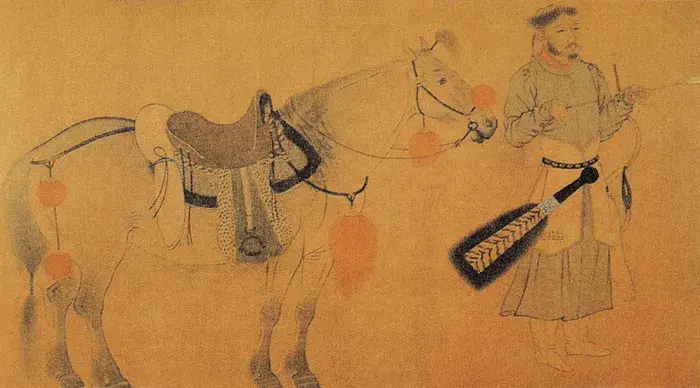
耶律李胡
Yelu Lihu (耶律李胡, 911–960), sinicized name Yelu Honggu, courtesy name Xiyin, belonging to the imperial Yelu clan of the Khitan, was the third son of Liao Taizu (Abaoji) and Empress Chunqin (Shulü Ping), and the younger brother of Yelu Bei (Emperor Yizong) and Yelu Deguang (Emperor Taizong). Endowed with extraordinary physical strength and martial ferocity, he was notoriously cruel and prone to sadistic punishments, prompting…
Yelu Lihu (耶律李胡, 911–960), sinicized name Yelu Honggu, courtesy name Xiyin, belonging to the imperial Yelu clan of the Khitan, was the third son of Liao Taizu (Abaoji) and Empress Chunqin (Shulü Ping), and the younger brother of Yelu Bei (Emperor Yizong) and Yelu Deguang (Emperor Taizong). Endowed with extraordinary physical strength and martial ferocity, he was notoriously cruel and prone to sadistic punishments, prompting his father Emperor Taizu to predict that his character and virtue fell far below those of his brothers. However, his mother Empress Shulü Ping doted upon him intensely. In 930, Emperor Taizong invested Lihu as Shouchang Crown Younger Brother and Grand Marshal of All Armies under Heaven, frequently appointing him regent over the supreme capital Shangjing during southern campaigns. When Emperor Taizong died unexpectedly in 947, Yelu Bei's son Yelu Ruan assumed the imperial throne as Emperor Shizong. Enraged by the bypassing of her beloved son, Empress Shulü sent Lihu to attack Shizong, but Lihu was crushed by Yelu Anduan at Taidequan. Following mediation by senior statesman Yelu Wuzhi on the Huang River, the dowager empress conceded, but after a subsequent conspiracy to depose Shizong was exposed, Lihu and Shulü Ping were exiled under armed house arrest in Zuzhou. In 960, implicated in a rebellion led by his son Yelu Xiyin, Lihu was imprisoned and perished in confinement at age fifty. He was posthumously honored as Emperor Qinshun and later re-canonized as Emperor Zhangsu in 1050.
Born into the royal house as the third son of Abaoji and Shulü Ping.
Tested alongside his brothers in gathering firewood; Abaoji judged him inferior in character.
Second brother Emperor Taizong mounted the throne; Lihu was assigned imperial guard duties.
Captured Huanzhou in Daibei and elevated to Shouchang Crown Younger Brother and Grand Marshal.
Commanded imperial cavalry alongside general Saguo in a successful punitive raid against the Tanguts.
Taizong died; dispatched by Empress Shulü to seize the throne, but routed by Yelu Anduan.
Concluded the Huang River Pact; subsequently exposed for plotting to depose Shizong and exiled to Zuzhou.
Implicated in the treason of his son Yelu Xiyin, arrested and died in custody at age fifty; posthumously honored as Emperor Qinshun in 983 and re-canonized as Emperor Zhangsu in 1050.
Yelu Lihu was born with immense physical stature, brute strength, and exceptional skill with composite bows and heavy spears. However, his nature was ruthless and tyrannical. When palace servants or camp attendants committed minor errors, Lihu frequently carved characters into their faces or cast them alive into roaring fires and boiling water, inspiring universal dread across the imperial camp. His father, Emperor Taizu Abaoji, harbored profound reservations regarding Lihu's moral character. Observing his three sons sleeping on a freezing winter night, Abaoji noted that Lihu curled his neck into the deepest recesses of the bedding, predicting that he would prove inferior to his elder brothers. On another occasion during heavy snowfall, Abaoji ordered all three sons to gather firewood. Deguang gathered branches swiftly and arrived first; Bei selected dried wood and tied it neatly before returning second; while Lihu gathered sparsely and dropped his load along the way, returning empty-handed. Abaoji sighed: "The eldest is ingenious, the second easily accomplishes tasks, while the youngest falls far short of them both." Despite this paternal verdict, Empress Shulü Ping doted blindly on her youngest son, creating deep factional divisions within the royal house.
In 926, following Abaoji's death, Empress Shulü Ping took power, sidelined her eldest son Yelu Bei, and enthroned her second son Yelu Deguang as Emperor Taizong. Under Taizong's reign, bolstered by his mother's favoritism, Lihu was showered with honors. In October 929, he led expeditionary cavalry to subjugate non-compliant towns across Daibei. In January 930, Lihu launched an assault that stormed the city of Huanzhou, returning with tens of thousands of captive families and herds. Pleased with his military performance, Taizong granted him thousands of Bohai households and officially proclaimed him Shouchang Crown Younger Brother and Grand Marshal of All Armies under Heaven in March 930. Whenever Taizong conducted southern expeditions against Later Tang and Later Jin, Lihu was entrusted with governing the supreme capital Shangjing as metropolitan regent. In 933, Lihu led elite cavalry units alongside general Saguo in a campaign against the Tangut tribes, establishing a formidable military reputation on the northwestern steppe.
In 947, Emperor Taizong captured Bianjing and extinguished Later Jin, but died suddenly at Luancheng during his return march. High generals and tribal princes surrounding the coffin acclaimed Prince Yelu Ruan (son of Yelu Bei) as Emperor Shizong at Zhenyang. When news reached Shangjing, Empress Shulü Ping was furious, adamantly determined to place her beloved Lihu upon the throne. She ordered Lihu to lead the metropolitan garrison cavalry south to attack Shizong. In June 947, Lihu clashed at Taidequan with Shizong's vanguard under Yelu Anduan and Yelu Liuge. Lacking tactical discipline and despised by his soldiers for his historical brutality, Lihu suffered a disastrous defeat, his forces disintegrating across the steppe. In July, Empress Shulü assembled the remaining loyalist armies on the north bank of the Huang River (modern Xar Moron River), facing Shizong's veteran divisions. A devastating civil war loomed until imperial grandee Yelu Wuzhi entered the dowager's tent. Wuzhi warned that the army and civil elite universally supported Shizong and that Lihu's notorious cruelty had alienated the realm. Recognizing that her cause was lost, Shulü Ping turned to Lihu in tears, conceding: "It is not that I refuse to enthrone you; you simply lack the capacity to reign." The factions concluded the Huang River Pact, where Lihu yielded his sword and rendered homage to Shizong.
Harboring deep resentment over his loss of the crown, Lihu returned to Shangjing and covertly conspired with Empress Shulü to organize an armed coup d'état to assassinate Shizong. The plot was uncovered by imperial loyalists before it could be launched. Enraged by this persistent treachery, Emperor Shizong stripped Lihu and Shulü Ping of all military and civil titles and banished them to permanent house arrest in Zuzhou, posting heavy garrisons to bar them from leaving the city. In October 960, during the reign of Emperor Muzong, Lihu's eldest son, Yelu Xiyin, Prince of Song, organized an abortive insurrection against the throne. Implicated under torture by Xiyin's confession, the fifty-year-old Lihu was arrested and cast into the imperial prison. Weary from decades of frustration and confinement, Lihu fell violently ill and died in his cell in late 960, being buried in the western valley of Yufeng Mountain.
Despite his lifelong record of factional bloodshed and failed ambition, Lihu's imperial bloodline led subsequent Liao monarchs to rehabilitate his status. During the Tonghe era of Emperor Shengzu, Lihu was posthumously elevated to Emperor Qinshun. In 1050, Emperor Xingzong upgraded his title to Emperor Zhangsu and canonized his wife Lady Xiao as Empress Hejing, enshrining their spirit tablets in the imperial ancestral temple. His son Yelu Xiyin was later executed by Emperor Jingzong for repeated rebellions, leaving Lihu's lineage as an enduring symbol of the violent dynastic instability of the early Liao court.
Under Emperor Taizong, Yelu Lihu held the positions of Crown Younger Brother and Grand Marshal of All Armies under Heaven concurrently. In managing the defense of Shangjing and conducting raids across Daibei and against the Tanguts, he exercised critical military leadership during the foundational expansion of the Liao empire.
Lihu's confrontation with Emperor Shizong precipitated the definitive constitutional crisis of the early Liao dynasty. The resulting Huang River Pact resolved the succession struggle between the lineages of Yelu Bei and Yelu Deguang, accelerating the Khitan transition from tribal electoral assemblies toward institutionalized primogeniture.
The repeated conspiracies orchestrated by Lihu and his son Xiyin prompted the Liao court to formulate more rigorous legal statutes governing royal princes and centralize imperial guard oversight.
FIGURES ASSOCIATED WITH THIS DYNASTY