Peasant Uprising
Joined peasant rebel armies in northern Shaanxi, serving as a trusted subordinate under cavalry commander Gao Jie.
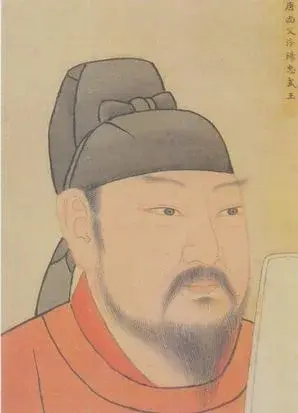
李成栋
Li Chengdong (李成栋, ? – April 11, 1649), nicknamed Li Hezi, was a prominent military commander and warlord during the tumultuous Ming-Qing transition. Originally from Dingbian, Shaanxi, Li began his career in northern Shaanxi peasant insurgent armies as a principal lieutenant to Gao Jie before surrendering alongside his commander to the Ming dynasty in 1638. Following the collapse of Beijing, he served the Southern Ming…
Li Chengdong (李成栋, ? – April 11, 1649), nicknamed Li Hezi, was a prominent military commander and warlord during the tumultuous Ming-Qing transition. Originally from Dingbian, Shaanxi, Li began his career in northern Shaanxi peasant insurgent armies as a principal lieutenant to Gao Jie before surrendering alongside his commander to the Ming dynasty in 1638. Following the collapse of Beijing, he served the Southern Ming Hongguang court as Brigade General of Xuzhou. In early 1645, after Gao Jie was assassinated in Henan, Li surrendered his forces to Qing Prince Dodo. Serving as the vanguard of the Qing invasion into southern China, Li enforced the hair-cutting edicts with ruthless brutality, directing the notorious Jiading Massacres and subjugating Jiangsu, Zhejiang, and Fujian. In late 1646, he launched a lightning invasion of Guangdong, capturing Guangzhou, extinguishing the Southern Ming Shaowu regime, and crushing regional loyalist armies under Chen Zizhuang and Zhang Jiayu to secure the entire province for the Qing, which rewarded him with the office of Provincial Commander-in-Chief of Guangdong. Despite conquering Liangguang, Li grew deeply embittered by the Qing court's systemic favoritism toward the Liaodong Eight Banners clique, finding his authority strictly subordinated to Governor-General Tong Yangjia. In April 1648, inspired by the loyalist uprising of Jin Shenghuan in Jiangxi, Li staged a massive military coup in Guangzhou, executing Qing agents, forcing Tong Yangjia to shave his queue in reverse, and pledging allegiance to the Southern Ming Yongli Emperor. Ennobled as the Duke of Hui and granted command over seven provinces, Li welcomed the Yongli court to Zhaoqing, instantly reviving the fortunes of the Southern Ming. However, his subsequent northern expedition into Jiangxi to relieve the siege of Ganzhou was repulsed by Qing forces. In spring 1649, during a chaotic withdrawal under enemy attack at Xinfeng, Li fell from his horse and drowned in a river. Deeply mourning his demise, the Yongli Emperor posthumously ennobled him as the Prince of Ningxia with the posthumous name Zhongwu.
Joined peasant rebel armies in northern Shaanxi, serving as a trusted subordinate under cavalry commander Gao Jie.
Defected from Li Zicheng alongside Gao Jie to submit to Ming Viceroy Sun Chuanting, campaigning against rebel armies.
Stationed at Xuzhou as Brigade General under Gao Jie to guard northern Grand Canal grain conduits.
Following Gao Jie's assassination at Suizhou, surrendered his veteran army to Qing Prince Dodo in Henan.
Enforced the Qing tonsure decree across Jiangnan, commanding three brutal massacres of civilian resisters in Jiading.
Advanced from Fujian into Guangdong, storming Guangzhou and executing the Southern Ming Shaowu Emperor.
Crushed loyalist risings led by Chen Zizhuang, Zhang Jiayu, and Chen Bangyan, appointed Provincial Commander-in-Chief.
Launched a mutiny in Guangzhou against banner dominance, pledging allegiance to the Yongli court as Duke of Hui.
Personally escorted the Yongli Emperor to establish his wartime capital at Zhaoqing, donating ten thousand taels of silver.
Led an invasion into Jiangxi to relieve loyalists in Nanchang, but suffered heavy casualties during an imperial night sortie at Ganzhou.
Marched north again to Xinfeng with replenished forces to maintain the Jiangxi front amidst collapsing loyalist defenses.
Encircled by Qing forces while retreating across a river, thrown from his mount and drowned; posthumously created Prince of Ningxia.
Li Chengdong was born into an impoverished farming family in Ningtiaoliang, Dingbian County, Yan'an Prefecture, Shaanxi. During the severe famines of the late Ming, he enlisted in the rural insurrections sweeping the northwest. Known for his tactical cunning and ferocious personal combat, he acquired the nickname Li Hezi and rose to become the chief lieutenant of Gao Jie, a premier general under rebel chieftain Li Zicheng. In 1638, following a bitter romantic and political dispute between Gao Jie and Li Zicheng, Li Chengdong accompanied Gao in defecting to Ming Viceroy Sun Chuanting. Incorporating into the imperial military, Li fought vigorously against his former rebel comrades across Shaanxi, Henan, and Huguang, winning promotion to colonel.
In 1644, following the fall of Beijing and the enthronement of the Hongguang Emperor in Nanjing, Gao Jie was ennobled as the Count of Xingping and given command over one of the Four Defense Areas of Jiangbei. Gao appointed Li Chengdong as Brigade General of Xuzhou, entrusting him with the vital intersection linking the Grand Canal with northern communication routes. In early 1645, Gao led his expeditionary force into Henan to prepare for northern campaigns but was lured into an ambush and murdered at Suizhou by traitorous general Xu Dingguo. As Prince Dodo's massive Manchu and Mongol banner divisions crossed the Huai River, the defense lines fractured. Viewing loyalty to the crumbling Ming as futile, Li Chengdong escorted Gao Jie's widow, Lady Xing, and her forces into the Qing encampment, surrendering ten thousand veteran troops to the invaders.
Eager to prove his value to the new dynasty, Li Chengdong spearheaded the brutal conquest of southern China. In summer 1645, the Qing court issued edicts commanding all Han men to shave their foreheads and braid their hair in queues. When local gentry and commoners in Jiading took up arms in defense of traditional dress, Li led his troops to besiege the county town. Employing European heavy artillery to shatter the ramparts, Li ordered three successive massacres over several weeks, systematically slaughtering tens of thousands of civilians and executing loyalist leaders Hou Dongzeng and Huang Chunyao. He subsequently pacified Songjiang and Kunshan with equal severity, leaving a trail of devastation across the Yangtze Delta.
In 1646, Li accompanied General Bolo into Fujian to destroy the Longwu court. Ambitious for independent command, Li volunteered to lead a flying column into Guangdong. Crossing the rugged mountain passes from Zhangzhou, his cavalry advanced with remarkable speed, catching provincial garrisons unprepared. Arriving outside Guangzhou, where the newly established Shaowu court was locked in civil war against the rival Yongli regime in Zhaoqing, Li dressed his vanguard in Ming attire to deceive the gate sentries. Taking the city by surprise, he captured the Shaowu Emperor, who committed suicide, and seized the regional metropolis.
Throughout 1647, Li campaigned relentlessly against loyalist insurgencies led by the "Three Loyalists of Lingnan"—Chen Bangyan, Chen Zizhuang, and Zhang Jiayu. Demonstrating exceptional operational mobility, Li defeated Chen Bangyan at Shunde, slew Zhang Jiayu at Dongguan, and broke a siege of Guangzhou mounted by combined loyalist militias. Within eighteen months, Li secured the entire province of Guangdong for the Qing and pushed his forces west into Wuzhou and Pingle in Guangxi, establishing himself as the supreme military master of the far south.
Despite his conquests, Li felt profoundly slighted by the Qing court's distribution of honors and offices. The regency of Dorgon maintained deep distrust toward recently surrendered Han generals, reserving supreme provincial civilian authority exclusively for the Han Chinese Banners from Liaodong. While Li was appointed Provincial Commander-in-Chief of Guangdong, absolute authority was vested in Governor-General Tong Yangjia, an imperial in-law belonging to the Han Plain Yellow Banner. Tong systematically treated Li as a subordinate, withholding campaign pay, pocketing provincial tax revenues, and claiming credit in Beijing for Li's battlefield victories.
Li's veteran officers, mostly Shaanxi natives unaccustomed to southern humidity, grew increasingly mutinous over delayed stipends and arrogance from banner overseers. In early 1648, news arrived that Jin Shenghuan and Wang Deren had rebelled against the Qing in Nanchang, driving imperial garrisons from Jiangxi. Recognizing that the empire's southern armies were overextended, Li resolved to change allegiances once more. On April 15, 1648, Li summoned his commanders to his headquarters in Guangzhou, drew his sword, and declared for the Ming. His men cut off their queues, restored Ming gowns, and surrounded the governor-general's compound. Overwhelmed by armed guards, Tong Yangjia wept, removed his queue, and signed declarations submitting to the Ming.
The Guangzhou mutiny immediately transformed the geopolitical landscape of southern China. The Yongli Emperor, who had been fleeing through the remote mountains of Guangxi, found himself backed by a wealthy coastal province and an army of forty thousand veterans. Overjoyed, the emperor appointed Li as Duke of Hui, awarded him imperial swords, and designated him Commander-in-Chief of Seven Provinces. In August 1648, Li traveled to Nanning to escort the imperial court to Zhaoqing, presenting ten thousand taels of silver from his personal stores to fund the imperial household.
To relieve imperial pressure on Jin Shenghuan in Nanchang, Li assembled an expeditionary army of forty thousand men in Guangzhou and marched north across the Meiling Pass into Jiangxi. In October 1648, his forces encircled Ganzhou, mounting continuous artillery barrages against the citadel. However, his troops were unaccustomed to prolonged siege warfare and neglected defensive outposts. At dawn on October 2, the Qing garrison launched a sudden sortie from three gates. Li's forward encampments panicked and disintegrated, with thousands trampled in the rout, compelling Li to withdraw across the mountains to Nanxiong.
In February 1649, following the fall of Nanchang and the death of Jin Shenghuan, Li launched a second offensive into Jiangxi to restore the collapsing front, reaching Xinfeng. On March 1, fresh Qing cavalry under Generals Gao Di and Tan Tai encircled his forward positions. Convinced that his lines were breached, Li ordered a nocturnal retreat toward the east gate. As his rearguard attempted to cross a swollen river under withering missile fire, the army collapsed in panic. While attempting to ford the deep channel, Li's warhorse was struck by arrows, stumbled into the rushing current, and threw the heavily armored general into the depths, where he drowned at around age forty. News of his death shattered the military credibility of the Yongli regime, precipitating the rapid reconquest of Guangdong by Qing forces under Shang Kexi. The Yongli court posthumously ennobled Li as Prince of Ningxia with the posthumous title Zhongwu.
As an aggressive field commander during the initial Qing conquest, Li Chengdong demonstrated unmatched operational velocity. Leading an isolated army across mountainous terrain from Zhejiang to Guangdong, he outmaneuvered fragmented Southern Ming resistance networks, swiftly toppling the Shaowu regime and securing control over one of China's wealthiest maritime commercial basins. His campaigns established the foundational administrative boundaries of early Qing authority in Lingnan.
Li's defection to the Ming in April 1648 represents one of the most critical turning points in the history of the Southern Ming dynasty. By placing the wealth, ports, and armed forces of Guangdong under the Yongli banner, he reversed years of military collapse, allowing the fugitive court to establish an administrative capital at Zhaoqing. Coordinated with concurrent insurrections in Jiangxi and Shaanxi, his uprising shook Qing control over the southern provinces to its foundations, creating a window of strategic opportunity for loyalist consolidation.
Li's career provides a stark historical portrait of the warlord mentality during China's dynastic transitions. Shifting allegiances four times—from peasant rebel to Ming officer, from Ming general to Qing enforcer, and finally from Qing commander back to Ming grandee—his actions were consistently driven by personal ambition and bureaucratic grievance rather than unwavering ideology. His perpetration of the Jiading Massacres remains one of the darkest atrocities of the conquest, underscoring the tragic human costs inflicted by unprincipled military adventurers upon civilian populations.
FIGURES ASSOCIATED WITH THIS DYNASTY