Birth in the Grand Chancellery
Born into the prime ministerial household in Beijing, excelling in both archery and classical letters.
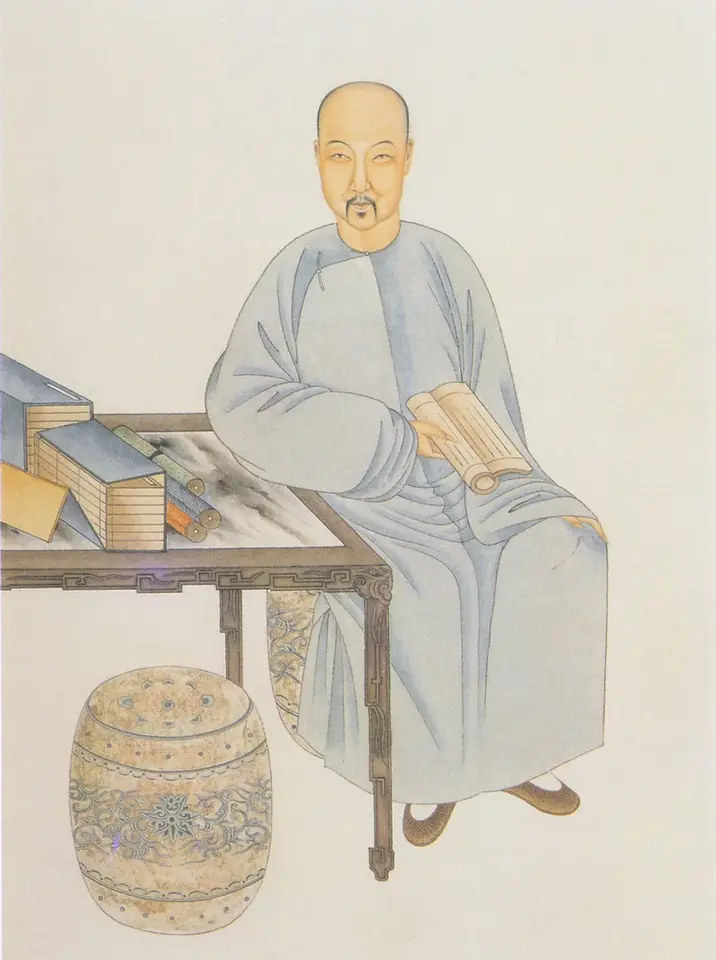
纳兰性德
Nalan Xingde (纳兰性德, 1655–1685), originally named Nalan Chengde (纳兰成德), courtesy name Rongruo (容若) and art name Lengjia Shanren (楞伽山人), was a member of the Yehe Nara clan enrolled in the Manchu Plain Yellow Banner. He was the preeminent poet, scholar, and imperial bodyguard of the early Kangxi reign. Born into the pinnacle of the Qing aristocracy as the eldest son of Grand Secretary Mingju and a princess of the imperial Aisin…
Nalan Xingde (纳兰性德, 1655–1685), originally named Nalan Chengde (纳兰成德), courtesy name Rongruo (容若) and art name Lengjia Shanren (楞伽山人), was a member of the Yehe Nara clan enrolled in the Manchu Plain Yellow Banner. He was the preeminent poet, scholar, and imperial bodyguard of the early Kangxi reign. Born into the pinnacle of the Qing aristocracy as the eldest son of Grand Secretary Mingju and a princess of the imperial Aisin Gioro clan, Nalan Xingde combined extraordinary martial prowess in archery and horsemanship with profound classical scholarship. Admitted to the Directorate of Education at seventeen, he won high esteem from the Chancellor Xu Yuanwen. In 1676, he passed the palace examinations with the jinshi degree and was appointed Imperial Bodyguard of the Third Class, subsequently rising to First Class and constantly attending Emperor Kangxi on imperial tours throughout northern borderlands, the imperial ancestral tombs in Manchuria, and the southern provinces. In 1682, he was dispatched alongside Deputy Lieutenant-General Langtan to survey the Amur River basin, providing invaluable intelligence on Tsarist Russian fortifications that enabled the victorious defense of Albazin. In literature and culture, Nalan Xingde is celebrated alongside Zhu Yizun and Chen Weisong as one of the "Three Great Ci Masters of the Qing." Transcending aristocratic ethnic divides, he erected the Lushui Pavilion and Huajian Thatched Cottage in Beijing, transforming them into vibrant literary salons that sheltered and patronized destitute Han scholars from Jiangnan, including Gu Zhenguan, Yan Shengsun, and Jiang Chenying. He famously orchestrated the imperial pardon and rescue of the exiled poet Wu Zhaoqian from the frozen outpost of Ningguta. He financed and edited the colossal Confucian canonical compendium Tongzhitang jingjie in over 1,800 volumes. In his lyrical poetry, he revolutionized the ci genre with unadorned, heartfelt clarity and poignant melancholy, producing timeless masterpieces in mourning elegies, friendship verse, and frontier lyrics. On July 1, 1685, he succumbed to a sudden fever at the age of thirty-one.
Born into the prime ministerial household in Beijing, excelling in both archery and classical letters.
Entered the Directorate of Education, earning high acclaim from Chancellor Xu Yuanwen and Academician Xu Qianxue.
Passed the provincial examination as a juren at age eighteen, followed by success in the metropolitan examination as a gongshi in 1673.
Wedded Lady Lu, daughter of Governor-General Lu Xingzu; their harmonious union inspired deep domestic happiness.
Changed his given name from Chengde to Xingde to avoid the taboo of Crown Prince Yinreng's personal name.
Awarded the jinshi degree in the palace examination, appointed Imperial Bodyguard, and formed a lifelong bond with Gu Zhenguan.
His beloved wife Lady Lu died in childbirth, plunging him into lifelong grief and inspiring his celebrated mourning lyrics.
Completed the publication of the 1,800-volume Confucian canonical compendium Tongzhitang jingjie.
Championed Gu Zhenguan's appeals and secured an imperial pardon for the exiled scholar Wu Zhaoqian from Ningguta.
Commanded an exploratory embassy to the Amur River basin to inspect Russian encroaching outposts.
Contracted a severe chill following a literary gathering at the Lushui Pavilion and died at his residence at age thirty-one.
Nalan Xingde was born on January 19, 1655, in the prime ministerial residence of Beijing. He belonged to the distinguished Yehe Nara clan of the Manchu Plain Yellow Banner. His great-grandfather Gintaisi was the final grand prince of the Yehe tribal confederacy who died fighting Nurhaci, while his grandfather Niyahan subsequently submitted to the Qing throne and received an imperial company command. His father, Mingju, was one of the most powerful grand secretaries and grand chancellors of Emperor Kangxi's reign, while his biological mother, Lady Aisin Gioro, was the fifth daughter of Prince Ajige, a grandson of Nurhaci.
Surrounded by extreme imperial opulence and aristocratic privilege, Nalan Xingde nonetheless cultivated an introspective, scholarly nature that detached him from worldly vanity. From his earliest boyhood, he mastered mounted archery, galloping through the hunting grounds with remarkable skill, while reading insatiably across the Confucian Classics, historical annals, Buddhist scriptures, and Song dynasty lyric poetry. In 1671, at age seventeen, he was admitted to the Directorate of Education. Chancellor Xu Yuanwen was astonished by his poetic sensitivity and scholarly breadth, enthusiastically recommending him to Vice Minister of Rites Xu Qianxue, under whose mentorship Nalan's classical philological foundation matured.
In 1672, the eighteen-year-old Nalan passed the Shuntian provincial examination as a juren. The following spring, he passed the metropolitan examinations as a tribute scholar (gongshi). However, severe illness prevented him from sitting for the palace examination that year. During his convalescence, he commenced writing Lushuiting zashi (Miscellaneous Notes from the Clear Water Pavilion), a wide-ranging collection of historical annotations, astronomical observations, and institutional commentaries, while cultivating friendships with southern literati including Yan Shengsun, Jiang Chenying, and Zhu Yizun.
In 1674, Nalan Xingde married Lady Lu, the daughter of former Governor-General Lu Xingzu. Cultured, gentle, and deeply appreciative of poetry, Lady Lu shared an idyllic companionship with Nalan, providing him with the warmest period of his emotional life. In late 1675, upon the formal installation of Emperor Kangxi's infant son Yinreng (whose milk name was Baocheng) as Crown Prince, Nalan Chengde dutifully altered his given name to Xingde to observe imperial naming taboos. In 1676, he completed the deferred palace examination, achieving the jinshi degree with high honors in the second class.
Recognizing his refined bearing, martial competence, and bilingual mastery of Manchu and Chinese, Emperor Kangxi did not assign him to the administrative ministries, but rather appointed him directly as an Imperial Bodyguard of the Third Class within the Grand Inner Court. Demonstrating meticulous devotion on duty, Nalan was soon promoted to Imperial Bodyguard of the First Class. Over the following decade, he was a fixture at the emperor's side, accompanying imperial progresses to the Eastern Tombs, the Mukden ancestral homelands, the Mulan autumn hunts, and the northern frontiers.
Despite his status as an imperial confidant and the scion of a supreme ministerial house, Nalan Xingde grew increasingly disillusioned with the superficiality and intrigues of court life. Craving genuine emotional sincerity and intellectual elevation, he utilized his personal resources to construct the Lushui Pavilion along the northern bank of Shichahai Lake in Beijing, flanked by the Huajian Thatched Cottage.
At the Lushui Pavilion, Nalan Xingde dismantled the rigid ethnic and social barriers separating the ruling Manchu elite from conquered Han scholars. He welcomed impoverished, politically disenfranchised Han intellectuals from the south, turning his residence into the cultural epicenter of the early Qing capital. Luminaries such as Gu Zhenguan, Yan Shengsun, Zhu Yizun, Chen Weisong, and Jiang Chenying gathered regularly at his estate to debate classical texts, examine antique rubbings, and chant newly composed ci lyrics. Nalan treated these scholars with self-effacing reverence, providing them with living stipends and publishing their works.
In the spring of 1682, following the suppression of the Rebellion of the Three Feudatories, Emperor Kangxi turned his strategic attention to northern border security. Tsarist Russian expansionists had built fortified palisades at Albazin on the northern bank of the Amur River, carrying out unprovoked assaults on local tributary tribes. To prepare for an effective counter-offensive, the emperor required precise intelligence regarding river navigation, enemy troop dispositions, and terrain. He selected Deputy Lieutenant-General Langtan and First Class Imperial Bodyguard Nalan Xingde to lead an exploratory embassy into the wilderness.
Navigating treacherous swamps, dense primeval forests, and bitter blizzards, Nalan Xingde traveled across the Greater Khingan range into the Solon and Amur river basins. Under challenging physical conditions, he mapped border river confluences, surveyed Russian fortifications, and recorded the allegiances of the Daur and Oroqen tribes. Upon their return, Nalan and Langtan submitted a detailed operational memorial to the emperor, advocating fortified granaries and synchronized water-land transport lines. These recommendations formed the strategic backbone of the victorious Albazin campaigns launched by the Qing military shortly thereafter.
Throughout Nalan Xingde's delicate and introspective life, personal bereavement cast an inescapable shadow over his spirit. In the fifth month of 1677, his beloved wife Lady Lu died in childbirth after only three years of marriage, at the age of twenty-one. The sudden loss devastated Nalan, shattering his inner world. He spent days weeping beside her coffin, and for the rest of his life, his grief remained an unhealing wound. He channeled this sorrow into verses of mourning that stand among the most moving elegies in Chinese literature.
In the late spring of 1685, exhausted by constant travel, military inspections, and chronic emotional depression, Nalan's physical health deteriorated sharply. On May 23, he gathered his closest literary companions, including Zhu Yizun and Liang Peilan, for a poetic symposium at the Lushui Pavilion. That very evening, he was stricken by a violent fever. Despite intensive medical treatment, his condition deteriorated rapidly. On July 1, 1685, Nalan Xingde passed away at his Beijing residence at the age of thirty-one. He was laid to rest in the family cemetery at Zhaojiadun in Shangzhuang, Beijing, leaving the empire's literary community in mourning.
Nalan Xingde's preeminent achievement was his revival and elevation of the ci lyrical form during the early Qing dynasty. Following centuries of stagnation and artificial ornament in the late Ming period, Nalan breathed renewed vitality into the genre through unadorned emotional sincerity and musical spontaneity.
His lyrical corpus, originally published as Ce mao ji and Yinshui ji, was later compiled into Nalan ci. His verse eschews convoluted pedantry, archaic allusions, and strained metric artifice in favor of crystalline diction and pure emotional immediacy. His contemporary Chen Weisong remarked that his lyrics possessed the moving pathos of the Southern Tang monarchs, while the late Qing master Kuang Zhouyi hailed him as the "foremost lyricist of the dynastic dawn." In the twentieth century, Wang Guowei canonized him in Poetic Remarks in the Human World, famously observing that "Nalan Rongruo viewed the world with natural eyes and voiced emotion with a natural tongue... since the Northern Song, he stands alone."
Nalan Xingde's unique role as an imperial bodyguard traversing the northern steppes and border forests enabled him to pioneer a distinctive subgenre of frontier ci poetry. Unlike earlier literati who composed frontier poetry based on historical imagination, Nalan recorded the visceral realities of mounted expeditions through firsthand experience.
In Tune: Chang xiangsi (On the Road to Yuguan), he captured the quiet sorrow of military bivouacs with the unforgettable lines: "One stretch of mountains, one stretch of waters, marching toward the distant pass; midnight reveals a thousand tents ablaze with lanterns. One gust of wind, one flurry of snow, shattering homesick dreams; my native garden knows no such sound." In lyrics like Tune: Rumengling (Thousands of Tents) and Tune: Caisangzi (Snowflakes on the Frontier), he portrayed the biting frost, wind-whipped yurt camps, and haunting melodies of nomadic flutes with melancholic precision, establishing an unprecedented benchmark for realistic frontier verse.
Within the centuries-old tradition of Chinese elegiac poetry, Nalan Xingde's mourning lyrics (daowang ci) rival the classical achievements of Pan Yue, Yuan Zhen, and Su Shi, distinguished by their pure, agonizing emotional fidelity. Following the untimely death of Lady Lu, Nalan dedicated dozens of lyrics to her memory across the remaining eight years of his life.
In his celebrated Tune: Huanxisha, he wrote the immortal lament: "Lost in reverie, I stand alone in the dying glow of the setting sun; what once seemed ordinary now breaks my heart." In pieces such as Tune: Qingshanshi and Tune: Jinlüqu, he shunned elaborate ornamentation to directly transcribe his weeping heart, mourning the quiet rituals of domestic life, the unread books, and the cold tea left behind. These raw, heartbreaking lyrics elevated marital mourning to a timeless aesthetic pinnacle.
In 1657, the Jiangnan Examination Scandal led to the unjust exile of brilliant Jiangnan poet Wu Zhaoqian to Ningguta in the frozen northeastern frontier. For over two decades, Wu endured squalor and freezing blizzards, separated from his family and homeland. His devoted friend Gu Zhenguan traveled to Beijing, desperately seeking patronage to secure his liberation.
Upon meeting Nalan Xingde, Gu presented his deeply moving double lyric Tune: Jinlüqu, begging for aid. Reading the lines "I too have drifted long; ten years of trials have failed past kindness, yet in life or death we remain teachers and friends," Nalan wept openly and pledged: "Consider this my sacred duty; within ten years, I shall see him return alive!" Mobilizing his father's paramount political influence, Nalan secured an imperial pardon for Wu Zhaoqian in 1681, welcoming the broken exile back to Beijing, providing for his family, and treating him with the deepest filial respect. His chivalric loyalty became an enduring legend of moral nobility among Chinese intellectuals.
As a scion of the Manchu ruling class, Nalan Xingde exhibited an extraordinary reverence for Chinese classical scholarship. Recognizing that centuries of war had caused classical commentaries from the Tang, Song, and Yuan dynasties to disperse and disintegrate, he sponsored the monumental publication of Tongzhitang jingjie (Exegetical Treatises of the Hall of Comprehensive Aspirations).
Enlisting prominent scholars such as Xu Qianxue and Yan Shengsun to supervise textual collation, Nalan invested his personal wealth to publish 1,800 volumes encompassing more than 140 classical treatises from pre-Qin times through the Ming dynasty. This gigantic scholarly enterprise rescued dozens of rare commentaries from extinction, dismantled the narrow scholastic dogmas of late Ming Neo-Confucianism, and laid foundational textual ground for the Qianjia evidential renaissance. Emperor Kangxi personally commended Nalan for using his wealth to preserve classical learning, honoring him as an exemplar of harmonious cultural integration.
FIGURES ASSOCIATED WITH THIS DYNASTY