Birth into Illustrious Scholar Clan
Born in Tongcheng, Anqing; studied classics and natural philosophy under Bai Yu and Wang Xuan.
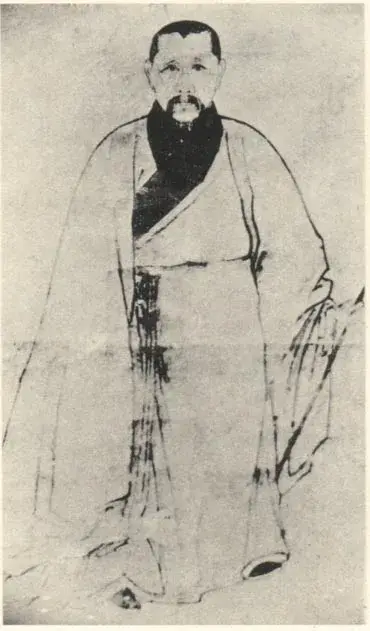
方以智
Fang Yizhi (方以智, styled Mizhi), later adopting the Buddhist name Dazhi and widely revered as the Yaodi Monk, was a towering intellectual giant, natural philosopher, and scientific polymath from Tongcheng, Anhui Province. Hailing from the prominent Tongcheng Fang lineage—his grandfather Fang Dazhen served as Junior Minister of the Court of Judicature and Revision and his father Fang Kongzhao was Grand Coordinator of…
Fang Yizhi (方以智, styled Mizhi), later adopting the Buddhist name Dazhi and widely revered as the Yaodi Monk, was a towering intellectual giant, natural philosopher, and scientific polymath from Tongcheng, Anhui Province. Hailing from the prominent Tongcheng Fang lineage—his grandfather Fang Dazhen served as Junior Minister of the Court of Judicature and Revision and his father Fang Kongzhao was Grand Coordinator of Huguang—Fang Yizhi displayed dazzling intellectual genius from early youth. Mastering classical canons, history, phonology, medicine, and Western science, he achieved nationwide literary fame alongside Chen Zhenhui, Hou Fangyu, and Mao Xiang as one of the Four Gentlemen of Late Ming and a leading intellectual figure of the Restoration Society (Fushe). Passing the imperial examination as a jinshi in 1640, Fang Yizhi was appointed Examining Editor in the Hanlin Academy and instructor to imperial princes. Following the fall of Beijing in 1644, he refused to collaborate with Li Zicheng's Shun regime, enduring brutal interrogation before escaping south. Persecuted in Nanjing by court corruptors Ma Shiying and Ruan Dacheng, he fled across southeastern China under aliases. He served the Southern Ming Yongli regime as Vice Minister of Rites and Grand Secretary, but retired when factional chaos undermined resistance. When Qing forces captured Guilin in 1650, he attempted suicide rather than shave his hair, subsequently taking Buddhist monastic vows at Panyue Temple. Arrested in 1671 due to alleged ties with anti-Qing networks, he passed away from acute illness on a prisoner boat at the Huangkong Rapids on the Gan River. Synthesizing traditional Chinese materialism with Western empirical sciences, he formulated the epochal doctrine that "investigating physical properties reveals ultimate metaphysical principles" (zhice ji cang tongji), authoring monumental encyclopedias including Wuli Xiaoshi, Tongya, and Dongxijun, standing as an iconic forerunner of Chinese scientific Enlightenment.
Born in Tongcheng, Anqing; studied classics and natural philosophy under Bai Yu and Wang Xuan.
Relocated to Nanjing following local unrest; founded the Ze Society and allied with Fushe scholars to oppose corrupt eunuch factions.
Passed the imperial examination; questioned on statecraft by Emperor Chongzhen and appointed Hanlin Examining Editor.
Wept at Chongzhen's bier; endured horrific torture without submission, escaping south only to be blacklisted by Ruan Dacheng.
Traveled disguised as medicine seller Wu Shigong; appointed Grand Secretary and Vice Minister of Rites by Emperor Yongli.
Captured at Guilin; attempted suicide before taking Buddhist vows at Panyue as Monk Dazhi (Yaodi).
Resided on Mount Lu, synthesizing Confucian, Buddhist, and Daoist dialectics into his philosophical masterpiece Dongxijun.
Lectured at Mount Qingyuan; published the fifty-two-volume Tongya and twelve-volume Wuli Xiaoshi.
Arrested under political suspicion; passed away on a transport vessel at Huangkong Rapids, Wan'an, Jiangxi.
Preeminent late Ming and early Qing philosopher, encyclopedic polymath, and natural scientist, one of the Four Gentlemen of Late Ming, who pioneered the epistemological doctrine of "investigating physical properties to reveal ultimate metaphysical principles" (zhice ji cang tongji) and authored Wuli Xiaoshi, Tongya, and Dongxijun.
Fang Yizhi was born into the preeminent Fang gentry clan of Tongcheng, South Zhili. His grandfather Fang Dazhen served as Junior Minister of the Court of Judicature and Revision and was a renowned master of both Cheng-Zhu Neo-Confucianism and Wang Yangming's School of Mind; his father Fang Kongzhao was Grand Coordinator of Huguang, an expert in I Ching hexagram dynamics and military engineering; and his mother Wu Shi was an accomplished scholar-poet. The family estate housed the famed Jigu Hall, an expansive library containing tens of thousands of classical volumes.
Endowed with exceptional intellect, Fang Yizhi received intensive training in classical canons under Bai Yu and Wang Xuan. Bai Yu emphasized practical statecraft, while Wang Xuan specialized in philology, physical investigations, and mathematical cosmology. Wang Xuan's treatise Wuli Suo directly inspired Fang Yizhi's lifelong passion for empirical research. Additionally, Fang studied pharmacology and pulse diagnosis under physician Fu Haifeng. Showing remarkable resilience, the teenage Fang Yizhi once trekked hundreds of miles on foot carrying dried rations to participate in civil service trials, subsequently founding the Ze Society in his father's suburban gardens to promote classical studies and social reform.
In 1634, local agrarian disturbances prompted Fang Yizhi to relocate to Nanjing. Along the Qinhuai River, he established close friendships with Hou Fangyu, Mao Xiang, and Chen Zhenhui. Their literary brilliance and moral uprightness earned them renown as the "Four Gentlemen of Late Ming." Joining the Restoration Society (Fushe) led by Zhang Pu, Fang Yizhi co-authored manifestos denouncing corrupt remnants of the Wei Zhongxian eunuch faction, most notably Ruan Dacheng, winning nationwide acclaim among gentry circles.
In 1640, Fang Yizhi passed the metropolitan examination and was enrolled as a Hanlin bachelor. Emperor Chongzhen granted him a personal audience in the Dezheng Palace; impressed by his incisive geopolitical counsel, the emperor patted the table in admiration. Appointed Examining Editor in the Hanlin Academy, Fang was assigned as lecturer to Prince Ding Zhu Cijiong and Prince Yong Zhu Cizhao. In the imperial capital, Fang utilized imperial archives and interacted extensively with European Jesuit astronomers including Giulio Aleni, Francesco Sambiasi, and Johann Adam Schall von Bell. Diligently examining translated Western treatises on astronomy, hydraulics, mathematics, and optics, he pioneered the synthesis of Eastern and Western learning, commencing drafts of Tongya and Wuli Xiaoshi in 1642.
In March 1644, Li Zicheng's Shun forces stormed Beijing, and Emperor Chongzhen committed suicide. Rushing to the imperial bier, Fang Yizhi wept bitterly before being apprehended by rebel commander Guo's regiments. Subjected to merciless beatings and bone-crushing tortures, Fang maintained absolute silence, refusing to serve the rebel regime. Intellectual circles in southern China compared his unyielding fortitude to Song loyalist Wen Tianxiang. Following Li Zicheng's defeat at Shanhai Pass, Fang escaped in the chaos and fled south to Nanjing.
However, the Southern Ming Hongguang court fell under the corrupt control of Ma Shiying and Ruan Dacheng. Seeking revenge for past Fushe manifestos, Ruan manufactured charges that Fang had failed to commit suicide in Beijing, classifying him as a traitor subject to arrest. Fang adopted the alias Wu Shigong, fleeing across Zhejiang and Fujian into Guangdong. In Guangzhou, magistrate Yao Qiyin—Fang's fellow jinshi of 1640—recognized his old friend and engaged him as a private tutor for his son Yao Duan. Secluded within the magistrate's yamen, Fang revised Tongya, composed poetry collections, and wrote the theatrical script Jinchanyu, before his wife Lady Pan and third son Fang Zhonglü arrived from Fujian to reunite with him.
In 1646, Prince of Gui Zhu Youlang was proclaimed the Yongli Emperor at Zhaoqing. Recommended by his father's lifelong friend Grand Secretary Qu Shisi, Fang Yizhi was appointed Junior Supervisor of the Household of the Heir Apparent, Hanlin Academician, Vice Minister of Rites, and Grand Secretary of the Eastern Studio. However, finding the regime paralyzed by factional intrigue, eunuch corruption, and civil conflict with the Shaowu regime, Fang realized that dynastic restoration was impossible and retired under the pseudonym Sanping to live among the southern mountains.
In late 1650, Qing troops under Prince Kong Youde captured Guilin, martyring Qu Shisi and Zhang Tongchang. Apprehended in Panyue, Fang was pressured by Kong Youde to accept a Qing bureaucratic appointment. When Qing soldiers brandished razors demanding he shave his head in submission, Fang drew his sword and slashed his own throat in defiance. Horrified soldiers wrested the blade from his hand. Bleeding profusely, Fang dipped his fingers in his own blood to write an unyielding testament, immediately entering Panyue's Jile Temple to take monastic vows under Chan Master Yingkong. Adopting the dharma name Dazhi and the style Yaodi Monk, he chose religious reclusion to preserve his moral integrity, forcing the Qing authorities to release him.
Severing all worldly ambitions, Fang Yizhi journeyed northward to Mount Lu in 1652. Amidst solitary monastic retreats, he integrated his traumatic experiences of dynastic ruin, natural scientific insights, and Buddhist-Daoist metaphysics to author his philosophical masterwork, the Dongxijun.
During the early Kangxi reign, Fang assumed the abbacy of Jingju Monastery on Mount Qingyuan in Ji'an, Jiangxi. He transformed Mount Qingyuan into a vibrant sanctuary where Ming loyalists and scholars congregated to exchange ideas. Supported by devoted disciples and sons, he published his monumental fifty-two-volume philological encyclopedia Tongya and twelve-volume scientific treatise Wuli Xiaoshi in 1664, preserving late Ming intellectual advancements.
Although cloistered in a monastery, Fang Yizhi remained an object of profound suspicion to the Qing regime due to his immense prestige among southern literati. In the winter of 1671, Qing officials investigating an anti-Qing conspiracy in Guangdong implicated Fang Yizhi. Constables arrested the aging monk at Mount Qingyuan and placed him under armed escort aboard a prisoner boat bound for Guangzhou.
Traveling down the Gan River, the vessel arrived at the treacherous Huangkong Rapids in Wan'an—where Southern Song patriot Wen Tianxiang had once composed his immortal lament. Exhausted by persecution and suffering from a severe carbuncle on his back, Fang Yizhi passed away peacefully aboard the vessel on November 9, 1671, at age sixty-one. His disciples transferred his remains back to Mount Qingyuan, interring him beside Hongji Monastery, where scholar Quan Zuwang later composed his epitaph celebrating his unyielding moral perfection.
Fang Yizhi's supreme contribution to Chinese epistemology was bridging natural science and metaphysical philosophy through his classic formula: "Investigating physical properties reveals ultimate metaphysical principles" (zhice ji cang tongji). In Tongya and Wuli Xiaoshi, he established a tripartite classification of human knowledge: "physical investigation" (zhice, empirical natural sciences), "social governance" (zaili, political and ethical science), and "metaphysical exploration" (tongji, foundational philosophy). He insisted that philosophical truth must never be derived from subjective speculation, but must be grounded in physical experimentation and rigorous observation, establishing the epistemological foundation for empirical science in pre-modern China.
Spanning twelve extensive volumes, Wuli Xiaoshi (Small Notes on the Principles of Things) represents the pinnacle of comprehensive natural science in seventeenth-century China. Covering astronomy, meteorology, geology, mechanics, optics, acoustics, metallurgy, and biology, the encyclopedia combined traditional Chinese empirical knowledge with Western scientific discoveries. In optics, Fang proposed a primitive wave theory of light based on his monistic qi philosophy, asserting that light was a wave-like dynamic vibration within the ether, demonstrating that light expanded continuously through space and noting that measurement of optical phenomena was subject to fundamental limitations. He performed camera obscura experiments and analyzed prism refraction. In human physiology, he incorporated Western anatomical theories to affirm that "the brain governs conscious thought," discarding the ancient belief that thinking originated in the heart.
In linguistics and philology, Fang Yizhi produced the massive fifty-two-volume Tongya, examining nearly one hundred thousand entries across twenty-four categories of ancient institutions, names, implements, and phonetics. Severely castigating Ming scholars for superficial speculation detached from ancient texts, he established rigorous evidential principles requiring textual claims to be supported by historical and physical verification. The editors of the Complete Library in the Four Branches (Siku Quanshu) praised Tongya as the foremost philological work in Chinese history, while modern scholar Liang Qichao identified Fang Yizhi as the true founding father of the Qing Qianjia school of evidential research (kaojuxue).
Completed in 1652, Dongxijun (The Balance of Opposites) represents one of the most sophisticated achievements of traditional Chinese dialectics. Rooted in Zhang Zai's monistic qi cosmology, Fang asserted that "the entire universe across all time consists of opposing pairs" (jin tiandi gujin jie er), and that "the common cause resides within the opposing cause" (gongyin ji zai fanyin zhong). He demonstrated that opposites did not simply annihilate each other, but engaged in dynamic reciprocal interpenetration (jiaolun jiaohe). In his chapter on life and death, he articulated the moral doctrine of "neither living in vain nor dying recklessly," providing a profound philosophical framework for moral survival during dynastic collapse.
In treatises including Yaodi Paozhuang and Qingyuan Zhilüe, Fang Yizhi articulated a mature synthesis of Confucianism, Buddhism, and Daoism. Grounding social ethics in Confucian statecraft while adopting Buddhist spiritual enlightenment and Daoist natural freedom, he eliminated sectarian dogma. In I Ching studies, he unified Xiangshu (images and numbers) calculations with Yili (philosophical principles), constructing a dynamic ontology of living transformation that revitalized Chinese philosophy on the eve of the modern era.
FIGURES ASSOCIATED WITH THIS DYNASTY