Devotion to Painting
Born in Xinfeng, devoted himself to painting, earning local acclaim for depictions of horses, cattle, and wild birds.
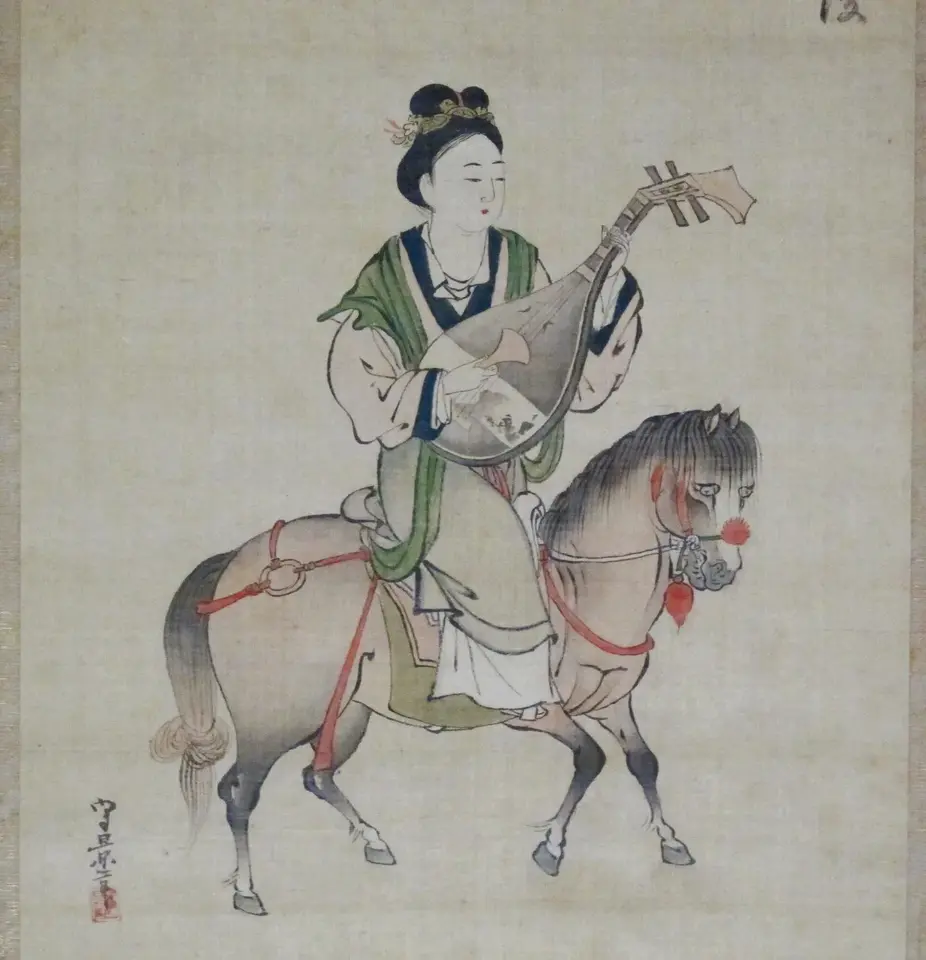
刘白
Liu Bai (刘白, ? – 33 BCE), a native of Xinfeng, Jingzhao (present-day northeast of Lintong District, Xi'an, Shaanxi Province), was a prominent court painter of the Western Han dynasty during the reign of Emperor Yuan. Excelling in brushwork and draftsmanship, Liu Bai was renowned alongside his contemporaries Mao Yanshou, Chen Chang, Gong Kuan, Yang Wang, and Fan Yu, collectively representing the pinnacle of palace pictorial…
Liu Bai (刘白, ? – 33 BCE), a native of Xinfeng, Jingzhao (present-day northeast of Lintong District, Xi'an, Shaanxi Province), was a prominent court painter of the Western Han dynasty during the reign of Emperor Yuan. Excelling in brushwork and draftsmanship, Liu Bai was renowned alongside his contemporaries Mao Yanshou, Chen Chang, Gong Kuan, Yang Wang, and Fan Yu, collectively representing the pinnacle of palace pictorial art in the late Western Han. According to Ge Hong's Miscellaneous Records of the Western Capital, Liu Bai specialized in depicting birds and beasts, sharing distinction with Chen Chang and Gong Kuan for their consummate skill in capturing cattle, horses, and flying birds with dynamic vitality and precise anatomical fidelity. During the reign of Emperor Yuan, the imperial palace housed numerous concubines and maids, making it impossible for the emperor to summon and inspect each in person. Consequently, the emperor ordered court painters under the Privy Purse to execute standardized portrait scrolls of all palace women, selecting concubines for intimacy based on their portraits. To secure imperial favor, palace ladies competed to bribe the painters with fortunes ranging from fifty thousand to one hundred thousand cash, establishing widespread venality within the palace ateliers. In the celebrated incident involving Wang Zhaojun (Wang Qiang), she refused to pay bribes out of pride in her innate beauty, prompting the resentful painters to depict her with deliberate mediocrity, leaving her neglected in the outer quarters for years. In 33 BCE (the 1st year of the Jingning era), Chanyu Huhanye of the Xiongnu visited Chang'an to pay homage and request a Han bride. Relying on the flawed portrait album, Emperor Yuan selected the unvisited Wang Zhaojun for the marriage alliance. At the farewell court audience, Emperor Yuan was stunned by Wang Zhaojun's matchless radiance, dignified grace, and articulate composure. Deeply regretting his choice but bound by international honor, the furious emperor launched a comprehensive investigation into court painter corruption. Liu Bai, alongside Mao Yanshou, Chen Chang, Gong Kuan, and other implicated painters, was convicted of bribery and executed in the public marketplace of Chang'an, his immense private fortune confiscated by the state. This tragedy devastated the artistic community of the Western Han capital, becoming an enduring literary motif commemorating Wang Zhaojun's fate and the perils of court patronage.
Born in Xinfeng, devoted himself to painting, earning local acclaim for depictions of horses, cattle, and wild birds.
Recruited into the Privy Purse as a court painter, contributing to palace architectural murals and portraits.
Ordered to paint portrait scrolls of palace maids; widespread bribery flourished among court painters.
Chanyu Huhanye requested a marriage alliance; Emperor Yuan consulted portraits and selected Wang Zhaojun for the nomadic marriage.
Upon seeing Zhaojun in person, Emperor Yuan was transfixed by her beauty, deeply regretted her departure, and ordered an inquiry.
Convicted of bribery and treasonous fraud, Liu Bai was executed in the marketplace alongside Mao Yanshou and other painters.
Liu Bai was born in Xinfeng County within the metropolitan Jingzhao region (northeast of modern Lintong, Xi'an). Established by Emperor Gaozu Liu Bang as a facsimile of his ancestral hometown of Fengyi to comfort his father, Xinfeng was an affluent hub situated along the Wei River, mere miles east of the imperial capital of Chang'an. In the middle to late Western Han, architectural decoration and ancestral tomb frescoes flourished, generating immense societal demand for elite draftsmen. From an early age, Liu Bai exhibited innate talent for pigments and brushwork, spending long periods studying wild fowl along northern riverbanks and pastoral herds of cattle and horses to master anatomical precision and dynamic movement.
During the reign of Emperor Yuan, the imperial court patronized Confucian learning and artistic pursuits. Relying on his growing prestige in animal and avian depiction, Liu Bai was recruited into the central Privy Purse, serving as a salaried court painter within the forbidden palace grounds. The palace painting bureau encompassed diverse responsibilities, including decorative architectural gilding, imperial ancestral iconography, historical commemorative frescoes, and official ceremonial regalia design.
Among the artists of the Privy Purse, Liu Bai maintained close associations with Mao Yanshou of Duling, Chen Chang of Anling, and his peers Gong Kuan, Yang Wang, and Fan Yu. While Mao Yanshou was preeminent in portraiture, capturing human likenesses with uncanny veracity regardless of beauty, age, or youth, Liu Bai, Chen Chang, and Gong Kuan specialized in zoological subjects. Their brushstrokes conveyed taut muscular structures and realistic plumage, evoking wild stallions galloping across plains and birds taking flight, which won enthusiastic praise among imperial aristocrats.
Emperor Yuan maintained expansive inner quarters containing hundreds of concubines, palace ladies, and handmaidens. As the number of palace women multiplied, the ailing emperor, residing in seclusion within Weiyang and Ganquan palaces, lacked the vitality to visit each residence personally. To resolve this dilemma, Emperor Yuan commanded palace painters to visit every court chamber, executing detailed portraits of each maiden to compile standardized portrait albums. The emperor would then browse these albums to summon favorites for intimate companionship.
This administrative innovation inadvertently placed immense arbitrary power in the hands of the painters, who effectively controlled the destinies of hundreds of cloistered women. In the isolation of the inner palace, winning an imperial visit represented the sole path to elevating one's status and family honor. Desperate to secure an alluring representation on the scrolls, palace women competed fiercely to bestow rich gifts upon the painters.
Bribery soon became institutionalized within the painting bureau. Miscellaneous Records of the Western Capital explicitly notes that palace ladies bribed the artisans with sums ranging from fifty thousand to upwards of one hundred thousand coins. The painters calibrated their brushwork directly against the bribes received: those who presented extravagant riches had their features beautified with delicate contouring and lustrous eyes, while those who could not or would not pay were rendered with clumsy, unflattering strokes or intentional flaws. Enmeshed in this pervasive corruption, Liu Bai succumbed to the temptation of private enrichment, compromising professional integrity.
During the Jianzhao era, Wang Qiang (courtesy name Zhaojun), originating from a reputable family in Zigui, Nan Commandery, was selected into the imperial harem. Possessing breathtaking beauty and unyielding dignity, Wang Zhaojun refused to demean herself by bribing the court artisans. Chief portraitist Mao Yanshou, resentful of her cold pride, deliberately distorted her features on the scroll, rendering her appearance unremarkable and reputedly painting a disfiguring blemish upon her cheek. Consequently, Wang Zhaojun remained stranded in neglected quarters for several years, never beholding the sovereign's face.
In the first month of 33 BCE (the 1st year of the Jingning era), Chanyu Huhanye of the Xiongnu arrived in Chang'an for his third state visit, receiving magnificent imperial hospitality. Huhanye petitioned Emperor Yuan to bestow a Han princess to seal an enduring peace between Han and nomadic realms. Reluctant to send an authentic royal daughter to the harsh northern steppes, Emperor Yuan inspected the palace portrait albums, selecting several neglected palace women whose painted visages appeared plain. Wang Zhaojun was chosen among them.
Weary of her joyless confinement, Wang Zhaojun had volunteered for the mission. On the day of departure, Emperor Yuan hosted a grand banquet for Chanyu Huhanye in the front palace hall and summoned the departing women to bid farewell. When Wang Zhaojun entered the grand hall in resplendent ceremonial robes, courtiers and foreign dignitaries were spellbound. Radiant and poised, her beauty illuminated the entire palace; her graceful demeanor and articulate responses surpassed all other women of the court.
Emperor Yuan was thunderstruck by her splendor, seized with immediate and intense remorse. He longed to rescind the decree and replace her with another maid, but the chanyu had already witnessed her in jubilation, and diplomatic protocols were irrevocably established. To preserve the word of the Han empire, Emperor Yuan suppressed his sorrow and watched Wang Zhaojun depart toward the distant northern wilderness.
Once Wang Zhaojun had departed, Emperor Yuan was consumed with fury. He ordered judicial authorities to mount an unsparing investigation into the bribery and artistic fraud within the inner palace. Officials seized original scrolls, compared them directly with the living concubines, and uncovered overwhelming evidence of extortion. Raids on the private estates of the court painters revealed hoards of illicit wealth.
As key members of the palace painting bureau, Liu Bai, Mao Yanshou, Chen Chang, Gong Kuan, Yang Wang, and Fan Yu were arrested and cast into prison. Under interrogation by the Chamberlain for Law Enforcement, their crimes of extortion, state deception, and corruption of palace order were verified beyond doubt. Emperor Yuan condemned them to the ultimate penalty: Mao Yanshou, Liu Bai, and their colleagues were executed on the same day in the bustling marketplace of Chang'an, and their massive familial fortunes were confiscated.
Liu Bai, a master draftsman of nature's creatures, perished in this political purge driven by greed and institutional corruption. This catastrophic judicial reckoning not only annihilated the foremost artistic masters of the late Western Han in a single blow, but also dealt an irreparable shock to the metropolitan arts. As Miscellaneous Records of the Western Capital lamented, "after this, painters in the capital became exceedingly rare," leaving an enduring void in early imperial pictorial traditions.
Liu Bai was a rare specialist in early Chinese painting who focused specifically on zoological and avian subjects. Distinguishing himself from portrait painters, Liu Bai, alongside Chen Chang and Gong Kuan, established the specialized subgenre of depicting "cattle, horses, and flying birds." Their empirical observations of galloping herds and soaring flocks laid foundational techniques for naturalistic rendering, exerting significant influence on subsequent Han tomb murals, stone reliefs, and the eventual development of bird-and-flower painting.
Liu Bai's participation in compiling portrait albums for Emperor Yuan's inner chambers provides an important historical record of the problematic system of selecting concubines through two-dimensional art. This arrangement reduced artistic craft into an instrument of administrative patronage, spawning illicit rent-seeking networks and exposing the vulnerabilities of late imperial palace governance.
The collective distortion of Wang Zhaojun's features by Liu Bai and his cohort inadvertently catalyzed her historic departure to the Xiongnu. Her marriage to Chanyu Huhanye secured over half a century of unbroken frontier tranquility between Han and nomadic tribes, bringing about an era where "border gates remained open, cattle grazed peacefully, and no alarm dogs barked for three generations." While motivated by venal instincts, the painters functioned as tragic catalysts in this historic turning point.
The simultaneous execution of Liu Bai and his peers in 33 BCE represents the largest state purge of palace artisans in Western Han history. Miscellaneous Records of the Western Capital emphasizes that "painters in the capital became exceedingly rare," marking the end of a golden era for early imperial draftsmanship. Subsequent generations of poets and historians frequently cited the trials of Mao Yanshou and Liu Bai to ponder the delicate relationship between artistic integrity and autocratic authority.
FIGURES ASSOCIATED WITH THIS DYNASTY