Birth in Meishan
Born on the twentieth day of the second month in Meishan, Sichuan, receiving classical education from his father Su Xun.
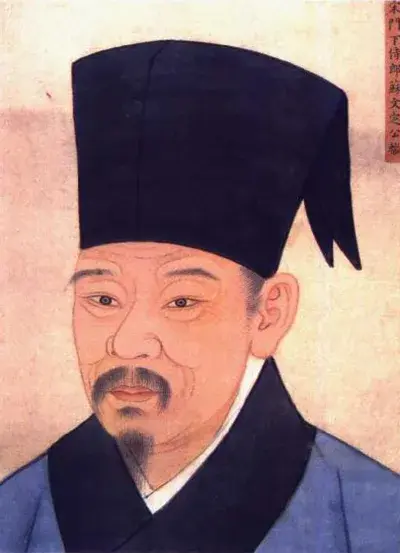
苏辙
Su Zhe (苏辙, 1039–1112), courtesy name Ziyou (子由), self-styled Yingbin Yilao (颍滨遗老), was an eminent statesman, philosopher, and classical prose master of the Northern Song dynasty, hailing from Meishan in Meizhou (modern Meishan, Sichuan). Renowned alongside his father Su Xun and elder brother Su Shi as one of the Three Sus and recognized among the Eight Great Masters of the Tang and Song, he passed the metropolitan…
Su Zhe (苏辙, 1039–1112), courtesy name Ziyou (子由), self-styled Yingbin Yilao (颍滨遗老), was an eminent statesman, philosopher, and classical prose master of the Northern Song dynasty, hailing from Meishan in Meizhou (modern Meishan, Sichuan). Renowned alongside his father Su Xun and elder brother Su Shi as one of the Three Sus and recognized among the Eight Great Masters of the Tang and Song, he passed the metropolitan examination alongside his brother in 1057 and astonished the court during the 1061 decree examination through his outspoken criticisms of imperial policy. During the Xining era of Emperor Shenzong, Su Zhe was appointed to the Three Offices Regulations Commission, where he candidly opposed Wang Anshi's Green Sprouts policy, warning that government moneylending would inevitably foster bureaucratic extortion; consequently, he was demoted to Assistant Staff Author in Henan. In 1079, during the Crow Terrace Poetry Case, Su Zhe risked his life to petition Emperor Shenzong, offering to forfeit his own official rank to redeem Su Shi from execution, resulting in his demotion to Supervisor of Salt and Wine Tax in Junzhou. Following Emperor Zhezong's accession and the regency of Grand Empress Dowager Gao during the Yuanyou era, the conservative faction returned to power, and Su Zhe rose to Right Remonstrant, Secretariat Drafter, Censor-in-Chief, Right Assistant Director of the Department of State Affairs, and ultimately Vice Director of the Chancellery. In this supreme cabinet role, he demonstrated pragmatic statesmanship, opposing Sima Guang's hasty repeal of the hired service system and reform of the labor-service system, as well as abrupt changes to the civil examination syllabus. Exiled to southern Guangdong during the Shaosheng political persecutions, he spent his retirement in Yingchang writing profound philosophical treatises. His literary style was expansive, tranquil, and profound, exemplified by masterpieces such as Six States Discourse and the Record of the Kuaizai Pavilion at Huangzhou.
Born on the twentieth day of the second month in Meishan, Sichuan, receiving classical education from his father Su Xun.
Passed the imperial examination under chief examiner Ouyang Xiu alongside his brother Su Shi, presenting his letter to Han Qi.
Passed the special decree examination with an outspoken memorial critiquing imperial governance, appointed Proofreader in the Palace Library.
Inducted into the Three Offices Regulations Commission, fiercely opposed Wang Anshi's Green Sprouts policy, demoted to Henan.
Petitioned Emperor Shenzong during the Crow Terrace Poetry Case offering his own rank to spare Su Shi's life; demoted to Supervisor of Salt and Wine Tax in Junzhou for five years.
Visited Su Shi in Huangzhou, composing the immortal prose masterpiece Record of the Kuaizai Pavilion at Huangzhou (Huangzhou Kuaizai Ting Ji).
Summoned to the capital as Right Remonstrant, impeaching corrupt ministers and urging Sima Guang to implement balanced administrative reforms.
Appointed Right Assistant Director of the Department of State Affairs and subsequently Vice Director of the Chancellery, enfeoffed as Founding Count.
Following Emperor Zhezong's personal assumption of power, demoted successively to Ruzhou, Yuanzhou, and exiled to Leizhou and Xunzhou.
Pardoned and returned north; upon Su Shi's death in Changzhou, authored his heartfelt funeral oration and official tomb epitaph.
Established his study called the Hermitage of the Relic Elder in Yingchang, styling himself Yingbin Yilao and editing the Collected Works of Luancheng.
Passed away on the third day of the tenth month at age seventy-four, buried beside Su Shi at Little Mount Emei in Jiaxian.
Su Zhe was born on March 17, 1039, into an esteemed literary lineage in Meishan, Meizhou. His father Su Xun was a profound essayist who achieved late renown, while his elder brother Su Shi was an unmatched literary genius. In 1048, Su Xun withdrew from public pursuits following his father's death to educate his two sons personally. Under his father's rigorous guidance, Su Zhe read voraciously across the Confucian canons, historical annals, and philosophical masters. In 1055, at age seventeen, he married Lady Shi of his native district.
In 1056, Su Xun traveled to Kaifeng accompanied by his two sons. Passing through Chengdu, they were warmly received by Zhang Fangping, the Regional Commander of Yizhou, who treated the father and sons as national treasures. In 1057, at the youthful age of nineteen, Su Zhe and Su Shi took the metropolitan examination in Kaifeng. Chief Examiner Ouyang Xiu was captivated by the vigor and clarity of their essays, placing both brothers high on the jinshi pass list. In the fourth month of that year, their mother Lady Cheng passed away, and the family returned to Sichuan to complete the mourning period. Returning to the capital in 1060, Su Zhe was appointed Assistant Magistrate of Mianchi in Henan and nominated for the prestigious decree examination.
In the eighth month of 1061, Su Zhe took the palace decree examination for exceptional talent. Observing that Emperor Renzong had reigned for over three decades, Su Zhe boldly offered an unvarnished critique of court complacency, administrative neglect, and the heavy burdens borne by common taxpayers. Examiner Hu Su denounced the memorial as disrespectful and demanded his disqualification, but review examiners Sima Guang and Fan Zhen defended his integrity. Emperor Renzong demonstrated magnanimous imperial tolerance, remarking: "I established this examination to solicit frank remonstrance; if I reject him for speaking frankly, what will the empire say of me?" Consequently, Su Zhe was passed in the lower grade and appointed Proofreader in the Palace Library and Military Judge of Shangzhou, though he remained in Kaifeng to assist his father in compiling imperial ritual codes.
In 1066, Su Xun passed away in Kaifeng, and the brothers returned to Sichuan for burial. In 1069, following the completion of mourning, Su Zhe returned to the capital and was granted an audience with Emperor Shenzong in the Yanhe Hall. At the time, Vice Grand Chancellor Wang Anshi was establishing the Three Offices Regulations Commission to implement sweeping fiscal and military reforms. Recognizing Su Zhe's exceptional intellect, Wang Anshi appointed him to the reform bureau.
When drafting the Green Sprouts policy, Wang Anshi presented the manuscript to Su Zhe for evaluation. Su Zhe offered candid, unyielding opposition: "Lending state funds to peasants at twenty percent interest is intended to relieve poverty, not generate profit. Yet when money passes through the hands of subordinate clerks, they will inevitably engage in extortion and fraud, which no law can prevent. When peasants receive cash, they spend it carelessly; when harvest comes, even wealthy households struggle to repay. Local magistrates will inevitably resort to flogging and torture to recover arrears, plunging local administration into chaos. In the Tang dynasty, financial minister Liu Yan never distributed government loans, but instead regulated prices through the Ever-Normal Granary system, buying grain when cheap and selling when dear. If your Excellency genuinely seeks the people's welfare, you should revitalize the granary system rather than issuing usurious loans." Wang Anshi was taken aback and paused the policy for a month.
However, when provincial officials secretly implemented the policy to court imperial favor, Wang Anshi resolved to enforce the law nationwide and dispatched commissioners to extract hidden revenues. Su Zhe warned Chief Minister Chen Shengzhi that predatory inspectors would ravage the provinces, and he addressed an outspoken memorial to Wang Anshi. Enraged by this unbending dissent, Wang Anshi moved to punish him, but Chen Shengzhi intervened, and in the eighth month of 1069, Su Zhe was expelled from the central government to serve as Assistant Staff Author in Henan.
Following his expulsion, Su Zhe served in regional posts across Henan, Shandong, and Jiangsu, including Lecturer in Chenzhou and Staff Secretary in Qizhou. Throughout these provincial years, he conducted his duties with quiet efficiency, forming warm intellectual bonds with elder statesmen Zhang Fangping and Wen Yanbo. In 1077, when Su Shi governed Xuzhou, the brothers met in Henan and traveled together to Xuzhou, spending over a hundred days in intimate companionship and vowing to retire together to the countryside once their official obligations were fulfilled.
In the eighth month of 1079, the infamous Crow Terrace Poetry Case erupted. Reformist censors accused Su Shi of writing subversive verses satirizing the court, dragging him into the Censorate prison to face execution. As terror enveloped the capital and former colleagues severed ties, Su Zhe acted with heroic loyalty, submitting a memorial to Emperor Shenzong offering to sacrifice his own official standing: "Your servant and his brother lost their parents in early youth and have relied upon each other for survival. Your servant willingly surrenders his office and rank to redeem his brother's offense, seeking only that his brother's life be spared to maintain the ancestral sacrifices."
Moved by Su Zhe's filial and fraternal devotion, Emperor Shenzong commuted Su Shi's sentence to banishment in Huangzhou. For his intervention, Su Zhe was severely punished: stripped of his posts, demoted to Vice Commandant of the Right Guard, and banished as Supervisor of Salt and Wine Tax in Junzhou, with a strict five-year ban on official promotion. In Junzhou, Su Zhe carried out his daily fiscal duties in busy markets without complaint, constructing the East Veranda to read and write. In 1084, he was transferred to become Magistrate of Jixi in Huizhou.
In 1085, Emperor Shenzong died, and the young Emperor Zhezong ascended the throne under the regency of Grand Empress Dowager Gao. The Empress Dowager rescinded the New Policies and appointed conservative leaders Sima Guang and Lu Gongzhu to direct the administration. Su Zhe was recalled to the capital and appointed Right Remonstrant.
In the contentious politics of the Yuanyou era, Su Zhe demonstrated immense courage by impeaching corrupt reformist ministers Cai Que, Zhang Dun, and Lu Huiqing, removing them from the court. However, unlike Sima Guang, who sought to abolish all New Policies overnight in a spirit of ideological retaliation, Su Zhe championed exceptional moderation and pragmatic realism.
When Sima Guang insisted on abolishing the hired service fee within a hundred days to resurrect the ancient labor-service system, Su Zhe cautioned: "The labor draft was abandoned nearly twenty years ago; neither clerks nor commoners remember its operation. Labor service involves complex administrative details; hasty restoration will inevitably spawn disastrous abuses. Fortunately, county treasuries still hold substantial surpluses of service tax funds; we should maintain the hired service system temporarily, utilizing this winter to draft precise statutes and implementing them next year." Furthermore, when Sima Guang attempted to abolish classical commentaries in the civil examinations to revert immediately to poetic composition, Su Zhe successfully argued that changing the examination curriculum on the eve of the triennial trials would throw thousands of scholars into panic. Although Sima Guang occasionally dismissed his warnings, history verified Su Zhe's superior balance and foresight.
In 1091, Su Zhe was appointed Right Assistant Director of the Department of State Affairs; in the sixth month of 1092, he was promoted to Vice Director of the Chancellery, attaining the rank of vice grand chancellor. During his premiership, he governed with judicial fairness and administrative integrity, solidifying his stature as a premier statesman of the Northern Song.
In the autumn of 1093, Empress Dowager Gao passed away, and Emperor Zhezong took personal control of the government. In 1094, reformist ministers Zhang Dun and An Tao regained power, inaugurating the Shaosheng era to exact vengeful retribution against conservative statesmen. Su Zhe, who vehemently protested the total reinstatement of controversial fiscal measures, was stripped of his premiership and banished to Ruzhou, then Yuanzhou, and finally placed under surveillance in Junzhou.
In 1097, as political persecutions intensified, Su Zhe was exiled as Vice Prefect of Huazhou under strict confinement in Leizhou, while Su Shi was banished across the sea to Hainan Island. In the fifth month, the two brothers met in Tengzhou, Guangxi, traveling together to the coastal shores of Guangdong. Standing before the boundless sea, the two white-haired brothers bid each other farewell, uncertain if they would ever meet again. In 1098, Su Zhe was transferred to Xunzhou.
In 1100, Emperor Zhezong died, and Emperor Huizong ascended the throne, issuing an imperial amnesty that allowed Su Zhe to return north and retire with the title of Grand Master for Thorough Counsel. In 1101, Su Shi died in Changzhou, expressing sorrow on his deathbed that he could not see his beloved brother one last time. Overwhelmed by grief, Su Zhe penned the sorrowful funeral oration and the authoritative tomb epitaph Epitaph of Master Dongpo.
In 1104, as Chancellor Cai Jing unleashed renewed persecution against the Yuanyou faction, Su Zhe withdrew into complete seclusion in Yingchang. He erected a rustic hall named the Hermitage of the Relic Elder, adopting the literary name Yingbin Yilao. For the final eight years of his life, he closed his doors to visitors, practiced silent meditation, and dedicated himself to scholarly writing. On October 25, 1112, Su Zhe passed away peacefully in his Yingchang residence at the age of seventy-four. The imperial court posthumously restored his rank as Academician of the Duanming Hall and awarded him Grand Master of Splendid Happiness. During the Southern Song, he was posthumously elevated to Grand Preceptor, enfeoffed as Duke of Wei, and bestowed the posthumous name Wending.
Throughout the tumultuous ideological battles of the Northern Song, Su Zhe distinguished himself as an independent political thinker who transcended factional dogmatism. He rejected both the reckless fiscal expansionism of Wang Anshi's New Policies and the reactionary antiquarianism of Sima Guang's conservative faction, consistently prioritizing public welfare and fiscal stability.
In his analysis of the Green Sprouts policy, Su Zhe demonstrated profound insight into the structural dysfunctions of the imperial bureaucracy. He recognized that government-sponsored agricultural credit would inevitably degenerate into compulsory extortion by predatory clerks, and that the state's extraction of twenty percent interest would dismantle the natural self-sufficiency of agrarian communities. He advocated the economic principles of Tang statesman Liu Yan, maintaining that the imperial government should stabilize commodity markets through the Ever-Normal Granaries rather than engaging in direct moneylending.
During the Yuanyou era, Su Zhe exhibited remarkable courage by challenging Sima Guang's dogmatic impulse to repeal all recent legislation simultaneously. He recognized that the hired service tax had generated substantial financial reserves and cautioned that an immediate restoration of the corvée draft would inflict severe economic disruption upon peasant households. Modern historians regard Su Zhe's balanced, pragmatic governance as one of the most mature expressions of political economy in middle imperial China.
The lifelong devotion between Su Zhe and Su Shi represents one of the most celebrated exemplars of fraternal affection in Chinese cultural history. When Su Shi was incarcerated in the Censorate prison in 1079 facing potential execution, court officials abandoned him to safeguard their own careers. Without hesitation, Su Zhe stepped forward to risk his life and social standing for his brother.
In his famous memorial Petition on Behalf of My Imprisoned Brother Shi, Su Zhe offered an airtight legal and moral defense of his brother's loyalty, movingly requesting that the imperial court strip him of all his official ranks and honors to redeem Su Shi from capital punishment. This extraordinary sacrifice deeply touched Emperor Shenzong, directly contributing to the commutation of Su Shi's sentence. The brothers' mutual devotion, immortalized in Su Shi's verse "Let us be brothers generation after generation, binding our unfinished affinity in lives to come," remains an enduring cultural archetype of fraternal virtue.
As a preeminent essayist, Su Zhe achieved timeless literary stature, joining Han Yu, Liu Zongyuan, Ouyang Xiu, Su Xun, Su Shi, Wang Anshi, and Zeng Gong as one of the Eight Great Masters of the Tang and Song. Su Shi celebrated his prose, writing: "Ziyou's literary style possesses wisdom sufficient to convey the Dao, and spirit sufficient to animate his prose; it is expansive, tranquil, and profound, carrying a resonance that evokes endless sighs of admiration."
Su Zhe's prose integrated the rhetorical vigor of Mengzi with the philosophical detachment of Zhuangzi. In his youthful masterpiece Letter to Grand Commandant Han of the Bureau of Military Affairs, he articulated his celebrated theory of cultivating vital energy (qi), arguing that great writing requires traversing magnificent landscapes and conversing with heroic figures rather than chasing petty bureaucratic rank.
In his celebrated philosophical essay Record of the Kuaizai Pavilion at Huangzhou (Huangzhou Kuaizai Ting Ji), written during his visit to his banished brother, Su Zhe formulated a transcendent psychological ideal: "If a gentleman living in this world is not at ease within himself, wherever he goes will be a source of distress; but if his heart is tranquil and free from outward distraction, what place will not bring him supreme joy?" Seamlessly uniting natural description with Stoic self-possession, the essay stands as a twin triumph alongside Su Shi's Red Cliff Rhapsodies. In historical criticism, his Six States Discourse challenged traditional historiography by arguing that the six kingdoms collapsed because the rear states of Qi, Chu, Yan, and Zhao failed to assist the frontline states of Han and Wei against Qin, establishing an incisive paradigm of geopolitical analysis.
Following his retirement to Yingchang, Su Zhe channeled his intellectual vitality into classical scholarship, producing monumental commentaries on the Confucian and Daoist traditions.
In canonical studies, he authored the twenty-volume Commentary on the Book of Odes (Shijizhuan), the twelve-volume Collected Commentary on the Spring and Autumn Annals, and the two-volume Explanation of the Daodejing. In interpreting these ancient texts, Su Zhe avoided tedious pedantic glosses, striving instead to uncover the profound moral essence of the sages while synthesizing Daoist metaphysics and Chan Buddhist insights into Confucian hermeneutics.
In historical scholarship, he authored the sixty-volume Ancient History (Gushi), critically evaluating pre-Qin and Han chronicles to rectify omissions in Sima Qian's Records of the Grand Historian. In memoir literature, his ten-volume Brief Records of Longchuan (Longchuan Luezhi) and Supplementary Records of Longchuan (Longchuan Biezhi) preserved invaluable firsthand documentation regarding palace administration, state institutions, and biographical anecdotes from the reigns of Emperors Renzong, Yingzong, and Shenzong. His complete literary works, compiled in his late years as the fifty-volume Collected Works of Luancheng, the twenty-four-volume Later Collection of Luancheng (Luancheng Houji), and the ten-volume Third Collection of Luancheng (Luancheng Sanji), total eighty-four volumes, representing an indispensable cultural repository of Northern Song intellectual history.
FIGURES ASSOCIATED WITH THIS DYNASTY