Birth in Weihui
Born on October 20 in Weihui, Henan; his family held a lineage of scholars and officials.
徐世昌
Xu Shichang (徐世昌, October 20, 1855 – June 6, 1939), courtesy name Bowu and pseudonym Juren, also styled Taozhai, Donghai, and the Rustic of Shuizhu, hailed ancestrally from Yinxian, Zhejiang, was born in Weihui Prefecture, Henan, and later registered in Tianjin, Zhili. He was an eminent statesman, strategist, scholar, and bibliographer of modern China, serving as a foremost leader of the Beiyang group across the late Qing and…
Xu Shichang (徐世昌, October 20, 1855 – June 6, 1939), courtesy name Bowu and pseudonym Juren, also styled Taozhai, Donghai, and the Rustic of Shuizhu, hailed ancestrally from Yinxian, Zhejiang, was born in Weihui Prefecture, Henan, and later registered in Tianjin, Zhili. He was an eminent statesman, strategist, scholar, and bibliographer of modern China, serving as a foremost leader of the Beiyang group across the late Qing and early Republican eras. In the late Qing, he rose to Grand Councilor, Viceroy of the Three Northeast Provinces, and Grand Academician of the Tiren Hall; in the Republic of China, he served as Secretary of State and President of the Republic of China. Orphaned of his father in childhood and raised in destitution by his mother, Xu studied with great tenacity, attaining the Jinshi degree in 1886 and being inducted into the Hanlin Academy as a Bachelor and Senior Compiler. In his youth, he forged a sworn brotherhood with Yuan Shikai, assisting him in training the Newly Created Army at Xiaozhan, serving as Inspector-General of the Army Training Directorate, and laying the military and administrative foundations for the Beiyang faction. In 1905, Xu was appointed Grand Councilor and Minister of Patrols and Police, pioneering China's first national modern police system. In 1907, following the reorganization of Manchuria into three civil provinces, Xu was named the inaugural Viceroy of the Three Northeast Provinces. Amid aggressive encroachments by Japan and Russia after the Russo-Japanese War, he spearheaded comprehensive modernizing reforms: establishing government banks, opening international trading ports, introducing cold-resistant spring wheat agriculture, and constructing regional rail lines, successfully safeguarding Chinese sovereignty. During the 1911 Revolution, Xu mediated between the imperial court and revolutionary forces, engineering the peaceful abdication of the Qing monarchy. When Yuan Shikai attempted to restore the monarchy in 1915, Xu recognized the move as disastrous, resigned from the cabinet, and withdrew to Henan in principled opposition. Following Yuan's demise and deepening warlord strife, Xu was elected President of the Republic of China by the Anfu Parliament in October 1918. Holding the presidency, he championed civil governance over militarism, declared a ceasefire with the southern constitutionalist government, organized the Shanghai Peace Conference, and authorized Xu Shuzheng's military expedition that recovered Outer Mongolia and annulled its autonomy. During the May Fourth Movement in 1919, he dismissed pro-Japanese officials and instructed Chinese diplomats to refuse to sign the Treaty of Versailles. After stepping down during the First Zhili-Fengtian War in 1922, he retired to the British Concession in Tianjin, publishing monumental classical compilations such as Qingru Xue'an. In his twilight years during the Japanese occupation, he steadfastly refused to collaborate with Japanese invaders, maintaining untarnished patriotic integrity until his death in 1939.
Born on October 20 in Weihui, Henan; his family held a lineage of scholars and officials.
Attained the Jinshi degree; entered the Hanlin Academy as a Bachelor, advancing to Compiler.
Appointed Chief of the Army Training Directorate at Xiaozhan, formulating modern regulations for the Beiyang Army.
Attended the imperial court during the Boxer crisis, winning the deep confidence of Empress Dowager Cixi.
Appointed Grand Councilor and Minister of Patrols and Police, founding China's first modern police system.
Appointed first Viceroy of the Three Northeast Provinces, implementing agricultural and frontier security reforms.
Served as Associate Minister of the Cabinet, orchestrating the peaceful abdication of the Qing Emperor.
Accepted appointment as Secretary of State; subsequently resigned and retired in protest against Yuan Shikai's imperial ambitions.
Sworn in as President of the Republic of China; ordered a ceasefire with the South and initiated peace talks.
Dismissed pro-Japanese ministers under public pressure; directed envoys to refuse to sign the Treaty of Versailles.
Approved General Xu Shuzheng's petition revoking Outer Mongolian autonomy, restoring direct central control.
Resigned from the presidency following the First Zhili-Fengtian War, retiring to the British Concession in Tianjin.
Rejected Japanese overtures to head puppet regimes; passed away on June 6 in Tianjin at age eighty-five.
Xu Shichang was born on Caoying Street in Weihui Prefecture, Henan. His family originated in Yinxian, Zhejiang, settled in Daxing during the Ming Dynasty, and produced magistrates and prefects across Henan. In 1871, when Xu was sixteen, his father died prematurely, leaving the family destitute. His mother, Lady Ren, pawned possessions to employ classical tutors and personally oversaw his literary instruction. By seventeen, gifted with exquisite regular calligraphy, Xu served as a clerical secretary in a county yamen, managing revenue correspondence and acquiring a deep grasp of legal and financial administration.
In 1879, at the age of twenty-four, while working as a scribe in the Huaining magistrate's office, Xu met the young Yuan Shikai. Despite Xu's threadbare attire and patched shoes, his commanding intellect and elegant demeanor captivated Yuan, who hailed him as an extraordinary talent. The two men formed a sworn brotherhood. Learning that Xu and his younger brother lacked the financial means to travel to the provincial examinations in Kaifeng, Yuan provided one hundred taels of silver, enabling both brothers to pass the provincial exams as Juren in 1882.
In 1886, Xu passed the metropolitan examinations and obtained the Jinshi degree, entering the Hanlin Academy as a Bachelor and becoming Senior Compiler in 1889. Despite the meager stipend of a seventh-rank compiler, while peers sought lucrative provincial magistracies, Xu sat on the cold Hanlin bench for nine patient years, mastering statecraft documents, studying Western treatises, and cultivating wide networks among reform-minded literati.
Following China's disastrous defeat in the First Sino-Japanese War, the court assigned Yuan Shikai to train the Newly Created Army at Xiaozhan in Tianjin. Conscious of his own limited classical scholarship, Yuan petitioned the throne in 1897 to transfer Hanlin Compiler Xu Shichang as Chief of the Army Training Directorate.
Throwing aside his scholar's robes, Xu immersed himself in the military camp. When rival officials accused Yuan of embezzling military payrolls and executing innocents, Grand Councilor Ronglu dispatched Vice Minister Chen Kuilong to investigate. Xu, a close metropolitan classmate of Chen, mediated skillfully, dissipating the crisis and earning Yuan's eternal gratitude. During his tenure at Xiaozhan, Xu taught himself military theory and English, authored Selected Military Strategies of the Newly Created Army and Detailed Illustrated Manual of Drill Formations in thirteen volumes, and introduced integrated combined-arms curricula. He personally selected and mentored future military leaders including Wang Shizhen, Duan Qirui, Feng Guozhang, and Cao Kun, forging the institutional core of the Beiyang military group.
Following the Boxer Rebellion of 1900, Xu accompanied the imperial court's return to Beijing, handling affairs in the Government Affairs Bureau with scrupulous discretion, earning the deep confidence of Empress Dowager Cixi. In 1905, the Qing court appointed Xu as Grand Councilor and Minister of Patrols and Police.
At that time, Chinese public order relied upon antiquated Green Standard soldiers and corrupt yamen runners. Xu synthesized European and Japanese police statutes, issued standardized nationwide police regulations, founded police officer academies in Beijing and Zhili, and established uniformed police forces, modern forensic divisions, and traffic management units, founding China's first national modern police system. In 1906, he took charge of the newly reorganized Ministry of Civil Affairs.
In 1907, following the Russo-Japanese War, Manchuria became a battleground of rival imperialist ambitions, with Russia dominating northern Manchuria and Japan encroaching upon the south. The Qing throne abolished the three military governorships and reorganized Manchuria into three civil provinces, commissioning Xu as Imperial Envoy, first Viceroy of the Three Northeast Provinces, and General-in-Charge of Regional Forces.
Arriving in Mukden, Xu implemented a strategy of commercial fortification to preserve sovereign rights. He founded the Government Bank of the Three Northeast Provinces to stabilize currency, opened commercial trading ports along land frontiers and waterways, and contracted foreign engineers, while categorically barring foreign powers from establishing sovereign concessions. Noting that local farmers had never cultivated wheat due to the cold climate, Xu promoted cold-resistant spring wheat, lifted grain export bans, and imported modern agricultural seeds. Within three years, wheat fields blanketed Manchuria, transforming regional food security, and grateful locals honored Xu as the Divine Progenitor of Wheat. Furthermore, he imported modern tractors and Australian sheep, planned the Jilin-Changchun Railway, and opened industrial trade schools to transform Manchu bannermen into productive artisans. In 1909, Xu returned to Beijing, being elevated to Grand Academician of the Tiren Hall and Minister of Posts and Communications.
In October 1911, the Wuchang Uprising ignited the downfall of the Qing Dynasty. The court named Xu Associate Minister of the Cabinet alongside Prime Minister Yuan Shikai. Perceiving that the republican tide was irresistible, Xu assisted Yuan in arranging peace negotiations with southern revolutionaries, while persuading the imperial family to embrace abdication. In February 1912, Empress Dowager Longyu issued the abdication decree, yielding authority to the Republic of China and averting nationwide devastation.
When Yuan Shikai became Provisional President, universal political expectations pointed to Xu as the premier candidate for prime minister. However, mindful of his decades of service under the Qing monarchs, Xu deemed it dishonorable to transition instantly into republican office, choosing instead to retire quietly to Qingdao.
In May 1914, following the suppression of the Second Revolution, Yuan reorganized the cabinet into the Hall of State Affairs and repeatedly urged Xu to return. Out of personal loyalty, Xu assumed the post of Secretary of State, codifying administrative statutes and centralizing financial governance.
However, in 1915, Yuan launched his campaign to restore the monarchy. Deeply appalled, Xu repeatedly remonstrated in private, asserting that the republic was rooted in the popular will and that declaring an empire was political suicide. When Yuan proceeded with his enthronement, Xu resigned his offices and retired to the village of Shuizhu in Huixian, Henan, adopting the name the Rustic of Shuizhu. Yuan designated him the foremost of the Four Friends of Mount Song, but Xu lamented that those who covet imperial thrones bring chaos upon the realm. When the monarchical experiment collapsed in 1916 and Yuan fell mortally ill, he summoned Xu to his deathbed to manage the transition, and Xu oversaw the state funeral with dignity, preserving the cohesion of the Beiyang leadership.
Following Yuan's death, the Beiyang leadership fractured into competing warlord factions, plunging China into the Constitutional Protection War. In October 1918, seeking a venerable statesman detached from militarist cliques, the Anfu Parliament elected Xu Shichang as President of the Republic of China.
Upon his inauguration, Xu condemned warlord violence and championed the principle of civil governance. He declared an immediate unilateral ceasefire against the southern constitutionalist armies and convened the Shanghai Peace Conference in February 1919 to achieve national reunification through dialogue.
In May 1919, news reached China that the Paris Peace Conference had rejected Chinese sovereign claims over Shandong in favor of Japan, sparking the nationwide May Fourth Movement. Student demonstrations erupted across Beijing, followed by general strikes among merchants and industrial workers in Shanghai. While the police initially arrested student demonstrators, Xu demonstrated political flexibility by bowing to public indignation. Defying Japanese protests, he dismissed pro-Japanese officials Cao Rulin, Lu Zongyu, and Zhang Zongxiang, submitted his own resignation to calm public fury, and instructed the Chinese delegation in Paris to refuse to sign the Treaty of Versailles, safeguarding the nation's core diplomatic honor.
Simultaneously, capitalizing on the chaos of the Russian Civil War, Xu appointed General Xu Shuzheng as Northwestern Frontier Defense Commissioner. In November 1919, Chinese frontier forces marched into Urga, convincing Mongolian princes to formally petition for the cancellation of Outer Mongolian autonomy, which President Xu ratified, restoring direct central sovereignty over Outer Mongolia.
In May 1922, the First Zhili-Fengtian War erupted, and victorious Zhili generals Cao Kun and Wu Peifu pressured the presidency. Disgusted by warlord intrigue, Xu issued a public resignation on June 2, retiring to the British Concession in Tianjin.
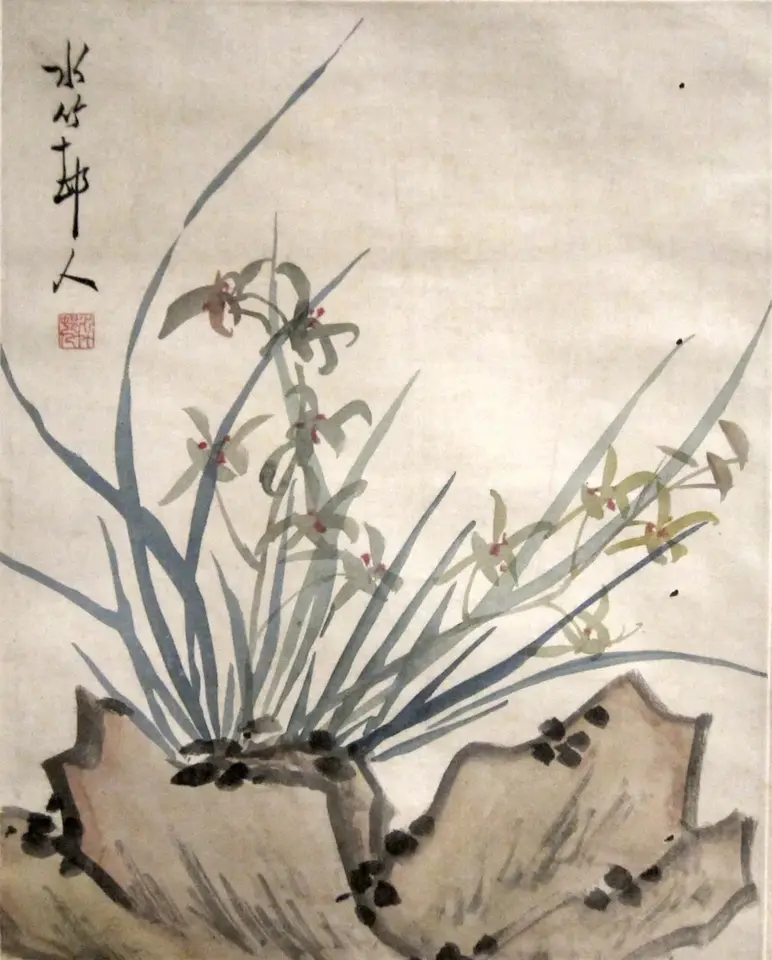
In retirement in Tianjin, Xu devoted himself entirely to classical scholarship, historical bibliography, and the arts, building the Wanqingyi Library and the Donghai Publishing House. Financing distinguished scholars including Miao Quansun and Ke Shaomin, he directed the compilation of the monumental 208-volume Qingru Xue'an, systematically anthologizing three centuries of Qing Confucian thought. He compiled the 200-volume Wanqingyi Shihui, preserving the verse of over six thousand Qing poets, and subsidized the publication of Ke Shaomin's 257-volume New History of Yuan. Renowned for his landscape and bamboo ink paintings, he left behind numerous poetic volumes, exemplifying the scholar-statesman tradition.
Following the Mukden Incident of 1931 and the outbreak of the Second Sino-Japanese War in 1937, northern China fell under Japanese occupation. Japanese intelligence chief Kenji Doihara repeatedly approached Xu, offering prestigious leadership positions in collaborationist puppet regimes.
Despite his advanced age and failing health, Xu indignantly rebuked the emissaries, declaring that an elder statesman of the Qing and former President of the Republic would never stoop to becoming a treasonous lackey. He feigned illness, boarded up his gates, and refused all Japanese contact.
In the winter of 1938, suffering from severe bladder cancer, Xu refused surgery in Japanese-occupied Beijing, fearing assassination. On June 6, 1939, Xu passed away peacefully in his Tianjin residence at the age of eighty-five.
The Nationalist Government in Chongqing issued an official citation of praise, commending his pure virtue and untarnished moral integrity. He was buried in Huixian, Henan, his simple headstone bearing only the inscription: "Tomb of the Rustic of Shuizhu."
At Xiaozhan, Xu Shichang assisted Yuan Shikai in creating modern China's first Western-style infantry, artillery, and logistics regulations, authoring foundational military textbooks including Selected Military Strategies of the Newly Created Army. He trained a cohort of modern commanders—including Duan Qirui, Feng Guozhang, Wang Shizhen, and Cao Kun—who dominated modern Chinese politics and military affairs for three decades.
As Minister of Patrols and Police and Minister of Civil Affairs from 1905, Xu surveyed Western and Japanese police administrations, creating the first unified police statutes, municipal patrol divisions, police academies, and rank systems in Chinese history, replacing corrupt traditional yamen underlings with a modern civilian law enforcement structure.
Serving as inaugural Viceroy of the Three Northeast Provinces from 1907 to 1909, Xu countered Russian and Japanese imperialist encroachment through bold economic statecraft. He opened commercial trading ports without conceding foreign settlements, founded regional government banks, introduced cold-resistant spring wheat, and promoted modern agricultural mechanization and railway transit, solidifying Chinese sovereign authority across the northeastern borderlands.
During his presidency, Xu championed civil conciliation over militarism, declaring ceasefires and convening peace talks with the south. Amid the May Fourth Movement, he acceded to public sentiment by dismissing pro-Japanese ministers and ordering delegates to reject the Versailles Treaty. Concurrently, he authorized the military operation that successfully reincorporated Outer Mongolia under direct central government rule in 1919.
In his final decades, Xu sponsored the publication of monumental intellectual histories, including Qingru Xue'an and New History of Yuan, preserving dynastic intellectual heritage. When northern China fell to Japanese invaders, the octogenarian former president withstood relentless intimidation and bribery, refusing all collaboration and leaving an inspiring exemplar of national integrity.
FIGURES ASSOCIATED WITH THIS DYNASTY