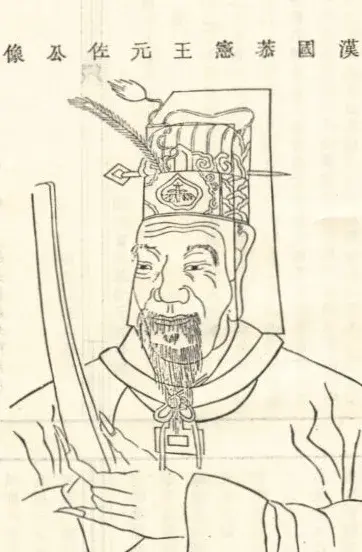
Life and Career
Heirs Apparent and Northern Campaigns
Zhao Yuanzuo was born in 965 in the official residence of Kaibao Temple in Kaifeng. His father, Zhao Kuangyi (later Emperor Taizong), was then serving as Prefect of Kaifeng and Inspector-General of the Palace Corps. Zhao Yuanzuo was the eldest son, born to Empress Yuande (Lady Li), who was also the biological mother of Emperor Zhenzong.
From his early years, Zhao Yuanzuo displayed sharp intelligence, broad comprehension, and an extraordinary capacity for memorization. Most pleasing to Emperor Taizong was that the young prince possessed a tall stature, refined bearing, and a countenance nearly identical to Taizong's own youth. Taizong remarked to courtiers: "This boy resembles me in every aspect, showing truly magnificent spirit!"
In 979, the fifteen-year-old Zhao Yuanzuo accompanied Emperor Taizong on the imperial expedition to extinguish Northern Han at Taiyuan, followed by the advance on Youzhou that led to the Battle of Gaoliang River. Armored and riding alongside the imperial carriage amid the smoke of battle, the prince relayed military orders with calm resolve, winning broad respect among the imperial ranks.
In 981, upon reaching his sixteenth year, Zhao Yuanzuo established his independent princely residence. Taizong bestowed an estate near the Eastern Gate, appointing him Acting Grand Tutor, Chancellor, and Prince of Wei. Shortly thereafter, Taizong transferred him to the Eastern Palace apartments, renamed him Yuanzuo, elevated him to Acting Grand Defender, and created him Prince of Chu. Officials and commoners viewed Zhao Yuanzuo as the undisputed heir to the throne.
Standing Alone for Uncle Zhao Tingmei
However, during Zhao Yuanzuo's prime, the early Song court was shaken by severe dynastic succession struggles.
Emperor Taizong's ascension was persistently clouded by rumors surrounding the Candle Shadows and Axe Sounds and the Golden Casket Covenant. According to the alleged testament of Empress Dowager Du, the imperial throne was to pass sequentially among brothers: from Taizu to Taizong, then to their fourth brother, Prince of Qin Zhao Tingmei, before returning to Taizu's sons.
To ensure the succession remained within his own direct lineage, Emperor Taizong allied with recalled Chancellor Zhao Pu to fabricate accusations of conspiracy against Zhao Tingmei.
In 982, Zhao Tingmei was stripped of the Kaifeng prefecture and exiled consecutively from Luoyang to Fuling, and finally to the mountainous confines of Fangzhou. Confronted with this dynastic purge, court ministers remained silent out of self-preservation.
Only the young crown prince Zhao Yuanzuo stepped forward. Convinced that his uncle was loyal and that the charges were slanders fabricated by courtiers, Zhao Yuanzuo disregarded his personal political prospects. He rushed into the imperial chambers and wept before Emperor Taizong: "My fourth uncle is the direct brother of the late emperor and shared the hardships of founding our state. Today he is exiled to a distant wilderness; how can this satisfy justice under Heaven? I beseech Your Majesty to have mercy on our blood kin and forgive his faults!"
Taizong was determined to remove rivals and reprimanded his eldest son harshly. Witnessing the destruction of close family ties, Zhao Yuanzuo suffered immense psychological trauma.
Grief, Madness, and Deposition through Arson
In 984, isolated in Fangzhou under strict surveillance, Zhao Tingmei died of grief and illness at the age of thirty-eight, vomiting blood before expiring.
When news of the death reached Kaifeng, the court remained mute with terror. Hearing the report, Zhao Yuanzuo collapsed to the floor in uncontrollable weeping. Shattered by grief, he suffered a complete mental breakdown, developing severe psychotic mania. He shut his doors, rambled incoherently, and assaulted attendants in erratic rages.
During the Double Ninth Festival of 985, Emperor Taizong hosted a grand banquet in the rear palace gardens, summoning royal princes and senior courtiers to compose poetry. Believing that Zhao Yuanzuo was mentally unhinged, Taizong did not invite him.
The banquet lasted until late night. Upon returning from the palace, his younger brothers Zhao Yuanxi and Zhao Yuankan (later Emperor Zhenzong) visited the Chu palace to check on their elder brother. Discovering that his siblings had spent the night feasting with their father while he was excluded, Zhao Yuanzuo felt abandoned and betrayed. He yelled in fury: "His Majesty feasts through the night with all of you, leaving me alone; this means our father has cast me aside forever!"
After his brothers departed, the demented prince seized torches and set fire to his residence. Flames leaped into the night sky, reducing the halls of the Chu palace to ashes.
Seeing the blaze, Emperor Taizong was incensed. Viewing the act as defiance of imperial authority, Taizong issued an edict stripping Zhao Yuanzuo of all princely ranks, reducing him to commoner status, and ordering his exile to Junzhou. Although courtiers pleaded for clemency and Taizong recalled him before he reached his destination, he was permanently confined to the South Palace, ending his prospects as heir apparent.
Fraternal Devotion under Zhenzong and Peaceful End
In 997, Emperor Taizong passed away, and his third son Zhao Heng (Emperor Zhenzong), who shared the same mother with Zhao Yuanzuo, ascended the throne.
Naturally benevolent, Emperor Zhenzong understood that his elder brother's mental collapse stemmed from righteous loyalty toward their uncle. The new emperor immediately rehabilitated Zhao Yuanzuo, restoring his royal rank as Military Commissioner of Wu'an Army, Chancellor, and Prince of Wei.
Zhenzong dismantled all guards around the South Palace, permitting Zhao Yuanzuo to attend court freely and restoring his royal retinue. During grand palace banquets, Zhenzong seated his elder brother at the highest table immediately below the throne, treating him with fraternal reverence.
Over the ensuing decades, Zhao Yuanzuo was promoted to Secretariat Director, consecutively created Prince of Qi, Prince of Lu, and finally Prince of Han. While his mental illness flared occasionally, he lived in security and honor under imperial care.
In 1027, Zhao Yuanzuo passed away peacefully in his Kaifeng residence at the age of sixty-three. Emperor Renzong suspended court audiences for five days, posthumously conferring the office of Grand Preceptor and Secretariat Director, the posthumous title Gongxian, and the title Prince of Qi. Defending family affection against imperial ruthlessness, Zhao Yuanzuo left behind an enduring monument of noble rectitude in early Song dynastic history.