Highland Birth
Born into the Tuyuhun royal clan as the eldest son and heir of Sui Xi.
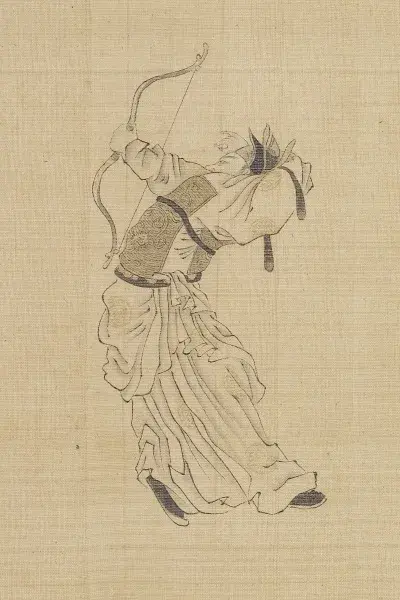
吐谷浑视连
Shilian (视连) (350–390), also styled Murong Shilian, was the sixth ruler of the Xianbei Tuyuhun state in northwestern China, serving as supreme chieftain for fifteen years from 375 to 390. He was the eldest son of the fifth sovereign Sui Xi. Gifted with intellectual acuity, extensive classical literacy, and tactical judgment, Shilian navigated Tuyuhun through one of the most volatile eras in Chinese history: the collapse…
Shilian (视连) (350–390), also styled Murong Shilian, was the sixth ruler of the Xianbei Tuyuhun state in northwestern China, serving as supreme chieftain for fifteen years from 375 to 390. He was the eldest son of the fifth sovereign Sui Xi. Gifted with intellectual acuity, extensive classical literacy, and tactical judgment, Shilian navigated Tuyuhun through one of the most volatile eras in Chinese history: the collapse of the Former Qin empire following the Battle of Fei River in 383 and the subsequent fragmentation of Guanzhong into warring Sixteen Kingdoms regimes. Maintaining unyielding strategic discipline, Shilian fortified the defiles of the Bailan Mountains and the upper Yellow River crossings, resolutely refusing to squander his tribal cavalry in peripheral Central Plains conflicts. Instead, he welcomed tens of thousands of Han Chinese scholars, artisans, and pastoral refugees fleeing warfare, employing literate officials to establish centralized administrative registries. He revolutionized the highland economy by founding fortified settlements, constructing irrigation canals for barley cultivation, and breeding the famed "Qinghai Cong" warhorses. Under his enlightened governance, Tuyuhun was transformed from an isolated pastoral league into an economically prosperous and militarily respected highland power.
Born into the Tuyuhun royal clan as the eldest son and heir of Sui Xi.
Succeeded to supreme leadership upon Sui Xi's death, continuing peaceful diplomacy.
Preserved armed neutrality during the collapse of Former Qin, fortifying Bailan passes.
Established diplomatic ties with the rising Western Qin state to secure the southern Silk Road.
Built fortified settlements, promoted highland agriculture, and standardized horse breeding.
Passed away after a transformative fifteen-year reign, succeeded by his capable brother Shipie.
Shilian was born in 350 into the Murong Xianbei lineage ruling the Longyou region. Endowed with broad vision and an inquiring mind, he studied Chinese classical texts alongside traditional horsemanship and archery. Recognized for his wisdom and moderation, he was appointed to lead key military garrisons during his father Sui Xi's reign.
In 375, upon the death of Sui Xi, twenty-six-year-old Shilian assumed the leadership of the Tuyuhun state. In accordance with ancestral policy, he maintained cordial tributary ties with Former Qin's court in Chang'an, securing regional peace.
In 383, the grand army of Fu Jian suffered a catastrophic defeat at the Battle of Fei River, shattering Former Qin's hegemony over northern China. In the immediate aftermath, Western Qin, Later Qin, and Later Liang emerged across Guanzhong and the Hexi Corridor, engulfing the northwest in savage multi-sided warfare.
Amid this existential turmoil, Shilian demonstrated consummate geopolitical restraint. While rival warlords exhausted their hosts in reckless land grabs, Shilian strictly barred his commanders from venturing beyond their mountain barriers. He garrisoned the strategic river crossings at Jishi Mountain and locked down the mountain gateways of Bailan. Concurrently, he opened his borders to thousands of displaced Han Chinese families, bureaucrats, and craftsmen. Shilian treated these migrants with dignity, integrating them into his administration as adjutants and secretaries, thereby building a formal civil bureaucracy modeled on imperial institutions.
Recognizing that pure nomadism constrained population growth and state power, Shilian instituted profound socio-economic reforms. He encouraged his tribesmen to settle in fortified villages along sheltered river valleys, introducing iron plows and diversion channels to cultivate highland barley and winter wheat.
Simultaneously, Shilian capitalized on Qinghai's natural grasslands to establish systematic state horse-breeding facilities. By crossbreeding hardy native ponies with high-end Central Asian steeds, Tuyuhun produced the celebrated "Qinghai Cong" horses—magnificent cavalry mounts capable of traveling hundreds of miles across rugged terrain. Through this dual agricultural-pastoral economy, Tuyuhun achieved unprecedented material wealth.
In 390, Shilian died of illness in the Bailan Mountains at the age of forty-one. His fifteen-year reign successfully guided Tuyuhun through continental chaos, bequeathing an intact, prosperous, and powerful state to his younger brother Shipie.
Shilian's resolute policy of armed neutrality protected his realm from the horrific conflicts that tore northern China apart after 383, providing an island of stability that attracted vital talent and population.
By transitioning from migratory nomadism to mixed farming and systematic horse breeding, Shilian established the economic foundation that sustained Tuyuhun's regional autonomy for centuries.
FIGURES ASSOCIATED WITH THIS DYNASTY