Birth in Guiyang
Born on May 9 in Guiyang into an established military-gentry family of Huainan ancestry.
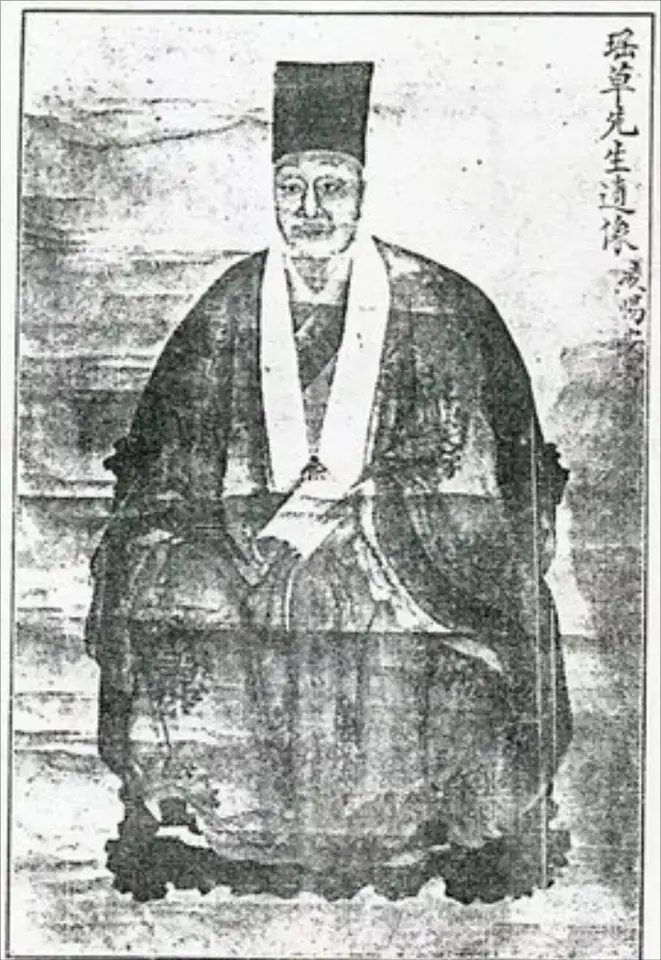
马士英
Ma Shiying (马士英, May 9, 1596 – 1646), courtesy name Yaocao and later Chongran, was a native of Guiyang Prefecture, Guizhou, whose ancestral roots traced back to Huainan. He was an eminent statesman, military commander, and Senior Grand Councilor of the Southern Ming Hongguang regime, rising to Grand Academician of the Jianji Hall, Minister of War, and Grand Guardian. Hailing from a family with a proud record of hereditary…
Ma Shiying (马士英, May 9, 1596 – 1646), courtesy name Yaocao and later Chongran, was a native of Guiyang Prefecture, Guizhou, whose ancestral roots traced back to Huainan. He was an eminent statesman, military commander, and Senior Grand Councilor of the Southern Ming Hongguang regime, rising to Grand Academician of the Jianji Hall, Minister of War, and Grand Guardian. Hailing from a family with a proud record of hereditary military service, Ma attained the Jinshi degree in 1619. He served as Secretary in the Ministry of Revenue in Nanjing, and successively governed the prefectures of Yanzhou, Henan, and Datong. In 1632, he was elevated to Right Assistant Censor-in-Chief and Grand Coordinator of Xuanfu. Slandered by an imperial eunuch over customary administrative gift-giving, he was stripped of rank and exiled, spending a decade in private life in Nanjing. In 1642, upon the recommendation of Senior Grand Councilor Zhou Yanru, he was recalled as Vice Minister of War and Supreme Commander of Luzhou and Fengyang. Stationed north of the Yangtze, he crushed the rebellion of Liu Chao and repeatedly repulsed roving insurgent armies with decisive military acumen. Following the fall of Beijing in 1644, when factional scholar-officials in Nanjing hesitated over imperial succession out of fear that old court controversies would be reopened, Ma Shiying firmly upheld dynastic precedence. Partnering with Earl Liu Kongzhao and the Four Military Commanders north of the river (Huang Degong, Gao Jie, Liu Zeqing, and Liu Liangzuo), he orchestrated the accession of Prince of Fu Zhu Yousong, establishing the Hongguang regime. Entering the cabinet as Senior Grand Councilor, Ma grappled with external Qing military offensives and domestic mutinies, including Zuo Liangyu's eastward march. Although criticized by Donglin literati for patronizing his longtime ally Ruan Dacheng, Ma displayed unyielding loyalty upon the fall of Nanjing. Refusing to surrender, he escorted the Empress Dowager to Zhejiang, fought across Yuhang, Fuyang, and Lake Tai, and was ultimately executed after being captured in a mountain monastery in Taizhou, dying an honorable death for his fallen dynasty.
Born on May 9 in Guiyang into an established military-gentry family of Huainan ancestry.
Passed the palace examinations as a Jinshi; appointed Secretary in the Nanjing Ministry of Revenue.
Appointed Grand Coordinator of Xuanfu; exiled following impeachment by a palace eunuch, residing in Nanjing.
Reinstated as Supreme Commander of Luzhou and Fengyang; laid siege to Yongcheng and captured rebel Liu Chao.
United the Four Defense Garrisons to enthrone the Prince of Fu in Nanjing; appointed Minister of War and Grand Academician.
Awarded the rank of Grand Academician of the Jianji Hall and Junior Preceptor, directing state administration.
Rebuffed Zuo Liangyu's rebel army while Qing armies stormed Yangzhou; Shi Kefa sacrificed his life.
Fled falling Nanjing while escorting the Empress Dowager into Zhejiang, organizing regional resistance forces.
Joined forces with Earl Wu Risheng at Lake Tai, launching amphibious assaults to liberate Hangzhou.
Captured by Qing troops at a mountain temple in Taizhou; refused all inducements to submit and was executed.
Ma Shiying was born on May 9, 1596, into a family hailing from Huainan that had served in the Ming armies since the founding of the dynasty. His earliest ancestor, Ma Cheng, marched to the southwestern frontier in the early Ming period and was granted the hereditary post of Assistant Commander of the Guiyang Guard. His great-grandfather Ma Fu served as Guard Commander with the rank of General of Manifest Bravery, while his father Ma Mingqing attained the Juren degree and served as Prefect of Jinning in Yunnan.
Gifted with an agile intellect and sweeping ambitions, Ma immersed himself in the Confucian classics and military treatises. In 1612, at age seventeen, he placed twelfth in the Guizhou provincial examinations. In 1616, he passed the metropolitan examination in Beijing, forging a lifelong friendship with fellow successful candidate Ruan Dacheng.
In 1619, Ma passed the palace examination, placing nineteenth in the second class of Jinshi. He was assigned as Secretary in the Guangdong Bureau of the Nanjing Ministry of Revenue. In 1623, he advanced to Bureau Director in the Shaanxi Bureau, subsequently serving as Prefect of Yanzhou in Zhejiang and Prefect of Kaifeng in Henan, earning distinction for executive competence. In 1627, he retired to observe filial mourning upon the death of his parent.
In 1629, having completed his mourning, Ma was appointed Prefect of Datong in Shanxi. Recognizing Datong's critical defensive role along the northern frontier, he refurbished the fortifications and conducted regular troop inspections. In 1630, he advanced to Vice Censor of the Yanghe Circuit, and in 1632, was elevated to Right Assistant Censor-in-Chief and Grand Coordinator of Xuanfu, assuming a major frontier command.
Within a month of arriving in Xuanfu, Ma followed common administrative convention by requisitioning several thousand taels from official reserves to present gifts to court dignitaries in the capital, aiming to secure logistics support. However, palace eunuch Wang Kun, who was engaged in an intense power struggle against civilian governors, denounced Ma to the throne for embezzlement. Emperor Chongzhen stripped Ma of his ranks and banished him to military exile.
Stripped of office, Ma resided in Nanjing for a decade. When Donglin-Fushe leader Zhang Pu died, prominent scholar-officials in the capital were consumed by maneuvering for administrative posts under newly restored Grand Councilor Zhou Yanru, completely neglecting Zhang Pu's funeral arrangements. Moved by his past friendship with Ruan Dacheng and Zhang Pu, Ma undertook a lone, grueling journey of over a thousand miles lasting a month, personally orchestrating the funeral and financing Zhang's burial, winning widespread acclaim for his magnanimity.
In May 1642, Supreme Commander Gao Douguang was impeached following the loss of five cities in Fengyang to peasant rebel armies. Vice Minister of Rites Wang Xigun and Grand Councilor Zhou Yanru recommended Ma Shiying for his seasoned military leadership. Emperor Chongzhen reinstated Ma as Vice Minister of War and Right Assistant Censor-in-Chief, commissioning him as Supreme Commander of Luzhou, Fengyang, and Huai'an.
Around this time, Liu Chao, former Regional Commander of Zunyi, staged an armed rebellion at Yongcheng, assassinating Grand Coordinator Wang Han and terrifying the central plains. Emperor Chongzhen ordered Ma to suppress the revolt. In April 1643, Ma encircled Yongcheng with entrenchments, repeatedly defeating rebel sorties. Because Liu had known Ma in Guizhou, he sought surrender but refused to unbuckle his sword during their meeting. Smiling calmly, Ma stepped forward, disarmed Liu with his bare hands, quietly dispersed his bodyguards, and seized the rebel leader, conveying him to Beijing for execution and restoring peace to the region.
In March 1644, peasant forces under Li Zicheng breached Beijing, and Emperor Chongzhen committed suicide on Coal Hill. As news reached Nanjing, the court was plunged into chaotic debates over imperial succession.
According to dynastic succession codes and the principle of brotherly succession, Prince of Fu Zhu Yousong—grandson of Emperor Wanli and eldest cousin to Emperor Chongzhen—stood as the undeniable heir to the throne. However, Donglin and Fushe scholar-officials like Gao Hongtu, Qian Qianyi, and Lu Daqi feared that enthroning the Prince of Fu would reignite investigations into the controversial late-Ming court cases, advocating the installation of the Prince of Lu, Zhu Changfang; meanwhile, Minister of War Shi Kefa proposed an impractical compromise favoring the distant Prince of Gui in Guangxi.
Stationed in Jianghuai, Ma recognized that violating genealogical succession would plunge the remaining empire into civil strife. He coordinated with Earl Liu Kongzhao, palace eunuchs Han Zanzhou and Lu Jiude, and the Four Military Commanders—Huang Degong, Gao Jie, Liu Zeqing, and Liu Liangzuo—to endorse the Prince of Fu. In May, Ma escorted Zhu Yousong to Nanjing, where the prince was formally enthroned, inaugurating the Hongguang era.
In recognition of his decisive role, the Hongguang Emperor appointed Ma as Grand Academician of the Dongge Hall, Minister of War, and Senior Grand Councilor. Shi Kefa voluntarily departed to supervise frontier defenses at Yangzhou. In the autumn of 1644, Ma was elevated to Grand Academician of the Jianji Hall, Junior Preceptor, and Grand Guardian, becoming the preeminent executive in Southern Ming.
Upon entering the cabinet, Ma sought conciliation with Donglin scholar-officials, endorsing Shi Kefa's command and appointing ministers like Gao Hongtu and Jiang Yuanguang to executive office. However, factional hatred ran deep, and moralist censors relentlessly denounced Ma as an accomplice of eunuch factions. To consolidate his authority, Ma secured the appointment of his confidant Ruan Dacheng as Minister of War. Ruan leveraged his authority to launch purges against old adversaries, intensifying internal political paralysis.
In the spring of 1645, General Zuo Liangyu led a massive force downstream from Wuchang under the banner of "cleansing the court of Ma and Ruan." With Qing armies under Dodo bearing down from the north, Ma was compelled to redeploy defensive garrisons from the Huai River to block Zuo's mutiny along the upper Yangtze.
On April 25, 1645, Qing forces breached Yangzhou, where Shi Kefa perished heroically. Qing detachments crossed the Yangtze virtually unimpeded. In May, as Nanjing's defense collapsed, senior nobles and ministers like Xu Jiuque, Zhao Zhilong, and Minister of Rites Qian Qianyi shaved their hair and welcomed the conquerors. Refusing to bend the knee, Ma Shiying personally marshaled his Guizhou troops, escorting the Empress Dowager through the city gates toward Hangzhou.
Following the collapse of the Hongguang regime, Ming resistance split between the rival courts of the Prince of Tang (Longwu) and the Prince of Lu. Influenced by partisan bias, both regimes refused to accept Ma's services. Despite facing total isolation, Ma remained steadfast in his refusal to submit to the Qing.
Gathering remnants of his forces, he launched repeated counterattacks across Yuhang and Fuyang, crossing the Qiantang River to coordinate assaults on Hangzhou. In the spring of 1646, Ma aligned with Earl Wu Risheng, joining the main anti-Qing resistance based at Lake Tai and establishing defensive redoubts in the Siming Mountains. In June 1646, Qing Viceroy Zhang Zunren deployed massive forces to encircle the lake, overwhelming the insurgents and capturing Wu Risheng.
Following the defeat, Ma escaped to the mountains of Xinchang in Taizhou, shaving his head as a Buddhist monk to regroup in secret. Betrayed by turncoat general Ye Cheng'en, Qing commanders Handai and Zhang Guoxun surrounded the mountain monastery, seizing Ma and General Zhao Tiyuan.
Confronted with threats and promises of office from Qing generals, Ma sat upright with blazing defiance, pouring scathing contempt upon turncoats and declaring his eternal fidelity to the Ming Dynasty. The Qing command ordered his execution at the military front, and Ma met his death with serene courage at fifty-one.
When Nanjing fell, turncoat ministers Qian Qianyi and Zhao Zhilong greeted the invaders, whereas Minister of Rites Huang Duanbo chose martyrdom. Brought before Prince Dodo, who asked why he praised the "wicked" Ma Shiying, Huang retorted: "Ma Shiying refused to surrender and escorted the Empress Dowager into Zhejiang to resist the northern armies; he is truly a loyal minister! It is those turncoats beside you who shaved their heads who are the real traitors!" History and official Qing archives, including the Veritable Records and Donghua Lu, definitively confirm that Ma died a faithful martyr, disproving late-Ming partisan slanders.
During the chaotic final years of the Chongzhen era, rebel general Liu Chao seized Yongcheng, assassinated regional governors, and threatened the strategic heartland of Henan. Commissioned as Supreme Commander, Ma Shiying directed the encirclement of Yongcheng, personally disarming the rebel commander during peace parleys through daring tactical composure. His resolute pacification restored order across the Huai River basin, demonstrating rare administrative and field military competence among late-Ming officials.
When Fushe leader Zhang Pu died in 1641, scholar-officials in Nanjing ignored his funeral while clamoring for political patronage under Grand Councilor Zhou Yanru. Although lacking intimate ties with Zhang, Ma traveled on foot for a thousand miles over a full month, utilizing his personal funds to arrange an honorable burial. His famous declaration—chiding those who prided themselves on factional solidarity yet abandoned their departed friend—demonstrated his loyalty, generosity, and chivalrous integrity.
Amid the catastrophe of the fall of Beijing in 1644, the Southern Ming faced an existential crisis of legitimate succession. While court elites proposed passing over the legitimate heir to prevent old factional grievances, Ma Shiying firmly upheld dynastic precedence. Uniting military commanders and imperial nobility, he secured the coronation of the Prince of Fu, preserving constitutional legitimacy and enabling organized resistance in the south.
When Nanjing collapsed, prominent Donglin scholar-officials and hereditary peers capitulated in rapid succession. In stark contrast, Ma Shiying evacuated the Empress Dowager, coordinated anti-Qing campaigns in Zhejiang, and organized guerilla resistance at Lake Tai alongside Earl Wu Risheng. Captured in a mountain temple in Taizhou, he refused all inducements to submit, dying with majestic composure and washing away political slanders with his martyr's blood.
In addition to statecraft and military strategy, Ma Shiying achieved remarkable distinction as a painter and calligrapher. Celebrated for his landscapes, flower compositions, and especially his expressive ink orchids, his works possessed vigorous brushwork and structural grandeur, rivaling contemporaries like Dong Qichang and Huang Daozhou. His literary anthology Yaocao Ji reflects the profound artistic and literary cultivation characteristic of the late-Ming elite.
FIGURES ASSOCIATED WITH THIS DYNASTY