Birth in the Imperial House
Born into the Borjigin golden clan as the grandson of Ögedei Khan and son of Qashi.
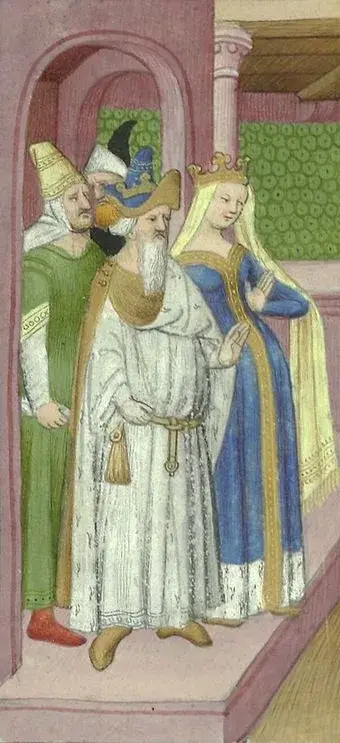
海都
Borjigin Qaidu (海都, 1234–1301) was an illustrious prince of the Mongol Empire, a grandson of Great Khan Ögedei, the son of Qashi, and the de facto founder and long-standing ruler of the Ögedeid Khanate. Following the ascension of Möngke Khan of the Toluid lineage, the political fortunes of the Ögedeid princes suffered severe setbacks, and Qaidu was relocated to Qayaliq (near modern Taldykorgan, Kazakhstan) in 1252. During the…
Borjigin Qaidu (海都, 1234–1301) was an illustrious prince of the Mongol Empire, a grandson of Great Khan Ögedei, the son of Qashi, and the de facto founder and long-standing ruler of the Ögedeid Khanate. Following the ascension of Möngke Khan of the Toluid lineage, the political fortunes of the Ögedeid princes suffered severe setbacks, and Qaidu was relocated to Qayaliq (near modern Taldykorgan, Kazakhstan) in 1252. During the civil war between Kublai and Ariq Böke in 1260, Qaidu backed Ariq Böke, utilizing the imperial distraction to forge ties with the Golden Horde (Kipchak Khanate) and rebuild his private military forces. After Ariq Böke submitted, Qaidu firmly refused Kublai's summons to court, asserting that the rightful imperial lineage belonged to the house of Ögedei, and established an autonomous power base centered at Qayaliq and Emil. In 1269, Qaidu orchestrated the renowned Talas Kurultai, uniting the Chagatai Khanate and the Golden Horde into a grand coalition against Kublai Khan's Great Yuan court, and was acclaimed supreme confederate leader across Central Asia. Over the ensuing three decades, Qaidu exercised effective overlordship over the Chagatai realm, enthroned Duwa as Chagatai Khan, and waged continuous campaigns across the Tian Shan, the Altai, and the Mongolian steppe. He exploited the Shiregi rebellion, allied secretly with the eastern prince Nayan, and repeatedly threatened the ancestral Mongol capital of Karakorum, standing as the paramount geopolitical adversary of emperors Kublai and Temür. In 1301, Qaidu was mortally wounded during a major confrontation in northern Karakorum and died during the retreat at the age of sixty-eight.
Born into the Borjigin golden clan as the grandson of Ögedei Khan and son of Qashi.
Reassigned to the frontier pasturelands of Qayaliq following Möngke's purge of the Ögedeid house.
Supported Ariq Böke during the Toluid civil war, rallying scattered nomads to build an elite force.
Refused Kublai's summons to visit the imperial court at Dadu, feigning illness and aged horses.
Convened the historic summit on the Talas River with Baraq and representatives of the Golden Horde, becoming leader of Central Asia.
Benefited from the mutiny of Toluid princes under Shiregi, who captured Yuan Chancellor Antong and handed him over to Qaidu.
Installed Baraq's son Duwa as Chagatai Khan, securing complete military and political dominion over Central Asia.
Entered into a coordinated pact with eastern prince Nayan to pinch Yuan forces from east and west.
Swept into the Mongolian heartland and occupied Karakorum, retreating only when Kublai personally advanced north.
Continued border warfare against the Yuan, suffering a tactical defeat by Yuan commander Chong'ur at Balin.
Marshaled forty allied princely divisions to attack Karakorum; defeated by Prince Qayishan and died from battle injuries.
Qaidu was born into the supreme golden clan of the Mongol Empire. His grandfather was Ögedei, the second Great Khan of the empire, and his father was Qashi, the fifth son of Ögedei. Qashi died at an early age due to chronic drunkenness, leaving young Qaidu to display remarkable resilience, sharp intellect, and solemn resolve from his youth. In the early succession struggles of the empire, the Ögedeid family held supreme power, but upon the enthronement of Möngke Khan of the Toluid house, the central court initiated extensive political purges against the lines of Ögedei and Chagatai, stripping them of military retinues and dividing their appanages.
In 1252, Möngke Khan exiled Qaidu to the remote Central Asian outpost of Qayaliq (near modern Taldykorgan in southeastern Kazakhstan). The territory was rugged and desolate, with few scattered pastoral households. Resenting the loss of his family's imperial heritage, Qaidu maintained deep ambition. In these adverse surroundings, he exhibited exceptional charisma, gathering dispersed nomad warriors and former family retainers to build an elite core of several thousand mounted archers, steadily rising as the undisputed leader among the fragmented Ögedeid princes.
Qaidu's appanage of Qayaliq lay along the southeastern fringes of the Kipchak Khanate (Golden Horde), bordering the pastures of Shiban to the west and the ulus of Orda to the north. Astutely recognizing that his isolated forces could not stand alone against the imperial center, Qaidu sought a close alliance with the Golden Horde, establishing deep rapport with Khan Berke. Around this time, the Chagatai realm was ruled by Alghu, who had switched allegiance to Kublai Khan and rapidly expanded his dominion over the agricultural oasis cities of Transoxiana, directly encroaching upon Jochid revenues.
To balance Alghu's surging power, Berke extended substantial military and economic backing to Qaidu. In 1260, civil war erupted between Kublai and Ariq Böke across the Mongolian Plateau. Qaidu seized this prime opportunity by siding with Ariq Böke, aggressively campaigning across Semirechye and extending his sway toward Lake Ulungur. Although he engaged in repeated, hard-fought engagements against Alghu, the shifting geopolitical turmoil allowed Qaidu to forge an unshakeable territorial base.
In 1264, Ariq Böke surrendered to Kublai in Karakorum. Kublai sought to pacify Qaidu by granting him the revenues of Caizhou in Henan and summoning him to pay homage at Dadu. Well aware that Kublai's adoption of Chinese bureaucratic models ran counter to nomadic traditions, and fearing political detainment, Qaidu flatly declined, claiming his horses were too emaciated for the distant journey. In 1266, following Alghu's death, Kublai dispatched Baraq to take the Chagatai throne, intending to instigate western infighting.
Upon reaching Central Asia, Baraq clashed repeatedly with Qaidu. Relying on masterly tactics and auxiliary forces from the Golden Horde, Qaidu defeated Baraq in the field. Rather than exterminating his rival, Qaidu orchestrated a diplomatic reconciliation, culminating in the historic Talas Kurultai in the spring of 1269. The summit convened Qaidu, Baraq, and representatives of Khan Mengu-Timur of the Golden Horde along the banks of the Talas River.
The assembled princes sacrificed white horses and swore mutual oaths: they condemned Kublai's sinicization policies as an abandonment of steppe traditions, repudiated Kublai's imperial suzerainty, proclaimed Qaidu supreme confederate leader across Central Asia, and reapportioned the pastures and urban revenues of Transoxiana. The Talas Kurultai formalized the independent existence of the Ögedeid Khanate and inaugurated decades of open confrontation between Central Asian nomadic rulers and the Great Yuan court.
Following the Talas Kurultai, Qaidu solidified his grip over Central Asian affairs. When Baraq died in 1271 following a disastrous western campaign against the Ilkhanate, Qaidu intervened decisively in the Chagatai succession, elevating Baraq's young son Duwa to the throne. Duwa proved an exceptionally loyal and competent co-ruler, cementing an integrated military axis between the Ögedeid and Chagatai realms under Qaidu's absolute guidance.
In 1276, Kublai dispatched Prince Nomuqan and Chancellor Antong with a massive army to secure the Altai frontier against Qaidu. Unexpectedly, dissident princes under Möngke's son Shiregi staged a mutiny, seizing Nomuqan and handing Chancellor Antong over to Qaidu. Antong, a direct descendant of founding hero Muqali, was a towering political figure; Qaidu treated him with immense hospitality while holding him under honorable confinement for nine years, thoroughly destabilizing Yuan defensive lines in the northwest.
In 1287, eastern prince Nayan rose in rebellion in Manchuria, coordinating with Qaidu for a simultaneous two-front offensive against Dadu. Kublai, despite his seventy-three years and failing health, personally campaigned east to crush Nayan before Qaidu could arrive. In 1289, Qaidu led a massive force across the Altai, capturing the ancestral Mongol capital of Karakorum. Kublai once again took personal command of an imperial counter-offensive, prompting Qaidu to withdraw westward into the Altai mountains.
Following the death of Kublai and the accession of Emperor Chengzong (Temür), the Yuan court reorganized its northwestern defenses, appointing Prince Qayishan (the future Emperor Wuzong) alongside veteran generals Chong'ur and Yueshici'er to command the steppe forces. In 1297, Qaidu's incursions were severely checked by Chong'ur at Balin.
In the autumn of 1301, Qaidu organized his ultimate military campaign. Mobilizing forty allied princely divisions from both the Ögedeid and Chagatai confederacies, he advanced deep into the steppe north of Karakorum. The two massive armies clashed in protracted, ferocious cavalry engagements at Kelieke and Dieqieliji.
During the climactic combat, Prince Qayishan led an elite cavalry strike directly into Qaidu's center. The confederate forces suffered devastating casualties; Duwa was severely wounded by an arrow, and Qaidu was mortally injured in the melee. Forced to retreat westward across the steppe, Qaidu succumbed to his battle wounds and physical exhaustion while on the march, dying at the age of sixty-eight. Following his death, his son Chabar assumed leadership, but the Ögedeid Khanate was irreparably weakened and collapsed within a few years under joint pressure from Duwa and the Yuan dynasty.
Qaidu's foremost historical accomplishment was reviving the nearly extinguished power of the Ögedeid imperial house. Following the fall of Güyük Khan and the rise of Möngke, the Ögedeid princes were thoroughly purged and marginalized from central authority. Banished to the remote steppe of Qayaliq, Qaidu displayed extraordinary perseverance, regrouping scattered clan members and enforcing strict military discipline.
He established fortifications and civil administrations at Qayaliq and Emil, restoring nomadic pastoral herds while strictly protecting sedentary agricultural and commercial towns from predatory raids. Through decades of calculated diplomacy and armed struggle, Qaidu transformed an isolated peripheral fief into a sprawling realm spanning the Altai, the Tian Shan, and Lake Balkhash, recognized by modern historians as the true architect of the Ögedeid Khanate.
The Talas Kurultai of 1269 was a watershed event in the institutional fragmentation of the Mongol Empire. Confronting military pressure from both Baraq and the Golden Horde, Qaidu chose diplomacy over destructive warfare, gathering the rival western Mongol monarchs along the Talas River.
Under Qaidu's guidance, the three powers reached binding agreements: they prohibited nomadic troops from trampling cultivated lands, secured orderly commercial tax collections across the oasis towns of the Amu Darya and Syr Darya, divided Transoxianan revenues proportionately, and pledged mutual defense against Kublai Khan and the Ilkhanate. This summit confirmed Qaidu as the paramount overlord of Central Asia and permanently solidified the division between the Yuan court and the autonomous western khanates.
In 1276, when Kublai Khan dispatched an imperial army under Prince Nomuqan to suppress western dissidents, Qaidu leveraged widespread steppe resentment against Kublai's adoption of Chinese institutional practices. He encouraged Shiregi and allied princes to revolt, resulting in the capture of Grand Councilor Antong.
Rather than executing Antong, Qaidu accorded him the highest dignities as an honored guest for nine years. By doing so, Qaidu presented himself across the steppe as a chivalrous defender of imperial traditions who honored the descendants of founding hero Muqali. This masterly psychological stroke deepened factional anxiety within Kublai's administration and severely hampered Yuan military operations in the north.
Throughout his thirty-year struggle against the central court, Qaidu demonstrated sophisticated geostrategic acumen. In 1287, when Prince Nayan revolted in the eastern borderlands of Manchuria, Qaidu established rapid courier communications between the Altai and Hulunbuir, concluding a joint operational pact to attack Dadu from east and west simultaneously.
Although Kublai's rapid mobilization crushed Nayan's forces before the two rebel armies could converge, Qaidu's strategic vision nearly severed the links between Dadu and the northern steppe. His capacity to coordinate across thousands of miles demonstrated an unmatched mastery over pan-Mongol steppe politics.
Although celebrated primarily as a nomadic cavalry chieftain, Qaidu implemented remarkably farsighted economic policies. Across Transoxiana and Semirechye, he prohibited nomadic warriors from pasturing their mounts on agricultural fields and severely punished unauthorized looting. He retained local Muslim administrators to supervise provincial revenues, institutionalizing fixed land and commercial taxes that revitalized historic trade centers like Samarkand and Bukhara.
Furthermore, Qaidu stabilized the regional financial system by minting silver and bronze coins with standardized weights and purities, providing a uniform medium of exchange across Central Asia and the Kipchak steppe. These economic policies guaranteed consistent provisions for his armies and brought half a century of relative prosperity and tranquility to the urban populations under his rule.
FIGURES ASSOCIATED WITH THIS DYNASTY