Biography
Youth in Jingzhou and the March West
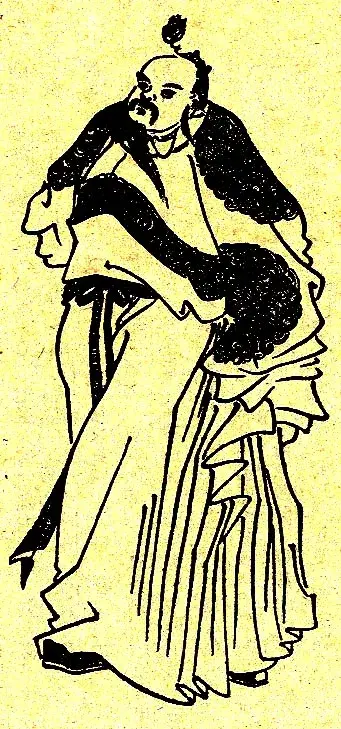
Ma Su was born in 190 in Yicheng County, Nanjun Commandery, Jingzhou (modern Yicheng, Hubei Province). The Ma family was a prestigious local literary lineage in the Jingxiang region. Ma Su had four older brothers, all of whom studied diligently and achieved widespread renown. Across regional scholarly circles, the brothers were collectively hailed as the "Five Changs of the Ma Family." The fourth brother, Ma Liang (courtesy name Jichang), who was distinguished by white hairs in his eyebrows, possessed exceptional virtue and learning, inspiring the popular saying that the white-browed brother was the finest of all. Ma Su (courtesy name Youchang) was the youngest brother. Endowed with a keen analytical mind and an extraordinary memory, he was especially devoted to studying classical military manuals and the rise and fall of historical regimes, gaining an early reputation for sweeping strategic vision.
During the Jian'an era, Jingzhou stood as the pivotal strategic crossroads contested by Cao Cao in the north, Sun Quan in the east, and Liu Bei. While Liu Bei governed Xinye under the patronage of provincial governor Liu Biao, he actively recruited regional talents, drawing both Ma Liang and Ma Su into his retinue. In 211, Yizhou Governor Liu Zhang dispatched Fa Zheng to Jingzhou to invite Liu Bei to lead an army into Sichuan to counter Zhang Lu of Hanzhong. At the age of twenty-two, Ma Su was assigned to accompany Liu Bei's expeditionary force up the Yangtze River as an Attendant Officer of Jingzhou. During the campaign, Ma Su demonstrated sharp tactical insight and logistics planning, emerging as an up-and-coming talent within Liu Bei's inner circle.
Regional Prefectures and Liu Bei's Admonition
In the summer of 214, Liu Bei captured Chengdu, consolidating control over Yizhou and rewarding his followers with regional administrative appointments. Due to his familiarity with legal statutes and civil affairs, Ma Su was named Magistrate of Mianzhu. Mianzhu was an essential transportation corridor in central Sichuan, suffering from wartime destruction and social displacement. In office, Ma Su clarified legal codes, reduced corvee exactions, and settled displaced refugees, earning popular acclaim. He was soon elevated to Magistrate of Chengdu, overseeing judicial order and civil administration in the provincial capital. Later, Liu Bei reassigned him as Administrator of Yuexi Commandery, a rugged frontier region inhabited by both Han settlers and indigenous minority tribes. In Yuexi, Ma Su conducted extensive investigations into mountain geography, defensive defiles, and local tribal leadership, acquiring valuable insights into borderland pacification.
However, over years of close interaction and official evaluations, the founding monarch Liu Bei developed deep reservations regarding Ma Su's operational capabilities. Having spent decades leading armies through brutal battlefields, Liu Bei recognized that governing settled counties differed radically from the chaotic contingencies of frontline combat, where theoretical eloquence could never substitute for practical grit. In April 223, following the disastrous defeat at the Battle of Xiaoting, Liu Bei lay critically ill at Baidicheng. When entrusting the infant emperor Liu Shan and the government to Chancellor Zhuge Liang, Liu Bei privately cautioned him: "Ma Su's words exceed his actual ability; he cannot be entrusted with grand military commands. You must observe him with utmost vigilance!"
Senior Advisor and Strategy in the South
Following Liu Bei's death, the young emperor Liu Shan succeeded to the throne, and Zhuge Liang assumed overarching authority over state and military affairs. Because of his long-standing esteem for the Ma family and his own scholarly inclination toward strategy, Zhuge Liang did not entirely heed Liu Bei's dying warning. Viewing Ma Su as a brilliant and erudite intellect, Zhuge Liang transferred him to the central administration in Chengdu as Army Advisor under the General Who Pacifies the Army. Whenever high strategic policies or troop deployments were debated, Zhuge Liang routinely summoned Ma Su into his private chambers, discussing military theory from morning until late at night. Ma Su's influence within the high command grew steadily.
In the spring of 225, major tribal rebellions erupted across the four southern commanderies of Shu Han, led by local chieftain Meng Huo and regional gentry magnate Yong Kai, gravely threatening the state's rear. Zhuge Liang decided to lead the punitive expedition in person. Before departure, Ma Su accompanied him dozens of li outside the capital. When Zhuge Liang asked for counsel regarding the southern tribes, Ma Su offered a penetrating analysis: "The south relies on mountain barriers and distant terrain; having long resisted imperial authority, they may be broken today only to revolt again tomorrow once our main force departs. You are about to mobilize the entire nation for a northern expedition against Cao Wei; if the southerners learn of internal weakness, their rebellion will come even faster. Attempting to exterminate the tribes to prevent future trouble is neither humane nor feasible in haste. In the art of warfare, attacking the heart is superior to attacking cities; psychological warfare is superior to armed combat. It is best to win their hearts."
Zhuge Liang embraced Ma Su's psychological strategy completely during the campaign. By capturing and releasing Meng Huo seven times, Zhuge Liang earned the sincere allegiance of the southern chieftains without leaving permanent occupation garrisons or appointing outside magistrates. For the remainder of Zhuge Liang's life, the southern frontier remained peaceful, providing valuable cavalry horses, metal ores, and elite troops for the northern wars. This success solidified Zhuge Liang's trust in Ma Su's strategic intellect, leading the Chancellor to view him as a potential military successor.
Command at Jieting and Strategic Catastrophe
In the spring of 228, after years of economic restoration and military preparation, Zhuge Liang launched the first northern expedition, advancing through Mount Qi with a hundred thousand troops. The sudden offensive caught Cao Wei off guard; the commanderies of Tianshui, Nan'an, and Anding rebelled against Wei and joined Shu, shaking the northwestern frontier. Emperor Ming of Wei (Cao Rui) rushed to Chang'an, sending veteran general Zhang He with fifty thousand elite cavalry and infantry westward across the Long Mountains to seize the vital bottleneck of Jieting (northeast of modern Qin'an, Gansu) and sever Shu Han's logistical lines.
Jieting was a narrow pass essential for safeguarding the Shu army's flank. Seasoned commanders such as Wei Yan and Wu Yi were widely expected by the army to lead the defensive detachment at Jieting. However, eager to provide Ma Su with independent operational credit, Zhuge Liang overrode general opinion and appointed Ma Su as vanguard commander to fortify the pass, assigning the disciplined veteran Wang Ping as his second-in-command with explicit orders to encamp squarely across the highway and secure local water supplies.
Upon reaching Jieting, Ma Su displayed reckless overconfidence. Viewing the steep southern hill overlooking the pass, he discarded Zhuge Liang's operational plan, abandoning the low-lying town and local springs to move his entire host atop the isolated hill, intending to charge down upon the Wei cavalry from high ground. Wang Ping repeatedly protested, pointing out that if the enemy encircled the hill and severed access to water, the army would collapse without a fight. Ma Su arrogantly dismissed Wang Ping's warnings, declaring that putting troops in mortal peril would compel them to fight with desperate valor. When Zhang He arrived, he immediately recognized Ma Su's fatal blunder, seized the valley springs, surrounded the hill, and set fire to the vegetation. Deprived of water for several days, the Shu soldiers fell into panic and were completely routed. Only Wang Ping's rearguard of one thousand men beat their drums resolutely, bluffing Zhang He into suspecting an ambush and allowing the remnants to retreat safely.
The Trial and Zhuge Liang's Tears
The fall of Jieting radically altered the entire strategic landscape of the northwestern campaign. Denied its defensive anchor, the Shu main force faced the imminent danger of being cut off and annihilated by converging Wei armies. Zhuge Liang had no choice but to abandon the three newly acquired commanderies, evacuate over a thousand civilian households from Xi County, and execute an emergency retreat back to Hanzhong. The promising first northern expedition collapsed entirely due to the loss of Jieting.
Upon returning to Hanzhong, the army was rife with anger over the defeat. Ma Su, who had fled in terror following the collapse, was apprehended and delivered to the Chancellor's military prison. Faced with the catastrophic loss of strategic ground and the need to maintain martial discipline, Zhuge Liang upheld military statutes and sentenced Ma Su to death. Senior minister Jiang Wan attempted to intervene, arguing: "In ancient times, when King Wen of Chu executed General Dechen, Duke Wen of Jin rejoiced. When the empire remains divided, executing a man of strategic intellect is deeply regrettable!" Weeping openly, Zhuge Liang replied: "The reason Sun Wu could triumph across the realm was his strict enforcement of laws. Now, when the four seas are fractured and warfare is beginning, if we discard the law, how can we ever defeat our enemies and restore the Han dynasty?"
In the autumn of 228, Ma Su was executed in prison in Hanzhong at the age of thirty-nine. Before his death, he wrote a final letter to Zhuge Liang expressing profound gratitude: "You treated me like a son, and I revered you like a father. I pray that you will emulate the ancient example of executing Gun while raising Yu, preserving our bond so that I may die without regret." On the day of execution, tens of thousands of Shu soldiers wept. Zhuge Liang personally attended the funeral, mourning bitterly, and provided generous, lifelong financial care for Ma Su's orphaned children. Zhuge Liang subsequently submitted a memorial to Emperor Liu Shan accepting full responsibility for the failure, requesting his own demotion by three ranks to General of the Right, establishing an immortal historical standard of martial accountability and legal integrity.
Major Achievements
Formulating the Heart-Attacking Strategy for the Southern Campaign
Ma Su's foremost strategic contribution to Shu Han history was the psychological doctrine he proposed for Zhuge Liang's southern campaign in 225. Confronted with intricate ethnic and geographic challenges in the southwestern borderlands, Ma Su identified the socio-psychological reality that tribal populations rebelled out of reliance on rugged terrain rather than mere military bravado. He formulated the principle that "attacking the heart is superior to attacking cities; psychological warfare is superior to armed combat."
This strategic counsel prompted Zhuge Liang to depart from blunt physical annihilation, adopting instead political reconciliation and psychological integration. By capturing and releasing Meng Huo seven times and granting local chieftains internal autonomy without stationing permanent occupation garrisons, the campaign permanently pacified the southern frontier. Ma Su's strategic insight not only freed Shu Han's armed forces for the northern expeditions but also provided a sophisticated political philosophy for multi-ethnic borderland governance throughout imperial Chinese history.
The Defensive Collapse at Jieting and the Strategic Reversal
The Battle of Jieting was the decisive turning point of the struggle for Guanlong during the Three Kingdoms era. As the commanding officer entrusted with safeguarding Zhuge Liang's flank, Ma Su committed a fatal blunder of dogmatic intellectualism. Ignoring local hydrology and terrain, he applied tactical maxims from the Art of War about seizing high ground in a mechanical fashion, isolating his forces atop a waterless mountain.
This operational error led to swift catastrophe when Wei general Zhang He encircled the mountain and severed water access. The loss of Jieting not only destroyed an elite Shu force but also cut off the logistical artery connecting Sichuan to the Longxi corridor, allowing Wei to reclaim Tianshui, Nan'an, and Anding. Consequently, Zhuge Liang was compelled to terminate the promising campaign and withdraw to Hanzhong. Ma Su's failure at Jieting remains one of the most famous tactical blunders in Chinese military history, illustrating the perils of substituting bookish theory for battlefield reality.
Upholding Martial Law in the Execution of Ma Su
Zhuge Liang's execution of Ma Su under military law left an enduring mark on ancient Chinese legal culture and statecraft ethics. Ma Su was not merely an esteemed confidant of Zhuge Liang, but someone regarded almost as a family member. Yet, in the face of battlefield ruin and national compromise, Zhuge Liang rejected pleas for leniency, prioritizing the supreme sanctity of martial law over personal affection.
The legendary episode of "Zhuge Liang executing Ma Su with tears" represents a profound synthesis of Legalist discipline and Confucian compassion. By executing his most cherished disciple, Zhuge Liang demonstrated that no rank or intimacy could shield an officer from military law, while personally caring for Ma Su's family after the fact. By punishing himself with demotion alongside the enforcement of the law, Zhuge Liang re-established unshakeable moral authority throughout the Shu Han army. Recorded in the Records of the Three Kingdoms and the Zizhi Tongjian, this event became an enduring archetype of administrative fairness and command accountability in Chinese history.