Adopted by Cao Cao
Following his father's death while shielding Cao Cao during troop recruitment, Cao Zhen was adopted into Cao Cao's household.
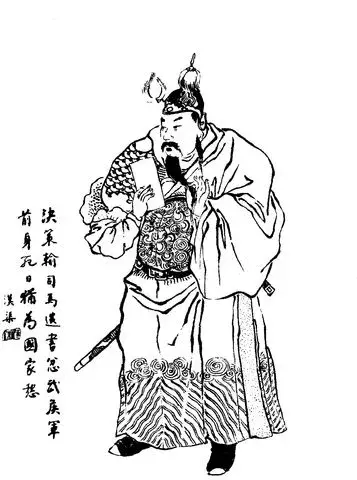
曹真
Cao Zhen (died 231), courtesy name Zidan, was a native of Qiao County in Peiguo. A core imperial clan general and supreme military commander of Cao Wei during the Three Kingdoms Period, Cao Zhen was the son of Cao Shao (or Qin Bainan in some accounts), an early follower of Cao Cao who sacrificed his life to shield his lord from pursuit. In gratitude for this sacrifice, Cao Cao adopted the orphaned young boy, raising him…
Cao Zhen (died 231), courtesy name Zidan, was a native of Qiao County in Peiguo. A core imperial clan general and supreme military commander of Cao Wei during the Three Kingdoms Period, Cao Zhen was the son of Cao Shao (or Qin Bainan in some accounts), an early follower of Cao Cao who sacrificed his life to shield his lord from pursuit. In gratitude for this sacrifice, Cao Cao adopted the orphaned young boy, raising him within his household alongside his own sons Cao Pi and Cao Zhi. In his youth, Cao Zhen distinguished himself through archery and horsemanship, once turning around in his saddle while being chased by a fierce tiger during a hunt to slay the beast with a single arrow to the forehead. Astonished by his daring, Cao Cao hailed him as possessing the courage of a tiger and placed him in command of the elite Tiger and Leopard Cavalry. During the Hanzhong Campaign, Cao Zhen defeated Shu forces under Gao Xiang at Xiabian. Following Cao Pi's ascension to the imperial throne, Cao Zhen was commissioned General Who Subdues the West and Commander of Military Affairs in Yong and Liang provinces. He oversaw the pacification of Hexi by defeating tribal rebellions, successfully re-opening the Silk Road to the Western Regions and receiving tributary embassies from kingdoms including Qiuci, Shanshan, and Yutian. In 222, he commanded the central army in the southern expedition against Eastern Wu, laying siege to Jiangling and shattering relieving contingents under Sun Sheng. On his deathbed in 226, Emperor Wen entrusted the state to Cao Zhen alongside Sima Yi, Cao Xiu, and Chen Qun as co-regents for the young Emperor Ming (Cao Rui), elevating Cao Zhen to Grand General. When Zhuge Liang launched his first northern expedition in 228 and three western commanderies defected to Shu, Cao Zhen directed the overall counteroffensive from Mei. He dispatched veteran general Zhang He to crush Ma Su at Jieting while personally repelling the diversionary forces of Zhao Yun and Deng Zhi at the Ji Valley, reclaiming all lost territories. Anticipating that Zhuge Liang's next offensive would target the strategic fortress of Chencang, Cao Zhen ordered Hao Zhao to rebuild and fortify the city defenses months in advance. When Zhuge Liang besieged Chencang with one hundred thousand troops in late 228, Hao Zhao successfully held out with one thousand defenders for more than twenty days until Shu provisions ran dry, a triumph universally attributed to Cao Zhen's foresight. In 230, Cao Zhen was promoted to Grand Marshal and led a multi-pronged offensive into Shu via the Ziwu Valley, which was ultimately aborted by imperial decree due to thirty days of unprecedented continuous rainfall that washed away mountain trestle roads. He died of illness in Luoyang in 231 and was posthumously honored as Marquis Yuan.
Following his father's death while shielding Cao Cao during troop recruitment, Cao Zhen was adopted into Cao Cao's household.
Participated in the Hanzhong Campaign under Cao Hong, defeating the Shu general Gao Xiang at Xiabian.
Appointed Army Protector Conquering Shu; coordinated with Xu Huang to defeat Gao Xiang and supervised the northern evacuation.
Emperor Wen ascended the throne; Cao Zhen was appointed General Who Subdues the West and Commander of Yong and Liang.
Directed the suppression of Hexi tribal rebellions, restoring the northern trade routes and tributary ties with the Western Regions.
Promoted to Senior General of the Upper Army; led the siege of Jiangling against Eastern Wu and routed relief forces under Sun Sheng.
Emperor Wen died; Cao Zhen, Sima Yi, Cao Xiu, and Chen Qun were named co-regents, and Cao Zhen was made Grand General.
Repelled Zhuge Liang's first northern expedition; dispatched Zhang He to break Ma Su at Jieting and repulsed Zhao Yun at Ji Valley.
Accurately predicted Zhuge Liang's next attack route and dispatched Hao Zhao to fortify Chencang, frustrating the subsequent Shu siege.
Elevated to Grand Marshal with Staff of Authority; spearheaded an invasion of Shu via Ziwu Valley, retreating due to thirty days of rain.
Fell ill in Luoyang following the expedition; died in the third month and was posthumously styled Marquis Yuan.
Cao Zhen was born in Qiao County of Peiguo. Historical records present two distinct accounts of his paternity. According to the standard account in the Book of Wei, his father was Cao Shao, a devoted clansman who raised volunteers to assist Cao Cao in opposing Dong Zhuo in 190 and was killed by Inspector Huang Wan of Yu Province while on recruitment duty. An alternative record in the Weilue suggests that Cao Zhen originally belonged to the Qin family; his father Qin Bainan was an intimate companion of Cao Cao who stepped forward to impersonate him when Cao Cao was pursued by Yuan Shu's cavalry at Buxian, dying in his lord's place. Profoundly indebted to this supreme sacrifice, Cao Cao took the orphaned youth into his own residence and adopted him as his son, bestowing upon him the imperial clan surname. Cao Cao raised Cao Zhen alongside his eldest sons Cao Pi and Cao Zhi, sharing meals, quarters, and classical instruction under identical paternal care.
From early youth, Cao Zhen exhibited immense physical strength, courageous composure, and exceptional skill in mounted archery. During an imperial hunting excursion in the mountains with Cao Cao, a ferocious, white-browed tiger suddenly broke cover and lunged toward Cao Zhen's mount. While the accompanying retainers scattered in panic, Cao Zhen maintained absolute poise, spurring his horse forward while twisting his upper body in the saddle. Drawing his heavy composite bow to full draw, he released a single iron arrow directly into the charging tiger's skull, felling the beast instantly. Observing this display from a distance, Cao Cao was filled with admiration, exclaiming that the boy possessed the valor of a tiger and the stamina of a steed. Cao Cao promptly breached customary protocol by placing the youthful Cao Zhen in command of the Tiger and Leopard Cavalry, the elite mounted imperial guard reserved exclusively for supreme commanders of royal blood.
In 215, Cao Zhen accompanied Cao Cao on the western expedition to Hanzhong against the religious separatist Zhang Lu. For his battlefield merit, he was enfeoffed as Marquis of Lingshouting. In 218, Liu Bei launched his grand northern offensive into Hanzhong, sending Zhang Fei, Ma Chao, Wu Lan, and Lei Tong to seize Xiabian in Wudu Commandery to sever Wei supply arteries. Cao Cao dispatched Cao Hong and Cao Xiu to counter the thrust, with Cao Zhen serving as Assistant General. Cao Zhen led a mobile force deep into enemy lines, encountering Shu forces commanded by Gao Xiang at Xiabian. Orchestrating a lightning cavalry envelopment, Cao Zhen routed Gao Xiang and beheaded numerous opposing officers. In 219, after Chief Commander Xiahou Yuan fell in combat at Mount Dingjun, Cao Cao personally marched west and appointed Cao Zhen Army Protector Conquering Shu, directing veteran commanders such as Xu Huang at Yangping Pass. Xu Huang defeated Gao Xiang on the frontlines, while Cao Zhen maintained theater discipline and logistical stability. When Cao Cao concluded that Hanzhong could not be held indefinitely, Cao Zhen was sent to Wudu to receive the returning rearguard of Cao Hong, successfully escorting border garrisons and civilians northward into the safety of Guanzhong.
In 220, Cao Cao died in Luoyang, and Cao Pi ascended the throne as Emperor Wen, inaugurating the Cao Wei dynasty. Having grown up as an inseparable companion to Cao Zhen, Emperor Wen placed boundless trust in his military acumen, appointing him General Who Subdues the West, Commander of Military Affairs in Yong and Liang provinces, and elevating his noble title to Marquis of Dongxiang. Cao Zhen was entrusted with complete strategic stewardship over the northwestern frontier, tasked with guarding against Shu Han and subduing rampant ethnic insurgencies across Longyou and Hexi. In the aftermath of decades of unrest, local tribal warlords had torn the Hexi corridor apart. Qu Yan of Xiping allied with Zhang Jin of Zhangye and Huang Hua of Jiuquan in armed rebellion, joined by various Qiang and Lushui Hu tribes, severing the Silk Road and setting the western frontier ablaze with warfare.
Faced with this perilous crisis, Cao Zhen devised a comprehensive pacification strategy from his theater headquarters in Chang'an. He recommended Zhang Ji, the competent Grand Administrator of Anding, to serve as Inspector of Liang Province, while deploying Su Ze, Administrator of Jincheng, as the vanguard. Cao Zhen orchestrated the logistical support and strategic deployment of provincial garrisons, directing Zhang Ji to execute a rapid strike into the core of Liang Province. Zhang Ji shattered the combined forces of Zhang Jin and Huang Hua, slaying Zhang Jin and forcing Huang Hua's surrender, pacifying the four western commanderies of Xiping, Wuwei, Zhangye, and Jiuquan. In 221, tribal chieftains Zhiyuanduo and Lushui Hu rose again with tens of thousands of horsemen. Cao Zhen led an expeditionary army through the western passes, delivering a crushing blow to the tribal coalition near Lingwu. More than fifty thousand rebels were killed in action, over one hundred thousand surrendered, and hundreds of thousands of horses and livestock were captured.
Following these sweeping victories, the long-severed Northern and Middle routes of the Silk Road were fully reopened under Cao Wei authority. In 222, the rulers of Shanshan, Qiuci, and Yutian dispatched royal ambassadors across ten thousand li to present tributary gifts of jade and prized horses to the court in Luoyang. Cao Wei formally re-established the office of Colonel of the Western Regions, re-integrating Central Asian trade and diplomacy under central administration. In formal appreciation of his monumental pacification of the frontier, Emperor Wen issued an imperial edict promoting Cao Zhen to Senior General of the Upper Army, Commander of Internal and External Military Affairs, and granting him the ceremonial battle-axe.
In the autumn of 222, using Sun Quan's refusal to send his eldest son as a court hostage as a pretext, Emperor Wen launched a massive three-pronged offensive against Eastern Wu. Cao Xiu advanced toward Dongkou, Cao Ren struck at Ruxu, while Senior General of the Upper Army Cao Zhen was placed in supreme command of the main central army, directing elite forces led by Zhang He, Xu Huang, and Xiahou Shang to lay siege to the premier Wu bastion of Jiangling.
Jiangling was heavily fortified and defended by Wu commander Zhu Ran with five thousand veteran troops. Upon reaching the outskirts, Cao Zhen deployed his forces methodically, storming peripheral fortifications and encircling the city. To sever all waterborne and overland relief lines, Cao Zhen ordered Xiahou Shang to cross the Yangtze River, seize the central river islands, and construct floating pontoon bridges to link both shores. In response, Sun Sheng, Wu commander at Ruxu, led ten thousand infantry and cavalry to relieve the siege by storming the islands. Cao Zhen directed Zhang He to execute an aggressive frontal counter-attack, shattering Sun Sheng's formation and driving his survivors in disordered flight. Cao Zhen subsequently erected earthen ramps, dug approach trenches, and mounted tall assault towers to pour arrows into Jiangling day and night, reducing multiple outer redoubts. However, seasonal spring rains caused the river to swell dramatically, while widespread pestilence struck the besieging camps. Following naval counter-raids by Zhuge Jin that threatened the pontoon bridges, Emperor Wen issued an imperial decree ordering a full tactical withdrawal. Although Jiangling remained untaken, Cao Zhen's skillful operational control and containment of major Wu reinforcements confirmed his stature as a premier grand army commander.
In the fifth month of 226, Emperor Wen fell critically ill in the Jiafu Hall at Luoyang. Recognizing his impending death, the emperor summoned Cao Zhen, Grand General Pacifying the East Cao Xiu, Grand General Guarding the Army Sima Yi, and Grand General Suppressing the Army Chen Qun to his bedside, designating them the four co-regents of the empire and admonishing the Crown Prince Cao Rui to revere them as fathers. Following Emperor Wen's death, Cao Rui ascended the throne as Emperor Ming. Cao Zhen was invested as Marquis of Shaoling and elevated to Grand General, standing above the Three Excellencies and wielding supreme operational authority over both internal and frontier military forces.
In the spring of 228, Chancellor Zhuge Liang of Shu Han launched his first northern expedition, leading a powerful army across the mountains toward Mount Qi. Because the central plains had enjoyed prolonged peace, border defenses were lax; the three western commanderies of Nan'an, Tianshui, and Anding surrendered to Shu in rapid succession, plunging the capital and Guanzhong into panic. The young Emperor Ming traveled west to Chang'an to steady public morale, delegating supreme theater command of the western armies entirely to Grand General Cao Zhen.
Taking command in the face of grave danger, Cao Zhen demonstrated exemplary calm and strategic insight. He established theater headquarters at Mei to anchor the Wei River line, blocking Shu forces from pouring into the Guanzhong plains via the Xie Valley. When Zhuge Liang deployed veteran commanders Zhao Yun and Deng Zhi through the Ji Valley to act as a diversionary threat, Cao Zhen accurately diagnosed their contingent as a feint. Leaving secondary forces to hold the crossings, he personally led an elite strike force into the Ji Valley, engaging and repelling Zhao Yun's force into defensible positions. Simultaneously, Cao Zhen dispatched veteran general Zhang He with fifty thousand elite troops westward along the northern route. Zhang He surrounded and annihilated Ma Su's vanguard at the strategic bottleneck of Jieting, severing Shu's supply corridor and fresh water sources. With his line of advance shattered, Zhuge Liang was forced to abandon his positions, evacuating a thousand families from Xixian as he retreated south to Hanzhong. Exploiting the collapse of the invasion, Cao Zhen directed swift counteroffensives across Longyou, restoring imperial authority over Tianshui, Nan'an, and Anding, and executing the insurgent tribal chieftain Yang Tiao.
Following the Shu retreat, the court consensus assumed that having suffered a major reverse, Zhuge Liang would not dare venture north again anytime soon. Cao Zhen alone demurred, offering a prescient strategic evaluation: "Zhuge Liang's recent thrust failed at Mount Qi. If the rebels venture north again, Mount Qi is too distant and rugged for sustained logistics; they will inevitably march through Chencang via the Da San Pass to shorten their transport lines!" Without delay, Cao Zhen commissioned the stalwart commanders Hao Zhao and Wang Sheng to lead one thousand elite veterans into Chencang, directing them to spend day and night rebuilding the ramparts, deepening moats, and erecting defensive archer towers. In the twelfth month of that same year, taking advantage of Wei troop movements to the eastern border, Zhuge Liang indeed emerged from the Da San Pass with one hundred thousand troops to launch a surprise assault on Chencang. However, Hao Zhao had already transformed the outpost into an unyielding bastion. For more than twenty days, the Shu army assaulted the walls with siege towers, battering rams, and subterranean tunnels, but Hao Zhao countered every device with fiery projectiles and stone boulders. When Cao Zhen dispatched Fei Yao with cavalry reinforcements from Luoyang, Zhuge Liang ran out of supplies and withdrew into the mountains. Cao Zhen's prophetic foresight at Chencang earned universal acclaim throughout the empire.
In 230, in recognition of his brilliant defense of the state, Emperor Ming promoted Cao Zhen to Grand Marshal with ceremonial battle-axe authority, granting him the rare privilege of wearing his sword and shoes into the imperial presence and walking without bowing. Observing that Shu Han's recurring northern expeditions placed continuous strain on the people of Guanzhong, Cao Zhen submitted a strategic memorial advocating a comprehensive preemptive campaign to destroy Shu in its homeland: "The Shu rebels make continual incursions across our frontier, forcing our soldiers and populace into ceaseless labor. We should now mobilize our grand armies and advance simultaneously along multiple routes to invade the southwest and pacify Ba-Shu forever!" Emperor Ming endorsed the strategy and granted full operational command.
In the eighth month of 230, Cao Zhen led one hundred thousand troops south from Chang'an into the Ziwu Valley, targeting Nanzheng directly. Simultaneously, Grand General Sima Yi sailed westward up the Han River toward Ankang, while Zhang He and Fei Yao advanced through the Xie Valley and Wudu, forming a vast four-pronged offensive designed to encircle the Shu heartland. However, nature intervened decisively against the imperial expedition. That autumn, the Hanzhong mountain ranges were inundated by catastrophic torrential rains lasting thirty consecutive days without cessation. Floods tore through the mountain gorges, sweeping away stone trestle roads, mountain pathways, and bridges. Cao Zhen forced his troops to cut new passages along the sheer cliffs, but after a month of grueling toil, the army had covered only half of the Ziwu defiles, with all supply wagons trapped in deep mud. Following urgent appeals from Grand Commandant Hua Xin and Minister of the Privy Purse Yang Fu, Emperor Ming issued an imperial rescript recalling the armies. Cao Zhen complied with imperial orders and executed a disciplined northward withdrawal, preserving his grand army from destruction in the flooded ravines.
Upon his return to Luoyang, worn down by decades of military campaigning and afflicted by severe bronchial ailments contracted in the cold damp of the mountain defiles, Cao Zhen fell gravely ill. Emperor Ming showed exceptional solicitude for the veteran statesman, visiting his residence in person multiple times to hold his hand and comfort him in tears. In the third month of 231, Cao Zhen passed away in Luoyang. Mourning the loss of his paramount pillar, Emperor Ming suspended court sessions and bestowed upon him the posthumous title of Marquis Yuan. His four sons—Cao Shuang, Cao Xi, Cao Xun, and Cao Yan—were all created marquises, with Cao Shuang inheriting the title of Marquis of Shaoling and assuming command of the palace guards. Throughout his life, Cao Zhen combined high rank with modesty and fraternal generosity toward his troops; whenever state provisions were insufficient for military rewards, he invariably disbursed his personal fortune to reward frontline soldiers, ensuring their unswerving devotion. Though his eldest son Cao Shuang later brought ruin upon the family during the Gaoping Tombs Incident against Sima Yi, Cao Zhen's own reputation as an unblemished, far-sighted grand commander of Cao Wei remained universally revered by posterity.
FIGURES ASSOCIATED WITH THIS DYNASTY