Birth in Danyang
Born into a prominent Southern aristocratic lineage in Jurong; his grandfather Ge Xi had served as Minister of Ceremonies in Eastern Wu.
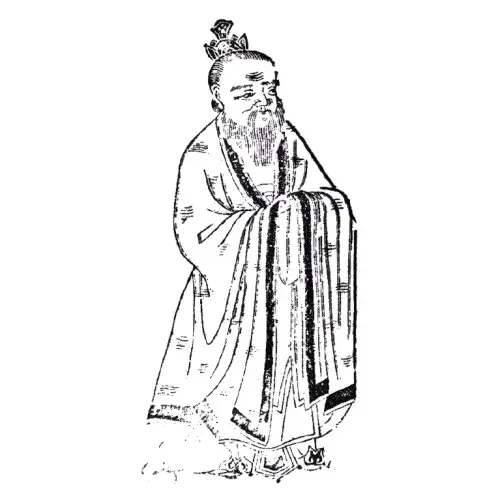
葛洪
Ge Hong (283–343), courtesy name Zhichuan, art name Baopuzi, known popularly as the "Lesser Immortal," was a native of Jurong County, Danyang Commandery (present-day Jurong City, Jiangsu Province). He was an illustrious Daoist philosopher, physician, alchemist, and naturalist of the Eastern Jin dynasty, and the grand-nephew of the prominent Eastern Wu Daoist master Ge Xuan. He occupies a towering position in Chinese religious…
Ge Hong (283–343), courtesy name Zhichuan, art name Baopuzi, known popularly as the "Lesser Immortal," was a native of Jurong County, Danyang Commandery (present-day Jurong City, Jiangsu Province). He was an illustrious Daoist philosopher, physician, alchemist, and naturalist of the Eastern Jin dynasty, and the grand-nephew of the prominent Eastern Wu Daoist master Ge Xuan. He occupies a towering position in Chinese religious history, intellectual philosophy, traditional medicine, and world proto-chemistry. Born into an impoverished aristocratic family after his father's early death, Ge Hong endured poverty by cutting firewood to purchase paper, immersing himself in the Confucian classics, dynastic histories, and esoteric alchemical texts. During the turbulent collapse of the Western Jin, Ge Hong joined military campaigns against the Shi Bing peasant rebellion, earning the title Wave-Quelling General and the peerage of Marquis within the Passes for his tactical achievements. Disillusioned with chaotic court politics, he relinquished worldly titles to devote himself to cultivation. During the Xianhe era of the Eastern Jin, Grand Chancellor Wang Dao repeatedly offered him prestigious ministerial offices, which Ge firmly declined. Hearing that Goulou County in Jiaozhi produced exceptional cinnabar, he requested assignment as county magistrate. Arriving in Guangzhou, Inspector Deng Yue persuaded him to remain at Mount Luofu, where Ge established his mountain retreat at Zhuming Cave to compound elixirs and compose scholarly treatises until his death. Ge Hong's landmark masterwork Baopuzi synthesized Confucian ethical statecraft with Daoist physical cultivation, establishing the systematic theoretical architecture of religious Daoism. His medical compendium Handbook of Prescriptions for Emergency (Zhouhou Beiji Fang) pioneered accessible, inexpensive emergency remedies for commoners; its famous formulation—"take a handful of sweet wormwood (qinghao), soak it in two liters of water, wring out the juice, and drink it all"—directly inspired the modern discovery of the Nobel Prize-winning antimalarial medicine artemisinin. His detailed alchemical documentation of the reversible reaction between cinnabar and mercury stands as an epoch-making milestone in ancient experimental chemistry.
Born into a prominent Southern aristocratic lineage in Jurong; his grandfather Ge Xi had served as Minister of Ceremonies in Eastern Wu.
Grew up fatherless and poor, gathering firewood to trade for paper; neighbors admired his unadorned integrity, calling him Baopu.
Entered the tutelage of Ge Xuan's chief disciple Zheng Yin, mastering gold elixir scriptures and occult arts.
Appointed military commander by Gu Mi to suppress the Shi Bing uprising, rewarded as Wave-Quelling General and Marquis within the Passes.
Traveled to Luoyang seeking alchemical manuscripts; delayed by Chen Min's revolt, he took refuge in Xiangyang and served Bao Jing.
Returned to Danyang upon the founding of the Eastern Jin, completing the definitive Inner and Outer Chapters of Baopuzi.
Repeatedly declined appointments as Cavalier Regular Attendant and Grand Palace Grandee offered by Grand Chancellor Wang Dao.
Requested appointment as Magistrate of Goulou to obtain cinnabar; detained by Inspector Deng Yue at Guangzhou.
Settled permanently at Zhuming Cave on Mount Luofu with his wife Bao Gu, compounding elixirs and practicing medicine.
Died peacefully on Mount Luofu at sixty, widely revered in Daoist tradition as having achieved immortal transcendence.
Ge Hong was born in 283 in Jurong County, Danyang Commandery, into an eminent southern aristocratic family that had wielded immense political and religious authority under the Eastern Wu dynasty. His grand-uncle Ge Xuan had been revered as a supreme Daoist thaumaturge, known as the "Immortal Ge"; his grandfather Ge Xi had served as Grand Herald (Dahonglu) in Wu, and his father Ge Ti had held the offices of Palace Secretary and commandery governor under Western Jin. However, when Ge Hong was only thirteen, his father died suddenly, plunging the household into poverty.
Unable to purchase books, paper, or brushes, young Ge Hong walked into mountain forests daily after farm labor, cutting firewood to trade for paper and ink at local market stalls. Under simple oil lamps, he copied hundreds of classical volumes, mastering the Confucian classics, military strategy, astronomy, and pharmacology. His neighbors marveled at his calm contentment and lack of worldly ambition, praising him as a "man who embraces simplicity" (baopu zhi shi), prompting Ge Hong to adopt the art name "Baopuzi." At sixteen, he became the chosen disciple of Zheng Yin, the foremost disciple of his grand-uncle Ge Xuan, receiving comprehensive instruction in alchemy, breath cultivation, and esoteric talismanic disciplines.
During the terminal decay of the Western Jin, peasant uprisings erupted across southern China. In 304, Shi Bing raised a massive insurrection, overrunning commanderies across Yang Province. Gu Mi, Administrator of Wuxing, recruited Ge Hong as troop-commanding captain. Ge mobilized local recruits, personally led charges on the battlefield, broke rebel divisions, and pacified the region. The imperial court rewarded his valor with the title Wave-Quelling General and the hereditary noble rank of Marquis within the Passes. Recognizing that military fame fostered spiritual peril, Ge promptly resigned his command.
In 305, Ge Hong journeyed toward Luoyang to search for ancient medical and alchemical scriptures. However, regional general Chen Min revolted in Jiangdong, severing overland communications. Stranded in the Xiangyang and Jingzhou regions, Ge spent years wandering among rural hamlets, collecting folk prescriptions and treating impoverished refugees afflicted with war-spawned epidemics. During this period, he befriended Bao Jing, Administrator of Nanhai. Recognizing Ge's exceptional character and intellectual depth, Bao Jing gave his daughter Bao Gu to him in marriage, transmitting his profound knowledge of acupuncture, moxibustion, and occult arts.
Following the establishment of the Eastern Jin dynasty at Jiankang, Emperor Yuan and Grand Chancellor Wang Dao actively solicited prestigious southern literati. Wang Dao repeatedly issued imperial summons offering Ge appointments as Cavalier Regular Attendant and Grand Palace Grandee, but Ge firmly declined on grounds of chronic infirmity. In 327, learning that Jiaozhi Commandery produced high-grade crystalline cinnabar vital for compounding elixirs, Ge submitted a petition requesting demotion to the remote post of Magistrate of Goulou. The emperor granted his request.
When Ge Hong arrived in Guangzhou with his family, Inspector Deng Yue blocked his onward journey, insisting that the provincial government would supply all cinnabar, mercury, and lead required for his laboratory. Recognizing Mount Luofu's temperate climate, secluded gorges, and rich botanical biodiversity, Ge chose to settle at Zhuming Cave. Over the next decade, assisted by his wife Bao Gu, he refined elixirs, treated regional illnesses with wild herbs, and drafted seminal texts. In 343, Ge Hong passed away peacefully on Mount Luofu at the age of sixty, revered by later generations as a realized immortal.
Ge Hong's paramount theoretical contribution was the composition of Baopuzi, which elevated Daoism from folk sorcery into an integrated philosophical and religious system. Spanning seventy volumes, the work creatively reconciled Confucianism and Daoism under the guiding principle that "Dao is the trunk, while Confucianism is the branches."
In the twenty Inner Chapters (Neipian), Ge formulated a comprehensive defense of physical immortality, establishing that celestial transcendence was accessible through disciplined study of golden elixirs, respiratory gymnastics, and meditation. Crucially, he anchored Daoist practice within Confucian morality: "He who seeks immortality must take loyalty, filial piety, harmony, benevolence, and trust as his foundation. If moral virtue is uncultivated and one relies solely on esoteric arts, eternal life is unattainable." This integration harmonized religious practice with imperial social order, enabling medieval rulers to embrace Daoism as orthodox state doctrine. In the fifty Outer Chapters (Waipian), he synthesized legalist, mohist, and dialectical philosophies, condemning the frivolous metaphysical conversation of Wei-Jin aristocrats and advocating strict judicial laws to restore statecraft stability.
Beyond religious theory, Ge Hong was a master clinician dedicated to universal healthcare. Grieving that traditional pharmacopeias were voluminous, expensive, and filled with rare ingredients unobtainable by commoners, he compiled the practical emergency guide Handbook of Prescriptions for Emergency (Zhouhou Beiji Fang), designed to be carried inside one's sleeve for immediate bedside reference.
The compendium holds an exalted place in world clinical epidemiology. It provided the earliest accurate descriptions of smallpox ("barbarian sores"), scrub typhus, and rabies. Most famously, Ge recorded the revolutionary clinical formula for treating malaria: "Take a handful of sweet wormwood (qinghao), soak it in two liters of water, wring out the juice, and drink it all." His explicit directive to wring the cold juice rather than boil the herb demonstrated an astonishing intuitive awareness that heat destroyed active therapeutic compounds. In the early 1970s, this passage directly inspired Tu Youyou's research team to employ low-temperature ether extraction to isolate artemisinin, leading to the 2015 Nobel Prize in Physiology or Medicine and saving millions of lives globally.
In his quest to compound enduring elixirs, Ge Hong conducted decades of rigorous laboratory experiments on Mount Luofu, recording precise physical and chemical transformations that established him as a pioneer of ancient experimental chemistry. His empirical observations are preserved within the Golden Elixirs and Yellow and White treatises of Baopuzi.
With extraordinary scientific precision, Ge documented the reversible chemical reaction between cinnabar (mercuric sulfide) and elemental mercury: "When cinnabar is heated, it produces mercury; after prolonged transformation, it returns again to cinnabar." He detailed the thermal decomposition of mercuric sulfide into vaporized metallic mercury, and its subsequent recombination with sulfur to reconstitute synthetic cinnabar. Furthermore, he cataloged the preparation of basic lead carbonate (white lead), recorded the displacement of metallic copper from copper sulfate solutions using iron plates (early hydrometallurgy), and analyzed diverse arsenic oxides, preserving foundational documents for world chemical history.
FIGURES ASSOCIATED WITH THIS DYNASTY