Birth in the Forbidden City
Born on the third day of the first lunar month in the Palace of Winged Harmony (Yikun Gong), becoming the favorite youngest daughter of the Qianlong Emperor.
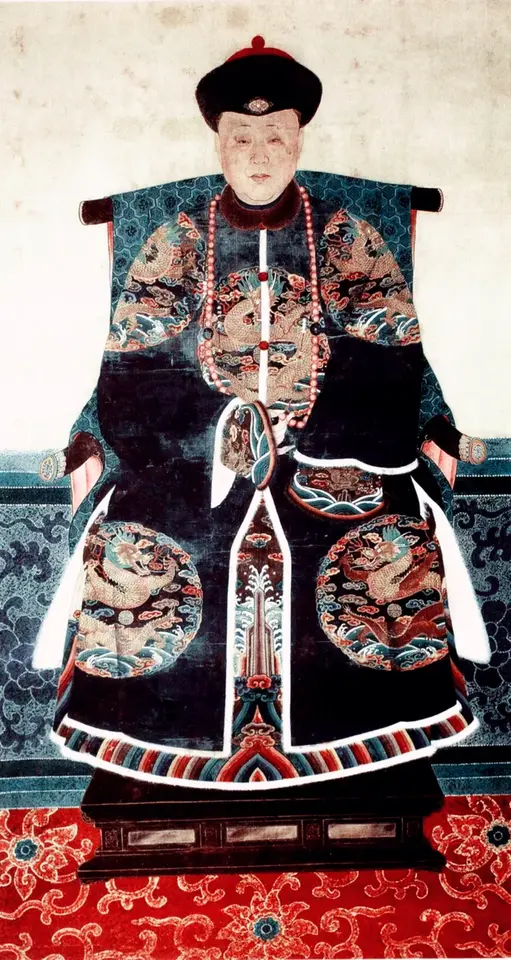
固伦和孝公主
Princess Gurun Hexiao (固伦和孝公主, February 2, 1775 – October 13, 1823), born into the imperial Aisin Gioro clan as the tenth daughter of the Qianlong Emperor and Consort Dun (Consort Wang), was one of the most prominent, favored, and influential imperial princesses of the high Qing era. Endowed with a resolute temperament, sharp intellect, and exceptional equestrian archery prowess, she closely resembled her father in manner and…
Princess Gurun Hexiao (固伦和孝公主, February 2, 1775 – October 13, 1823), born into the imperial Aisin Gioro clan as the tenth daughter of the Qianlong Emperor and Consort Dun (Consort Wang), was one of the most prominent, favored, and influential imperial princesses of the high Qing era. Endowed with a resolute temperament, sharp intellect, and exceptional equestrian archery prowess, she closely resembled her father in manner and appearance, prompting Qianlong to openly lament that she had not been born a male prince who could succeed him. Departing from ancestral dynastic protocol that reserved the supreme title of Gurun Princess exclusively for daughters born of the Empress, Qianlong issued an extraordinary decree elevating her to the rank of Princess Gurun Hexiao with first-rank imperial honors and allowances. In 1789, she formally married Fengshen Yinde, the eldest son of the grand chancellor and omnipotent imperial favorite Niohuru Heshen. Cognizant of the perils surrounding excessive wealth and political monopolization, Princess Hexiao consistently urged her husband to exercise moderation and preserve ministerial integrity. Following the death of the Qianlong Emperor in 1799, the Jiaqing Emperor swiftly orchestrated the downfall and demise of Heshen; yet out of profound affection for his younger tenth sister, the emperor deliberately spared Fengshen Yinde from execution and exile, allowing the couple to retain their residence and noble sustenance. Surviving through the Qianlong, Jiaqing, and Daoguang reigns, Princess Gurun Hexiao passed away in 1823 at the age of forty-nine, commemorated for her poise, filial restraint, and moral distinction.
Born on the third day of the first lunar month in the Palace of Winged Harmony (Yikun Gong), becoming the favorite youngest daughter of the Qianlong Emperor.
Betrothed by imperial edict to Fengshen Yinde, the eldest son of grand minister Niohuru Heshen.
Bestowed the paramount rank of Princess Gurun Hexiao, enjoying privileges normally reserved for empress-born daughters.
Married Fengshen Yinde in a lavish state wedding, riding an imperial gold-topped sedan chair.
Death of Emperor Qianlong; Emperor Jiaqing executed Heshen but exempted Fengshen Yinde out of fraternal regard for Princess Hexiao.
Fengshen Yinde passed away at thirty-six; the princess entered widowhood, devoted to raising her daughter and managing estate affairs under continuous imperial stipends.
Passed away in her Beijing mansion on the tenth day of the ninth lunar month; Emperor Daoguang attended her funeral rites in person.
Princess Gurun Hexiao was born on February 2, 1775 (the third day of the first lunar month in the fortieth year of the Qianlong era), in the Palace of Winged Harmony (Yikun Gong) within the Forbidden City. Her biological mother, Consort Dun of the Bordered Yellow Banner Wang clan, was elevated to the status of Consort in the late autumn preceding the princess's birth. Born when Emperor Qianlong had already reached sixty-five years of age and had not fathered a daughter in more than a decade, the infant princess brought immense delight to the aging monarch, who showered her with unparalleled paternal affection from her infancy.
From an early age, the tenth princess demonstrated physical vitality, intelligence, and an assertive demeanor that closely mirrored her father's character. Unlike traditional aristocratic ladies confined to inner chambers, she excelled in horsemanship and archery under the guidance of imperial instructors, mastering the use of the hunting bow with remarkable precision. During the annual autumn imperial hunts at Mulan and excursions to the Rehe Summer Resort, Qianlong routinely instructed the princess to don Manchu hunting attire and ride at his flank, frequently hunting deer and wild game together. Qianlong was recorded to have fondly caressed her back and sighed that had she been born a male prince, he would undoubtedly have established her as the heir apparent to the imperial throne.
Under the institutional ordinances of the Collected Statutes of the Great Qing (Da Qing Huidian), the preeminent title of Gurun Princess was strictly reserved for biological daughters of the reigning empress, whereas daughters born of imperial consorts and concubines were designated Heshuo Princesses. Nevertheless, in January 1787 (the fifty-second year of the Qianlong reign), Qianlong disregarded precedent by formally ennobling his tenth daughter as Princess Gurun Hexiao. She was granted an annual stipend of one thousand taels of gold and ten thousand taels of silver, alongside ceremonial carriages, headwear, and retinues equal to those of an imperial first-born legitimate princess.
This profound favor was further demonstrated when her mother Consort Dun beat a palace maid to death in a fit of rage in 1778, an egregious offense that resulted in Dun being demoted to Concubine. Yet within little more than a year, Qianlong reinstated her to the rank of Consort solely because he could not bear to see the young three-year-old princess deprived of her mother's care.
In 1780, when the tenth princess was six years old by traditional count, the Qianlong Emperor finalized arrangements for her future matrimonial alliance. At that juncture, Niohuru Heshen, Minister of the Imperial Household and Vice Minister of Revenue, was rapidly emerging as the emperor's most indispensable confidant. Qianlong took a profound liking to Heshen's handsome young eldest son, personally conferring upon him the Manchu name "Fengshen Yinde" (meaning abundant blessings and extended prosperity). In May of that year, Qianlong officially decreed the marriage pact between Princess Hexiao and Fengshen Yinde, elevating the social and political hegemony of the Niohuru lineage to its apex.
In November 1789 (the fifty-fourth year of the Qianlong reign), the fifteen-year-old princess formally wed Fengshen Yinde. Emperor Qianlong orchestrated a nuptial celebration of unprecedented splendor. Imperial treasury archives reveal that her bridal trousseau exceeded that of any previous Qing princess, encompassing thousands of gold and silver vessels, fine silks, precious jade curios, and extensive territorial estates and pawnshops throughout Zhili province.
Furthermore, Qianlong exceptionally permitted Princess Hexiao to ride a ceremonial golden-roofed red sedan chair during the nuptial procession, an honor strictly reserved for daughters of an empress. The procession from the Forbidden City to the princess's grand residence captivated the entire capital, symbolizing the height of High Qing imperial extravagance.
Following the wedding, Fengshen Yinde was appointed Senior Chamberlain of the Imperial Bodyguard and granted hereditary ranks. Despite inhabiting an environment of supreme indulgence, Princess Gurun Hexiao exhibited neither arrogance nor vanity. She showed deep filial reverence toward her in-laws, conducted household governance with strict order, and maintained respectful marital relations with Fengshen Yinde, winning universal praise from the court and the public.
Possessing acute political discernment, Princess Gurun Hexiao was never blinded by her family's overwhelming power. In the 1790s, Niohuru Heshen amassed immense executive authority, simultaneously presiding over the Grand Council, the Board of Revenue, the Board of Civil Office, and the Imperial Household Department. As Heshen monopolized court appointments, amassed vast fortunes through systematic extortion, and built extensive personal factions, Princess Hexiao recognized that such unsustainable hubris would inevitably incur ruin.
Official and private Qing historical memoirs record that the princess repeatedly confronted Fengshen Yinde in private, tearfully admonishing him: "Your father has received boundless benevolence from the Imperial Father, yet he fails to repay it with honest service, instead spending his days accumulating illicit riches and provoking widespread grievances. When catastrophic calamity strikes, the court will show no mercy, and disaster will inevitably encompass you. How will you then preserve yourself?" While Fengshen Yinde acknowledged her warnings, he lacked the moral fortitude to alter his domineering father's trajectory. The princess's perspicacity stood out as a beacon of sober judgment in an era of political delirium.
On February 7, 1799 (the third day of the first lunar month in the fourth year of the Jiaqing reign), the Retired Emperor Qianlong passed away in the Hall of Mental Cultivation (Yangxin Dian). Acting with astonishing speed and resolve, the Jiaqing Emperor stripped Heshen of his official posts the following day, threw him into prison, and confiscated his colossal fortune. On the eighth day of that month, twenty capital charges were promulgated, and on February 22, Heshen was compelled to commit suicide by hanging in his prison cell.
During this seismic upheaval, the Niohuru clan faced total annihilation. However, Emperor Jiaqing harbored profound sibling affection for Princess Hexiao. In his imperial rescripts regarding the adjudication of Heshen's treason, Jiaqing explicitly decreed that while Heshen's heinous crimes warranted the execution and exile of his entire lineage, an extraordinary exception would be granted to preserve Fengshen Yinde solely because Princess Gurun Hexiao was their revered father's favorite child. Fengshen Yinde was spared capital punishment and banishment, retaining his noble title of First-Class Earl. Furthermore, Jiaqing granted the southern precinct of Heshen's former palatial compound (now Prince Gong Mansion) and sufficient estates to Princess Hexiao to ensure that her household remained financially secure.
Although Fengshen Yinde escaped the scaffold, the utter collapse of his family's prestige left him traumatized, melancholic, and increasingly detached from administrative life. In 1803, an aggrieved household servant submitted a malicious petition falsely accusing Fengshen Yinde of harboring treasonous designs against the princess and maintaining concubines during the official state mourning period for Emperor Qianlong. An investigation conducted by the Imperial Clan Court cleared him of treasonous intent toward the princess, but substantiated that he had fathered offspring with concubines during imperial mourning. Consequently, Emperor Jiaqing stripped him of his earl title and ordered him to reflect upon his misconduct at home. Princess Hexiao handled these domestic humiliations with remarkable dignity, maintaining household peace and shielding her husband from further disgrace.
In 1806, out of enduring sympathy for the princess, Emperor Jiaqing restored Fengshen Yinde to imperial guard rank and assigned him to Uliastai in Outer Mongolia as Deputy Military Lieutenant-Governor, while Princess Hexiao remained in the capital. The harsh Siberian climate and harsh frontier conditions rapidly deteriorated Fengshen Yinde's already frail health. In early 1810, he was permitted to return to Beijing for medical treatment, where he died shortly afterward at the age of thirty-six. Their only biological son had died in infancy, leaving only a daughter.
Following her husband's death, the thirty-six-year-old princess spent the remaining thirteen years of her life in quiet widowhood. Emperor Jiaqing awarded five thousand taels of silver for funeral expenses and granted substantial recurrent stipends, instructing the Imperial Household Department to attend meticulously to all her requirements. The princess lived modestly, adopting an heir named Fu'en, providing for her daughters, and dedicating herself to Buddhist devotion and charitable deeds.
When the Daoguang Emperor ascended the throne in 1820, he treated his imperial aunt with the utmost veneration, frequently dispatching imperial emissaries to inquire after her well-being. On October 13, 1823, Princess Gurun Hexiao passed away peacefully in her Beijing residence at the age of forty-nine. Deeply grieved, Emperor Daoguang attended her funerary rituals in person, provided generous imperial funding for her grand burial at Dongzhuang near Haidian, and preserved her memory as an exemplar of royal virtue, political foresight, and resilience.
FIGURES ASSOCIATED WITH THIS DYNASTY