Birth in the Chancellery
Born in the capital residence of Chancellor Wang Dao; displayed early genius and encyclopedic learning.
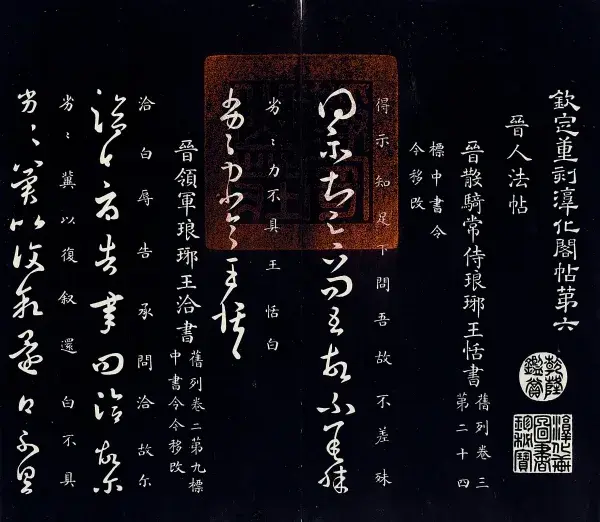
王洽
Wang Qia (王洽; 323–358), courtesy name Jinghe, was a native of Linyi County, Langya Commandery (present-day Lanshan District, Linyi, Shandong Province). He was an eminent statesman and master calligrapher of the Eastern Jin dynasty, the third son of founding Chancellor Wang Dao, and cousin of the "Sage of Calligraphy" Wang Xizhi. Rising to the post of General Leading the Army, he famously declined appointment as Director of…
Wang Qia (王洽; 323–358), courtesy name Jinghe, was a native of Linyi County, Langya Commandery (present-day Lanshan District, Linyi, Shandong Province). He was an eminent statesman and master calligrapher of the Eastern Jin dynasty, the third son of founding Chancellor Wang Dao, and cousin of the "Sage of Calligraphy" Wang Xizhi. Rising to the post of General Leading the Army, he famously declined appointment as Director of the Secretariat. Renowned as the most gifted and celebrated of Wang Dao's sons, he shared equal acclaim with statesman Xun Xian and was held in profound affection by Emperor Mu, serving as an executive pillar and cultural luminary of the Langya Wang lineage. Born into the foremost aristocratic family of the era, Wang Qia displayed high intellectual gifts and moral balance from early youth. Entering the civil service at age twenty, he served successively as Attendant Gentleman of the Cavalier, Gentleman of the Secretariat, Chief Clerk of the Central Army, Left Chief Clerk to the Minister over the Masses, and General Establishing Military Might, before governing Wu Commandery as Senior Administrator with exemplary benevolence. Recalled to the capital to command the palace guards as General Leading the Army, he restored immaculate military discipline. Emperor Mu sought to entrust him with supreme executive power, issuing imperial decrees appointing him Director of the Secretariat; however, Wang Qia submitted ten separate petitions persistently declining the honor, maintaining his modest reserve. As a calligrapher, Wang Qia mastered all scripts, excelling particularly in clerical, running, and cursive styles. In close collaboration with Wang Xizhi, he transformed archaic draft cursive into dynamic modern cursive, winning Wang Xizhi's highest praise that "my younger brother's calligraphy is by no means inferior to my own." Tang critic Zhang Huai Guan placed his running and cursive scripts in the wonderful class. He died in office in 358 at thirty-six, succeeded by his sons Wang Xun and Wang Min, who both became masters of calligraphy.
Born in the capital residence of Chancellor Wang Dao; displayed early genius and encyclopedic learning.
Entered imperial service at twenty, serving as Attendant Gentleman of the Cavalier and Gentleman of the Secretariat.
Promoted to Chief Clerk of the Central Army and Left Chief Clerk to the Minister over the Masses, sharing high acclaim with Xun Xian.
Appointed General Establishing Military Might and Senior Administrator of Wu Commandery, reducing corvee burdens and promoting farming.
Recalled to Jiankang as General Leading the Army, reorganizing the palace garrison and securing imperial gate security.
Emperor Mu appointed him Director of the Secretariat; Wang Qia submitted ten memorials persistently declining the post.
Passed away in office as General Leading the Army at thirty-six; deeply mourned by Emperor Mu and the imperial court.
Wang Qia was born into the preeminent emigre aristocratic lineage of the Eastern Jin, the Langya Wang clan. His father was Wang Dao, the founding chancellor who had engineered the restoration of the Jin imperial house south of the Yangtze River, leading contemporaries to declare that "the Wang and the Sima share the realm together." Among Wang Dao's sons, the eldest, Wang Yue, was gentle but died young, while the second son, Wang Tian, was an erratic chess master; Wang Qia alone united intellectual brilliance with administrative competence and dignified moral poise.
From childhood, Wang Qia was intensely devoted to learning, reading through the night and mastering classical exegesis, philosophy, music, and calligraphy. Within the aristocratic circle of Langya Wang youths, Wang Qia was universally recognized as their most accomplished representative, standing on equal footing with Xun Xian of the Yingchuan lineage, with the literati celebrating both as possessing immaculate reputations.
In accordance with aristocratic practice, Wang Qia entered imperial service at age twenty. He was appointed Attendant Gentleman of the Cavalier, soon transferring to Gentleman of the Secretariat. In the Secretariat, which drafted imperial decrees and recorded sovereign directives, the young Emperor Mu frequently summoned Wang Qia to the inner chambers to analyze classical texts and governmental protocols. Wang Qia's refined bearing, clear analytical expression, and integrity won the emperor's deep affection and trust.
As his political experience matured, Wang Qia assumed increasingly significant administrative responsibilities. He advanced to Chief Clerk of the Central Army and Left Chief Clerk to the Minister over the Masses, directing executive staff in central ministries. In these roles, he handled complex administrative documentation with efficiency, gaining the reliance of senior councilors.
During the Yonghe era, the imperial court appointed Wang Qia as General Establishing Military Might and Senior Administrator of Wu Commandery to stabilize this vital economic heartland. Wu Commandery was the primary source of state agricultural taxation and the stronghold of southern gentry clans, presenting complex administrative challenges.
Upon arriving in Wu, Wang Qia discarded superficial aristocratic habits, dedicating himself to practical governance. He reduced labor levies on ordinary households, curbed land grabbing by aristocratic estates, supported sericulture, and enforced bureaucratic discipline. During his tenure, criminal litigation declined, and local populations prospered under his benevolent rule. His administrative success disproved the common belief that aristocratic scions were capable only of abstract philosophical disputation.
In the early Shengping era, recognizing the need for reliable security in Jiankang, Emperor Mu summoned Wang Qia back to the capital to serve as General Leading the Army. As supreme commander of the imperial palace guards and capital garrison, this sensitive post was reserved for trusted loyalists. Wang Qia reorganized the guard units, instituted inspections of imperial passes, and enforced strict gate security, ensuring that order was preserved throughout the capital.
As Emperor Mu reached adulthood, he relied increasingly on Wang Qia's counsel, intending to grant him overarching executive authority. In 357, the emperor issued an imperial decree appointing Wang Qia concurrently as Director of the Secretariat. The Director of the Secretariat directed the preparation and promulgation of all imperial decrees, effectively wielding the executive power of a chancellor. However, recognizing that excessive aristocratic power provoked imperial anxiety and inter-clan jealousy, Wang Qia chose to practice restraint.
Wang Qia submitted ten separate petitions persistently declining the appointment. Observing his stubborn refusal, Emperor Mu issued another decree: "Jinghe possesses pristine judgment and noble grace. When you served as Gentleman of the Secretariat, I was young, yet I frequently summoned you, holding deep affection for you. I appoint you Director of the Secretariat because the realm requires transcendent talent, and because I desire to consult with you daily on statecraft as a trusted counselor and friend. Your repeated refusals run contrary to my deepest wishes! Let him be urged to accept without delay." Despite the emperor's earnest appeals and constant envoys, Wang Qia maintained his refusal, winning universal praise for his modesty and detachment from power.
Beyond his upright political career, Wang Qia dedicated himself to calligraphy. Sharing aesthetic ideals with his cousin Wang Xizhi, he practiced brushwork day and night, studying the evolution of ancient and contemporary scripts.
However, the combined burdens of military command and scholarly labor exhausted his physical constitution. In 358, Wang Qia fell ill while serving as General Leading the Army and passed away at the age of thirty-six. Emperor Mu wept bitterly upon hearing the news, lamenting the loss of an intimate friend and councilor. Following his death, his sons Wang Xun and Wang Min inherited the family's artistic brilliance, rising to top executive offices and becoming celebrated calligraphers.
Serving as General Leading the Army, Wang Qia demonstrated exceptional military administration. In Jiankang, aristocratic clans maintained private retainers, causing discipline among the palace guard units to deteriorate into laxity.
Taking command of the garrison, Wang Qia reformed the security protocols. He re-authenticated credentials for entering the palace, established rotational shifts, and inspected defense perimeter posts personally. Rebuffing all requests for personal favor from powerful nobles, he restored absolute discipline to the capital guard, securing stability for the Eastern Jin imperial court.
Amid the fierce factional rivalry of Eastern Jin aristocratic politics, Wang Qia's persistent refusal of the Directorate of the Secretariat demonstrated rare political foresight and ethical balance. The Langya Wang family had amassed immense influence since the dynasty's founding, making it vulnerable to imperial suspicion and hostility from competing clans.
Wang Qia recognized that excessive power invites downfall. Despite Emperor Mu's persistent pressure to elevate him to executive leadership, Wang Qia submitted ten successive memorials declining the post, choosing to remain in a military command rather than monopolize executive authority. This deliberate restraint softened potential conflicts between the Wang family and the throne, setting a precedent that ensured the family's survival and continuity throughout the Eastern Jin period.
Wang Qia occupies a vital position in the history of Chinese calligraphy. The Wei-Jin period witnessed a historic transition from Han clerical and draft cursive scripts to standard, running, and modern cursive forms. Studying under masters such as Zhong Yao, Lady Wei, and Wang Dao, Wang Qia achieved mastery over all calligraphic forms, excelling in clerical, running, and cursive styles.
Collaborating with his cousin Wang Xizhi, Wang Qia reformed archaic draft cursive (zhangcao). By breaking the rigid isolation of characters and smoothing out the sharp breaks of clerical origin, they incorporated the fluid rhythm of running script to invent the flowing, expressive style known as modern cursive (jincao). Wang Xizhi celebrated his artistry, remarking that "Jinghe's brushwork is by no means inferior to my own." In Evaluation of Calligraphy, Tang critic Zhang Huai Guan placed Wang Qia's cursive and running scripts in the wonderful class, praising his strokes for "possessing the effortless mastery of an artisan working with the wind."
As an intellectual bridge within the Langya Wang calligraphic lineage, Wang Qia played a decisive role in transmitting artistic knowledge across generations. His wife, Lady Gou, was an accomplished female calligrapher, fostering an environment of refined aesthetic devotion within their household.
Under his guidance, his sons Wang Xun and Wang Min matured into immortal masters of the brush. Wang Xun rose to Master of Writing; his surviving masterpiece, the Letter to Boyuan, was designated by Emperor Qianlong as one of the three supreme treasures of the Sanxi Hall, remaining the only authenticated original ink trace by an Eastern Jin literatus in existence. His second son, Wang Min, served as Director of the Secretariat and rivaled Wang Xianzhi in renown. The artistic achievements of Wang Qia's family marked the zenith of medieval Chinese calligraphic culture.
FIGURES ASSOCIATED WITH THIS DYNASTY