Birth in Anhui
Born into a peasant household in Huagang Town, Hefei County, Anhui Province, losing his father at an early age.
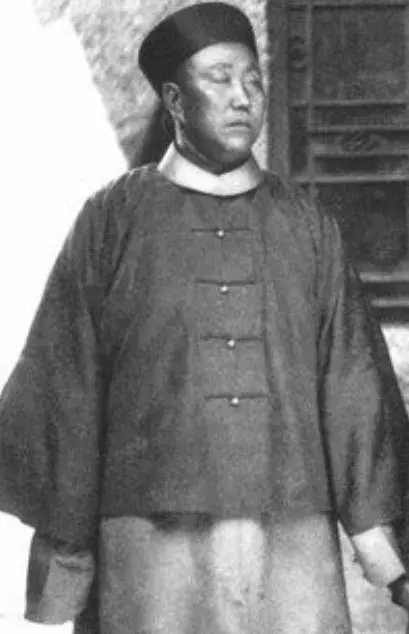
叶志超
Ye Zhichao (叶志超, 1838–1901), courtesy name Guanqun and art name Shuqing, was a prominent late Qing dynasty Huai Army military officer who rose to the position of Provincial Commander-in-Chief of Zhili. Born into an impoverished rural family in Hefei, Anhui, Ye enlisted in local militia during the tumultuous period of the Taiping and Nian rebellions. Serving under Huai Army leaders Liu Mingchuan and Zhang Shusheng, he…
Ye Zhichao (叶志超, 1838–1901), courtesy name Guanqun and art name Shuqing, was a prominent late Qing dynasty Huai Army military officer who rose to the position of Provincial Commander-in-Chief of Zhili. Born into an impoverished rural family in Hefei, Anhui, Ye enlisted in local militia during the tumultuous period of the Taiping and Nian rebellions. Serving under Huai Army leaders Liu Mingchuan and Zhang Shusheng, he distinguished himself through raw physical bravery and fierce battlefield aggression, steadily rising through the officer ranks to become a brigade general and earning the Manchu martial title Etuhun Baturu. Following the pacification of the central plains rebellions, he became a trusted protégé of Viceroy Li Hongzhang, helping to supervise strategic coastal fortifications at Tianjin and Shanhaiguan before being elevated to supreme commander of Zhili provincial land forces in 1889. In 1894, on the eve of the First Sino-Japanese War, Ye was ordered to lead an expeditionary force across the sea to Asan at the request of the Korean court. Following skirmishes at Seonghwan, Ye withdrew to Pyongyang and was named overall commander of all Qing forces assembled there. When the Imperial Japanese Army launched a coordinated multi-pronged assault on Pyongyang, the death of vanguard commander Zuo Baogui prompted Ye to raise a white flag and orchestrate a nocturnal abandonment of the fortress. The retreat devolved into a chaotic five-hundred-li rout back across the Yalu River into Chinese territory, resulting in the total loss of Korea. Following his catastrophic defeat, Ye was stripped of all offices, arrested, and condemned to death by the Board of Punishments, though he was later pardoned and spent his final days in seclusion in his native Anhui.
Born into a peasant household in Huagang Town, Hefei County, Anhui Province, losing his father at an early age.
Enlisted in local militias that joined the newly formed Huai Army under Zhang Shusheng and Liu Mingchuan, fighting Taiping forces.
Campaigned across northern and central China against the Nian cavalry, repeatedly leading vanguard cavalry charges and earning the title Etuhun Baturu.
Appointed acting Brigade General of Zhengding, commanding modernized disciplined battalions to garrison Xincheng and guard the rear of the Dagu Forts.
Transferred to command the garrison at Shanhaiguan Pass, modernizing defensive fortifications and training infantry in modern firearms.
Promoted to Provincial Commander-in-Chief of Zhili, the highest provincial military authority under Viceroy Li Hongzhang.
Commanded Huai Army cavalry and infantry on a rapid march into Rehe, suppressing the sectarian revolt at Chaoyang and receiving the Yellow Riding Jacket.
Led over two thousand troops to Asan on the west coast of Korea following the Korean court's appeal for assistance against the Donghak rebels.
Japanese forces launched an unprovoked surprise assault on Asan; following defensive action at Seonghwan, Ye withdrew inland while falsifying victory reports.
Regrouped at Pyongyang with arriving Qing reinforcements, where the imperial court formally appointed him supreme commander of all forces.
Following the death of Zuo Baogui under heavy Japanese assault, Ye ordered a nocturnal retreat that became a five-hundred-li rout across the Yalu River.
Deprived of all ranks and taken into custody; imperial decrees firmly rejected Li Hongzhang's pleas to allow him to serve in camp.
Brought in chains to Beijing and tried by the Board of Punishments, receiving a sentence of execution after the autumn assizes.
Freed amidst the chaos of the Boxer Protocol period when foreign allied forces took Beijing, after which the throne officially pardoned him.
Passed away quietly from illness in his native Feixi County, Anhui, at the age of sixty-four.
Ye Zhichao was born into a destitute farming family in Huagang Town, Hefei, Anhui Province. Orphaned of his father while still a young child, he herded cattle for his maternal uncle to support his family. Endowed with an unusually tall, muscular frame and exceptional physical stamina, Ye joined a local defense militia organized by the gentryman Xie Xianliang during his youth as unrest spread across the Huai River basin. In the early 1860s, as Li Hongzhang organized the Huai Army to relieve Shanghai, Ye enlisted under commanders Zhang Shusheng and Liu Mingchuan as a common private.
In continuous engagements against Taiping forces around Shanghai, Jiangyin, and Wuxi, Ye earned a reputation for reckless courage, frequently stripping to the waist to wield heavy broadswords at the head of assault columns. His aggressive battlefield performance brought rapid promotion to squad leader and company commander. During the subsequent campaigns against the mobile cavalry of the Eastern and Western Nian rebellions, Ye led cavalry squadrons across Anhui, Henan, Shandong, and Zhili. For his repeated breakthroughs against enemy lines, the imperial court promoted him to brigade general and conferred upon him the prestigious Manchu martial title Etuhun Baturu.
With the pacification of the Nian rebellions, Li Hongzhang assumed the post of Viceroy of Zhili and Superintendent of Trade for the Northern Ports. Recognizing Ye's loyalty and martial vigor, Li kept him within the core cadre of the northern military establishment. In 1875, Ye was appointed acting Brigade General of Zhengding. Based at Tianjin Xincheng, he oversaw modernized drilling of provincial troops tasked with protecting the interior approaches behind the strategic Dagu Forts.
A decade later, the imperial court reassigned Ye to command the fortress at Shanhaiguan, the vital gateway linking the capital region with Manchuria. There, Ye supervised the upgrading of coastal artillery batteries and introduced modern breech-loading rifles to the garrison battalions. His administrative efficiency won warm commendation from Li Hongzhang, resulting in his permanent appointment as Brigade General. In 1889, upon the death of Li Xianghe, Ye was promoted on Li Hongzhang's recommendation to Provincial Commander-in-Chief of Zhili, becoming the senior military commander responsible for the defense of the imperial capital region.
In the autumn of 1891, the sectarian Jindandao uprising erupted in Chaoyang, Rehe, capturing several towns and threatening northern imperial domains. In response, Li Hongzhang dispatched Ye at the head of elite Huai Army cavalry and infantry. Ye moved with exceptional rapidity, encircling and annihilating the main rebel concentrations near Chaoyang and slaying the rebel ringleader Li Guozhen. The swift pacification earned him imperial praise and the bestowal of the prestigious Yellow Riding Jacket, marking the zenith of his military standing.
In the spring of 1894, the Donghak peasant rebellion overwhelmed government forces in southern Korea, prompting the Korean monarch to request military intervention from the Qing court. In May, Li Hongzhang ordered Ye Zhichao and Taiyuan Brigade General Nie Shicheng to lead an expeditionary force of approximately two thousand Huai Army veterans across the Yellow Sea to Asan on Korea's western coast. However, the Japanese government utilized the crisis as a pretext to land thousands of modern troops at Incheon, seizing the royal palace in Seoul and creating a tense standoff with imperial troops.
Surrounded by superior Japanese naval and ground forces, Ye felt isolated and repeatedly cabled Li Hongzhang requesting either major reinforcements or authorization to withdraw, yet Beijing remained paralyzed by indecision. On July 28, 1894, a reinforced Japanese brigade under Major General Oshima Yoshimasa launched a surprise assault on Qing positions around Asan. While Nie Shicheng conducted a stubborn defense at Seonghwan, Ye failed to provide effective reserves from his base camp, choosing instead to withdraw southward toward Gongju. The combined Qing forces subsequently conducted a grueling overland march through mountainous territory to reach Pyongyang.
During this retreat, Ye sought to obscure the loss of Asan by cabling fabricated reports to Li Hongzhang, claiming that imperial forces had killed over two thousand Japanese soldiers at Seonghwan. Accepting these reports at face value, Li forwarded them to the throne, which rewarded Ye and his men with twenty thousand taels of silver. Ye reinforced this deception by cabling similar exaggerations through foreign missionaries in Seongcheon, completely misleading the Qing court regarding the true balance of power on the Korean peninsula.
By late July 1894, Ye arrived at Pyongyang, where four major Qing military detachments totaling thirteen thousand troops—under Sheng Army commander Wei Rugui, Yi Army commander Ma Yukun, Feng Army general Zuo Baogui, and Fengtian bannerman Fengsheng'a—had already assembled. Relying on Ye's senior rank and his supposed victory at Seonghwan, the Guangxu Emperor issued an edict designating him overall supreme commander of the gathered forces. However, the various commanders harbored deep mutual rivalries and distrusted Ye's leadership, while Ye himself was terrified by his earlier encounters with Japanese firepower and unsuccessfully sought to decline the post.
In early September, the First Japanese Army under General Yamagata Aritomo converged on Pyongyang from four directions. On September 15, Japanese divisions launched a massive coordinated attack on outer defense lines. While General Zuo Baogui personally directed artillery from the battlements of the northern gate until he was killed in action, and Wei Rugui and Ma Yukun repulsed enemy attacks along the Taedong River, Ye lost his nerve completely. Disregarding protests from fellow commanders, he ordered a white flag raised above the city walls to feign negotiations, while secretly arranging a night retreat under heavy rainfall.
During the midnight evacuation, Japanese forces waiting in ambush outside the gates unleashed withering fire on the congested imperial columns, triggering complete pandemonium that left thousands killed or captured. Rather than rallying his men at fortified positions along the route, Ye abandoned Anju, Dingzhou, and Uiju without firing a shot. In six days of headlong flight, his columns retreated over five hundred li, crossing the Yalu River into Chinese territory. The entire Korean peninsula fell to Japan, exposing Manchuria to direct invasion.
Outraged by the disaster, imperial censors demanded Ye's execution for treasonous incompetence. The Guangxu Emperor summarily dismissed him from all posts and ordered his arrest. Despite persistent efforts by Li Hongzhang to obtain a reprieve, Ye was escorted in chains to Beijing in 1896 and condemned to execution by the Board of Punishments. He remained imprisoned until the Boxer Rebellion in 1900, when allied troops captured Beijing and prison doors were opened. The imperial court formally pardoned him, allowing him to return to Anhui, where he died in obscurity in 1901.
During the initial expansion of the Huai Army, Ye Zhichao earned a genuine reputation as an aggressive battlefield commander. Rising from the lowest ranks of rural recruits through raw martial prowess, he played a notable role in suppressing the Taiping and Nian rebellions. In numerous cavalry clashes across Jiangsu, Anhui, and Shandong, his willingness to spearhead frontal charges against fierce opposition helped turn the tide of key engagements, earning him imperial accolades and the title Etuhun Baturu.
Throughout his decade-long tenure commanding garrisons at Tianjin Xincheng and Shanhaiguan, Ye contributed significantly to the defensive infrastructure designed by Li Hongzhang. He oversaw the introduction of Western drill methods and breech-loading rifles, reinforcing coastal artillery installations guarding the sea approaches to Beijing. His rapid suppression of the 1891 Jindandao uprising in Rehe demonstrated impressive logistical mobility, earning him national recognition as one of the empire's senior provincial commanders.
The Battle of Pyongyang proved to be the decisive turning point of the Sino-Japanese War on land and the defining failure of Ye's career. When confronted with a modern industrial military force, Ye displayed an absolute absence of strategic comprehension, moral courage, and tactical leadership. His initial fabricated reports from Seonghwan blinded imperial policymakers to the urgency of the military crisis, while his panic-stricken retreat from Pyongyang destroyed the empire's best field armies, permanently ending China's traditional tributary relationship with Korea and precipitating imperial collapse.
FIGURES ASSOCIATED WITH THIS DYNASTY