Birth in England
Born at Bloxwich in Staffordshire; orphaned in early childhood and reared by his paternal uncle in Birmingham.
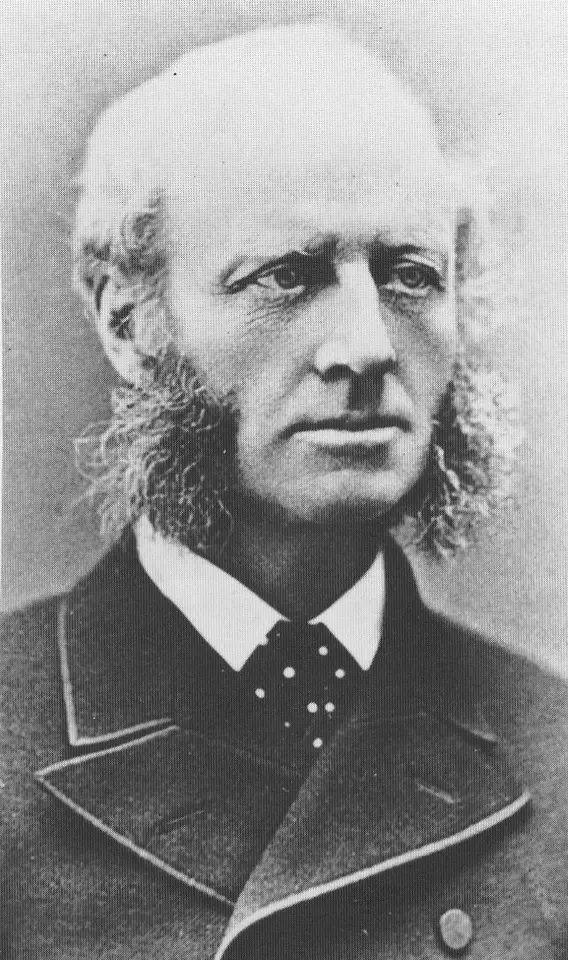
巴夏礼
Sir Harry Smith Parkes (巴夏礼; 1828–1885) was an English diplomat from Bloxwich, Staffordshire, who became a prominent representative of British imperialist expansion and gunboat diplomacy in nineteenth-century East Asia. Throughout a four-decade career, Parkes served as attache, interpreter, consul at Xiamen and Guangzhou, Minister Plenipotentiary to Japan, and finally British Minister to China, profoundly shaping the…
Sir Harry Smith Parkes (巴夏礼; 1828–1885) was an English diplomat from Bloxwich, Staffordshire, who became a prominent representative of British imperialist expansion and gunboat diplomacy in nineteenth-century East Asia. Throughout a four-decade career, Parkes served as attache, interpreter, consul at Xiamen and Guangzhou, Minister Plenipotentiary to Japan, and finally British Minister to China, profoundly shaping the modern geopolitical landscape of China and Japan. Orphaned at five years of age, Parkes traveled to China at age thirteen to join family relatives and systematically master the Chinese language. In 1842, at just fourteen, he served as an attache to British Plenipotentiary Sir Henry Pottinger during the Yangtze expedition in the First Opium War, witnessing firsthand the signing of the Treaty of Nanking. Over the next decade, he served across treaty ports including Zhoushan, Fuzhou, Xiamen, and Shanghai, acquiring thorough familiarity with Qing administrative customs while establishing a reputation for aggressive belligerence and zealous expansion of imperial privileges. In 1856, as acting British consul in Guangzhou, Parkes seized upon the "Arrow Incident" to fabricate claims that Qing authorities had insulted the British flag, rejecting conciliation by Viceroy Ye Mingchen and directly triggering the Second Opium War. After Anglo-French forces sacked Guangzhou, he established and directed an allied puppet governing committee before accompanying northern expeditionary forces to Tianjin and Beijing. His hostile conduct during the 1860 Tongzhou negotiations led to his temporary detention by Qing authorities, which the allied command used as a pretext to loot and burn the Old Summer Palace (Yuanmingyuan). He subsequently helped negotiate the Convention of Beijing and established British concessions at Hankou and Jiujiang. From 1865 to 1883, Parkes served as Minister to Japan, supporting the anti-shogunate reform movement and covertly facilitating the "bloodless surrender of Edo" during the Meiji Restoration. Appointed British Minister to China in 1883, he died of malaria in Beijing two years later.
Born at Bloxwich in Staffordshire; orphaned in early childhood and reared by his paternal uncle in Birmingham.
Arrived in Macao to join his cousin, entering the office of the Chief Superintendent of British Trade to study Chinese.
Accompanied Pottinger on the Yangtze naval campaign; witnessed the signing of the Treaty of Nanking aboard HMS Cornwallis.
Served as interpreter across Fuzhou, Xiamen, and Shanghai, assisting Rutherford Alcock in consolidating treaty privileges.
As acting consul in Guangzhou, manufactured the Arrow Incident to ignite the Second Opium War against the Qing Empire.
Allied troops captured Guangzhou; Parkes captured Viceroy Ye Mingchen and directed the Allied Commission governing the city.
Captured at Tongzhou by Prince Sengge Rinchen; released after allied forces surrounded Beijing, facilitating the Convention of Beijing.
Surveyed the Yangtze River with naval forces, securing the Hankou concession agreement and establishing consulates.
Promoted to British Envoy Extraordinary and Minister Plenipotentiary to Japan, serving eighteen years amid the Meiji transition.
Promoted to British Minister to China and Korea, concluding the United Kingdom-Korea Treaty of 1883 in Seoul.
Succumbed to malarial fever at the British Legation in Beijing at the age of fifty-eight.
Harry Smith Parkes was born in 1828 at Bloxwich in Staffordshire, England. His father, Harry Parkes, was an engineer and founder of a local metal manufacturing firm. Tragic misfortune struck early: his mother died when he was four, and his father was killed in a roadway vehicle accident the following year, leaving the young Parkes an orphan. He was subsequently taken into the household of his paternal uncle, a former naval officer residing in Birmingham. Parkes received a rigorous classical and humanistic education at boarding schools before matriculating into the prestigious King Edward's School in Birmingham.
In the summer of 1841, at thirteen years of age, Parkes boarded a merchant vessel sailing for China to join his maternal cousin, Mary Wanstall Gutzlaff, who resided in Macao with her husband, the Prussian missionary and British intelligence official Karl Gutzlaff. Arriving in Macao that autumn, Parkes was enrolled in the office of John Robert Morrison, Chinese secretary to British Plenipotentiary and Chief Superintendent of Trade Sir Henry Pottinger. Under Morrison's tutelage, Parkes applied himself diligently to learning colloquial and administrative Chinese. The raging First Opium War provided the adolescent Parkes with immediate practical exposure to wartime diplomacy.
In the spring of 1842, having gained foundational competence in spoken Chinese, Parkes joined Morrison in Hong Kong. In June of that year, Pottinger embarked upon a massive British naval expedition ascending the Yangtze River, and Parkes accompanied the expedition as a diplomatic attache. Imperial British forces seized Wusong and Zhenjiang, eventually dropping anchor off Nanjing. On August 29, 1842, onboard HMS Cornwallis, Chinese and British envoys signed the Treaty of Nanking, China's first modern unequal treaty. Fourteen-year-old Parkes observed the humiliation of Qing imperial commissioners firsthand, an formative experience that ingrained his lifelong conviction in coercive gunboat diplomacy.
Following the ratification of the Treaty of Nanking, five Chinese coastal cities were forcibly opened to Western trade. From September 1842, Parkes served in the British colonial administration on occupied Zhoushan Island. In August 1843, he passed the official Chinese language examination administered by the British consulate in Hong Kong, and was soon appointed interpreter at Fuzhou. Although administrative reshuffling transferred him briefly to Guangzhou, Parkes swiftly established his reputation as an astute, aggressive negotiator with keen insight into bureaucratic politics.
In 1844, Parkes was assigned as interpreter at Xiamen. In March 1845, he accompanied the newly appointed consul Rutherford Alcock to Fuzhou. There, Parkes assisted Alcock in aggressively asserting British consular jurisdiction, provoking frequent jurisdictional disputes with local Qing officials and clashing violently with local residents who pelted the British officers with stones. In 1846, Parkes and Alcock oversaw the transport of over forty-six thousand pounds sterling in Qing indemnity payments to Hong Kong, after which both men were transferred to Shanghai, the burgeoning commercial hub of foreign trade.
During his tenure in Shanghai, Parkes perfected his assertive diplomatic style. In the spring of 1848, three British missionaries were injured in Qingpu County during a confrontation with local boatmen. Parkes accompanied Vice-Consul Thomas Wade to the governor's yamen in Suzhou, where they brandished naval threats to coerce local authorities into punishing the Chinese participants and issuing formal apologies. Following a leave of absence in Britain, Parkes returned to China in 1851, serving successively in consular capacities in Xiamen and Guangzhou. In 1855, after accompanying Governor John Bowring to Bangkok to negotiate the historic Bowring Treaty with Siam, Parkes returned to London, where he was granted a personal audience with Queen Victoria and lauded as an indispensable rising star in Far Eastern affairs.
In 1856, Parkes assumed the post of acting British consul at Guangzhou. With local residents fiercely resisting foreign entry into the walled city and the newly appointed Viceroy of Liangguang Ye Mingchen maintaining a policy of non-intercourse, diplomatic friction reached an explosive pitch. Parkes actively searched for a casus belli that would permanently batter open the gates of Guangzhou.
On October 8, 1856, a Chinese-built lorcha named the Arrow was boarded in the Pearl River near Huangpu by Qing maritime patrols. Acting on intelligence that notorious maritime outlaws were hiding aboard, Chinese naval officers arrested twelve Chinese crew members. Parkes seized upon the incident, asserting that the vessel had been registered in Hong Kong under the British flag and claiming that Chinese officers had torn down the Union Jack in deliberate insult to the British Crown. He delivered an ultimatum demanding the unconditional return of the crew and a formal written apology from Ye Mingchen. Ye responded with documented proof: the vessel was owned and manned entirely by Chinese, its British registry had expired, and no British flag had been flying at the time of boarding.
Seeking to avert war, Ye Mingchen conceded to releasing the non-implicated sailors, but Parkes categorically rejected any compromise, coordinating his maneuvers with Governor Bowring and Royal Navy Admiral Michael Seymour. On October 23, British gunboats commenced the bombardment of river forts and breached the walls of Guangzhou, inaugurating the Second Opium War. In late 1857, Lord Elgin arrived with massive Anglo-French reinforcements, subjecting Guangzhou to devastating sustained shelling.
On January 5, 1858, following the fall of Guangzhou, Parkes personally led a squad of British sailors into the viceroy's yamen, arresting Ye Mingchen, who was subsequently deported on an English warship to Calcutta, where he died in captivity. Following the city's capitulation, Parkes coerced the captured Governor Bo-gui into serving as figurehead and organized a three-member Allied Commission that exercised dictatorial authority over Guangzhou for three years. Parkes established military tribunals, recruited a foreign-led police force, and forcibly reopened commerce, while shielding predatory coolie recruitment depots. His despotic administration inflamed popular indignation, prompting local gentry to place a substantial bounty upon his head.
In the summer of 1860, determined to compel the Qing government to ratify the Treaty of Tianjin, Lord Elgin and French envoy Baron Gros led an allied army of over ten thousand soldiers to attack Dagu forts. By August 21, allied forces had captured the forts and occupied Tianjin. Serving as chief interpreter and political advisor to the expeditionary force, Parkes exhibited extreme arrogance, directing allied maneuvers and intimidating Chinese negotiators. Rejecting Qing concessions, allied troops marched toward Tongzhou, just outside Beijing.
In mid-September, Qing ministers Prince Yi (Zaiyuan) and Mu-yin met with allied representatives at Tongzhou. Entering the front lines, Parkes delivered an unacceptable ultimatum on September 17, demanding that Lord Elgin lead a heavily armed guard into Beijing to deliver imperial credentials directly to Emperor Xianfeng without performing traditional kowtow ceremonies. As heated arguments erupted, Parkes walked out of the conference.
While Parkes was riding back toward allied lines, Qing imperial commander Prince Sengge Rinchen determined that Anglo-French forces were using the diplomatic talks to encircle Qing positions. In response, Emperor Xianfeng ordered the detention of the foreign emissaries. On September 18, Sengge Rinchen's cavalry ambushed Parkes, private secretary Henry Loch, and their escort of thirty-nine men near Zhangjiawan. Bound in heavy chains, Parkes was dispatched to Beijing and cast into the dreaded North Prison of the Board of Punishments. Throughout his incarceration, Parkes refused to draft peace overtures on Qing terms. On September 29, Prince Gong (Yixin) transferred the captives to the Gaoliangqiao temple complex to preserve them as bargaining chips.
The allied command treated Parkes's capture as an unforgivable offense, routing Sengge Rinchen's armies at Baliqiao and encamping before Beijing's gates. Emperor Xianfeng fled in haste to Rehe. On October 8, Prince Gong released Parkes and the surviving prisoners, discovering that twenty-one members of the party had died from mistreatment. In deliberate retribution, Elgin and Parkes ordered British troops to burn the magnificent Old Summer Palace (Yuanmingyuan) to the ground, unleashing three days of systematic looting and arson that destroyed priceless cultural treasures. Unrepentant, Parkes assisted Elgin in drafting the punitive Convention of Beijing and formally accepted the cession of the Kowloon Peninsula the following year.
Following the ratification of the Convention of Beijing, Parkes spearheaded British commercial penetration along the Yangtze River. In early 1861, accompanying Vice-Admiral Sir James Hope's naval squadron, Parkes sailed upriver to Zhenjiang, Jiujiang, and Hankou. Exploiting military intimidation and his linguistic fluency, he negotiated directly with Viceroy Guanwen, concluding the regulations governing the British concession at Hankou and establishing consulates. During the same journey, he visited Nanjing and Huangzhou, employing diplomatic pressure to deter Taiping leaders like Chen Yucheng from advancing toward foreign treaty ports. Returning to Britain for medical recuperation later that year, Parkes was created a Knight Commander of the Order of the Bath by Queen Victoria.
After serving as consul in Shanghai in 1864, assisting Li Hongzhang's Huai Army against the Taiping Rebellion, Parkes was appointed British Envoy Extraordinary and Minister Plenipotentiary to Japan in May 1865, succeeding Sir Rutherford Alcock.
Parkes occupied the legation in Japan for eighteen crucial years, leading the Western diplomatic corps in Tokyo. Navigating the tumultuous fall of the Tokugawa Shogunate, he astutely foresaw the collapse of the Bakufu and the rise of the southwestern domains (Satsuma and Choshu). Parkes guided British policy toward official neutrality while cultivating close diplomatic and commercial ties with the imperialist reform faction. When imperial forces marched on Edo in 1868, Parkes intervened forcefully, warning against a destructive assault on the city and urging clemency for the surrendered Shogun Tokugawa Yoshinobu. His diplomatic intervention helped secure the "bloodless surrender of Edo," averting catastrophe and ensuring a smoother transition for the Meiji Restoration. During early Meiji modernization, he supported the establishment of railways, telegraphs, and currency reforms, while fostering pioneering British Japanologists like Ernest Satow and William George Aston. His overbearing demeanor, however, attracted deep resentment from conservative samurai, surviving three assassination attempts.
In 1883, Parkes received his final diplomatic promotion, succeeding Sir Thomas Wade as British Minister Plenipotentiary to China and Korea. This appointment represented the pinnacle of British diplomatic service in East Asia. That same year, he journeyed to Seoul to negotiate and sign the United Kingdom-Korea Treaty of 1883, formalizing British commercial and diplomatic rights on the Korean peninsula.
Returning to Beijing, the fifty-five-year-old Parkes struggled with failing health after decades of rigorous labor in Asian climates. As Sino-French tensions escalated over Indochina, Parkes worked tirelessly to protect British shipping rights and mediate between belligerents to extract commercial advantages for London. The unrelenting diplomatic strain proved fatal: in March 1885, Parkes was stricken with severe recurring fever diagnosed as malignant malaria. He passed away at the British Legation in Beijing on March 21, 1885, at the age of fifty-eight.
Following his death, the British government paid tribute to his services, repatriating his remains to England and conferring upon him the Knight Grand Cross of the Order of the Bath and the Order of St Michael and St George. In 1890, a bronze statue of Parkes was unveiled on the Shanghai Bund, where it stood until it was toppled and melted down by Japanese forces during World War II. In modern Chinese historiography, Parkes remains a notorious symbol of imperialist aggression and colonial coercion.
In 1856, while serving as acting consul in Guangzhou, Parkes seized upon the lawful Qing search of the Chinese lorcha Arrow to invent fraudulent allegations of insult to the British flag.
Rejecting peaceful overtures by Viceroy Ye Mingchen, he orchestrated naval bombardments that escalated diplomatic friction into full-scale war, fundamentally launching the Second Opium War to smash open Chinese markets.
Following the fall of Guangzhou in 1858, Parkes led the naval raid that captured Viceroy Ye Mingchen, who was deported to die in India.
Parkes then directed the tripartite Allied Commission, ruling Guangzhou through the puppet governor Bo-gui for three years and establishing an early model of direct imperialist municipal control on Chinese soil.
During the 1860 Tongzhou negotiations, Parkes provoked his own detention through combative diplomatic intimidation and battlefield reconnaissance.
Upon his release following the allied occupation of Beijing, he actively supported Lord Elgin in retaliating by ordering the destruction of the magnificent Yuanmingyuan, causing the catastrophic loss of invaluable world cultural heritage.
In 1861, Parkes commanded consular diplomacy during the opening of riverine trade, extracting the Hankou concession agreement from Qing authorities.
His riverine expeditions established British concessions and consular stations deep within central China, consolidating foreign control over the Yangtze commercial artery.
During his eighteen-year mission to Japan, Parkes maintained a policy of benevolent neutrality toward the southwestern domains, facilitating the political triumph of the Meiji reformers.
At the climax of the Boshin War in 1868, his diplomatic intervention prevented the destruction of Edo and secured the bloodless surrender of Tokugawa Yoshinobu, aiding Japan's rapid modernization.
FIGURES ASSOCIATED WITH THIS DYNASTY