Birth in Lingnan
Born in Hualing Village, Hua County, Guangdong, into an educated lineage hailing originally from Yiwu, Zhejiang.
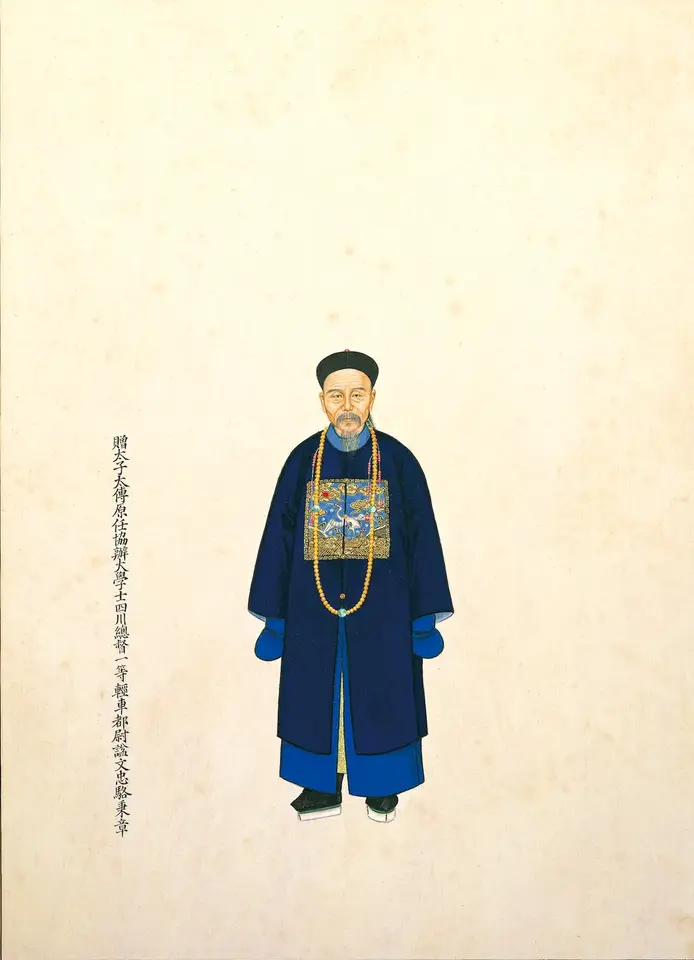
骆秉章
Luo Bingzhang (骆秉章, 1793–1867), originally named Jun, courtesy name Yuemen, art name Ruzhai, was a native of Hua County, Guangzhou Prefecture, Guangdong Province, and an eminent statesman, military commander, and key leader of the Xiang Army during the late Qing Dynasty. He attained the degree of Metropolitan Graduate (Jinshi) in 1832, was appointed a bachelor in the Hanlin Academy, and served as a compiler. He subsequently…
Luo Bingzhang (骆秉章, 1793–1867), originally named Jun, courtesy name Yuemen, art name Ruzhai, was a native of Hua County, Guangzhou Prefecture, Guangdong Province, and an eminent statesman, military commander, and key leader of the Xiang Army during the late Qing Dynasty. He attained the degree of Metropolitan Graduate (Jinshi) in 1832, was appointed a bachelor in the Hanlin Academy, and served as a compiler. He subsequently held positions as an imperial censor, reader of the Hanlin Academy, and surveillance commissioner of Hubei. In 1850, he was appointed governor of Hunan, where he served for a decade. During the Siege of Changsha in 1852, he led the garrison in a tenacious defense that repelled the Taiping forces and lifted the siege. Recognizing the indispensable role of local defense forces, Luo gave his unreserved backing to Zeng Guofan in organizing and expanding the Xiang Army. He brought Zuo Zongtang into his gubernatorial staff to manage military affairs, instituted the likin commercial tax, reformed the salt monopoly, and marshaled vast quantities of revenue and supplies to sustain the counter-insurgency campaigns down the Yangtze River. In 1860, facing an escalating crisis in the southwest, Luo was reassigned as governor-general of Sichuan. Over seven years of administration, he restored military discipline, crushed internal rebellions, and in 1863 engineered the complete entrapment and destruction of the Taiping Army led by Shi Dakai at the Dadu River, capturing Shi Dakai alive. In 1867, he was promoted to Associate Grand Secretary, passing away later that year in the provincial capital of Chengdu. He was posthumously granted the title of Grand Tutor of the Crown Prince, enshrined in the Temple of Worthies, and given the posthumous name Wenzhong. Celebrated for his integrity, governance, and discernment of talent, he is honored among the Restoration statesmen of the late Qing.
Born in Hualing Village, Hua County, Guangdong, into an educated lineage hailing originally from Yiwu, Zhejiang.
Passed the imperial examination as a Metropolitan Graduate and was selected as a bachelor in the Hanlin Academy.
Appointed as censor to audit the Ministry of Personnel silver vault, fearlessly suppressing entrenched corruption and winning the emperor's trust.
Served as reader in the Hanlin Academy and subsequently as surveillance commissioner of Hubei, cleaning up judicial backlogs.
Promoted to governor of Hunan, immediately initiating reforms in county administration and local defense.
Directed the defense during the Taiping siege of Changsha; his garrison artillery mortally wounded Western King Xiao Chaogui and broke the siege.
Reappointed governor of Hunan, retaining Zuo Zongtang as chief advisor and providing essential political and logistical patronship for Zeng Guofan.
Implemented the likin transit tax system and salt transport reforms, dispatching elite forces under Luo Zenan to secure northern Hunan and southern Hubei.
Reassigned as governor-general of Sichuan to suppress regional insurgencies and safeguard the critical southwestern rear.
Orchestrated the encirclement of Taiping Wing King Shi Dakai at the Dadu River, capturing him alive along with his vanguard.
Bestowed the title of Junior Guardian of the Crown Prince and an hereditary rank of First-Class Light Chariot Commander for decisive military contributions.
Elevated to Associate Grand Secretary and passed away in Chengdu; posthumously conferred Grand Tutor of the Crown Prince and canonized as Wenzhong.
Luo Bingzhang was born in 1793 in Hualing Village, Hua County, Guangdong Province. His ancestral lineage originated in Yangtang Village, Yiwu County, Jinhua Prefecture, Zhejiang, before migrating south to Guangdong. From an early age, Luo was recognized for his quiet disposition, disciplined study habits, and dedication to Confucian statecraft. His family relocated to the commercial center of Foshan, where, despite humble financial circumstances, he immersed himself in the Confucian Classics, historical jurisprudence, military strategy, and regional geography, while cultivating refined skill in calligraphy.
Throughout the late Jiaqing and early Daoguang reigns, Luo experienced several setbacks in the provincial examinations. Remaining steadfast in his scholarly ambitions, he traveled to the capital in 1832 and succeeded in the Metropolitan Examinations, being selected as a bachelor of the Hanlin Academy. Following three years of intensive study and archival training, he was confirmed as a Hanlin compiler, responsible for recording imperial pronouncements and compiling court annals.
In 1840, Luo was commissioned as an imperial censor to inspect the silver treasury of the Ministry of Personnel. At that time, the imperial vaults were plagued by habitual embezzlement, fraudulent bookkeeping, and systemic skimming by clerks and officials. Grand Councilor Mu-zhang-a and other influential figures subtly encouraged Luo to overlook established conventions, but Luo adamantly refused, filing comprehensive memorials that exposed illicit practices and stabilized treasury accounts.
His resolute conduct earned high praise from the Daoguang Emperor, who advanced him to reader of the Hanlin Academy. Upon the death of his mother, Luo complied with filial rites, resigned his office, and returned to Guangdong for three years of mourning. Returning to Beijing, he served as right sub-director of the Supervisorate of Imperial Instruction. In 1848, he was appointed surveillance commissioner of Hubei, where he traveled extensively through prefectures and counties, resolving hundreds of long-delayed criminal dockets and purging illegal fees extorted by underlings.
In 1850, following the accession of the Xianfeng Emperor, Luo was elevated to governor of Hunan on account of his seasoned judgment and administrative probity. Southern Hunan was then troubled by secret societies, banditry, and chronic inertia among local magistrates. Luo took immediate steps to stabilize public security, establish rural militia registers, and adjudicate pending grievances, bringing preliminary order to the province.
In the spring of 1852, the Taiping rebellion erupted out of Guangxi, capturing passes and advancing swiftly through Daozhou and Chenzhou directly toward Changsha. The governor-general of Huguang, Cheng Yucai, withdrew to the provincial capital, while provincial green standard troops suffered repeated defeats in open terrain. Confronting this perilous threat, Luo remained on the city walls day and night, marshaling laborers and gentry to fortify ramparts, dig moats, mount heavy artillery, and demolish outlying dwellings to deny cover to the attackers.
In August of that year, the Taiping Western King Xiao Chaogui led a spearhead column to attack the Tianxin Pavilion at the southern gate of Changsha. Luo personally supervised the defense, ordering artillery gunners to withhold fire until the enemy was well within range. When Xiao Chaogui raised his command pennant on an opposite mound, a direct cannon shot struck his chest, mortally wounding him and crushing the assault.
Subsequently, Hong Xiuquan and Yang Xiuqing brought the bulk of the Taiping host to lay an eighty-day siege to Changsha. The rebels excavated tunnels beneath the masonry, detonating several mines that opened wide breaches in the ramparts. Luo and commanding general Yu Wanqing stood firm at the breaches, directing desperate counter-charges, reinforcing broken sections with earthbags, and raining down cannon shot and boulders. As imperial relief columns converged from neighboring provinces, the Taiping army suffered heavy casualties and was compelled to lift the siege in November. The successful defense of Changsha preserved Hunan as an imperial bulwark.
Following the relief of Changsha, although Luo was temporarily demoted for initial defensive shortcomings, his wartime performance led to his retention in Hunan, and in the autumn of 1853, he was formally reinstated as governor of Hunan. Conscious that regular green standard garrisons lacked discipline and cohesion, Luo realized that suppressing the rebellion required reliance on local gentry-led militia forces.
Zeng Guofan had received an imperial edict to organize local militia in Hunan, but his uncompromising measures aroused deep hostility among the provincial bureaucracy and green standard commanders, leading to open friction in Changsha. Luo intervened decisively on Zeng's behalf, providing administrative legitimacy, public funds, and ordnance. Even after Zeng relocated to Hengzhou to train his naval flotilla, Luo ensured an unbroken conduit of supplies, effectively shielding the emergent Xiang Army from political interference.
Luo's most renowned administrative decision was recruiting the scholar Zuo Zongtang into his inner circle. Recognizing Zuo's exceptional strategic mind and tolerating his unyielding temperament, Luo granted him sweeping authority to draft dispatches, deploy troops, allocate supplies, and appoint officers, while Luo used his full gubernatorial authority to back every initiative. Contemporary observers noted that Luo provided the broad vision and steady backing, while Zuo contributed tactical drive.
To finance these costly campaigns, Luo and Zuo established the provincial likin bureau, creating transit customs stations along waterways and overland highways to levy moderate commercial duties. They also reformed the salt trade, replacing old monopoly licenses with a more flexible ticket system that substantially expanded tax revenues. In 1854, the Xiang Army advanced downriver, capturing Yuezhou and Tongcheng. When Taiping forces recaptured Wuchang in 1855, Luo dispatched elite units under Bao Chao and Liu Changyou across the river to assist Hu Linyi, and continuously forwarded silver and arms to Zeng Guofan in Jiangxi, establishing Hunan as the premier rear base for imperial restoration.
By late 1860, the military situation across the southwestern provinces had deteriorated sharply. In Sichuan, insurgent forces led by Li Yonghe and Lan Chaoding swept through dozens of counties, while Taiping Wing King Shi Dakai marched his veteran legions toward the region to carve out an independent base. The incumbent governor-general of Sichuan, Zeng Wangyan, proved completely incapable of stemming the tide. The Qing court promptly transferred Luo Bingzhang to take command as governor-general of Sichuan.
Arriving in Sichuan in the autumn of 1861 with veteran Xiang Army detachments commanded by Huang Chunxi, Liu Yuezhao, and Xiao Qijiang, Luo found the provincial capital in panic and the civilian populace terrorized by rampant extortion and banditry. Luo enacted swift punitive measures, executing corrupt officers who looted noncombatants, reorganizing the demoralized garrison, and enforcing strict codes of conduct across all camps.
Adopting a strategy of combined perimeter fortifications and coordinated multi-pronged offensives, Luo deployed his forces to safeguard southern Sichuan. Troops under Huang Chunxi intercepted Lan Chaoding's army near Danleng and Qingshen, routing the insurgents in mountain skirmishes and killing Lan Chaoding in battle. Luo subsequently directed Tang Yougeng to encircle Li Yonghe at Niuhuaxi, severing his supply corridors and capturing him in late 1862. The suppression of the Li-Lan rebellion stabilized the wealthy Sichuan basin and secured vital revenue sources for the Qing court.
Between late 1862 and the spring of 1863, Shi Dakai led tens of thousands of veteran Taiping troops across the Jinsha River, driving rapidly toward the Dadu River in hopes of crossing into the central Sichuan plain and taking Chengdu. Recognizing Shi Dakai's propensity for rapid maneuvers across difficult mountain passes, Luo deployed defensive forces at all key strategic choke points well in advance.
In May 1863, Shi Dakai's advance guard arrived at Zidadi, modern-day Anshunchang in Shimian County, along the southern bank of the Dadu River. Unusually heavy seasonal rains caused the river to swell violently into a torrential barrier, smashing the rafts constructed by the Taiping soldiers. Luo acted with lightning speed, ordering Tang Yougeng to march day and night to seize the northern bank, where imperial forces erected fortified redoubts and batteries to sweep the river.
Concurrently, Luo enacted a comprehensive geopolitical encirclement. He dispatched emissaries laden with silver bullion, silks, and grain to negotiate with the local Yi and Tibetan chieftains, including Wang Yingyuan and Ling Chengen. The indigenous chieftains, winning Luo's goodwill and rewards, sealed off the precarious mountain defiles to the south and east, rolling down boulders and destroying paths to cut off Shi Dakai's foraging parties.
Imperial detachments led by Xiao Deyang and Yang Yinggang closed the trap from the rear, confining Shi Dakai's legions to a narrow, desolate gorge. Encircled for over a month with provisions exhausted and horses slaughtered, the Taiping soldiers suffered terrible attrition from hunger and mountain sickness. Repeated attempts to force crossings of the Songlin River and Dadu River were shattered by defensive artillery and mountain ambushes.
In June 1863, recognizing that further resistance meant annihilation for all his followers, Shi Dakai approached the imperial camp to negotiate terms. Luo enforced an unyielding military discipline, having key rebel commanders separated and executed, while sending Shi Dakai, his young son Shi Dingzhong, and lieutenant Zeng Shihe under heavy escort to Chengdu. On July 13, 1863, Shi Dakai was interrogated, displayed remarkable composure, and was executed. The elimination of Shi Dakai's host eradicated the last major Taiping expeditionary force in the west.
Following the destruction of Shi Dakai's army, Luo was hailed throughout the empire as an architect of victory. The Xianfeng and Tongzhi emperors repeatedly commended his strategic foresight and steadiness, conferring upon him the rank of Junior Guardian of the Crown Prince, double-eyed peacock feathers, and an hereditary title of First-Class Light Chariot Commander. With the fall of Nanjing to imperial armies in 1864, Luo received further imperial citations for his logistical coordination.
Turning his focus to provincial rehabilitation, Luo addressed the widespread devastation left by years of warfare. He removed corrupt commanders, including Brigade General Tao Maolin, abolished unapproved local levies, and exempted war-torn prefectures from outstanding land taxes. He also undertook major civil engineering projects, directing substantial funds toward dredging and repairing the Dujiangyan irrigation system to restore agricultural fertility to the Chengdu plain.
To revive commerce, Luo reorganized the Sichuan salt administration and opened extensive trade avenues to market Sichuan well salt throughout Hunan and Hubei. Despite suffering from debilitating respiratory illness and swelling in his lower limbs, Luo continued to conduct court business and review administrative files late into the night.
In early 1867, Luo was promoted to Associate Grand Secretary while remaining governor-general of Sichuan. He handled remaining frontier security matters with patience, averting border tribal disputes. On January 12, 1867, exhausted by decades of unrelenting labor, Luo passed away in the governor-general's compound in Chengdu at the age of seventy-five. When news of his death spread, shops across Chengdu closed their doors as citizens wept in the streets. The Tongzhi Emperor issued an imperial decree conferring the posthumous title of Grand Tutor of the Crown Prince, ordering his enshrinement in the Temple of Worthies, and bestowing the posthumous name Wenzhong.
One of Luo Bingzhang's most enduring legacies was his exceptional capacity to discover, protect, and promote individuals of talent. During his tenure as governor of Hunan, he recognized the unique genius of Zuo Zongtang, an uncredentialed provincial scholar who had repeatedly failed the metropolitan examinations. In the face of conservative criticism, Luo extended complete trust to Zuo, empowering him to direct military logistics, strategy, and official appointments. This partnership provided the launchpad for Zuo's rise to national prominence and his historic reclamation of Xinjiang.
Beyond Zuo Zongtang, Luo actively recommended and nurtured a galaxy of distinguished civil and military commanders, including Liu Rong, Huang Chunxi, Hu Zhonghe, Tang Yougeng, Liu Yuezhao, Zhou Dawu, Huang Mian, and Bao Chao. He appointed Liu Rong to head his military chancellery and subsequently secured his promotion to governor of Shaanxi; he elevated Tang Yougeng from humble soldiering to provincial commander-in-chief; and he secured honorable stipends for the survivors of Huang Chunxi after his death in combat.
The late Qing scholar Xue Fucheng observed that Luo excelled at commanding subordinates through sincerity, possessing the rare grace to accommodate personal eccentricities in pursuit of great state enterprises. His administrative chanceries in Changsha and Chengdu functioned as primary academies for the military and political leaders who shaped China's nineteenth-century resurgence.
Throughout his decades as a provincial governor and governor-general, Luo made integrity and administrative rigor the twin cornerstones of his statecraft. In Hunan, he dismissed dozens of venal county sub-magistrates and clerical despots who preyed upon the populace through arbitrary levies, establishing a clean administrative climate across the province.
Upon arriving in Sichuan, Luo confronted entrenched gentry cliques and widespread military decadence. He instituted strict annual merit reviews, personally investigated local grievances, and impeached high-ranking military commanders such as Tao Maolin for corruption and misconduct, forcing the restitution of misappropriated military funds.
He overhauled the regional defense system by applying the strict operational doctrines of the Xiang Army. Regular Green Standard battalions and provincial irregulars were systematically weeded of opium smokers and unfit veterans, replaced by disciplined rural recruits organized under cohesive platoon rules. These reforms transformed the Sichuan forces from an undisciplined liability into an effective combat army.
During the 1850s, wartime exigencies prompted the Qing court to issue depreciated large-denomination copper coins, treasury notes, and government paper certificates, unleashing severe inflation that crippled commercial activity. In 1853, Luo took the decisive step of prohibiting the circulation of fiat tokens and depreciated coinage throughout Hunan, mandating transactions in standard silver bullion and genuine cast copper cash, which stabilized markets and restored consumer confidence.
Working with Zuo Zongtang, Luo pioneered the provincial likin transit tax bureau in Hunan, creating the administrative model later adopted nationwide. By establishing transparent fee schedules at key river ports and overland checkpoints, he diverted mercantile wealth into military logistics while suppressing unauthorized local exactions.
In Sichuan, Luo revitalized the state salt monopoly, cracking down on private smuggling cartels and orchestrating the Eastern Salt Relieving Chu program. This initiative transported vast quantities of Sichuan well salt to the central Yangtze markets, resolving acute salt shortages in Hubei and Hunan while generating substantial, sustainable customs revenues that transformed Sichuan's bankrupt provincial treasury into a solvent resource.
Following the suppression of regional insurgencies, large swathes of the Sichuan basin lay uncultivated. Convinced that agricultural stability rested on effective water management, Luo prioritized water conservancy and famine relief. He personally inspected the Dujiangyan hydraulic network in Guan County, allocating tens of thousands of silver taels to clear and reinforce the Yuzui bypass, the Feishayan spillway, and the Baopingkou diversion channel, safeguarding irrigation across hundreds of thousands of fertile acres.
Luo complemented hydraulic engineering with compassionate social policies. He granted multi-year tax exemptions on farmland devastated by fighting, abolished road transit levies on essential foodstuffs, and allocated abandoned lands along with draft cattle and seed grain to returning refugees and disbanded soldiers. In Chengdu and major commercial centers, he founded community granaries that purchased surplus grain each autumn to cushion vulnerable communities against droughts and floods.
Southwestern and northwestern Sichuan were home to diverse ethnic communities, where historical exploitation by frontier officials and heavy tax demands had generated recurrent friction between Han settlers and Yi or Tibetan populations. In managing these borderlands, Luo abandoned punitive expeditions in favor of conciliation grounded in good faith and equitable rewards. He dispatched experienced civil magistrates to confer with tribal leaders, reducing obsolete tributes and respecting customary practices.
During the critical Dadu River campaign against Shi Dakai, Luo's established reputation for fairness persuaded the Yi and Tibetan chieftains of the Daliang Mountains to join the imperial blockade rather than assist the rebels. Following the victory, he distributed imperial honors and silver subsidies to the chieftains, established charity schools along key border routes, and enrolled indigenous youths in classical and practical studies, fostering enduring stability along the southwestern frontier.
Despite holding senior provincial posts for over twenty years and overseeing the disbursement of millions of silver taels in military revenues, Luo remained famously ascetic. Within his official residences in Changsha and Chengdu, he ate plain food, wore mended cotton robes, and steadfastly refused seasonal gifts and gratuities from subordinate officials. He forbade his relatives and dependents from meddling in public works or local lawsuits.
When Luo passed away in office in 1867, inventory clerks found that the governor-general and Associate Grand Secretary had accumulated only eight hundred taels of silver in personal savings, barely enough to cover his funeral and the return of his casket to Guangdong. Deeply moved by his lifetime of unselfish devotion, the people of Sichuan and Hunan erected memorial shrines in his honor, revering him alongside historical administrators such as Zhuge Liang and Wei Gao, and honoring him as the foremost clean official of the late Qing period.
FIGURES ASSOCIATED WITH THIS DYNASTY